

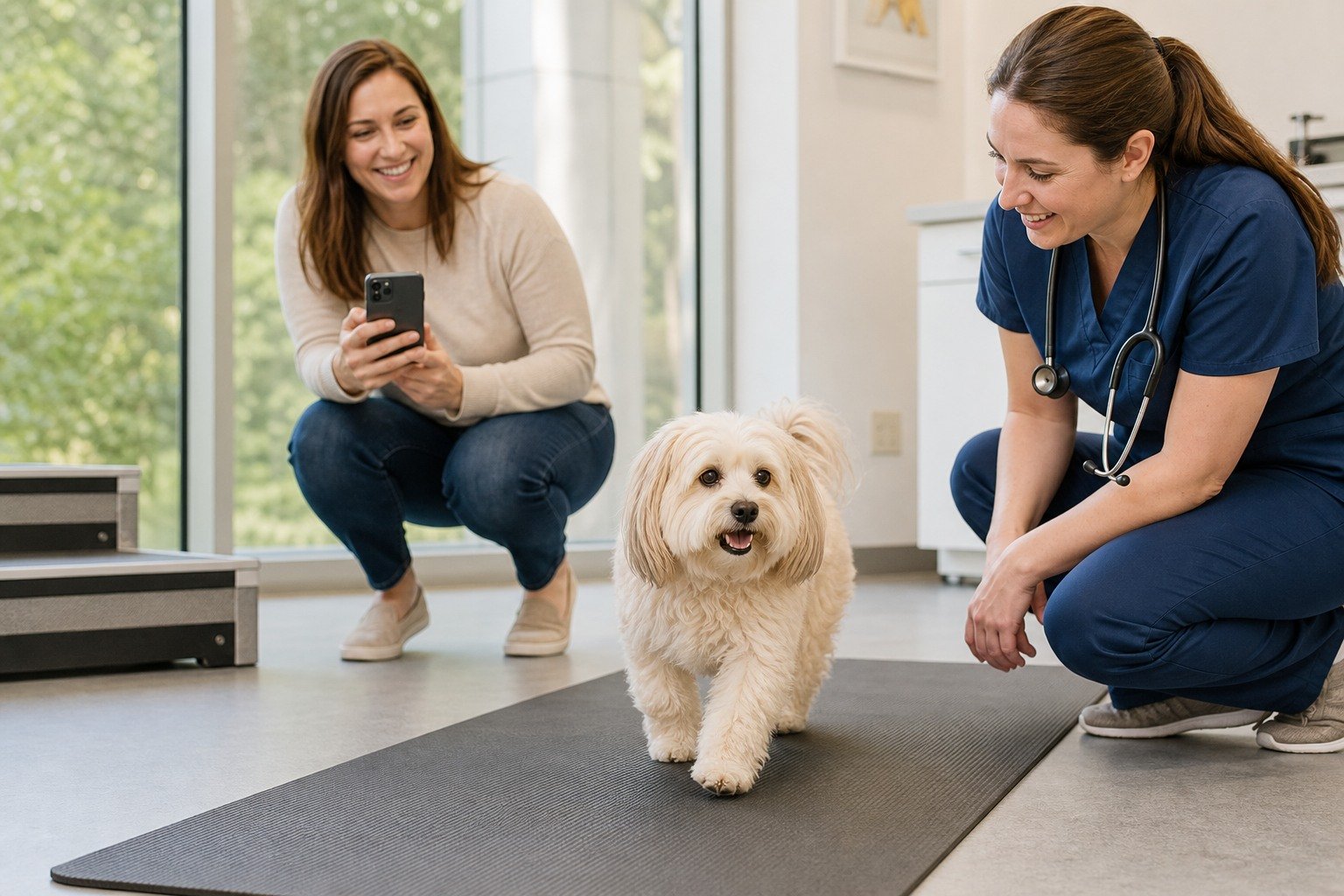
Small dogs are not simply scaled-down large dogs, but size and breed still cannot diagnose an orthopedic problem. Patellar luxation is overrepresented in some small breeds, and Legg-Calve-Perthes disease is a distinct disorder seen mainly in young miniature and small-breed dogs. Skipping, limping, reluctance, posture change, or altered activity can also come from many orthopedic, neurologic, or medical causes. A dated log, short videos, and veterinary examination are more useful than assuming a behavior is normal for a small dog.
Short answer
Watch function without diagnosing from a skip
Record changes in walking, rising, sitting, jumping, stairs, play, posture, grooming, sleep, and willingness to be handled. An intermittent skipping gait is commonly described with patellar luxation, but it is not a home diagnostic test. Cornell and MSD describe different small-breed orthopedic conditions whose signs can overlap, so the veterinary team uses history, examination, gait assessment, and imaging when indicated. [1] [2]
- Record the exact pattern, timing, exposures, function, and recent changes.
- Separate population evidence from what can be concluded about one dog.
- Use the veterinary team to define evaluation, monitoring, and urgent-response steps.
Safety first
Sudden, persistent, or painful mobility change needs veterinary attention
Contact a veterinarian for recurring skipping, limping, stiffness, reduced activity, pain, swelling, posture change, or difficulty with familiar movements. Seek urgent or emergency care for major trauma, inability to stand, sudden non-weight-bearing lameness, severe pain, dragging or knuckling paws, collapse, breathing difficulty, or rapid deterioration.
- Do not use general information to delay care for severe, persistent, or worsening signs.
- Do not start, stop, combine, or calculate treatment from this article.
- Keep labels, dates, videos, and a concise observation timeline available for the veterinary team.
Veterinary note
This article is educational and does not diagnose, treat, prescribe, or replace care from a licensed veterinarian. Your dog’s history, examination, diet, medications, and current signs determine what is appropriate.
Small size does not identify the condition
Patellar luxation occurs when the kneecap moves out of its normal groove. Cornell notes that it is more common in small breeds but can occur in larger dogs, and signs range from absent or intermittent to persistent lameness. Breed association supports vigilance, not an owner diagnosis or prediction about severity. [1]
Legg-Calve-Perthes disease is different: an aseptic necrosis of the femoral head described mainly in young miniature and small-breed dogs, especially terriers. MSD explains that veterinary diagnosis uses clinical findings and imaging. It should not be conflated with a kneecap problem, osteoarthritis, or a vague sensitive-joints label. [2]
Other possibilities include injury, spinal or peripheral nerve disease, muscle or soft-tissue pain, hip disease, foot or nail problems, inflammatory disease, and pain outside the limb. Similar owner observations can lead to different examinations and tests.
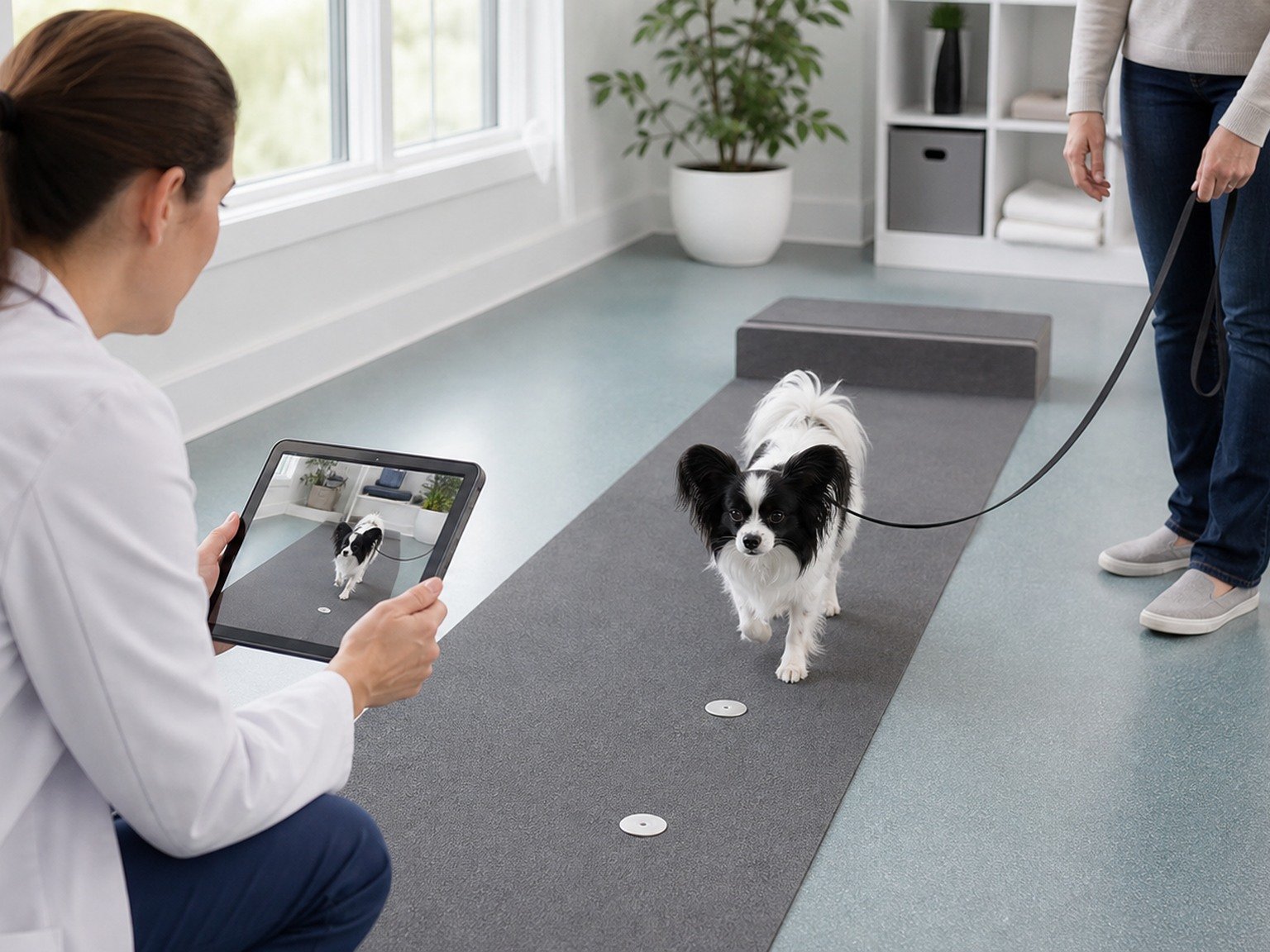
Turn everyday behavior into usable observations
Record which limb appears affected, whether the change is intermittent or continuous, and what happens before and after it. Note surface, speed, turning, jumping, stairs, play, sleep, toileting, grooming, and touch response. Capture a short safe video without provoking the sign or repeatedly testing the dog.
Small dogs are often carried, lifted onto furniture, or helped over stairs. That may make a mobility change less visible. Record when assistance became necessary and whether the dog hesitates before being picked up. Do not force movement or withhold support merely to obtain evidence.
AAHA pain guidance includes owner observations as part of chronic-pain assessment and emphasizes patient-specific reassessment. Behavior change can reflect discomfort, fear, illness, or context, so a video and timeline supplement rather than replace the examination. [4]
Understand the veterinary evaluation
The clinician reviews onset, recurrence, growth, trauma, activity, medications, prior disease, and family or breed history. Gait, posture, joint motion, muscle condition, neurologic function, feet, spine, and pain responses may be assessed. Imaging or referral is selected when findings justify it; this article does not provide a home examination.
Risk-factor research for canine osteoarthritis and predisposing joint disorders identifies both modifiable and nonmodifiable associations, with uneven evidence and interaction among factors. A listed breed, age, body weight, or activity does not establish the diagnosis or outcome for one dog. [3]
Ask what findings support the leading possibilities, what remains uncertain, whether imaging changes the plan, and when an orthopedic or neurologic referral is appropriate. Keep copies of imaging and reports for future comparison.
Support health without a universal regimen
Discuss body condition, nutrition, daily activity, flooring, stairs, jumping, and rest with the veterinary team in the context of the individual dog. These are care-planning topics, not guarantees that a condition will be prevented or cured.
Do not give human pain medicine, use leftover veterinary medication, begin a supplement, impose prolonged rest, or copy another dog's exercise plan. Medication, surgery, rehabilitation, and environmental decisions depend on diagnosis, severity, age, health, function, and caregiver circumstances.
Repeat the same observations after a plan begins. Improvement, recurrence, side-to-side change, new weakness, or difficulty with a different activity may change the assessment. Long-term monitoring should remain tied to comfort and function rather than a product claim.
Prepare for a focused veterinary conversation
Bring a concise timeline, short natural-movement or symptom videos when safe, the exact names and photographs of every food, treat, medication, and supplement label, and notes about appetite, water intake, stool, sleep, activity, comfort, and behavior. Include recent injuries, travel, boarding, diet changes, missed medication, and previous test results. A complete record helps the veterinary team separate a repeatable pattern from a single impression.
Decide in advance what you need from the visit: an urgency decision, a diagnosis plan, a nutrition review, a pain or mobility assessment, or a monitored trial. Ask what result would change the plan and what finding would rule an option out. This keeps research and product information in the right role. Evidence can shape questions and expectations, but it cannot determine what is safe for an individual dog without the history and examination.
Owner tool
Build a small-dog mobility record
On a phone, swipe across the table to see every column.
| Checkpoint | Record | Why it helps |
|---|---|---|
| Pattern | Limb, gait, timing, recovery | Defines recurrence |
| Function | Rise, stairs, jump, play, toilet | Shows daily impact |
| Context | Surface, activity, carrying, growth | Finds confounders |
| Clinic | Exam, imaging, plan, recheck | Tracks decisions |
Better questions, calmer next steps
Questions to ask your veterinarian
- Which conditions fit this dog's age and findings?
- Does the video change what you see in clinic?
- Would imaging or referral change the plan?
- What function should I monitor consistently?
- Which changes require prompt reassessment?
FAQ
Do all small dogs develop joint problems?
No. Size and breed are context, not a diagnosis.
Does skipping prove a luxating patella?
No. It is an observation that needs veterinary interpretation.
Should I carry a limping dog?
Avoid forcing movement and ask the veterinary team for safe case-specific guidance.
Can a supplement prevent disease?
This source set supports no prevention guarantee.
Why take videos?
Intermittent changes may not appear during a brief clinic visit.
Sources
- Cornell University College of Veterinary Medicine: Patellar Luxation. Signs, breed context, examination, and imaging.
- MSD Veterinary Manual: Aseptic Necrosis of the Femoral Head in Dogs. Legg-Calve-Perthes disease boundaries.
- Frontiers in Veterinary Science: Risk Factors for Canine Osteoarthritis. Risk-factor evidence and uncertainty.
- American Animal Hospital Association: 2022 Pain Management Guidelines. Owner observations and patient-specific reassessment.
