

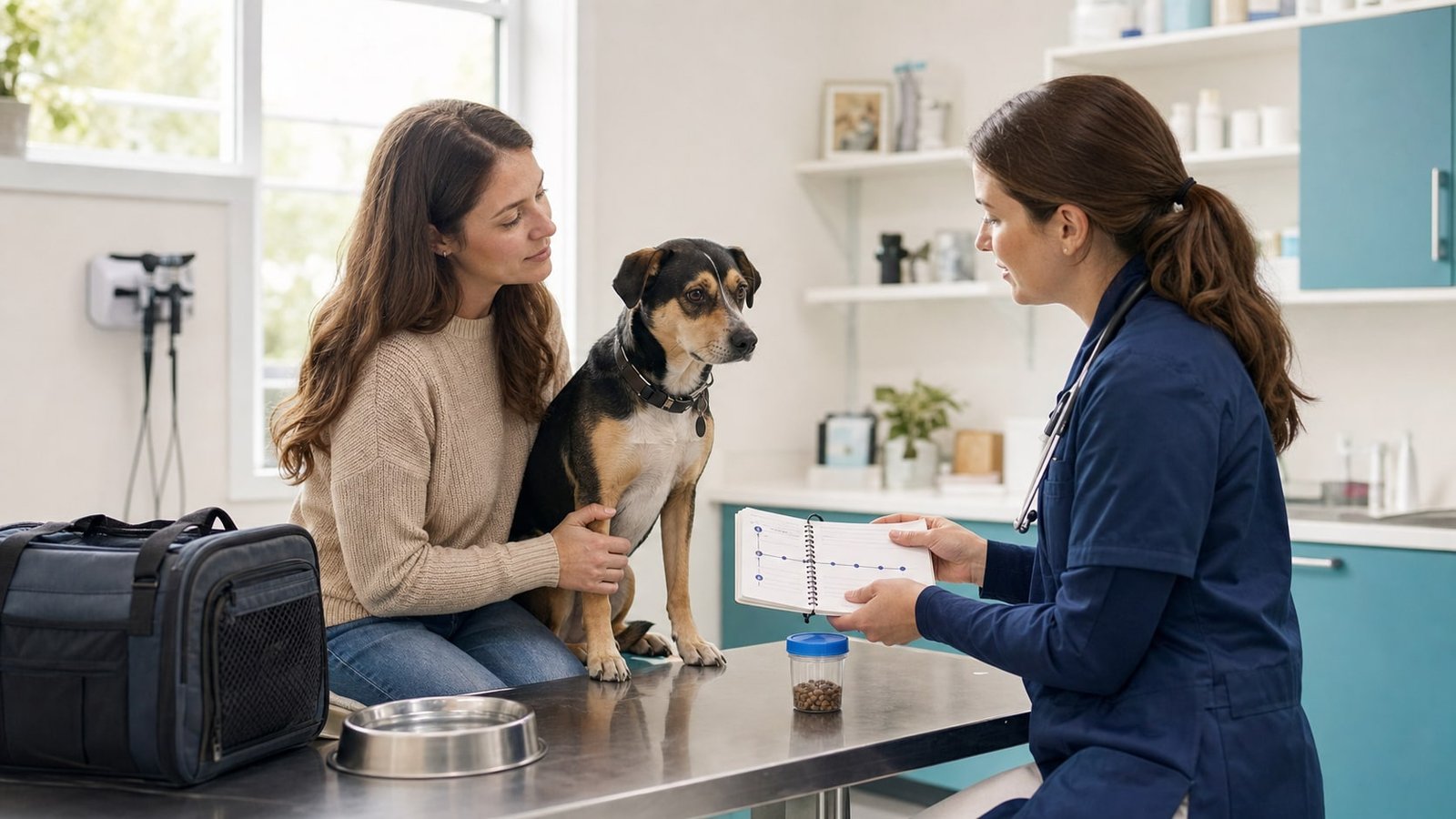
Diarrhea, vomiting, appetite changes, gas, and abdominal discomfort can be brief and mild or part of a more serious pattern. The safest next step depends on duration, frequency, the dog’s whole-body condition, life stage, possible exposures, and warning signs. This guide helps owners observe and communicate clearly without trying to diagnose the cause at home.
Short answer
Judge the whole pattern, not one symptom in isolation
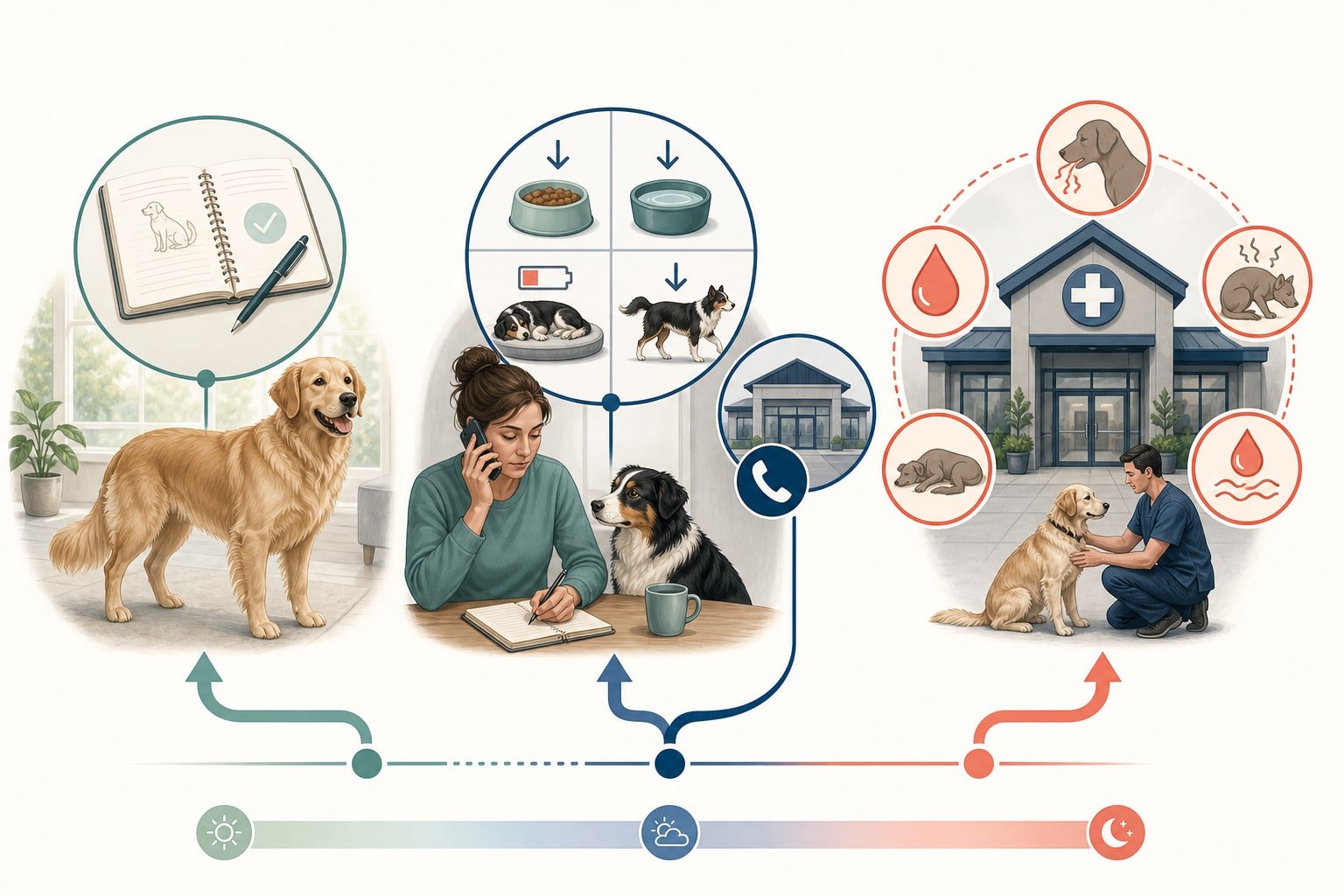
A single mild stool change in a bright adult dog is different from repeated vomiting, bloody diarrhea, pain, weakness, or a rapidly worsening dog. Track what happened and call your veterinary clinic when a sign persists, repeats, combines with another problem, or affects a puppy, senior, very small dog, or dog with chronic disease. [1]
- Record timing, frequency, stool or vomit appearance, appetite, water intake, energy, comfort, and recent changes.
- Do not give human medication, withhold food or water, or stack supplements unless a veterinarian directs you.
- Keep packaging after a possible toxin, medication, foreign-object, or food exposure.
- Ask the clinic whether to bring a fresh stool sample and how to store it.
Safety first
Seek prompt veterinary guidance for serious digestive signs
Contact a veterinarian or emergency clinic promptly for repeated vomiting, blood in vomit or stool, black or tarry stool, severe or persistent diarrhea, a swollen or painful abdomen, repeated unproductive retching, collapse, marked weakness, pale gums, trouble breathing, suspected toxin or foreign-object exposure, inability to keep water down, or rapid deterioration.
Call sooner for puppies, senior dogs, very small dogs, pregnant or nursing dogs, and dogs with chronic disease or current medication. Severe bloody diarrhea and abdominal emergencies can require rapid assessment. [3]
Veterinary note
This page is educational. It cannot diagnose a digestive disorder or provide individualized treatment. A dog’s history, examination, hydration, current signs, medications, and diagnostic findings determine the appropriate plan.
A practical digestive-symptom triage
| Pattern | Owner response | Escalate when |
|---|---|---|
| One mild loose stool; bright adult dog | Observe closely and record food, treats, activity, and stool | It repeats, worsens, or another sign appears |
| Vomited once; quickly normal again | Monitor behavior, water, appetite, and recurrence | Vomiting repeats or the dog seems painful, tired, or unable to drink |
| Digestive signs lasting or returning | Call the veterinary clinic for guidance | Weight loss, dehydration, appetite loss, pain, or multiple symptoms develop |
| Blood, black stool, collapse, swollen abdomen, repeated retching | Seek prompt or emergency veterinary care | Do not delay for a home trial |
| Puppy, senior, very small, pregnant, or medically complex dog | Use a lower threshold for calling | Any persistence, recurrence, or whole-dog change |
These categories help frame urgency; they are not diagnostic rules. Veterinary assessment combines the history and physical examination with tests selected for the individual dog. [2]
What to observe
Stool pattern
Record frequency, consistency, color, mucus, visible blood, black or tarry appearance, urgency, straining, accidents, and whether the dog can pass stool. A photograph can be useful when handled discreetly and stored privately for the veterinary team.
Vomiting pattern
Note the number of episodes, timing around food or water, appearance, force, possible material eaten, and whether the dog can keep water down. Distinguish vomiting from coughing, gagging, or passive regurgitation as accurately as you can, but do not delay care while trying to label it.
Whole-dog condition
Appetite, water intake, urination, energy, posture, sleep, breathing, gum color, abdominal comfort, body weight, and behavior help place a digestive sign in context. A mild-looking stool change can matter more when the dog is weak, painful, dehydrated, or acting unlike themselves.
Why the same sign can have different causes
Digestive signs can be associated with dietary change, eating unfamiliar material, parasites, infection, inflammation, medication effects, stress, toxins, foreign material, disorders outside the digestive tract, and other conditions. Similar outward signs can require very different care, which is why an at-home product trial cannot identify the cause. [4]
Tell the clinic about new food, treats, chews, table scraps, trash access, travel, boarding, contact with other animals, water sources, medication changes, preventives, supplements, recent procedures, and anything the dog may have swallowed.
What the veterinary team may ask or check
The veterinary team may review onset, frequency, exposures, diet, medication, vaccination and parasite-prevention history, travel, weight change, and previous episodes. Examination can assess hydration, temperature, pain, abdominal findings, circulation, and the dog’s overall condition.
Depending on the pattern, the veterinarian may discuss fecal testing, blood or urine tests, imaging, diet evaluation, hydration support, medication, or other targeted steps. Testing and treatment should follow the individual case rather than a generic checklist.
What not to do at home
- Do not give human antidiarrheal, antacid, pain, nausea, or other medication without veterinary direction.
- Do not induce vomiting unless a veterinarian or animal poison professional instructs you.
- Do not remove water or start prolonged fasting without guidance.
- Do not make repeated diet changes or add several probiotics, fibers, enzymes, or herbs at once.
- Do not assume a natural product is harmless or that a previous plan fits a new episode.
- Do not delay care when warning signs are present.
Where diet, probiotics, and supplements may fit
Nutrition is part of digestive assessment, but the right approach depends on the dog’s usual diet, symptoms, diagnosis, and nutritional needs. A complete diet history is more useful than changing foods repeatedly. Global veterinary nutrition guidance emphasizes systematic nutrition assessment as part of patient care. [5]
A veterinarian may discuss a diet adjustment, probiotic, prebiotic, fiber, enzyme replacement, or another supportive measure for a defined reason. These options are not interchangeable and should not be used to mask persistent or urgent signs.
Owner tool
Prepare a concise digestive-health record
| Record | Details | Bring |
|---|---|---|
| Timeline | Start, frequency, progression, previous episodes | Written notes or clinic message |
| Stool and vomit | Appearance, amount, timing, photos if useful | Fresh stool sample only if the clinic requests it |
| Whole-dog signs | Appetite, water, energy, pain, urination, behavior | Short videos when safe and relevant |
| Exposures | Food, treats, trash, toxins, travel, animals, water sources | Packages and ingredient labels |
| Current care | Medications, preventives, supplements, diagnoses | Exact names, amounts, and schedule |
Digestive issues in dogs: FAQs
When is dog diarrhea an emergency?
Seek prompt guidance when diarrhea is bloody, black or tarry, severe, persistent, or paired with vomiting, pain, weakness, dehydration, collapse, or rapid deterioration.
Should I bring a stool sample?
Ask the clinic. If requested, use a clean sealed container and follow the clinic’s instructions for freshness, storage, and transport.
Can I give a probiotic before calling the vet?
Do not let a supplement delay care. A veterinarian can help decide whether the pattern needs assessment first and whether a specific probiotic belongs in the plan.
Can I give a human stomach medicine?
Not without veterinary direction. Human products may be inappropriate, interact with other care, or mask important signs.
What should I track before the appointment?
Track timing, frequency, stool and vomit appearance, appetite, water, energy, pain, behavior, diet and exposure changes, and every medication or supplement.
Sources
- Cornell University College of Veterinary Medicine: Diarrhea. Urgency, dehydration, causes, sample handling, and diagnostics.
- MSD Veterinary Manual: Introduction to Digestive Disorders of Dogs. Signs, history, examination, and tests.
- Cornell University College of Veterinary Medicine: Emergency and Critical Care. Severe bloody diarrhea and abdominal emergency context.
- MSD Veterinary Manual: Disorders of the Stomach and Intestines in Dogs. Causes, diagnosis, and cause-specific treatment context.
- World Small Animal Veterinary Association: Global Nutrition Guidelines. Nutrition assessment framework.