


Short answer: Dog digestion supplements are products designed to support your dog’s gut, not replace veterinary care or a balanced diet. They include probiotics that add helpful bacteria, prebiotics that feed those bacteria, digestive enzymes that help break down food, and sensitive-stomach formulas meant to support meal tolerance. Owners often look at these products for occasional soft stool, gas, diet transitions, or post-antibiotic gut support, but not every dog needs them and not every symptom is safe to manage at home. This guide explains how dog gut health works, how different supplement types fit together, when a cautious conversation with your veterinarian may make sense, and when gut changes mean you should call your vet promptly.
Track the Pattern Before Your Vet Visit
Record stool consistency and frequency, appetite, vomiting, gas, discomfort, food or treat changes, medications, supplements, energy, and water intake. Bring the notes and, when requested, a fresh stool sample to your appointment.
Short Answer: Can Digestion Supplements Help Dogs?
When Gut Support May Be Reasonable
Gut support may be worth discussing for occasional soft stool in an otherwise bright dog, diet transitions, travel stress, or after antibiotics when your veterinarian agrees. A supplement can be part of a broader vet-guided plan that includes food, hydration, monitoring, and follow-up.
When Supplements Are Not Enough
Ongoing, severe, sudden, or multi-symptom digestive changes need professional care. Do not use a supplement to delay a veterinary exam for serious stool changes, vomiting, pain, appetite loss, collapse, or dehydration.
When to Call Your Veterinarian Promptly
Contact your veterinarian promptly if your dog has persistent diarrhea, blood in stool, black stool, repeated vomiting, severe bloating, lethargy, collapse, signs of pain, dehydration, appetite loss, or sudden digestive changes, especially in puppies, seniors, or dogs with known health conditions.
What Are Dog Digestion Supplements?
Dog digestion supplements are products added to a dog’s routine to support normal gut function. They are different from food, which provides core nutrition, and medication, which is used under veterinary direction for diagnosed problems.
Types of Gut Supplements
- Probiotics: Dog-specific bacteria intended to help support a healthy gut microbiome. Learn more in Dog Probiotics Explained.
- Prebiotics: Fibers or compounds that help feed beneficial gut bacteria. See the planned guide Prebiotics vs Probiotics for Dogs.
- Digestive enzymes: Ingredients meant to help break down nutrients. Vet input matters because enzyme use depends on the dog’s situation.
- Sensitive-stomach formulas: Products that may combine gut-support ingredients with gentle formulation choices. They should not mask serious symptoms.
How Dog Gut Health Works
Your dog’s gut contains many microorganisms that interact with food, stool quality, immune signaling, and the intestinal environment. Diet changes, stress, illness, parasites, medications, and chronic conditions can all affect that balance. Supplements may help support the gut environment in selected cases, but they do not diagnose the reason a dog is having symptoms.
Probiotics for Dogs
Probiotic effects are strain-specific, and published canine studies remain limited. Reviews have found that benefits may be small or uncertain, especially for chronic gastrointestinal disease, so a probiotic should not be treated as a substitute for diagnosis or veterinary care.
Probiotics contain live microorganisms chosen to support a healthy balance of gut bacteria. Owners commonly ask about them after antibiotics, during mild stool changes, or when a dog has a sensitive routine. Chews are convenient, powders can be flexible for dose and multi-dog homes, and capsules may suit dogs that tolerate pills. When you are ready to compare product slots, use Best Dog Probiotics for Digestive Health.
Prebiotics for Dogs
Prebiotics are not bacteria; they are ingredients that help feed beneficial gut bacteria. Some products combine probiotics and prebiotics as synbiotics. Because some dogs can become gassy or uncomfortable with certain fibers, introduce them carefully and ask your veterinarian if your dog has ongoing gut signs.
Digestive Enzymes for Dogs
Digestive enzymes are designed to help break down nutrients. They are sometimes discussed for particular digestive concerns, but enzyme choice should be guided by a veterinarian when symptoms are persistent, weight changes occur, or a medical condition is suspected.
Sensitive Stomach Support
“Sensitive stomach” can mean many things: food intolerance, diet transitions, fast eating, stress, parasites, medication effects, or other health issues. Diet changes often matter more than supplements. Gut-support products may be considered only after red flags are ruled out and the plan fits the dog’s age, diet, and health history.
Dog Diarrhea, Gas, Bloating, and Stool Changes
| Symptom | May discuss supplement with vet? | Vet now? |
|---|---|---|
| Occasional soft stool in a bright adult dog | Possibly, especially with diet tracking | If it persists or worsens |
| Gas after diet change | Possibly, with slow food transition | If painful bloating or distress appears |
| Persistent diarrhea | Only as part of a vet-guided plan | Yes |
| Blood, black stool, repeated vomiting, collapse, pain, dehydration, appetite loss | No self-trial | Yes, promptly |
Serious signs should not be softened or hidden by supplements. Use the Digestive Issues in Dogs guide for professional-care context.
How to Choose a Dog Digestion Supplement
Match the category to the concern, read the label, and introduce only one new product at a time. For probiotics, check strains, CFUs, dog-specific directions, storage, expiration, warnings, and inactive ingredients. Use the dog supplement label reading guide and checklist before comparing products.
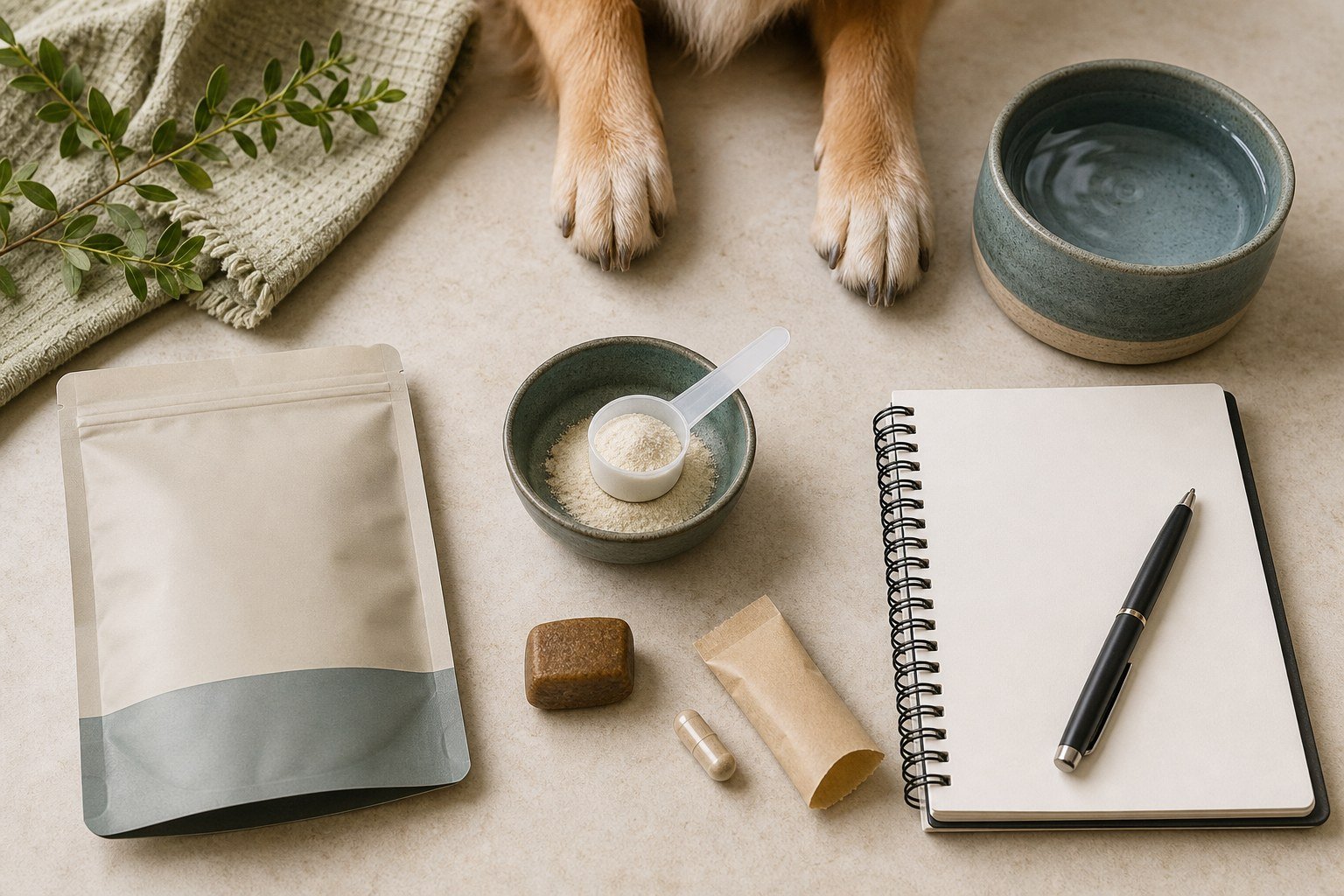
Chews vs Powders vs Capsules
| Format | Pros | Cons | Best for |
|---|---|---|---|
| Chews | Convenient and familiar | May include more flavoring or calories | Picky dogs that accept treats |
| Powders | Flexible and often easy to mix | Some dogs notice taste or texture | Multi-dog homes or food-based routines |
| Capsules | Simple ingredient lists are possible | Harder for some dogs to take | Dogs comfortable with pills |
How to Introduce a Gut Supplement Safely
Start with one product, follow label or veterinary directions, and monitor stool, appetite, energy, gas, vomiting, comfort, and behavior. Re-evaluate if nothing changes after the agreed trial period or if symptoms worsen. Stop and call your veterinarian if concerning signs appear.
How Healthy Paws Essentials Reviews Digestion Products
Healthy Paws Essentials reviews digestion products by ingredient transparency, strain and CFU clarity, dog-specific use directions, safety cautions, evidence quality, owner practicality, and reviewer input. Read how Healthy Paws Essentials reviews digestion products and how we handle affiliate links and recommendations.
Related Guides and Next Steps
- Our complete dog supplements guide
- Dog Probiotics Explained: how they support gut health
- Signs your dog may benefit from probiotics
- Prebiotics vs Probiotics for Dogs
- Digestive Issues in Dogs: when gut symptoms need a vet
- Compare dog probiotic product slots
Gut & Digestion FAQs for Dog Owners
Can dog digestion supplements resolve chronic diarrhea?
Chronic diarrhea needs a veterinarian’s assessment before relying on any product. A probiotic or other gut support may be part of a plan for some dogs, but the underlying cause matters.
Are dog probiotics appropriate for daily use?
Some dogs use daily probiotics under label or veterinary directions. Dogs with health conditions, medications, or ongoing gut signs should be reviewed by a veterinarian first.
What is the difference between prebiotics and probiotics?
Probiotics add beneficial bacteria. Prebiotics feed beneficial bacteria. Some products combine both, but sensitive dogs may need extra caution with fiber-heavy formulas.
Can I give my dog human probiotics?
It is generally safer to use dog-specific products because strains, dosing, flavoring, and added ingredients may differ. Ask your veterinarian before using a human product.
How quickly should probiotics work?
Timing varies. Some owners notice stool changes within days, while others may need longer. If symptoms worsen or do not improve during the agreed trial, contact your veterinarian.
Medical and Veterinary Disclaimer
This guide is educational and is not a substitute for veterinary diagnosis, treatment, medication, nutrition planning, or individualized care. Always ask your veterinarian before starting a supplement, especially for puppies, senior dogs, dogs taking medication, dogs with health conditions, or dogs with ongoing digestive signs. Read the full medical and veterinary disclaimer.