

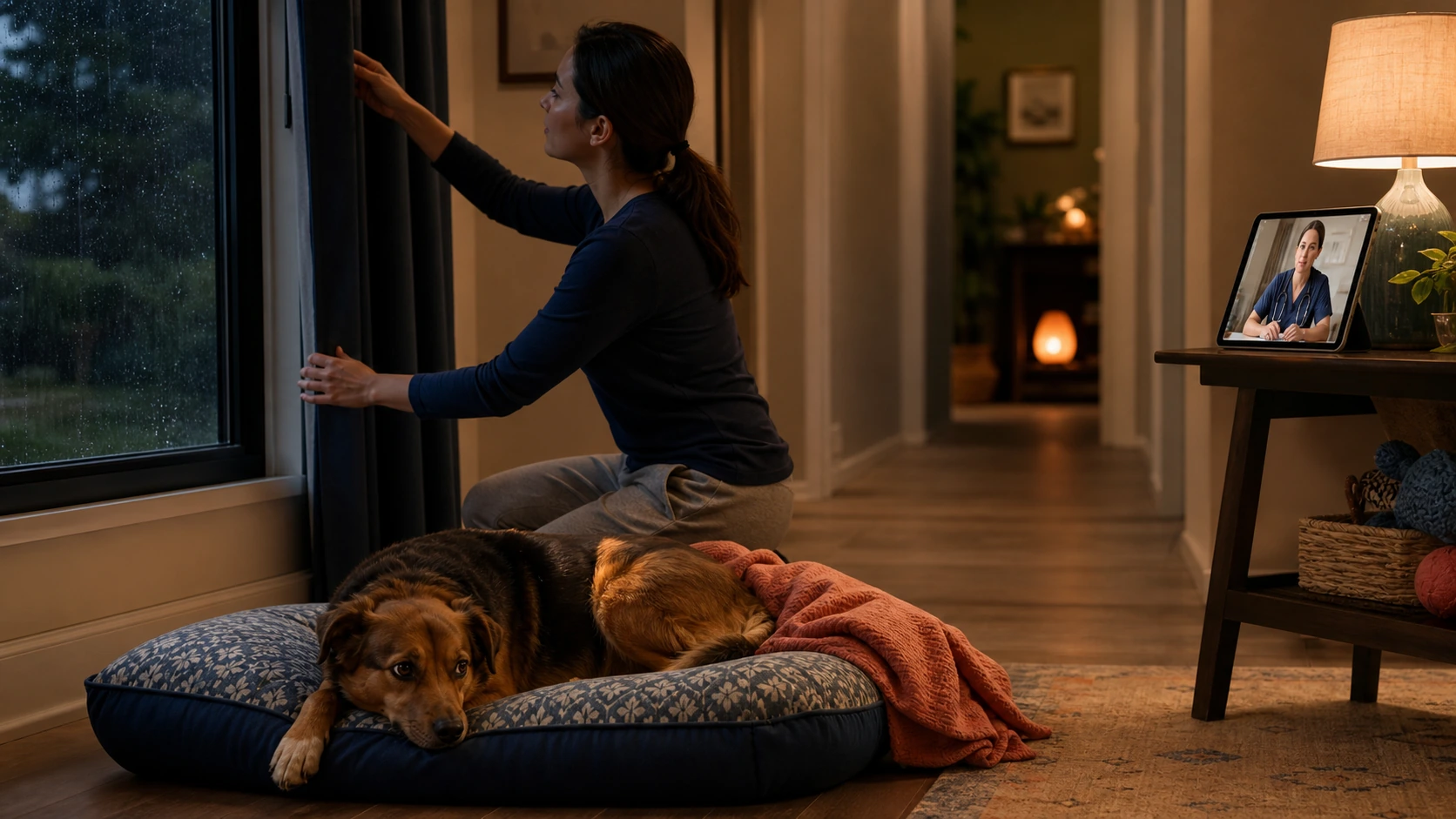
A storm is not one sound. Thunder may arrive with changing barometric pressure, wind, rain, static, vibration, darkness, flashes, household activity, and the owner's own preparation. Some dogs react before people hear thunder, and responses can become anticipatory or spread to rain, weather alerts, or seasonal contexts. A storm-specific history helps separate assumptions from observable patterns.
Short answer
Storm fear is often multi-sensory and may escalate without early planning
Dogs may pant, pace, tremble, hide, vocalize, cling, refuse food, eliminate, destroy barriers, or attempt escape during storms. Signs and triggers differ among individuals. Management should begin before the event when possible, protect physical safety, avoid punishment and forced exposure, and connect severe or worsening fear with veterinary assessment. [1] [2]
- Prepare a secure interior retreat, identification, exit controls, toileting plan, and veterinary instructions before storm season.
- Track weather cues, onset, behavior, peak intensity, and recovery instead of assuming thunder is the only trigger.
- Use reward-based support within the dog's coping range; a real storm is not the time for an exposure test.
Safety first
A storm response can become a physical emergency
Seek urgent help for self-injury, escape into traffic or severe weather, collapse, breathing difficulty, overheating, ingestion of debris or toxins, prolonged inability to recover, or a sudden severe behavior change. Contact the veterinarian promptly when storms repeatedly cause panic or prevent normal eating, drinking, elimination, or sleep.
- Check gates, doors, windows, screens, crates, and identification before the forecast event.
- Do not confine a dog in a crate during storms if confinement itself triggers frantic escape or injury.
- Do not use punishment, aversive devices, forced exposure, human medication, or last-minute unreviewed products.
Veterinary note
This article is educational and does not diagnose, treat, prescribe, or replace care from a licensed veterinarian. Your dog’s history, examination, diet, medications, and current signs determine what is appropriate.
Map the storm-specific pattern
Record forecast conditions, wind and rain onset, distant thunder, flashes, household lights, alerts, time of day, location, and the dog's first sign. Note whether the response begins before audible thunder, follows a flash, or occurs with similar non-storm cues. This does not identify a hidden sense, but it helps define the practical trigger set.
Thunderstorm phobia and general noise phobia can overlap but are not identical. An older clinical case series found different risk associations and ages of onset across separation anxiety, thunderstorm phobia, and noise phobia. Its design cannot establish causes, yet it supports asking about multiple behavior domains rather than treating every case as the same condition. [3]

Prepare the environment in advance
Choose an interior location the dog already uses voluntarily. Reduce access to windows when that helps, provide familiar bedding and water, add steady background sound only if tolerated, and keep routes to exits secured. Practice quiet access on ordinary days. Do not suddenly lock the dog into a novel room when the storm begins.
Plan necessary toileting before the storm when possible and use secure handling if an outdoor trip is unavoidable. Keep microchip and identification information current. A dog that usually seeks a person may benefit from calm proximity; another may prefer distance. Follow the dog's safe choice rather than imposing contact. [1]
Use behavior work at the right time and intensity
Recorded thunder can be part of carefully structured behavior work, but it lacks the full storm environment. The volume must begin below the reaction threshold and be paired with something the dog values. If the dog stops eating, scans, freezes, tries to leave, or shows escalating tension, the exercise is too difficult.
Punishment cannot make fear safe and may add the owner or context to the threat picture. AVSAB recommends reward-based methods and cautions against aversive techniques. A veterinary behavior professional can design work for complex cases, coordinate medication decisions with medical care, and address confinement, separation, or generalized anxiety at the same time. [2] [4]
Coordinate veterinary treatment before the forecast
The veterinarian reviews health, pain, age-related change, other fears, medications, supplements, and the storm pattern. Some plans include medication, but selection, trial timing, safety screening, and dosing are individual medical decisions. Waiting until the dog is panicking can limit both effectiveness and learning.
Create written instructions for forecast days: when to prepare the retreat, what observations to record, what the expected response is, which adverse effects matter, and when to call. Do not change several variables at once unless safety requires it.
Measure progress through welfare and function: earlier retreat use, lower peak intensity, reduced escape behavior, ability to eat, shorter recovery, and restored sleep. A dog may still notice thunder while coping more safely. Reassess when the pattern worsens, generalizes, or changes with pain, hearing, vision, or cognition. [1] [2]
Prepare for a focused veterinary conversation
Bring a concise timeline, short natural-movement or symptom videos when safe, the exact names and photographs of every food, treat, medication, and supplement label, and notes about appetite, water intake, stool, sleep, activity, comfort, and behavior. Include recent injuries, travel, boarding, diet changes, missed medication, and previous test results. A complete record helps the veterinary team separate a repeatable pattern from a single impression.
Decide in advance what you need from the visit: an urgency decision, a diagnosis plan, a nutrition review, a pain or mobility assessment, or a monitored trial. Ask what result would change the plan and what finding would rule an option out. This keeps research and product information in the right role. Evidence can shape questions and expectations, but it cannot determine what is safe for an individual dog without the history and examination.
Owner tool
Prepare a storm-day plan
On a phone, swipe across the table to see every column.
| Phase | Prepare | Observe |
|---|---|---|
| Before season | Veterinary plan and safe retreat | Baseline behavior |
| Forecast day | Secure exits and identification | Earliest cue response |
| During storm | Choice, distance, calm environment | Peak and safety |
| After storm | Quiet recovery and notes | Time to normal function |
Better questions, calmer next steps
Questions to ask your veterinarian
- Which storm cues seem to start the response?
- Could pain, sensory, or cognitive change be contributing?
- Is the chosen retreat safe for this dog?
- Should treatment be trialed before storm season?
- What outcome and stop rules should we track?
FAQ
Why does my dog react before I hear thunder?
Dogs may notice distant sound or other environmental changes; record timing without assuming one sensory cause.
Should I crate my dog?
Only if the crate is already a voluntary safe place and does not trigger confinement distress or escape attempts.
Does comforting reinforce fear?
Fear is not a voluntary behavior; calm support and safety can be offered while respecting the dog's choice.
Can recordings cure storm anxiety?
No. They may support controlled behavior work but do not reproduce every storm cue or replace veterinary care.
When should I seek specialist help?
Seek help for severe, worsening, generalized, injurious, or treatment-resistant fear.
Sources
- Cornell University College of Veterinary Medicine: Fear of Fireworks and Thunderstorms. Storm signs, safety planning, and referral context.
- Frontiers in Veterinary Science: Therapy and Prevention of Noise Fears in Dogs. Evidence hierarchy and multimodal management.
- Journal of the American Veterinary Medical Association: Risk Factors and Age of Onset for Canine Anxiety Conditions. Clinical distinctions and association limits.
- American Veterinary Society of Animal Behavior: Position Statements. Humane reward-based behavior guidance.
- Scientific Reports: Canine Anxiety in 13,700 Finnish Pet Dogs. Population-level anxiety associations and comorbidity context.
