Large and giant dogs can be predisposed to developmental orthopedic conditions, including hip and elbow dysplasia, but breed or size does not predict how one dog feels or functions. Genetics, growth, conformation, body condition, injury, environment, and other disease interact. The owner cannot reshape a joint through a supplement or generic exercise plan, but can protect complete growth nutrition, avoid excess energy and unplanned calcium, maintain an appropriate body condition, provide traction, build activity progressively, and record changes early. Limping, reluctance, altered posture, difficulty rising, reduced endurance, or loss of muscle deserves prompt assessment even when both limbs appear equally affected or the change seems mild. Do not wait for a young dog to outgrow repeated lameness or assume an older large dog is slowing down normally. Diagnosis may require orthopedic examination and imaging, and treatment choices depend on age, condition, severity, pain, function, and household goals.
Short answer
Large size changes risk, not the need for an individual diagnosis
ACVS describes hip dysplasia as a developmental condition in which joint laxity can lead to pain and progressive change, and elbow dysplasia as a group of developmental abnormalities common in large and giant breeds. Both require examination and appropriate imaging. [1] [2]
- Start with the individual dog's baseline, complete history, and veterinary plan.
- Record function and change over time instead of assigning a diagnosis from one sign.
- Use environment, nutrition, conditioning, and handling as coordinated supports, not substitutes for care.
- Escalate sudden, severe, persistent, or rapidly worsening signs promptly.
Safety first
Sudden inability to bear weight, severe pain, or trauma needs prompt care
Seek urgent veterinary care after major trauma, an obvious deformity, severe or rapidly worsening pain, inability to stand, dragging limbs, loss of bladder control, collapse, or systemic illness. Contact a veterinarian for any persistent or recurrent limp, joint swelling, reluctance to move, difficulty rising, or unexplained loss of muscle. Do not force a painful dog to walk for comparison.
- Do not use this article to diagnose, manipulate a joint, or calculate treatment.
- Do not force activity, food, water, or handling when a dog is distressed or painful.
- Seek urgent veterinary care for collapse, breathing difficulty, severe pain, major trauma, or rapid decline.
Veterinary note
This article is educational and does not diagnose, treat, prescribe, or replace care from a licensed veterinarian. Your dog’s history, examination, diet, medications, and current signs determine what is appropriate.
Protect controlled growth without nutrient improvisation
Choose a complete and balanced growth food appropriate for the expected adult size. Measure the entire intake, including treats and toppers, and monitor body and muscle condition with the veterinary team.
ACVS notes that hip dysplasia is multifactorial, with heredity a major risk and rapid weight gain or growth from excessive nutritional intake able to complicate development. That does not mean food alone causes or cures the condition. [1]
Do not add calcium, minerals, oils, or joint products to a complete puppy diet unless the individual veterinary nutrition plan identifies a reason. More nutrient is not automatically safer for a growing skeleton.
Observe gait and function across everyday tasks
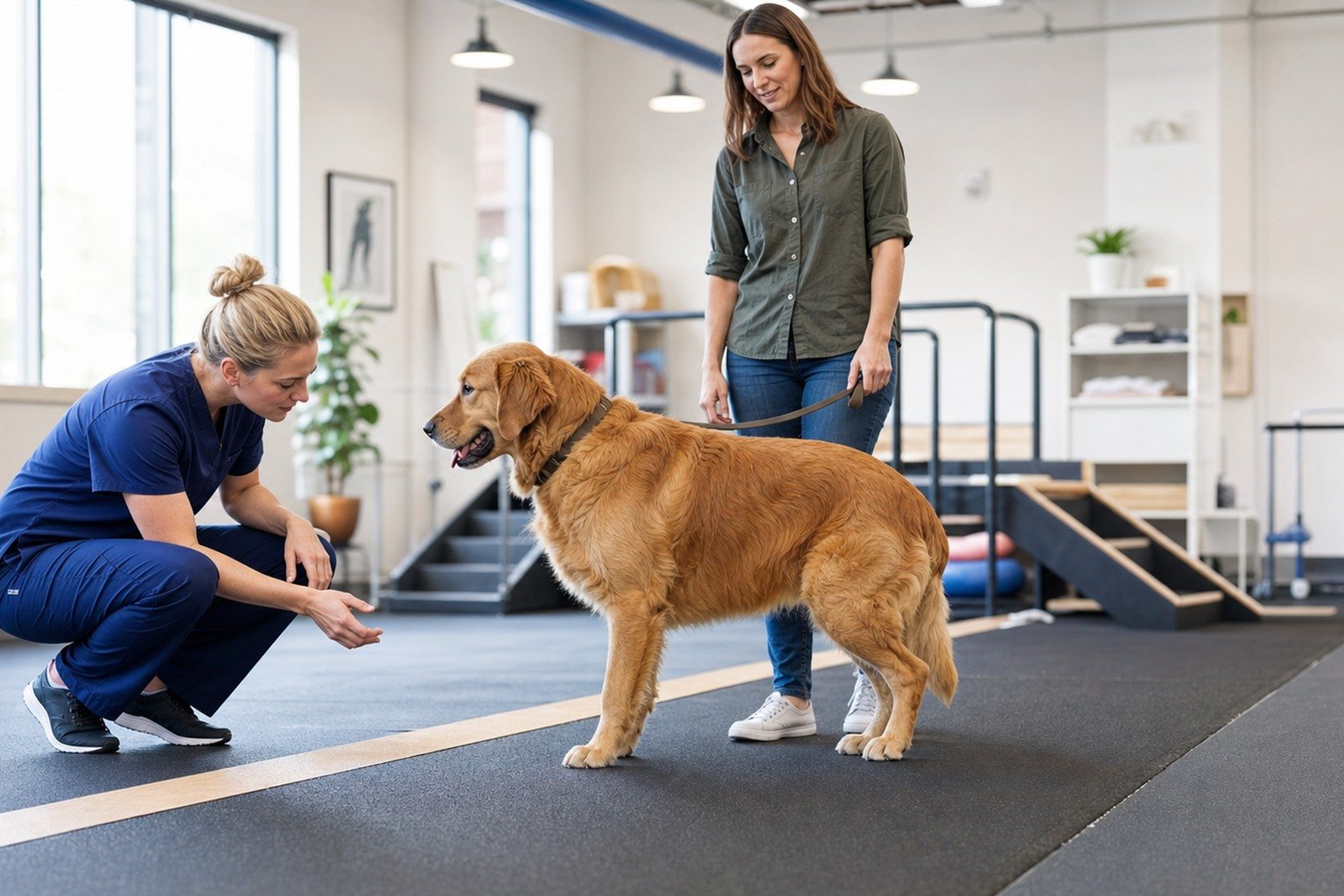
Watch rising, sitting, stairs, getting into a vehicle, turning, trotting, play, toileting, and recovery after activity. Record surface, duration, side, warm-up effect, and whether the change repeats.
When both elbows or hips are involved, a dog may shorten stride, shift weight, tire early, or resist activity without an obvious one-sided limp. ACVS reports bilateral elbow involvement is common, which can make asymmetry harder to see. [2]
Video the dog moving naturally from front, rear, and side when safe. Do not repeatedly provoke jumping, stairs, or fatigue to obtain footage.
Use body condition, traction, and movement as coordinated supports
Maintain a veterinarian-defined healthy body condition and monitor muscle. Excess load can compound pain and mobility limits, while excessive calorie restriction can compromise nutrition and lean tissue.
Provide secure footing, trimmed nails, clear pathways, suitable rest, and controlled access to stairs and vehicles. Environment changes support function but do not correct dysplasia or replace pain assessment.
Build age-appropriate activity progressively. Avoid weekend surges, forced running, repeated high-impact drills, and copying another dog's rehabilitation program. Movement plans change with diagnosis and growth stage.
Discuss screening, imaging, and treatment options early
Ask about breed and family history, screening recommendations, and whether a young dog's signs warrant referral. A normal-looking home video does not exclude developmental disease, and radiographic findings do not always match pain severity.
Hip and elbow evaluation may include palpation, gait examination, radiographs, sedation, or advanced imaging. The purpose is to identify the affected structures and stage, not simply to label the breed.
Management can include weight optimization, activity modification, rehabilitation, medication, and selected surgery. [3] [4] [5] Decisions are individualized; supplements cannot realign a malformed joint or guarantee prevention.
Prepare for a focused veterinary conversation
Bring a concise timeline, short natural-movement or symptom videos when safe, the exact names and photographs of every food, treat, medication, and supplement label, and notes about appetite, water intake, stool, sleep, activity, comfort, and behavior. Include recent injuries, travel, boarding, diet changes, missed medication, and previous test results. A complete record helps the veterinary team separate a repeatable pattern from a single impression.
Decide in advance what you need from the visit: an urgency decision, a diagnosis plan, a nutrition review, a pain or mobility assessment, or a monitored trial. Ask what result would change the plan and what finding would rule an option out. This keeps research and product information in the right role. Evidence can shape questions and expectations, but it cannot determine what is safe for an individual dog without the history and examination.
Owner tool
Track a large dog's joint development
On a phone, swipe across the table to see every column.
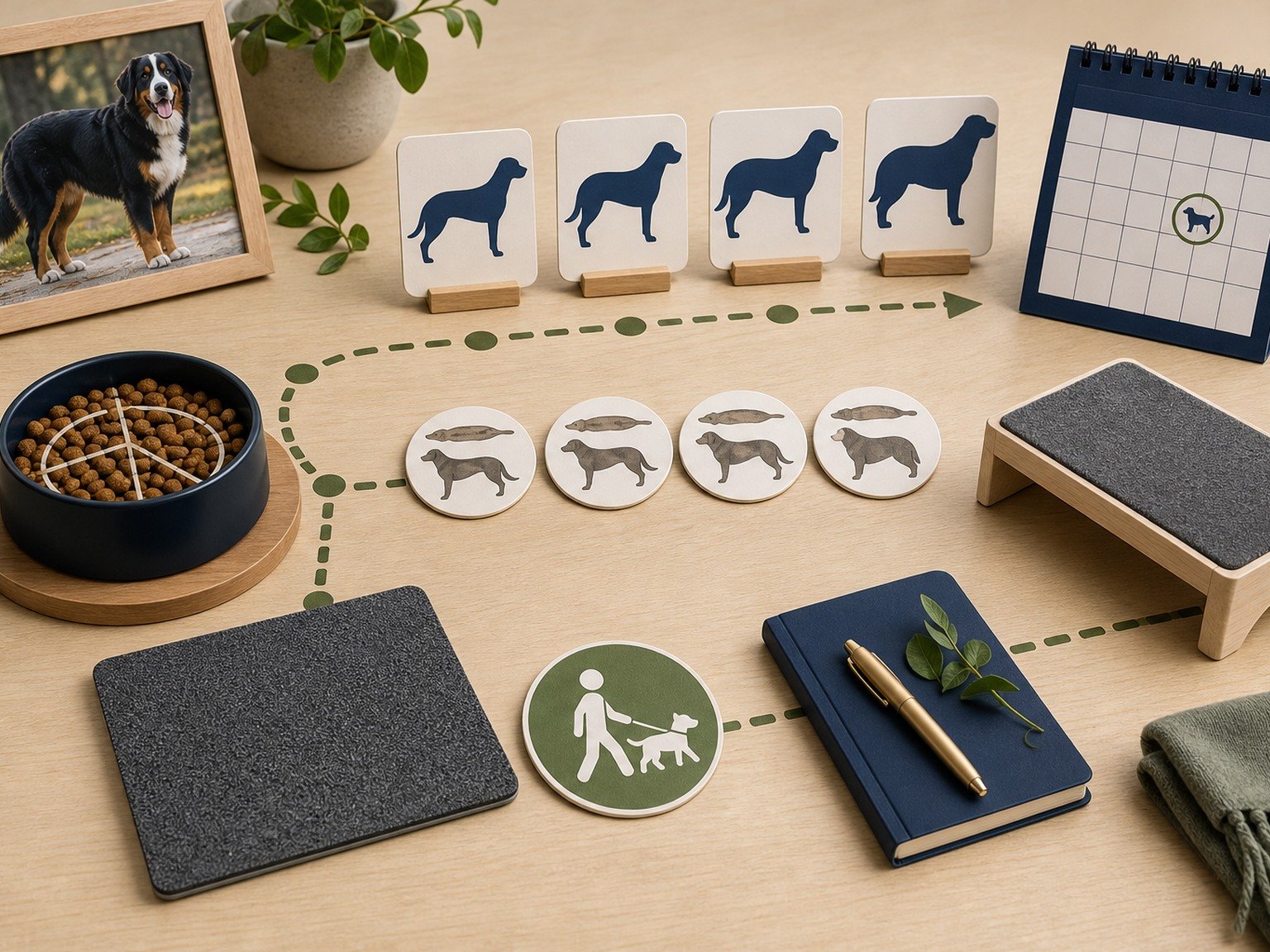
| Checkpoint | What to record | Why it helps |
|---|---|---|
| Growth | Food, weight, body and muscle | Protects context |
| Function | Rise, gait, stairs, recovery | Finds change |
| Environment | Traction, steps, vehicle access | Reduces challenge |
| Assessment | Exam, imaging, plan, review | Guides care |
Better questions, calmer next steps
Questions to ask your veterinarian
- Is growth and body condition appropriate?
- Does breed or family history change screening?
- Could both limbs be affected without a clear limp?
- Which activities are safe now?
- When should orthopedic referral or imaging occur?
FAQ
Do all large dogs develop dysplasia?
No. Risk is not certainty.
Can calcium prevent joint disease?
Unplanned supplementation can disrupt a complete growth diet.
Will a puppy outgrow limping?
Repeated or persistent lameness needs assessment.
Does a normal walk rule out joint disease?
No. Signs can be subtle or bilateral.
Can a supplement reshape a hip or elbow?
No. Structural disease needs veterinary evaluation.
Sources
- American College of Veterinary Surgeons: Canine Hip Dysplasia. Development, signs, diagnostics, and treatment.
- American College of Veterinary Surgeons: Canine Elbow Dysplasia. Developmental elbow disease and bilateral signs.
- American Animal Hospital Association: 2021 Nutrition and Weight Management Guidelines. Growth, diet history, body condition, and nutrition.
- American College of Veterinary Surgeons: Osteoarthritis in Dogs. Secondary OA and functional signs.
- American Animal Hospital Association: Nonpharmacologic Modalities for Pain Management. Weight, movement, rehabilitation, and pain context.
