

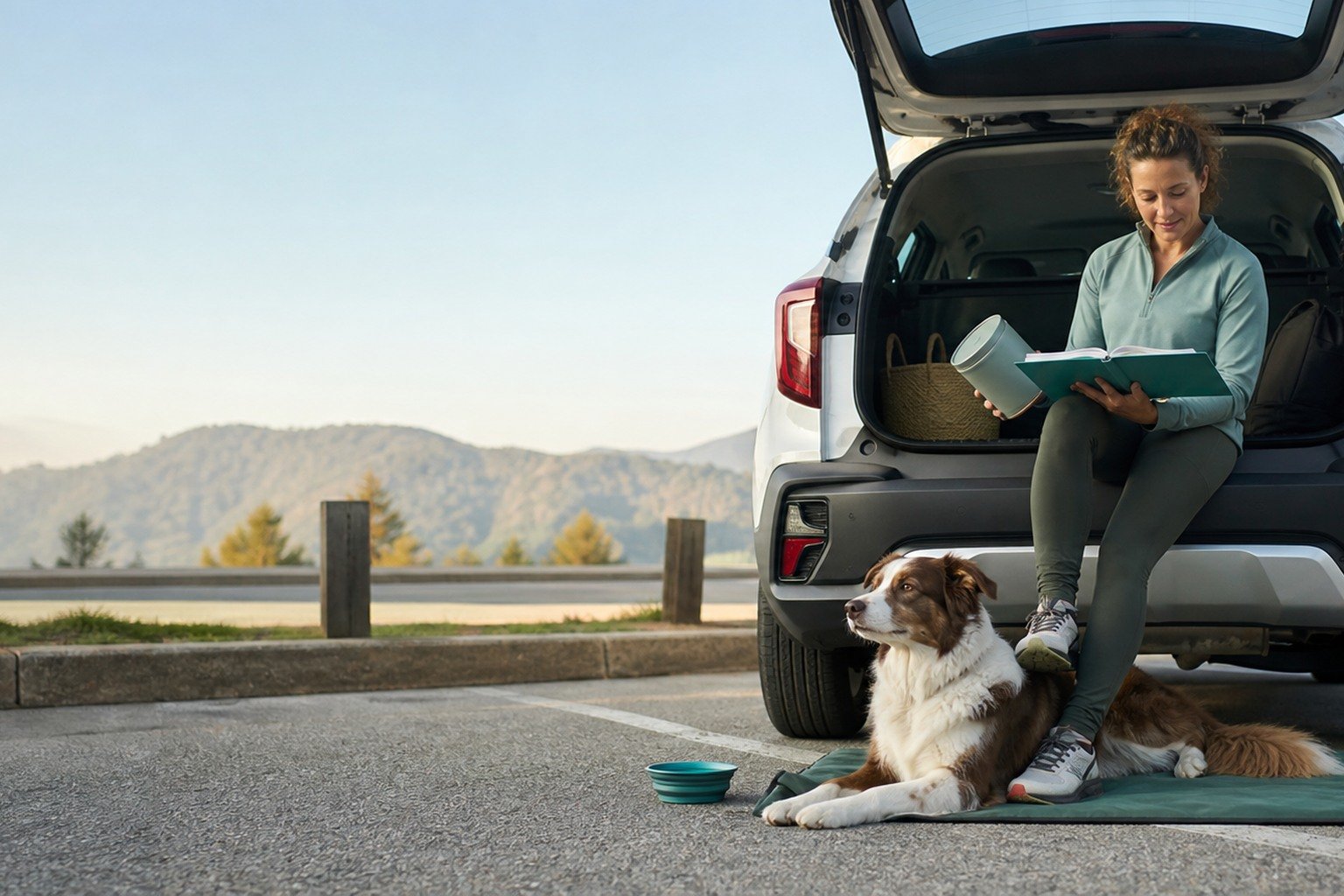
Travel changes meal timing, water sources, motion, temperature, activity, sleep, toileting access, parasite exposure, and emotional arousal. Any of those changes can coincide with loose stool, vomiting, appetite change, or discomfort, but a familiar pattern still does not prove the cause or make the trip safe to self-treat. Prepare while the dog is stable. Ask whether the current condition, medication schedule, diet, age, airway, anxiety, or previous travel response changes the route or mode of travel. Carry enough familiar complete food and required treatment in original, traceable packaging; plan safe water and rest stops; identify destination and emergency clinics; and verify legal entry requirements early. Keep the dog securely restrained and supervised. If signs begin, record what changed and contact a veterinarian according to the prearranged threshold rather than adding human medication, withholding prescribed treatment, or trying several new products.
Short answer
Protect routine, traceability, and access to care
CDC travel guidance recommends planning ahead, current identification and vaccination, secure transport, familiar food and water supplies, medication, documents, frequent stops, and destination veterinary contacts. Requirements and individual health needs should be checked before departure. [1]
- Start with the individual dog's baseline, complete history, and veterinary plan.
- Record function and change over time instead of assigning a diagnosis from one sign.
- Use environment, nutrition, conditioning, and handling as coordinated supports, not substitutes for care.
- Escalate sudden, severe, persistent, or rapidly worsening signs promptly.
Safety first
Severe GI signs, heat illness, and inability to maintain intake can end the trip
Seek urgent veterinary care for repeated vomiting, blood, severe or enlarging abdominal pain, unproductive retching, collapse, breathing difficulty, marked weakness, pale gums, heat-related distress, toxin or foreign-object exposure, or inability to keep water down. Do not force food or water, give human antidiarrheals, or continue traveling while a dog is unstable.
- Do not use this article to diagnose, manipulate a joint, or calculate treatment.
- Do not force activity, food, water, or handling when a dog is distressed or painful.
- Seek urgent veterinary care for collapse, breathing difficulty, severe pain, major trauma, or rapid decline.
Veterinary note
This article is educational and does not diagnose, treat, prescribe, or replace care from a licensed veterinarian. Your dog’s history, examination, diet, medications, and current signs determine what is appropriate.
Plan with the veterinary team before departure
Share destination, route, dates, transport method, climate, altitude, lodging, activities, food and water plan, prior motion or GI signs, chronic conditions, medications, preventives, and the location of routine and emergency clinics. Ask whether the dog is medically fit for the proposed trip.
Verify vaccination, identification, health certificate, testing, treatment, airline, state, territory, transit-country, and destination requirements. USDA APHIS notes that requirements differ and can take weeks or months; confirm the current rules for every trip. [2]
Request written medication instructions for time-zone changes, missed or vomited doses, food requirements, and emergencies. Do not calculate a new schedule or use sedatives, antinausea drugs, or supplements without individual direction.
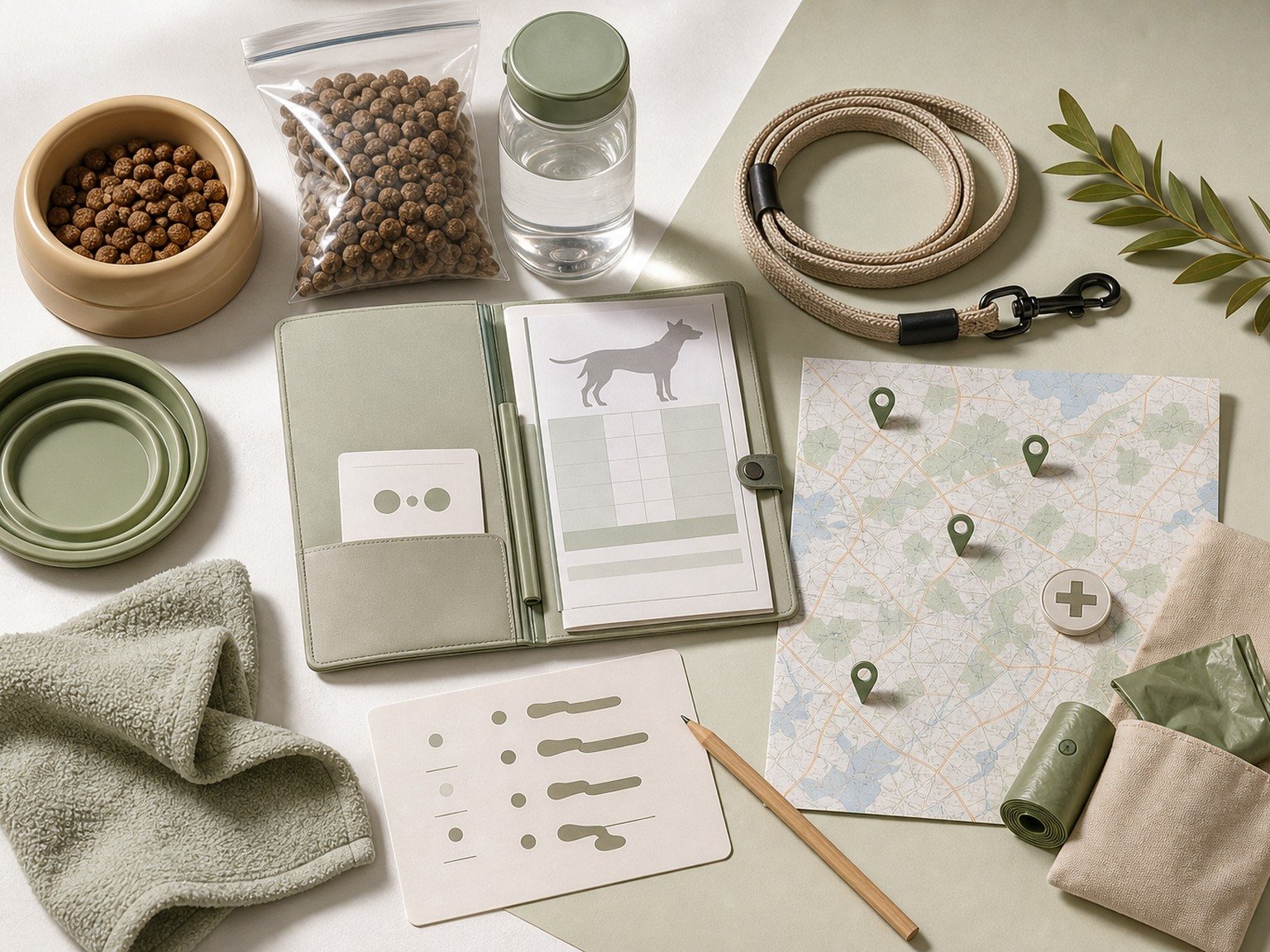
Pack a stable, traceable food and water system
Bring enough of the dog's familiar complete diet plus a reasonable contingency amount. Keep product identity, lot, storage instructions, and packaging available; avoid decanting everything into an unlabeled container.
Measure meals and treats, and record administration. Travel snacks, chews, restaurant food, and well-meaning handouts can create a large diet change. Do not introduce a new probiotic, rich chew, electrolyte drink, or novel diet immediately before or during travel unless the veterinary plan calls for it.
Carry water and clean bowls, and prevent drinking from stagnant, discolored, foamy, foul-smelling, or visibly contaminated water. CDC warns that unsafe recreational water and travel exposures can cause illness. [1]
Reduce transport stress without hiding medical signs
Acclimate through short practice trips when time and health allow. Use a well-ventilated secured crate or appropriate vehicle restraint, comfortable temperature, nonslip footing, and planned quiet breaks. Never allow roaming in the vehicle or leave a dog unattended in a parked car.
Keep meals, toileting, sleep, and activity as predictable as practical. A dog who is panting, drooling, restless, nauseated, painful, or fearful needs reassessment; do not assume every sign is behavioral or every episode is motion sickness.
Air travel adds carrier, temperature, timing, airway, and regulatory considerations. Dogs who are very young, older, chronically ill, or short-nosed may face additional risk, and some trips should be postponed or redesigned. [3]
Track changes during travel and after returning
Record food, water, stool, vomiting or regurgitation, appetite, urine, energy, pain, temperature context, medications, treats, scavenging, animal contact, water exposure, and travel stage. Note whether companions are ill.
Use the predetermined call threshold. A brief isolated change in an otherwise normal dog may be handled differently from recurrent diarrhea, blood, pain, weight loss, dehydration, or systemic illness; only the veterinary professional can triage the complete context.
Continue observations after arrival and after returning home. Parasite, infectious, dietary, and stress-related signs can appear later. [4] [5] Tell the clinic where the dog traveled and what exposures occurred rather than describing only the stool.
Prepare for a focused veterinary conversation
Bring a concise timeline, short natural-movement or symptom videos when safe, the exact names and photographs of every food, treat, medication, and supplement label, and notes about appetite, water intake, stool, sleep, activity, comfort, and behavior. Include recent injuries, travel, boarding, diet changes, missed medication, and previous test results. A complete record helps the veterinary team separate a repeatable pattern from a single impression.
Decide in advance what you need from the visit: an urgency decision, a diagnosis plan, a nutrition review, a pain or mobility assessment, or a monitored trial. Ask what result would change the plan and what finding would rule an option out. This keeps research and product information in the right role. Evidence can shape questions and expectations, but it cannot determine what is safe for an individual dog without the history and examination.
Owner tool
Build a travel digestion record
On a phone, swipe across the table to see every column.
| Checkpoint | What to record | Why it helps |
|---|---|---|
| Before | Baseline, diet, medicines, documents | Prepares plan |
| Route | Stops, climate, clinics, restraint | Controls context |
| Daily | Food, water, stool, vomit, energy | Finds change |
| Escalation | Signs, call threshold, packaging | Speeds care |
Better questions, calmer next steps
Questions to ask your veterinarian
- Is this dog fit for this route and transport method?
- What documents and preventives are required?
- How should medicines and meals be handled across the schedule?
- Which signs should end travel and trigger urgent care?
- Which destination clinic has the dog's record?
FAQ
Should I change food before a trip?
Avoid unnecessary changes; use the veterinary diet plan.
Can I give a human antidiarrheal?
Not without veterinary direction.
Is bottled water always required?
Use a safe, reliable source and the dog's individual plan.
Should I fast my dog before travel?
Follow veterinary and carrier-specific guidance rather than a universal rule.
Do domestic trips require paperwork?
Requirements vary by destination and carrier; verify current rules.
Sources
- Merck Veterinary Manual: Planning for Travel With Pets. Preparation, identification, supplies, health, and travel planning.
- USDA Animal and Plant Health Inspection Service: Pet Travel Process Overview. Destination requirements and certificate planning.
- Merck Veterinary Manual: Traveling by Car With Pets. Vehicle acclimation, restraint, breaks, and travel safety.
- Companion Animal Parasite Council: General Guidelines. Travel, geography, and parasite-risk planning.
- World Small Animal Veterinary Association: Global Nutrition Toolkit. Diet history and nutrition assessment.
