

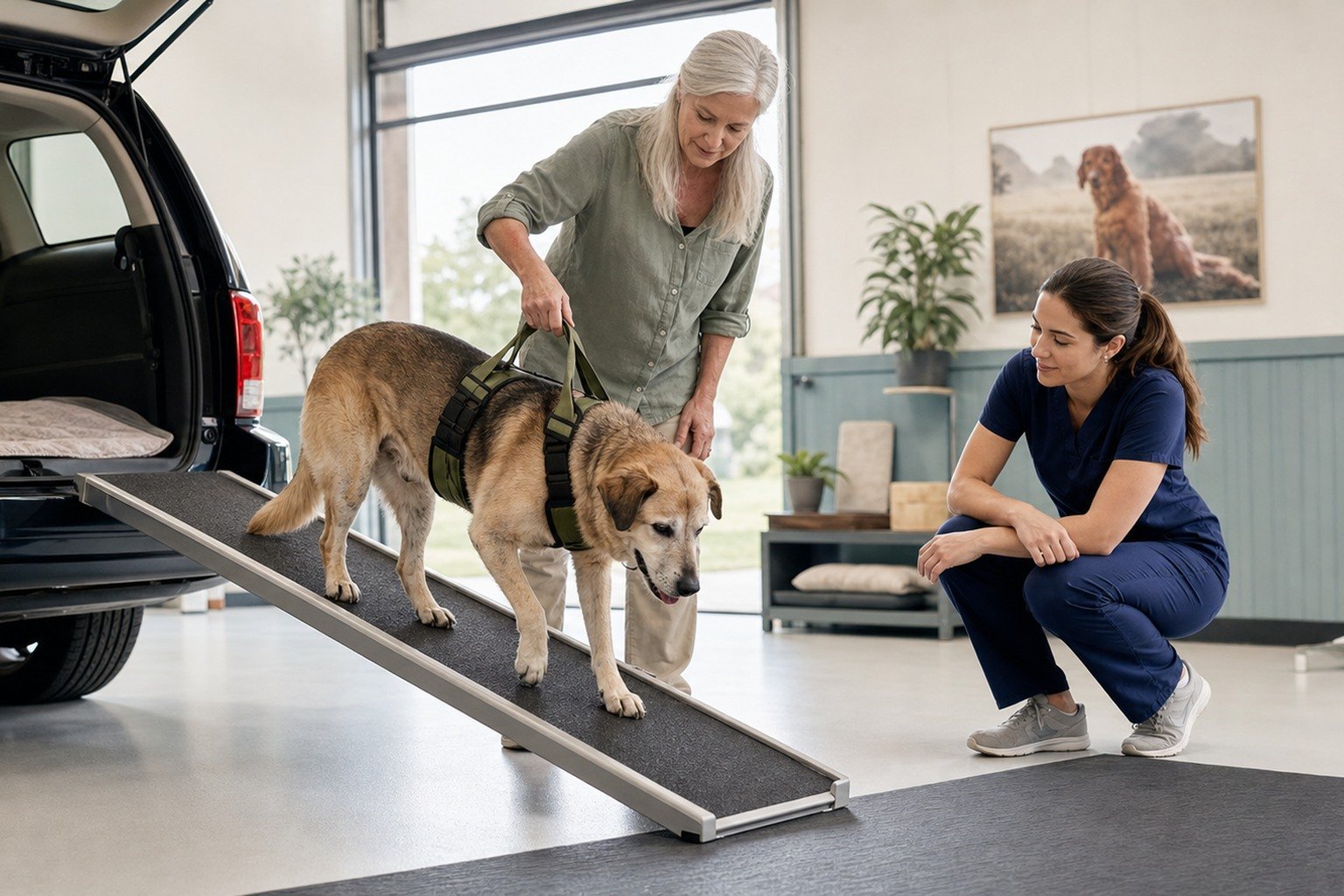
Travel can change footing, vehicle access, rest, temperature, activity, medication timing, toileting, sleep, and access to veterinary care. For a dog with osteoarthritis or another joint condition, those changes may expose a narrow comfort margin, but there is no single evidence-based ramp, break schedule, bed, lifting method, or route that suits every patient. Start with the dog's diagnosis, usual gait, pain control, stamina, other diseases, and previous travel response. Ask whether the proposed trip is reasonable now, how prescribed treatment should be handled, and which changes should end the trip. Prepare secure transport and familiar supports that the dog has already used safely. Record function before, during, and after travel. New severe pain, trauma, inability to bear weight or rise, or a major decline requires prompt veterinary assessment rather than a home medication change.
Short answer
Decide whether this trip fits the dog's current function
AAHA travel guidance emphasizes pre-trip veterinary planning, records, identification, restraint, supplies, and destination care. Pain guidance adds repeated assessment of function and individualized environmental support. Together, those sources support a patient-specific plan, not a universal joint-travel protocol. [1] [2]
- Start with the individual dog's baseline, history, environment, and veterinary plan.
- Record context, function, and recovery instead of assigning a diagnosis from one sign.
- Use calm management and reward-based support without forced exposure or punishment.
- Escalate sudden, severe, persistent, or rapidly worsening changes promptly.
Safety first
Severe pain, trauma, or lost function should stop the trip
Seek prompt veterinary care for major trauma, an obvious deformity, sudden non-weight-bearing lameness, inability to stand or rise, dragging limbs, loss of coordination, severe or rapidly worsening pain, collapse, breathing distress, or a marked change from baseline. Do not give human pain medicine, increase a prescription, manipulate a joint, or force the dog through a transfer.
- Do not use this article to diagnose anxiety, pain, digestive disease, or an orthopedic condition.
- Do not force movement, exposure, food, water, or handling when a dog is distressed or painful.
- Seek urgent veterinary care for collapse, breathing difficulty, severe pain, major trauma, or rapid decline.
Veterinary note
This article is educational and does not diagnose, treat, prescribe, or replace care from a licensed veterinarian. Your dog’s history, examination, diet, medications, and current signs determine what is appropriate.
Start with a fit-to-travel veterinary conversation
Share the route, dates, transport mode, climate, lodging, expected surfaces, stairs, vehicle access, activities, and distance from care. Add the dog's orthopedic diagnosis, baseline gait, pain behaviors, stamina, body and muscle condition, other diseases, medications, supplements, previous travel response, and any recent change. A trip that was manageable last year may not fit today's function.
Ask for exact written instructions for every prescribed medicine, including food requirements, storage, time-zone changes, missed or vomited doses, and the threshold for calling. Do not add a sedative, pain reliever, anti-inflammatory, supplement, or leftover prescription because travel seems harder. Multimodal pain care is selected and reassessed for the individual patient. [2]
Confirm identification, records, legal requirements, routine and emergency clinic contacts, and how records can be transferred. AAHA recommends advance planning rather than waiting for a problem at the destination. [1] If the dog is unstable, recovering from injury or surgery, or cannot use the required transport safely, postponing or redesigning the trip may be the safest decision.
Test access and restraint before departure
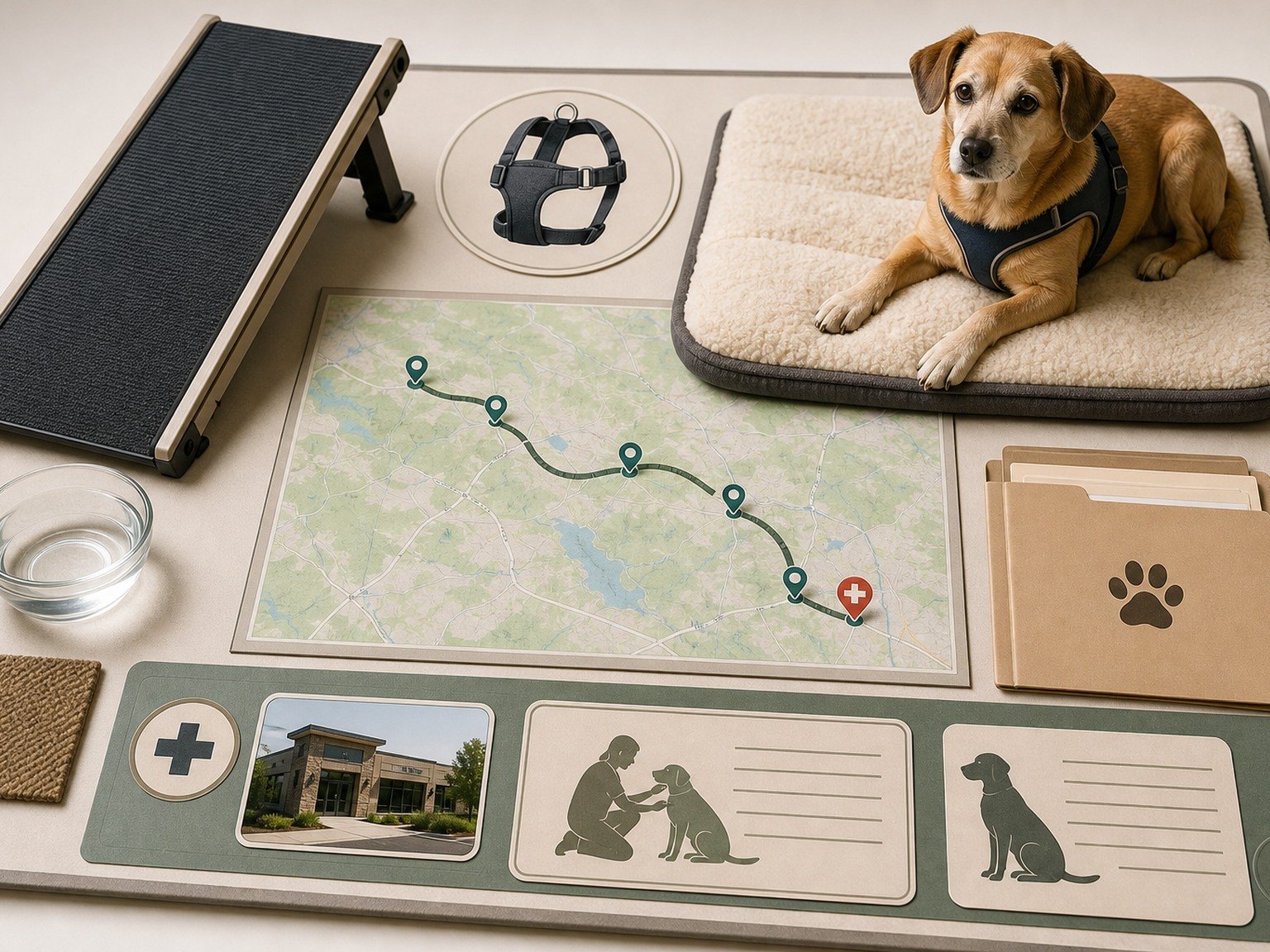
Practice the exact vehicle entry, carrier, ramp, step, harness, bedding, and footing while the dog is rested and the vehicle is parked. The goal is not to make the dog complete a device trial; it is to learn whether the setup is stable, appropriately fitted, accepted without distress, and physically manageable for both dog and caregiver.
Use secure restraint and enough space for a comfortable posture without allowing the dog to roam. Add nonslip footing where paws land and remove unstable mats, narrow gaps, and trip hazards. Ramps and support harnesses are options, not automatic solutions. The angle, grip, fit, dog, vehicle, and caregiver capacity determine whether an aid is useful or unsafe. [3]
Never pull a dog up a ramp, lift by the limbs, or improvise a transfer method from an online demonstration. If the dog cannot enter, exit, turn, lie down, or toilet without a meaningful decline, ask the veterinary or rehabilitation team to reassess the plan rather than repeating the challenge until the dog complies.
Protect routine, rest, and medication traceability
Carry prescriptions in original labeled containers, enough medication and familiar complete food for the planned trip plus a reasonable contingency, water, records, bedding, traction materials, cleanup supplies, and contact information. Keep a written administration log so a handoff between caregivers does not create a missed or duplicate dose.
Plan quiet stops and activity around the dog's normal tolerance, weather, surface, and toileting needs, but avoid a rigid break interval presented as medical advice. A dog who is stiff after rest may need a different strategy from one who worsens with sustained activity. Cornell describes osteoarthritis as chronic and progressive, with signs and response varying among dogs. [4]
At the destination, inspect flooring, thresholds, stairs, sleeping access, and outdoor routes before allowing free movement. Preserve familiar routines where possible. A supportive bed or traction mat can improve access or comfort for some dogs, but neither treats the joint disease or guarantees pain relief. Keep the environment simple enough that changes in gait and behavior remain visible.
Monitor the whole trip and the recovery home
Record rising, lying down, weight bearing, stride, posture, turning, toileting, appetite, sleep, willingness, vocalization, panting, licking, medication administration, activity, surface, and recovery. Compare with a calm baseline instead of another dog. Short natural video can help when it is safe and does not provoke movement.
Contact the veterinary team at the agreed threshold. Persistent lameness, swelling, repeated difficulty rising, reduced appetite, sleep disruption, or a steadily shrinking activity tolerance deserves reassessment even if the dog can still walk. Pain is a welfare issue, and apparent stubbornness or anxiety can be a response to discomfort. [5]
Continue the log after returning. Travel-related activity and disrupted rest may reveal change later. Report the complete timeline, not only the worst moment, and include any medication variance, fall, slip, unusual surface, long transfer, or new behavior. The record helps the clinician decide whether the prior plan remains appropriate.
Prepare for a focused veterinary conversation
Bring a concise timeline, short natural-movement or symptom videos when safe, the exact names and photographs of every food, treat, medication, and supplement label, and notes about appetite, water intake, stool, sleep, activity, comfort, and behavior. Include recent injuries, travel, boarding, diet changes, missed medication, and previous test results. A complete record helps the veterinary team separate a repeatable pattern from a single impression.
Decide in advance what you need from the visit: an urgency decision, a diagnosis plan, a nutrition review, a pain or mobility assessment, or a monitored trial. Ask what result would change the plan and what finding would rule an option out. This keeps research and product information in the right role. Evidence can shape questions and expectations, but it cannot determine what is safe for an individual dog without the history and examination.
Owner tool
Build a joint-condition travel record
On a phone, swipe across the table to see every column.
| Checkpoint | What to record | Why it helps |
|---|---|---|
| Baseline | Gait, rising, pain, stamina, sleep | Defines normal |
| Setup | Access, restraint, traction, rest | Tests feasibility |
| During | Function, doses, surfaces, recovery | Finds change |
| Escalation | Red flags, clinic, records, transport | Speeds care |
Better questions, calmer next steps
Questions to ask your veterinarian
- Is this dog medically and functionally fit for the proposed trip?
- How should each prescription be handled across the schedule?
- Which access aids and restraint have been assessed for this dog?
- What change should stop travel and trigger local care?
- How long should function be monitored after returning?
FAQ
Does every dog with arthritis need a ramp?
No. Fit, stability, acceptance, vehicle geometry, and caregiver capacity are individual.
Can I give an extra pain dose for a long trip?
Only with explicit veterinary instructions.
How often should we stop?
Use an individual plan based on the dog, route, weather, and transport rather than a universal interval.
Should the dog rest for the whole vacation?
Activity and rest should follow the veterinary plan and observed tolerance.
What should I bring to a destination clinic?
Bring the medication list, records, diagnosis, recent changes, and the trip timeline.
Sources
- American Animal Hospital Association: Traveling Safely With Your Pet. Pre-trip veterinary consultation, records, restraint, supplies, and destination planning.
- American Animal Hospital Association: 2022 AAHA Pain Management Guidelines. Individual multimodal pain assessment and reassessment.
- American Animal Hospital Association: Pain Management in Senior Pets. Mobility, environmental support, and individualized pain care.
- Cornell University College of Veterinary Medicine: Osteoarthritis. Progressive joint disease, signs, diagnosis, and management.
- American College of Veterinary Surgeons: Osteoarthritis in Dogs. Functional signs, diagnosis, and treatment context.
