

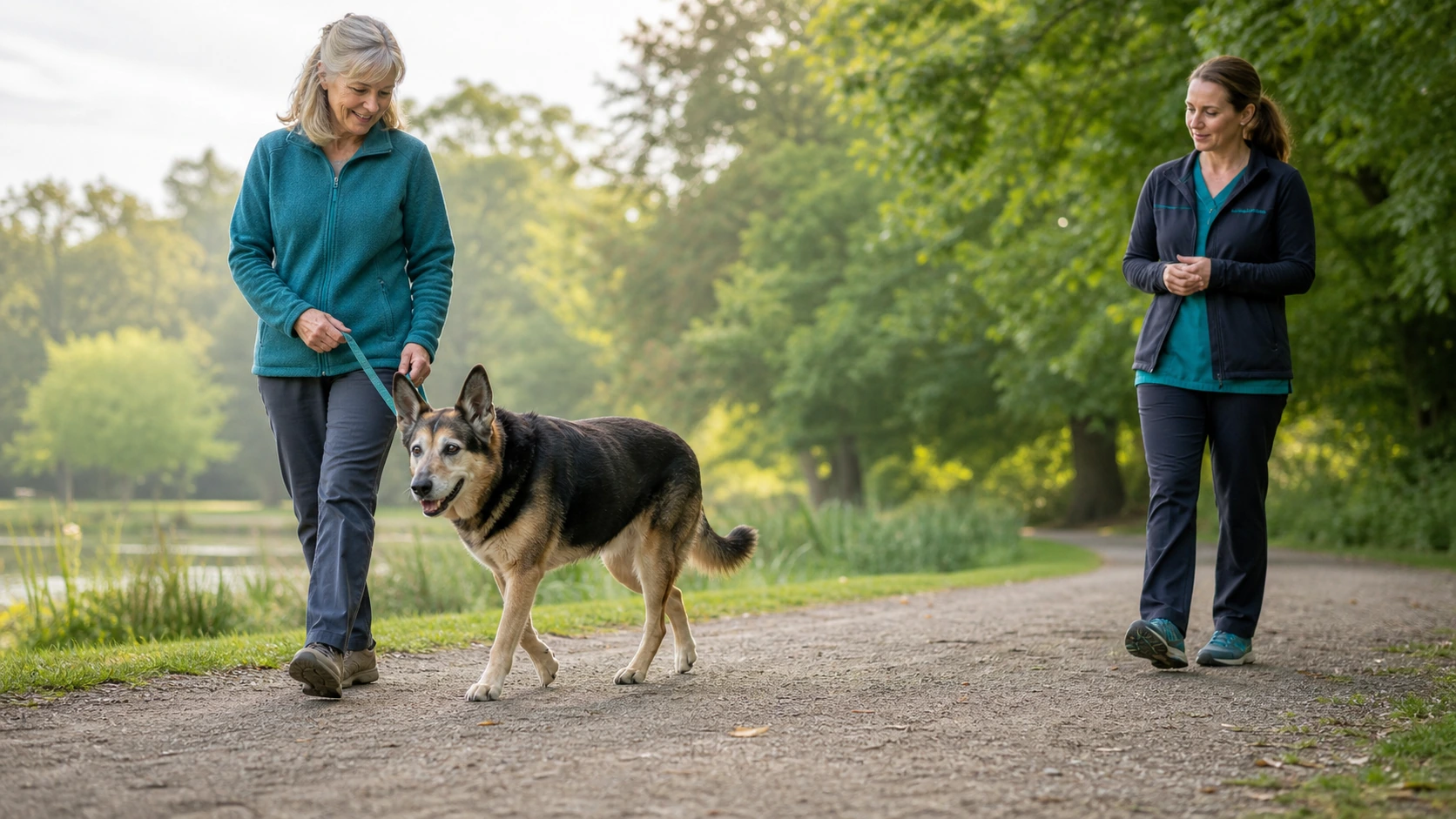
Older dogs still benefit from movement, exploration, social contact, and mental engagement, but senior exercise is not a generic number of minutes or steps. The appropriate activity depends on pain, joint and neurologic health, heart and lung function, body and muscle condition, senses, weather, footing, medication, previous activity, and recovery. The goal is comfortable repeatable function, not exhaustion.
Short answer
Exercise is a dose that includes recovery
Regular activity can support mobility, body composition, engagement, and daily function, but the safest plan is individualized. Veterinary and rehabilitation guidance emphasizes assessment, controlled progression, environmental support, and monitoring rather than a universal senior routine. [1] [2]
- Have new, severe, or rapidly changing mobility or exercise tolerance assessed before increasing activity.
- Choose stable surfaces and predictable movement, then change only one exercise variable at a time.
- Track stiffness, sleep, appetite, breathing, and willingness later that day and the next morning.
Safety first
Stop activity when movement or physiology changes abruptly
Seek urgent veterinary care for collapse, breathing difficulty, blue or very pale gums, inability to stand, sudden non-weight-bearing lameness, severe pain, dragging limbs, loss of coordination, heat illness signs, major trauma, or a swollen painful abdomen. Stop the session and move to safety without forcing the dog to walk farther.
- Do not exercise through a new limp, repeated stumbling, distress, weakness, or refusal.
- Do not use human pain medication or extra doses to make activity possible.
- Do not introduce stairs, unstable balance equipment, swimming, or intense play as an unsupervised test.
Veterinary note
This article is educational and does not diagnose, treat, prescribe, or replace care from a licensed veterinarian. Your dog’s history, examination, diet, medications, and current signs determine what is appropriate.
Establish what limits exercise before choosing it
A senior dog's slowing may reflect osteoarthritis, soft-tissue injury, neurologic disease, heart or lung disease, anemia, endocrine disease, obesity, muscle loss, pain, sensory change, or deconditioning. A history and examination help determine whether movement should continue, be modified, be restricted, or be designed with a rehabilitation professional. [1] [3]
Record ordinary rising, level walking, turning, stairs, toileting, play, and recovery. Capture a short natural video when safe. Include coughing, panting at rest, nighttime restlessness, appetite change, medication timing, recent falls, and surface differences. Do not repeat a difficult task to make the sign more visible.
Use predictable low-load movement as a starting point
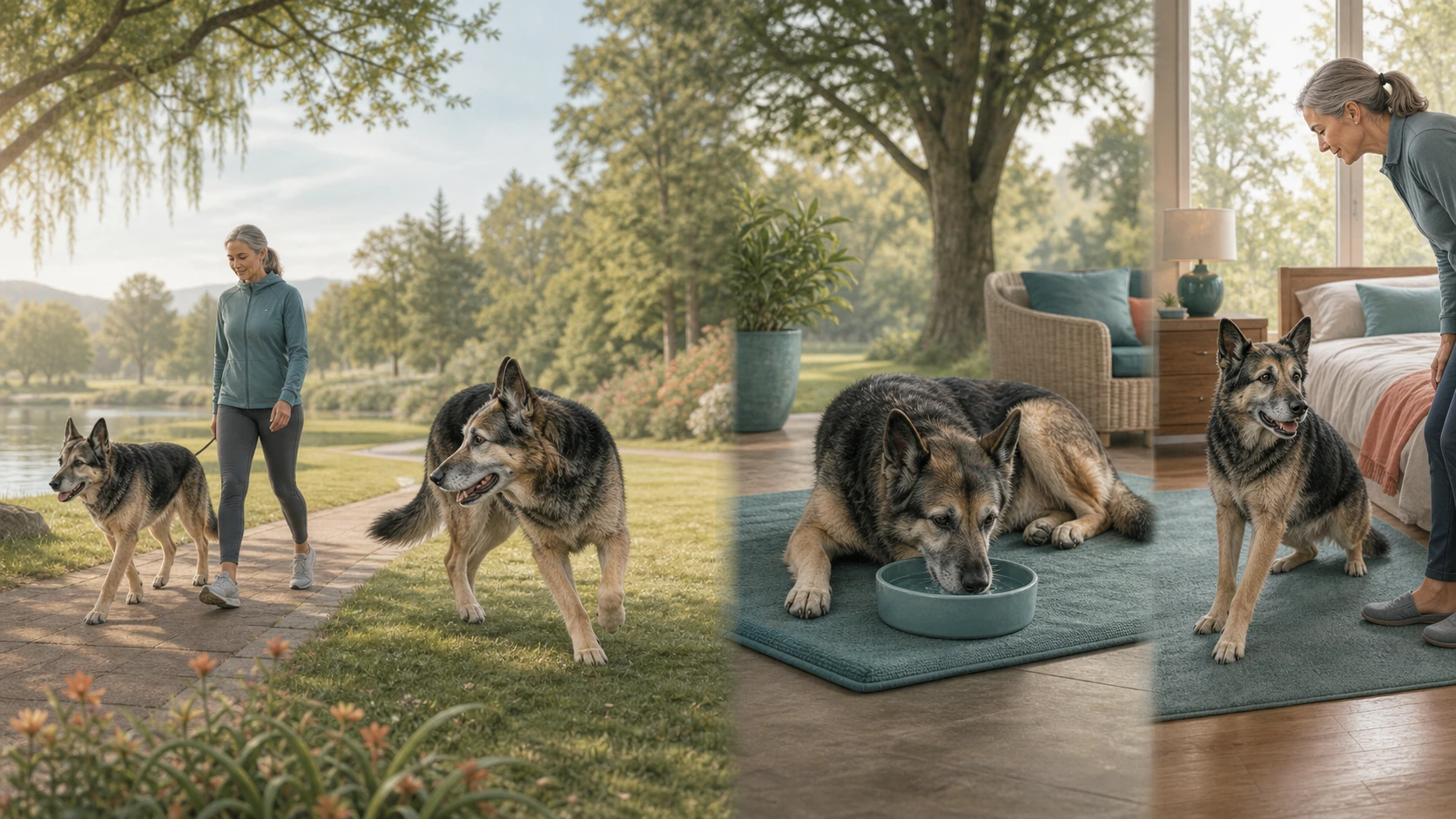
Controlled level walking is often adjustable because pace, duration, turns, and surface can be changed. Shorter sessions may be easier to interpret than one long outing. Wide turns and nonslip footing can reduce avoidable challenge. Sniffing and gentle exploration can add engagement without forcing speed.
Rehabilitation plans may include weight shifts, sit-to-stand variations, low obstacles, range-of-motion work, aquatic exercise, or strength tasks, but each has indications and contraindications. Evidence for individual modalities varies, and correct technique matters. Water activity is not automatically safe because entry, exit, fatigue, temperature, skin, ear, cardiac, and respiratory factors matter. [2] [4]
Progress by response, not enthusiasm
A dog can be excited enough to exceed current capacity. Monitor stride, pace, slips, pauses, willingness, breathing, and ability to recover during the session. Then observe later stiffness, difficulty rising, disturbed sleep, panting, reduced appetite, or reluctance at the next outing.
Change duration, frequency, pace, terrain, or task complexity one at a time. Keep the previous level long enough to observe a pattern and define stop rules with the veterinary team. Medication changes, weight change, a flare, surgery, illness, or new neurologic signs may require a new baseline rather than continued progression. [2]
Adapt the environment and the day
Use traction where the dog starts, turns, eats, and exits. Maintain nails and paw comfort, choose comfortable temperatures, bring water when appropriate, and avoid hot pavement or dangerous cold. Ramps and harnesses need correct fit and training; they can create risk when steep, unstable, or used to pull a painful dog.
Balance physical work with rest and mental engagement. Food-search games, scent exploration, gentle choice-based training, and social contact can provide activity when physical capacity is limited, but calorie intake and frustration should be considered. The plan should preserve quality of life without turning every day into a test. [5]
Prepare for a focused veterinary conversation
Bring a concise timeline, short natural-movement or symptom videos when safe, the exact names and photographs of every food, treat, medication, and supplement label, and notes about appetite, water intake, stool, sleep, activity, comfort, and behavior. Include recent injuries, travel, boarding, diet changes, missed medication, and previous test results. A complete record helps the veterinary team separate a repeatable pattern from a single impression.
Decide in advance what you need from the visit: an urgency decision, a diagnosis plan, a nutrition review, a pain or mobility assessment, or a monitored trial. Ask what result would change the plan and what finding would rule an option out. This keeps research and product information in the right role. Evidence can shape questions and expectations, but it cannot determine what is safe for an individual dog without the history and examination.
Owner tool
Track exercise and delayed response
On a phone, swipe across the table to see every column.
| Time | Observe | Decision clue |
|---|---|---|
| Before | Rise, baseline gait, breathing, energy, surface | Is today different before starting? |
| During | Pace, stride, slips, pauses, willingness | Stop or modify when quality changes |
| Later | Stiffness, sleep, appetite, panting | Detect delayed overload |
| Next day | First rise and willingness for routine | Confirm recovery before progression |
Better questions, calmer next steps
Questions to ask your veterinarian
- What diagnosis or body system is most likely limiting exercise?
- Which movements, surfaces, temperatures, or durations should be avoided now?
- What during-session and next-day signs mean stop or reduce the dose?
- Would rehabilitation referral or a mobility aid improve safety?
- How will we reassess pain, strength, body condition, and exercise tolerance?
FAQ
How long should a senior dog walk?
There is no universal duration. Start from the dog's veterinary baseline and response during and after activity.
Is swimming always good for older dogs?
No. Entry, exit, fatigue, temperature, skin, ears, and cardiopulmonary health can make it unsuitable.
Should a stiff senior dog rest completely?
Acute problems may need restriction, while many chronic conditions benefit from controlled movement. Diagnosis determines the balance.
Can mental enrichment replace physical exercise?
It can add valuable engagement but has a different role. The mix should fit the dog's physical and behavioral health.
Is soreness after exercise expected?
New or increased pain, stiffness, or reluctance suggests the dose may be too high and should be discussed with the veterinary team.
Sources
- AAHA: 2023 Senior Care Guidelines for Dogs and Cats. Senior mobility, function, pain, and individualized care.
- Frontiers in Veterinary Science: COAST International Consensus Guidelines for Canine Osteoarthritis. Modified exercise, rehabilitation, progression, and multimodal management.
- American College of Veterinary Surgeons: Osteoarthritis in Dogs. Mobility signs, diagnosis, and management context.
- Veterinary Sciences: Physiotherapeutic Strategies and Their Current Evidence for Canine Osteoarthritis. Canine rehabilitation options and evidence limitations.
- Frontiers in Veterinary Science: Lifestyle Factors Affecting Aging and Healthspan in Dogs and Cats. Physical activity, enrichment, monitoring, and aging context.
