

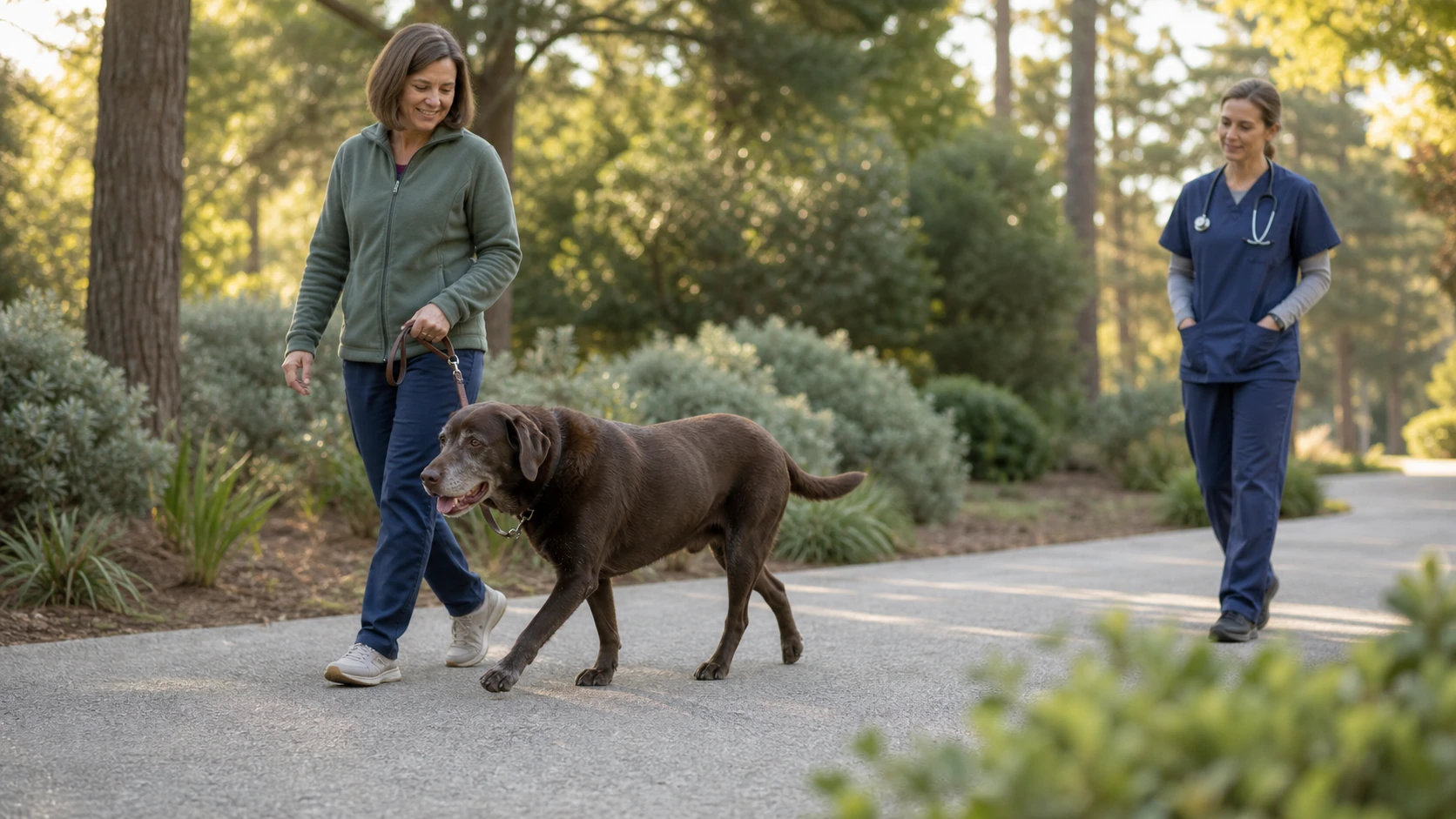
For a dog with mobility concerns, the goal is not simply more exercise or more rest. The useful goal is an appropriate dose of comfortable movement that preserves function without provoking a setback. The safest plan starts with a veterinary assessment and changes according to the dog's diagnosis, pain control, strength, balance, endurance, home environment, and response after activity.
Short answer
Low impact describes loading, not a universal exercise list
Controlled level walking is often used because pace, surface, duration, and turns can be adjusted. Rehabilitation may also use weight shifts, wide turns, carefully selected ground-pole work, underwater exercise, or other tasks. Evidence and consensus support individualized movement within multimodal care, but the clinical evidence for specific canine physiotherapy techniques remains uneven. [1] [2]
- Have sudden, severe, or unexplained mobility changes assessed before starting a home program.
- Consistency and response matter more than reaching a generic mileage, repetition, or time target.
- Record movement during the activity and later that day because overload may appear after the session.
Safety first
Do not exercise through an acute or rapidly worsening problem
Seek prompt veterinary care for inability to stand, sudden non-weight-bearing lameness, severe pain, major swelling, trauma, dragging or knuckling paws, loss of coordination, collapse, breathing difficulty, or loss of bladder or bowel control. These are not situations for a trial walk or online exercise routine.
- Stop if the dog develops a new limp, repeated stumbling, marked slowing, distress, weakness, or refusal.
- Do not force stairs, tight turns, stretching, unstable equipment, or swimming to test ability.
- Never give a human pain medicine to make exercise possible unless the veterinarian specifically directs it.
Veterinary note
This article is educational and does not diagnose, treat, prescribe, or replace care from a licensed veterinarian. Your dog’s history, examination, diet, medications, and current signs determine what is appropriate.
Start with the reason mobility changed
Mobility can change because of osteoarthritis, developmental joint disease, ligament injury, muscle or tendon injury, neurologic disease, paw pain, systemic illness, excess body weight, or deconditioning. The same activity can be useful for one problem and inappropriate for another. A gait and physical examination help determine whether exercise should continue, be restricted, or be designed by a rehabilitation professional. [3] [4]
Pain control and exercise planning belong together. A dog that cannot move comfortably may compensate through the spine or other limbs, while complete inactivity can contribute to muscle loss and reduced confidence. Multimodal pain guidance therefore combines assessment, medical treatment when indicated, environmental support, and function-focused movement rather than treating exercise as a stand-alone cure. [5]
Build a repeatable baseline
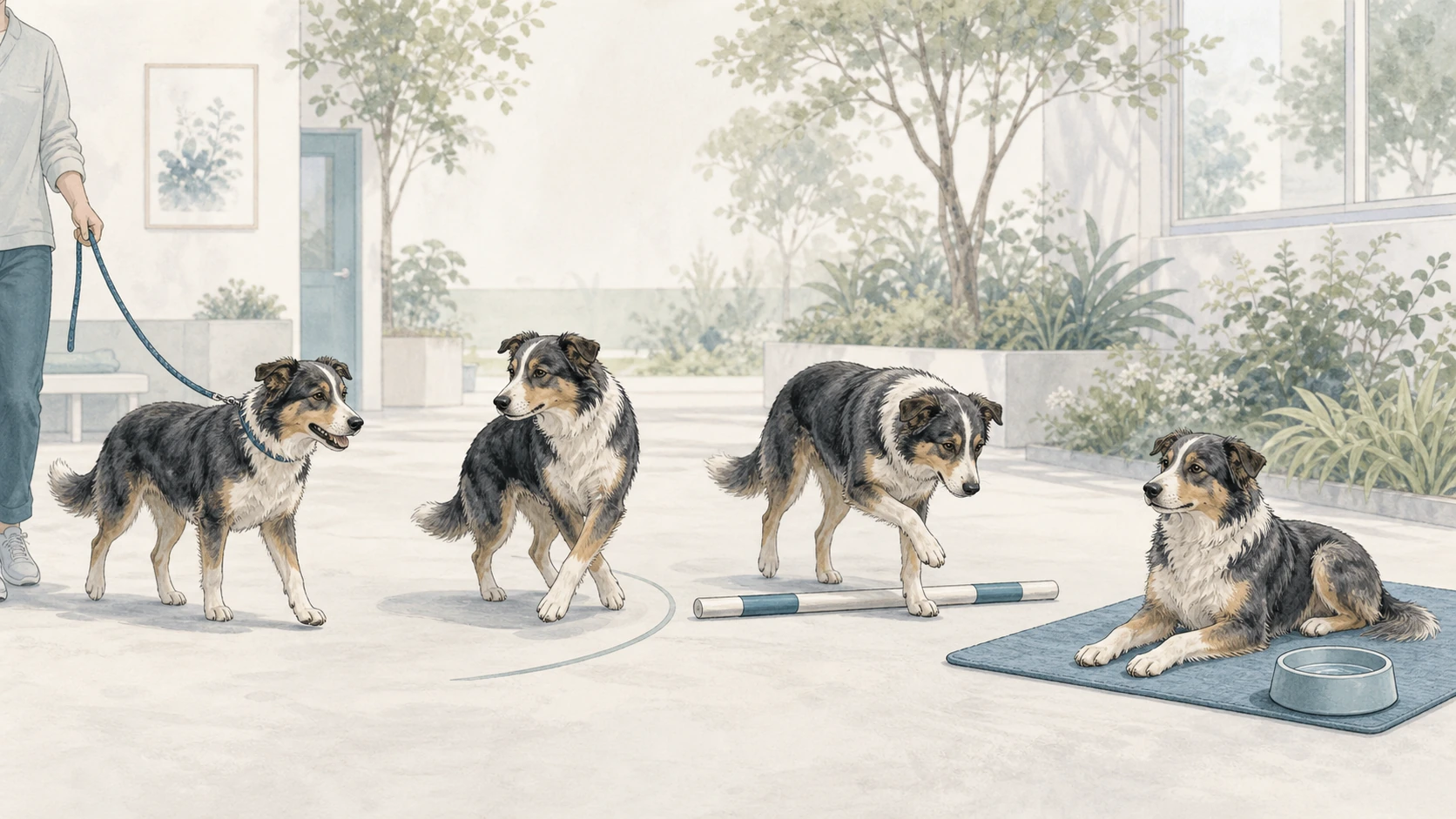
Observe rising, level walking, turning, stopping, and recovery on familiar ground. Record the surface, pace, duration, assistance, slips, stride changes, and willingness. A short natural video can preserve an intermittent pattern, but do not lengthen a walk or repeat a difficult task to produce a more obvious sign.
A baseline should include what happens after the session. Increased stiffness later, reluctance at the next outing, disturbed sleep, panting at rest, reduced appetite, or a longer recovery may indicate that the previous activity exceeded the dog's current capacity. One enthusiastic walk does not prove that the amount was appropriate.
Use low-impact options deliberately
Level leash walks can be divided into shorter, predictable sessions. Wide turns generally demand less twisting than tight circles. Nonslip flooring and well-maintained nails improve footing. Rehabilitation professionals may add controlled weight shifts, low obstacles, balance work, sit-to-stand variations, or aquatic exercise only after deciding that the movement fits the dog. [1] [2]
Swimming is not automatically low risk. Entry, exit, water temperature, fatigue, uncontrolled limb motion, skin or ear disease, and cardiopulmonary status matter. An underwater treadmill is different from open-water swimming because buoyancy, water height, speed, and supervision can be controlled. Neither should be introduced solely because water is described as gentle.
Progress one variable at a time
Change duration, frequency, terrain, pace, or task complexity separately when possible. Small changes make it easier to identify what caused improvement or a setback. Avoid the weekend pattern of very little weekday movement followed by a long hike, repeated fetching, sharp turns, or prolonged play.
A veterinarian or certified rehabilitation professional can define the acceptable response, reassessment date, and stop rules. The plan may need to change after medication adjustments, weight change, surgery, a flare, new neurologic signs, or loss of strength. Consensus guidance supports modified exercise and professional rehabilitation across canine osteoarthritis stages while recognizing that individual modalities have different evidence levels. [2]
Prepare for a focused veterinary conversation
Bring a concise timeline, short natural-movement or symptom videos when safe, the exact names and photographs of every food, treat, medication, and supplement label, and notes about appetite, water intake, stool, sleep, activity, comfort, and behavior. Include recent injuries, travel, boarding, diet changes, missed medication, and previous test results. A complete record helps the veterinary team separate a repeatable pattern from a single impression.
Decide in advance what you need from the visit: an urgency decision, a diagnosis plan, a nutrition review, a pain or mobility assessment, or a monitored trial. Ask what result would change the plan and what finding would rule an option out. This keeps research and product information in the right role. Evidence can shape questions and expectations, but it cannot determine what is safe for an individual dog without the history and examination.
Owner tool
Track the activity dose and the recovery
On a phone, swipe across the table to see every column.
| Checkpoint | Record | Reason |
|---|---|---|
| Before | Ease of rising, baseline limp, energy, surface | Shows whether today differs before activity begins |
| During | Pace, stride, slips, pauses, willingness | Identifies fatigue or discomfort in real time |
| Later | Stiffness, sleep, panting, appetite, next rise | Captures delayed response and overload |
| Progression | Only one changed variable and the review date | Keeps the plan interpretable |
Better questions, calmer next steps
Questions to ask your veterinarian
- What diagnosis or differential is driving this dog's mobility change?
- Which movements should be encouraged, modified, or avoided right now?
- What response during or after exercise means stop and contact the clinic?
- Would referral to a certified rehabilitation professional change the plan?
- How often should strength, pain, body condition, and function be reassessed?
FAQ
Is walking always safe for a dog with arthritis?
Not automatically. Surface, pace, duration, disease severity, pain control, and other medical problems matter. Ask the veterinarian for an appropriate starting plan.
Should a stiff dog rest until the stiffness disappears?
Acute injuries may require restriction, while chronic conditions often benefit from controlled movement. The cause and current examination determine the balance.
Is swimming the best low-impact exercise?
No single activity is best for every dog. Water activity has entry, exit, fatigue, temperature, supervision, and medical considerations.
How quickly should activity increase?
There is no universal schedule. Change one variable gradually and use the dog's during-session and next-day response to guide veterinary reassessment.
Can home exercise replace pain treatment?
No. Movement is one part of multimodal care and should not be used to avoid assessment or necessary pain management.
Sources
- Veterinary Sciences: Physiotherapeutic Strategies and Their Current Evidence for Canine Osteoarthritis. Canine physiotherapy goals, exercise planning, environmental modification, and evidence limits.
- Frontiers in Veterinary Science: COAST International Consensus Guidelines for Canine Osteoarthritis. Consensus support for modified exercise, rehabilitation, and individualized plans.
- American College of Veterinary Surgeons: Osteoarthritis in Dogs. Causes, signs, diagnostic assessment, and multimodal management.
- Cornell University College of Veterinary Medicine: Osteoarthritis. Owner-facing mobility signs and veterinary care context.
- AAHA/AAFP: Pain Management Guidelines for Dogs and Cats. Pain assessment and multimodal management principles.
