

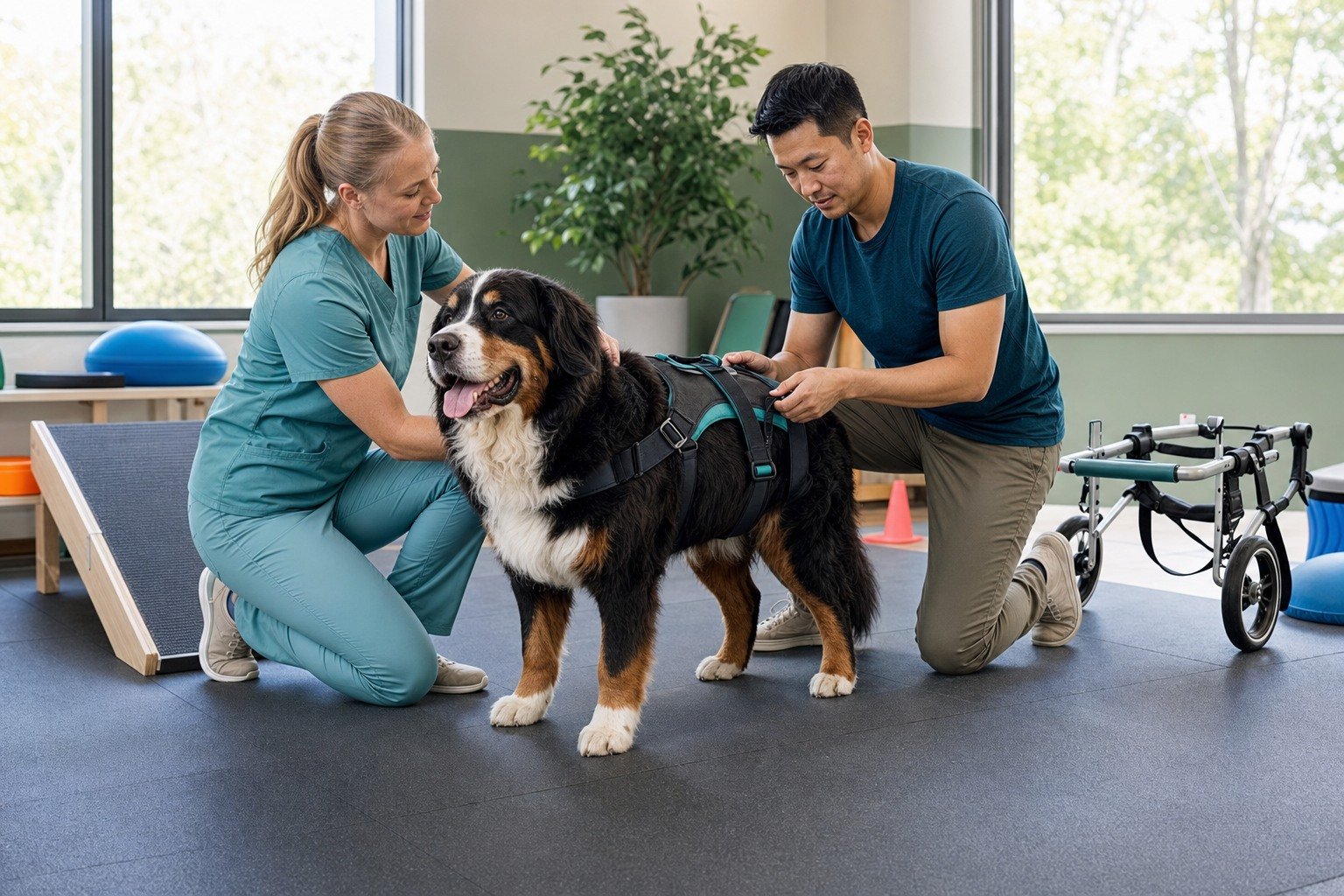
Assistive devices can support selected dogs during recovery or long-term mobility loss, but the category label does not make a device suitable. Rear-support and full-body harnesses, slings, ramps, traction surfaces, orthoses, prostheses, and mobility carts serve different goals and load the body differently. Diagnosis, pain, strength, coordination, sensation, skin, continence, body shape, home layout, and caregiver ability all affect selection. Incorrect fit can restrict movement, chafe skin, shift pressure, create falls, or mask progression. A veterinarian or qualified canine rehabilitation professional should define the goal, fit and train the device, and schedule reassessment. This overview explains questions and monitoring principles without endorsing a brand, product, size, shopping destination, or do-it-yourself fitting protocol.
Short answer
Choose the goal and the dog first, then consider the device
Research and rehabilitation practice describe assistive walking devices as potentially useful for selected mobility disorders, while surveys also report skin wounds, fit complications, and variable outcomes. Device choice and fitting should be individualized and monitored, not based on a product photo or breed alone. [1] [2]
- Record changes in movement, appetite, stool, sleep, behavior, and daily function with dates.
- Use research to prepare questions, not to diagnose a dog or select treatment at home.
- Bring current diets, medications, supplements, prior records, and short natural-movement videos when useful.
- Agree on what to monitor, when to reassess, and which change requires urgent care.
Safety first
Sudden weakness, paralysis, or loss of bladder control needs urgent care
Seek prompt veterinary assessment for new or worsening weakness, dragging paws, repeated falls, skin injury, pain, inability to rise, or a device that changes breathing, gait, urination, or defecation. Seek emergency care for sudden paralysis, major trauma, severe uncontrolled pain, collapse, breathing difficulty, inability to urinate, or rapid neurologic decline.
- Do not delay care for sudden, severe, escalating, or function-limiting signs.
- Do not start, stop, combine, or calculate treatment from this article.
- Keep an exact timeline and product or exposure record available for the veterinary team.
Veterinary note
This article is educational and does not diagnose, treat, prescribe, or replace care from a licensed veterinarian. Your dog’s history, examination, diet, medications, and current signs determine what is appropriate.
Understand the main device categories and goals
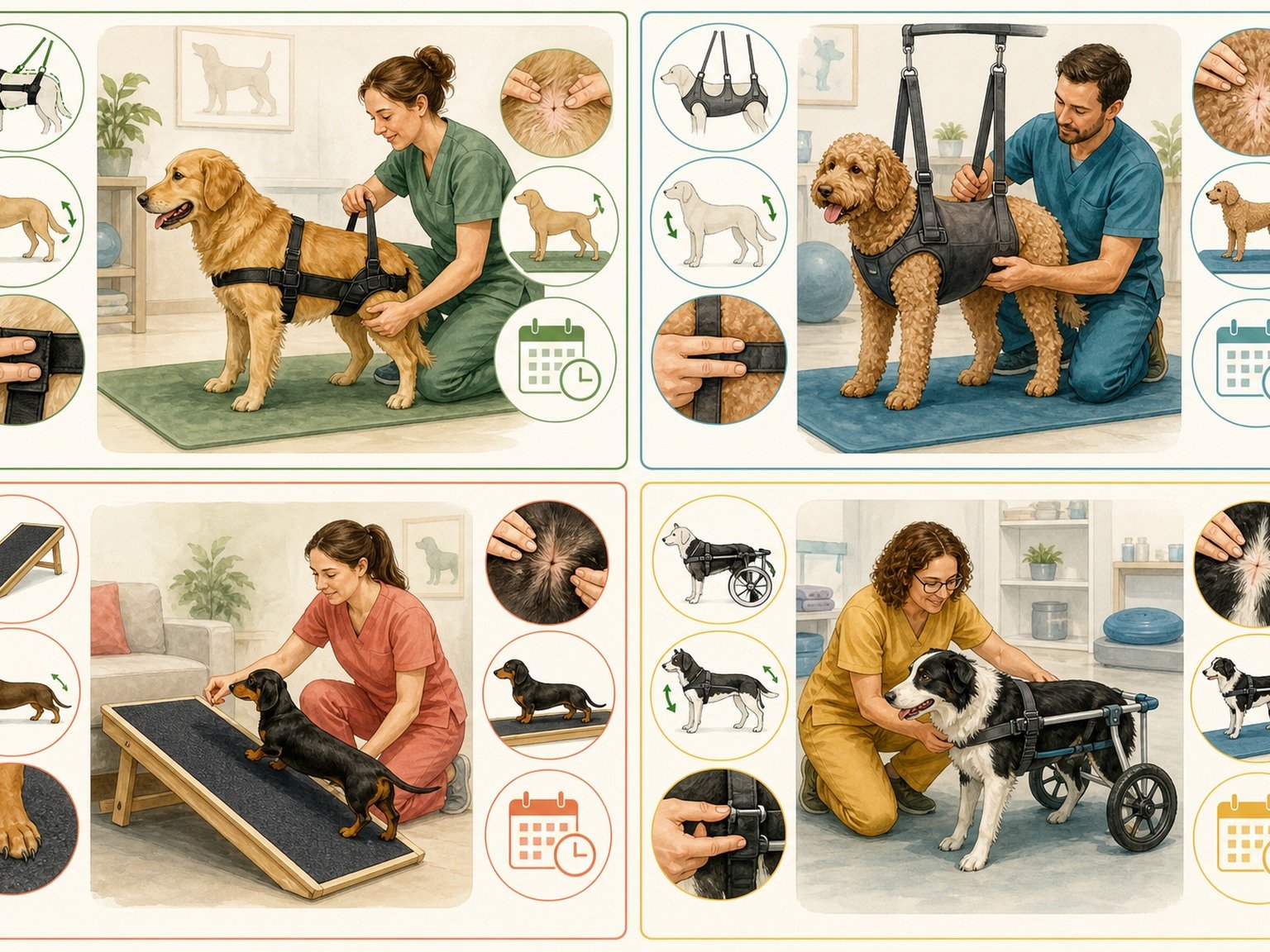
A rear-support harness may help a caregiver assist the pelvis during short transfers or toileting, while a full-body system can distribute support across more regions. The correct choice depends on which limbs need help, whether the dog can bear weight, and how long support is required.
Ramps, steps, and traction surfaces change the environment rather than attach to the dog. They can reduce a specific barrier only when angle, width, edge protection, stability, surface grip, landing space, and the dog's training and control are appropriate. [3]
Orthoses, prostheses, and mobility carts have more specialized roles. They can alter load and movement substantially and require diagnosis, measurements, fitting, acclimation, and follow-up. A cart may be temporary or long term, and the ability to use one safely varies with front-limb strength, spinal condition, sensation, endurance, skin, and environment. [2]
Why veterinary and rehabilitation assessment comes first
Mobility loss can arise from orthopedic pain, neurologic disease, muscle weakness, injury, postoperative restrictions, systemic illness, or several problems together. A device that assists one pattern may be unsafe or ineffective for another.
The team should define whether the goal is transfer assistance, reduced slipping, supported exercise, protection of a healing structure, improved access, prevention of secondary injury, or quality-of-life support. A measurable goal keeps device use from continuing simply because it was purchased.
Evidence is uneven across device types and diagnoses. A survey of degenerative-myelopathy professionals found frequent use of assistive walking devices, but recommendations were individualized and commonly paired with rehabilitation and regular exercise. [1]
Fit, skin, gait, and acclimation checks
Check straps, seams, buckles, pressure areas, axillae, groin, chest, abdomen, and any area under an orthosis or cart. Watch for redness, heat, swelling, hair loss, moisture, wounds, guarding, or a change in breathing. Remove the device and contact the fitting professional when a problem appears.
A harness can affect gait even when marketed as nonrestrictive. Published reviews describe changes in shoulder motion and pressure distribution across designs, supporting individual gait observation rather than relying on a label. [4]
Introduce equipment gradually under professional instructions. Observe standing, turning, stopping, backing, lying down when relevant, toileting, fatigue, and recovery. Never leave a dog unattended in a support device or cart unless the veterinary professional has explicitly established a safe use plan.
Home setup, caregiver safety, and reassessment
Map the route between bed, water, food, door, toileting area, vehicle, and favorite resting places. Remove trip hazards, stabilize rugs, improve lighting, block unsafe stairs, and provide enough turning space. Environmental changes should reduce, not create, barriers.
Caregiver body mechanics matter, especially with a large dog. Ask for hands-on training in lifting, strap placement, transfers, emergency release, cleaning, and transport. A device that exceeds the caregiver's safe ability needs a different plan.
Schedule reassessment for fit, growth or weight change, muscle loss, recovery, disease progression, wounds, and changing goals. Orthotic surveys and cart studies report both perceived quality-of-life benefits and meaningful complication rates, especially wounds, reinforcing the need for follow-up. [2] [5]
Prepare for a focused veterinary conversation
Bring a concise timeline, short natural-movement or symptom videos when safe, the exact names and photographs of every food, treat, medication, and supplement label, and notes about appetite, water intake, stool, sleep, activity, comfort, and behavior. Include recent injuries, travel, boarding, diet changes, missed medication, and previous test results. A complete record helps the veterinary team separate a repeatable pattern from a single impression.
Decide in advance what you need from the visit: an urgency decision, a diagnosis plan, a nutrition review, a pain or mobility assessment, or a monitored trial. Ask what result would change the plan and what finding would rule an option out. This keeps research and product information in the right role. Evidence can shape questions and expectations, but it cannot determine what is safe for an individual dog without the history and examination.
Owner tool
Create a mobility-device safety record
On a phone, swipe across the table to see every column.
| Checkpoint | Record | Why it helps |
|---|---|---|
| Goal | Task, distance, support needed | Defines success |
| Fit | Straps, pressure, gait, breathing | Finds device risk |
| Use | Duration, surface, fatigue, recovery | Guides acclimation |
| Review | Skin, function, weight, recheck | Supports refitting |
Better questions, calmer next steps
Questions to ask your veterinarian
- What diagnosis and goal support this device?
- Who should measure, fit, and train it?
- Which skin and gait changes mean stop?
- How long and where may it be used?
- When should fit and function be reassessed?
FAQ
Can I size a harness from weight alone?
No. Body shape, purpose, and movement also matter.
Is a wheelchair appropriate for every weak dog?
No. Diagnosis and whole-body function determine suitability.
Can a harness change gait?
Yes. Design and fit can affect movement.
Should a dog sleep in a support device?
Only if the veterinary professional explicitly approves the exact use.
Why inspect skin often?
Pressure, friction, moisture, and debris can cause wounds.
Sources
- Journal of Veterinary Internal Medicine: Degenerative Myelopathy Management Survey. Professional use of rehabilitation and assistive walking devices.
- Frontiers in Veterinary Science: Assistive Mobility Cart Use in Companion Animals. Use goals, quality of life, fitting gaps, and wound complications.
- American Animal Hospital Association: Nonpharmacologic Modalities for Pain Management. Environmental modification, movement, and chronic-pain support.
- Animals: Review of Collars, Harnesses, and Head Collars. Harness effects, fit, pressure, gait, and individual variation.
- Frontiers in Veterinary Science: Orthotic Device Use in Canine Patients. Owner-reported quality of life and complication rates.
