

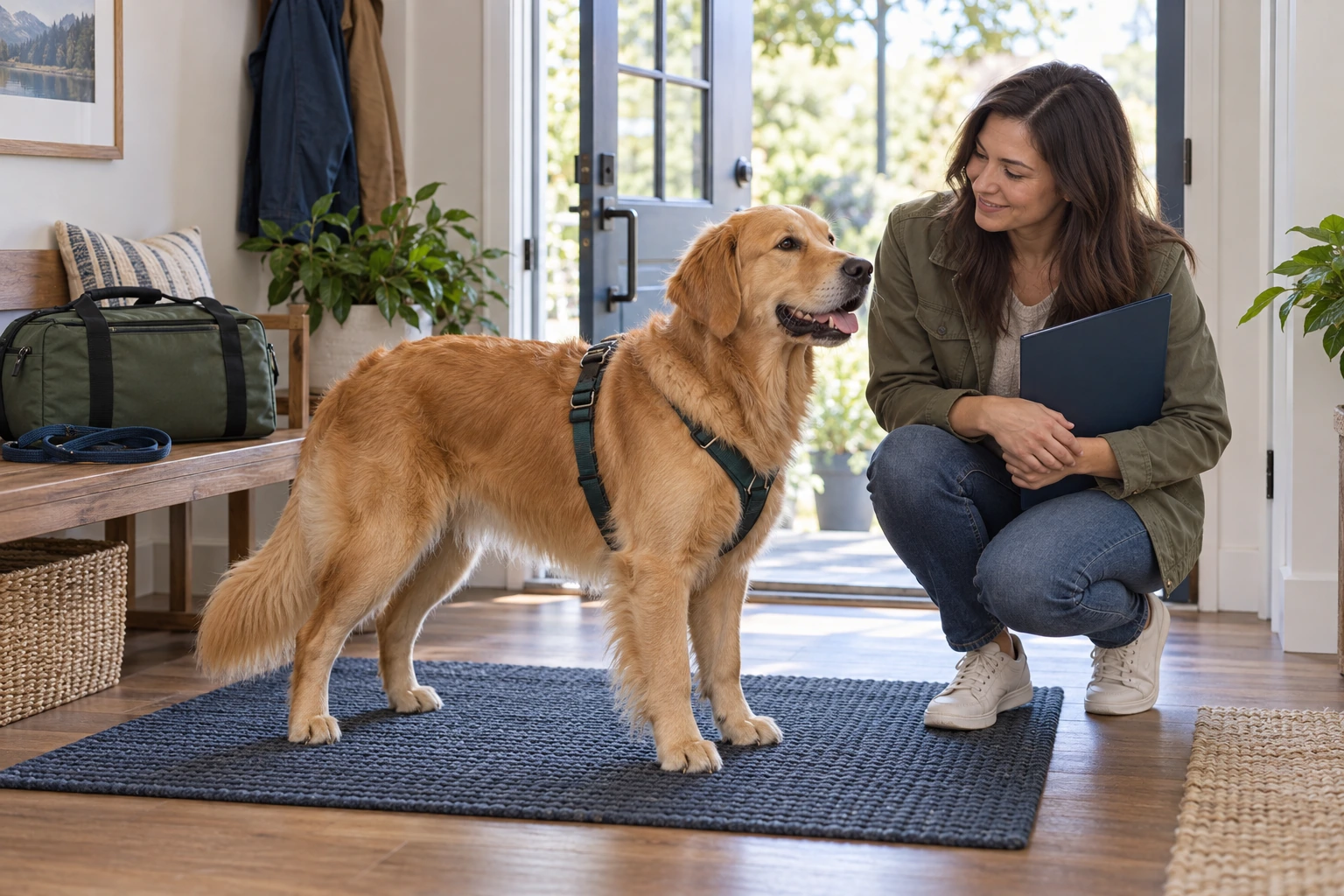
Put the decisions, people, destinations, and dog-care essentials in one written plan before an alert arrives.
Short answer
A dog emergency plan needs both a leave plan and a stay plan
Your dog emergency plan should say who gets your dog, what travels with them, where you can go, and how you will follow local instructions if you must stay home. Keep a short printed copy with your dog’s identification, records, contacts, and ready-to-carry supplies. This is a preparation tool: emergency officials guide disaster decisions, and your veterinarian guides medical care.
- Assign a primary caregiver and a backup person.
- Confirm dog-friendly destinations before relying on them.
- Practice finding your dog, securing them, and reaching the exit in ordinary conditions.
Safety first
An evacuation checklist must not delay urgent veterinary care
Difficulty breathing, unresponsiveness, major injury or bleeding, and sudden paralysis or extreme weakness require immediate veterinary attention. Repeated vomiting or severe diarrhea, especially with blood or weakness, also warrants prompt care. Call an emergency veterinary hospital for instructions and tell them about unsafe roads or transport limitations. These signs are examples, not a complete triage list; if you are unsure, call. AAHA’s pet emergency guidance explains these warning signs.
Follow evacuation or shelter instructions from local officials. Do not remain in a dangerous building to finish packing, enter floodwater, or return to an unsafe area to retrieve supplies. Human safety and safe access come first.
Preparation supports care; it does not replace it
This guide provides general education, not diagnosis, treatment, first-aid training, or an individualized disaster response plan. Contact your veterinarian for advice about your dog’s health, handling, prescriptions, and emergency needs. Follow local emergency directions. See our medical disclaimer.
Start with local instructions, then use your dog’s plan
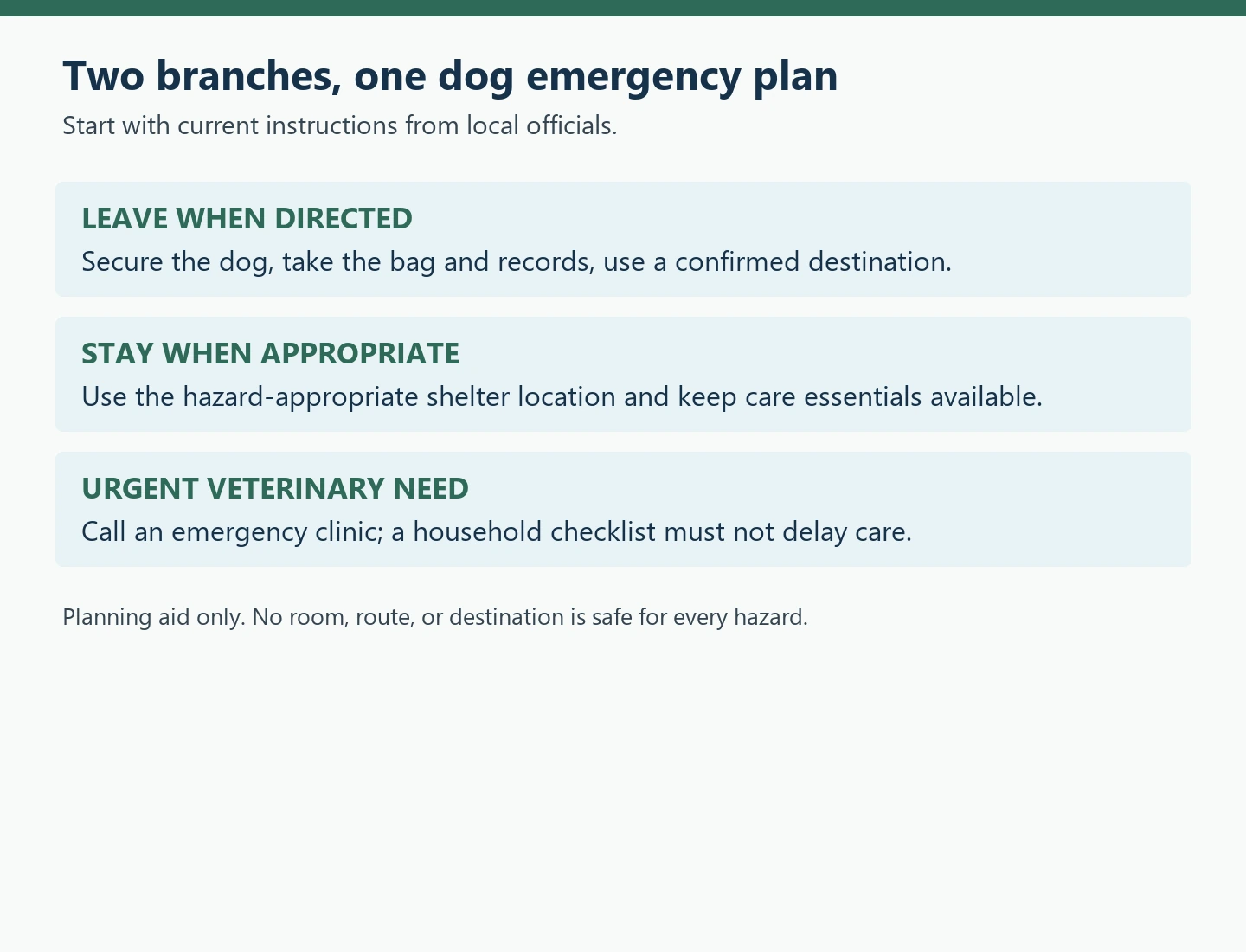
A storm warning, a household fire, and a regional evacuation do not call for identical actions. Write down how your household receives official alerts and where you check local emergency updates. A social post or an old shelter list is not a substitute for current instructions. Michigan’s pet preparedness guidance recommends staying informed and following officials’ directions to evacuate or shelter in place.
Organize the page into two branches: leaving with your dog, and remaining in the location officials identify as appropriate. Under each branch, list the person responsible, equipment location, and next destination or room. This makes the page useful even when the person reading it did not assemble the kit.
Keep a separate line for urgent veterinary care. A sick or injured dog may need a clinic rather than a hotel. Planning for a destination does not tell you whether a building, route, or dog is safe. Those decisions need current emergency information and professional advice.
If your family has no vehicle, arrange help ahead of time and ask local emergency management about available transport options. Record who you would call and what has actually been confirmed. Avoid a plan that simply says “someone will help” without a named person or service.
Give each person a clear job and name a backup
Use a short assignment such as “Avery secures the dog; Jordan takes the bag and records.” Decide where everyone meets if they leave through different exits. The backup person should know where the dog usually rests or hides and where the leash, carrier, keys, and information folder are kept. The CDC recommends a buddy system for times when you are away.
Ask the backup person directly whether they can help, including during their work hours. Give them only the access and information they need, using a private arrangement rather than posting entry instructions publicly. Confirm whether they can transport your dog and who makes the next call if you cannot be reached. A nearby helper may face the same emergency; identify an additional contact outside the immediate area.
For several dogs, make each animal’s identity and care instructions distinguishable. A caregiver should be able to match the name on a folder to the right dog. Note important handling limits, known escape behavior, and whether dogs need separate spaces. Do not expect an unfamiliar helper to improvise medical care or manage interactions they have never practiced.
For a dog with joint problems, difficulty walking, or a caregiver who cannot safely assist them, use the existing mobility-aware emergency plan. It covers accessible exits and individualized handling; this general checklist does not provide a lifting technique.
Confirm where your dog can go before you need to leave
Choose a first destination and a backup you can realistically reach. They might be an out-of-area friend, a dog-friendly hotel, boarding facility, or a locally designated animal sheltering arrangement. Michigan’s 2026 pet preparedness message advises identifying these options in advance because many emergency shelters cannot accommodate animals.
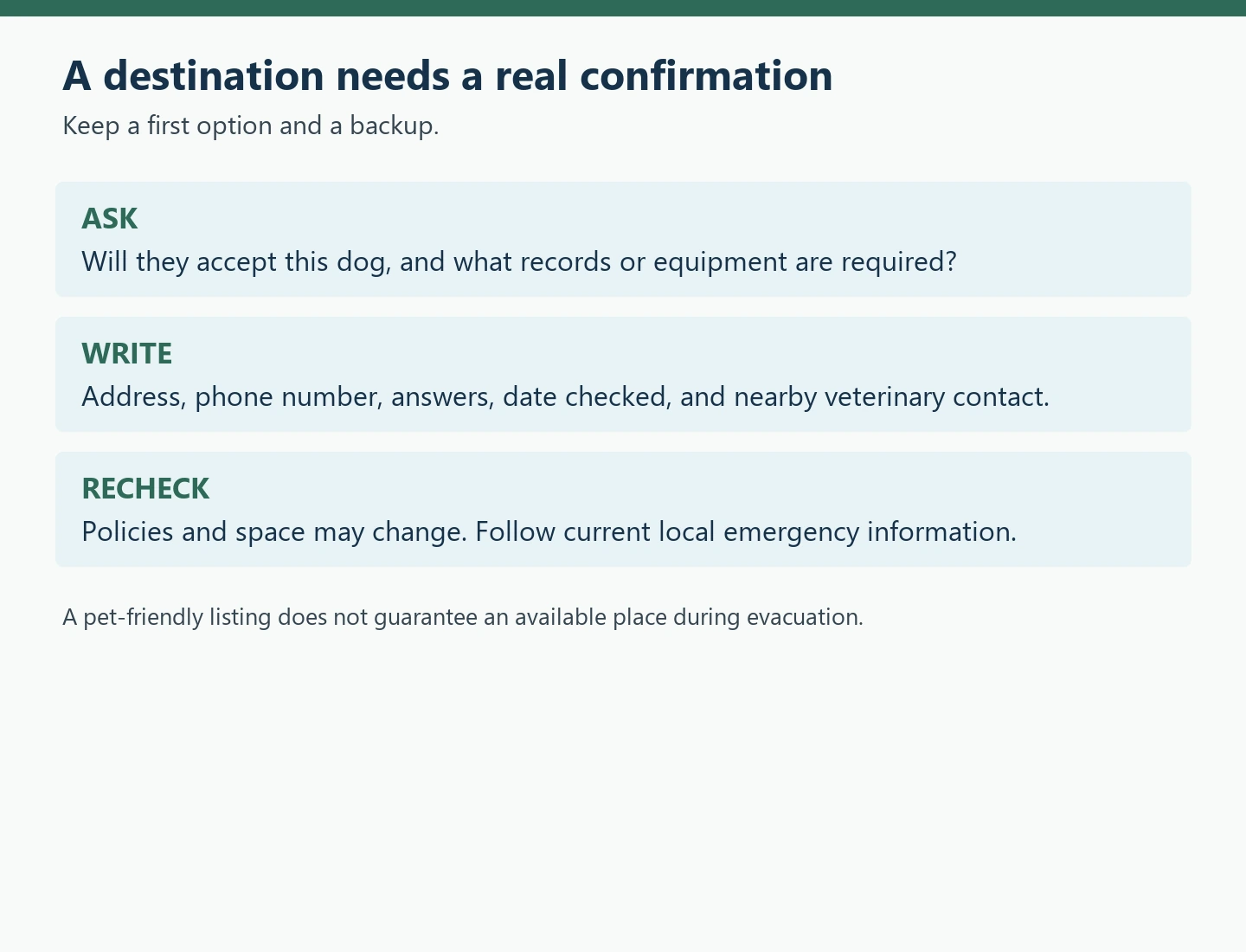
Call the actual destination. Ask whether your dog’s size, number of animals, and care needs are accepted; what records or equipment you must bring; and how admission works during an evacuation. Write down the contact number, address, answers, and date checked. A listing that says “pet friendly” does not confirm space, current rules, or emergency availability.
Find a veterinary hospital near each likely destination and note its contact information. For a boarding facility, ask who handles a medical concern while you are absent. For a friend, discuss a contained resting space and existing animals before arrival. Recheck availability when an alert arises if there is time and doing so does not delay safe departure.
Keep directions available without depending entirely on a charged phone. Mark the destination as “not confirmed” until someone has answered your questions. If both options become unavailable, contact local emergency management or animal services for current guidance; do not assume every human shelter will take your dog.
Keep the information and supplies together, with a clear grab point
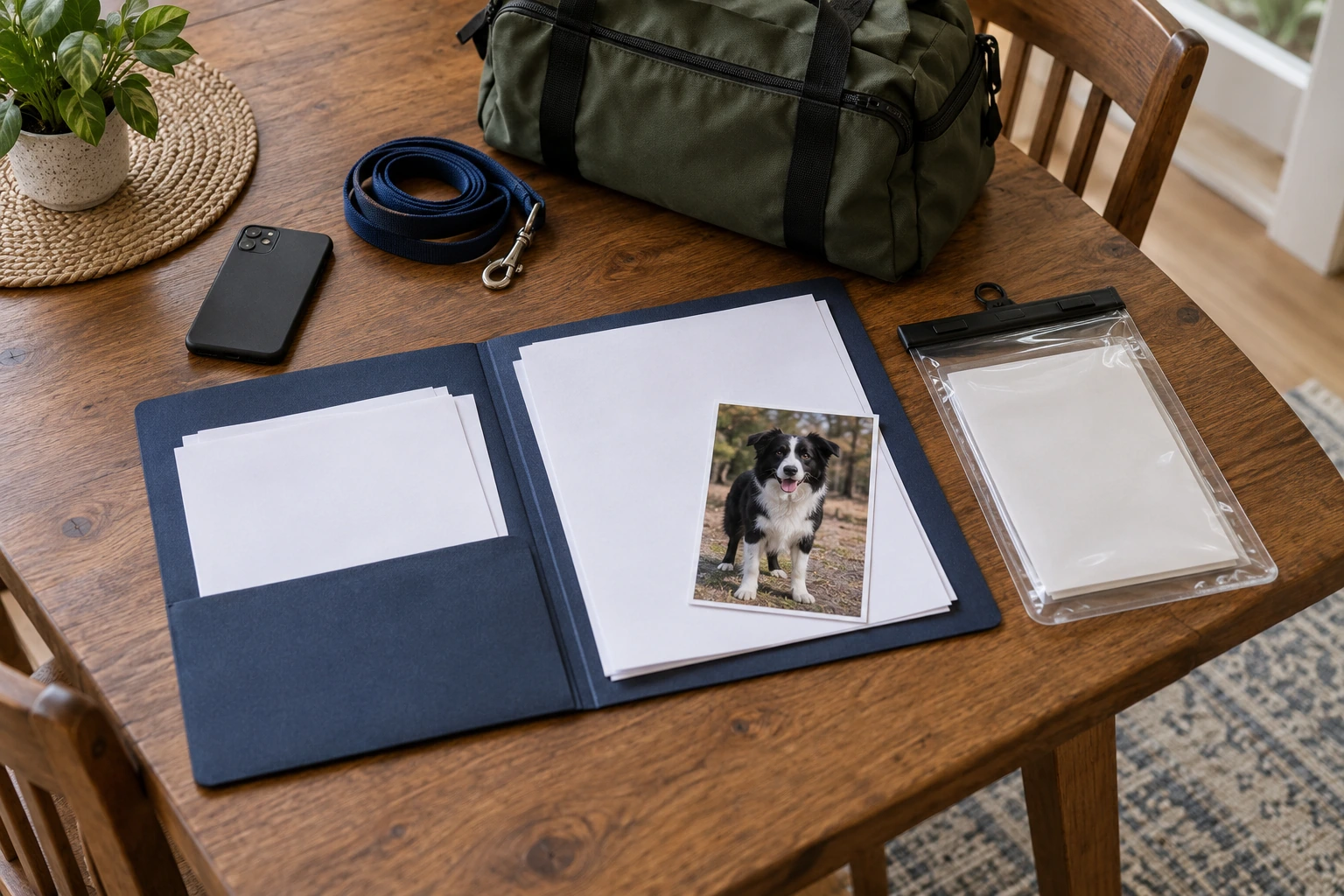
Your plan should show where the portable bag, restraint equipment, and records are stored. Keep the grab point accessible without blocking an exit. Michigan’s pet kit checklist includes usual food, water, bowls, identification, medication when needed, a carrier, comfort items, sanitation supplies, contacts, and veterinary records.
The plan is the index to those items, not a shopping list for a particular brand. Write down where anything that cannot remain packed is kept. For example, a prescription may have special storage requirements; note its location and the veterinary team’s instructions. Do not decant medication into an unmarked container, change a dose, or make a storage assumption to simplify packing.
Supply-duration recommendations vary. The CDC’s downloadable checklist gives a two-week example for food, water, and applicable medications, while Michigan’s 2026 message gives at least three days for food and water. Neither number is a universal prescription for every household. Use local emergency guidance for the expected disruption and ask your veterinarian about refills, storage, and continuity of care.
Keep printed medical and vaccination records, a current dog photo, identification details, and contact information protected from water. A digital copy can be a backup. Do not make the only usable copy depend on a password or device the backup caregiver cannot access when needed.
Check the phone number on your dog’s ID tag and the contact details in the microchip registry. AAHA explains that microchips complement tags and do not track a dog’s location by GPS. Keeping records current supports identification; it does not guarantee reunification.
Build a stay-home branch that follows the actual hazard
Sheltering at home is a branch of the plan only when it is appropriate under current instructions. Choose the room using guidance for the hazard in your area. For general pet sheltering, the CDC describes an interior room with few or no windows and removal of toxic chemicals or plants. That suggestion does not make the same room safe for every fire, flood, or other emergency.
Write down where your dog will rest, where essential supplies will be reachable, and how you will prevent access to damaged areas. Keep the dog’s carrier or other familiar containment equipment available. Account for water, sanitation, and waste handling without planning an outdoor trip that conflicts with safety instructions.
Consider what fails when power is lost. Ask your veterinarian ahead of time if your dog’s prescription, medical equipment, or condition needs a specific outage plan. Record the clinic’s instructions and an alternative contact. A home checklist cannot decide whether a refrigerated medicine remains usable or a dog can safely stay in changing temperatures.
Put the change-of-plan question on the page: “What official instruction or loss of a safe care arrangement means we need another option?” Use it to prompt a call or official update, not to invent your own weather threshold. Staying flexible matters more than trying to predict every scenario.
Practice the logistics in ordinary conditions
Do a calm walkthrough: locate the dog, find the equipment, gather the folder and bag, and identify the meeting point. Check whether the assigned person can complete their job without moving clutter or searching for keys. Start with these human tasks before asking your dog to do anything unfamiliar.
Make a carrier familiar in advance rather than introducing it during a warning. Michigan’s pet guidance suggests leaving it open in a place the pet visits and adding familiar bedding. Rehearsal is preparation, not anxiety treatment or a guarantee that a dog will cooperate in a crisis.
Stop if practice causes fear, pain, or unsafe handling, and ask the veterinary team for an individualized approach. Never recreate smoke, heat, flood conditions, or loud emergency effects as a test. If you discover a problem, record one fix and who will make it: “Move the leash to the grab point” is more useful than “Be better prepared.”
Owner tool
Fill in one page that another person can use
Copy these headings into a printed page. Fill in real names, numbers, locations, and dated confirmations. Keep sensitive access details private. The table is a planning aid, not an official evacuation order or a veterinary care protocol.
| Plan field | Write this down | Check before relying on it |
|---|---|---|
| Alerts and decisions | Official local alert source; leave or shelter instructions | Current information for the actual hazard |
| People | Primary dog caregiver, backup, meeting point | Availability, access, and safe transport confirmed |
| Leaving | Leash or carrier location; bag and records grab point | Exit accessible; equipment familiar and suitable |
| Destinations | First option, backup, phone numbers, nearby clinic | Dog acceptance, requirements, and date checked |
| Staying | Hazard-appropriate room; supplies and containment | Official guidance and individual care needs |
| Dog information | Name, photo, tag and chip details, medical summary | Current contacts and veterinary instructions |
| Changes and gaps | Last review date; unresolved task; person responsible | Update after a move or care-plan change |
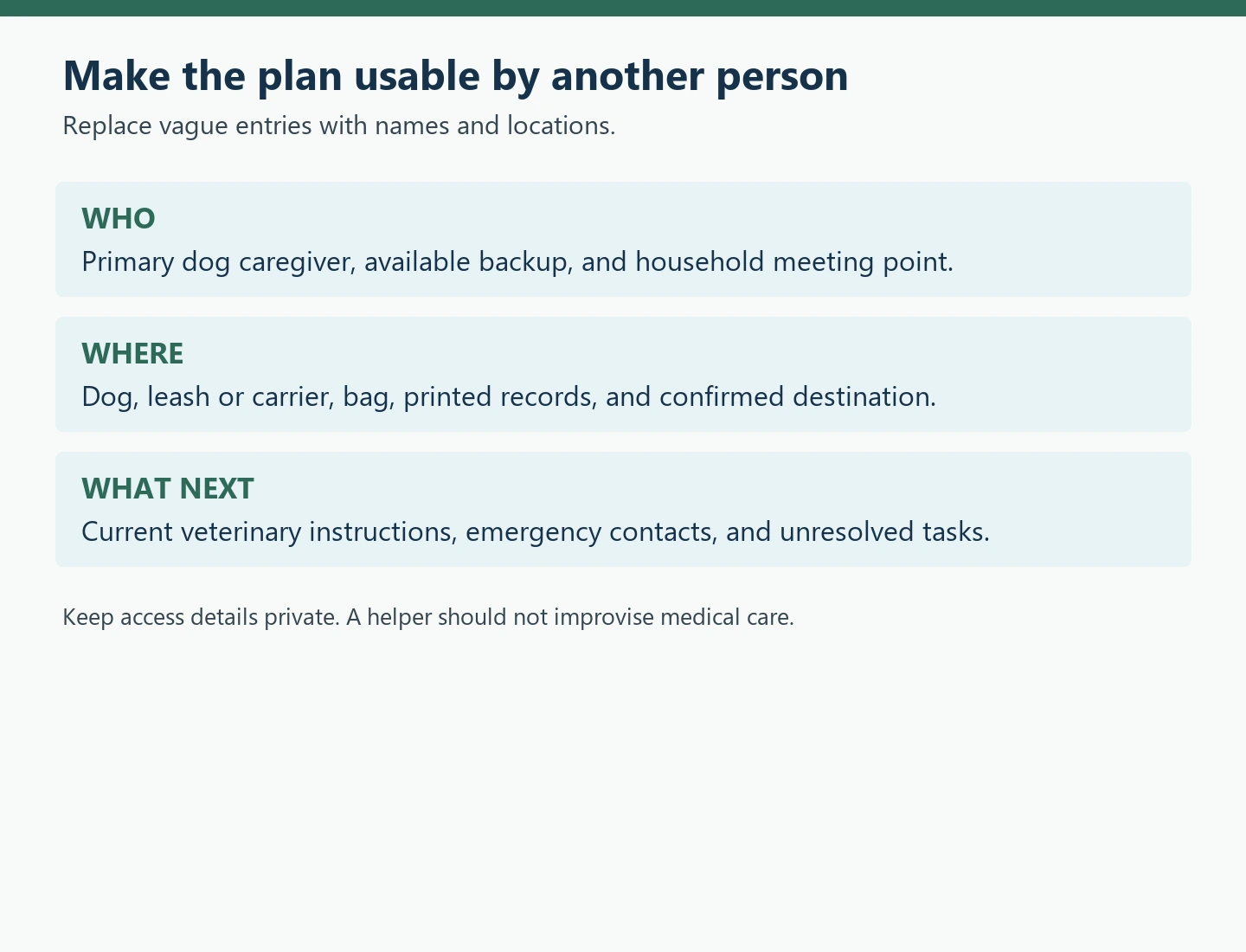
Consider a household in which one person works away from home: the backup cannot help if the folder says only “call my vet” and contains no number. Replace vague entries with information someone can use. Keep the plan short enough to scan and place the longer care instructions behind it.
Update the plan when circumstances change
Choose a recurring reminder that fits your household and recheck before your area’s higher-risk season. This is a suggested organization habit, not a medically validated interval. Update sooner after changes to your address, phone number, dog’s prescriptions or mobility, caregiver availability, vehicle, or destination rules.
Review open tasks instead of just checking that a bag exists. Replace expired supplies as appropriate, confirm contact details, and ask whether the backup could still act. After a real disruption, note what was hard to find and revise that part. Keep one clearly dated current version so caregivers do not follow conflicting instructions.
Better questions, calmer next steps
Ask your veterinarian about the parts that depend on your dog
- How should we plan prescription access and storage during evacuation or power loss?
- What handling and transport limits apply to this dog’s health and mobility?
- Which changes require an immediate emergency visit, and whom should we call after hours?
- What medical summary and records would a temporary caregiver or clinic need?
Bring the draft plan and a current medication list. Ask for specific instructions where the page still contains a guess. For an older dog with mobility needs, our senior-dog emergency guide offers a companion framework to discuss.
FAQ
Can I begin the plan before I have every supply?
Yes. Start by naming the responsible people, confirming a destination, and locating the dog’s identification and records. Record missing items as open tasks. An incomplete kit should not prevent the useful planning steps you can take now.
Does “pet friendly” mean a destination will take my dog during an evacuation?
No. Confirm directly and record the date, animal limits, admission process, and required documents. Space and operating rules can change. Use current local information when the emergency occurs.
What if I cannot reach my usual veterinarian?
Keep an after-hours hospital contact and a clinic contact near your likely destination. Bring your dog’s medical summary. For severe signs, contact an emergency clinic rather than waiting for the usual practice to reopen.
Is a digital plan enough?
A digital copy is useful, but power, connectivity, or account access may fail. Keep a readable printed copy with the records and make sure the trusted caregiver can find it.
Sources and limits
Direct government and veterinary-organization sources were checked on October 14, 2026. They support general preparedness and warning signs; they do not certify a household plan, promise an available shelter, or provide individualized medical instructions.
- CDC: Be Prepared—Pet Safety in Emergencies. General planning, caregiver backup, containment, and sheltering considerations.
- Michigan State Police: Pet Emergency Preparedness Kit Checklist. Supplies, records, and contacts.
- Michigan State Police: Pet Preparedness. Official alerts, pet-inclusive evacuation, and familiar carrier preparation.
- CDC: Pet Disaster Kit Checklist. Portable documents and supply categories; duration examples require local and veterinary context.
- Michigan State Police: June 2026 preparedness message. Destination checks and a differing supply-duration example.
- AAHA: Help! Is This a Pet Emergency?. Veterinary escalation signs.
- AAHA: Pet Microchipping FAQs. Identification, registration, and GPS limitations.
Not yet medically reviewed.
Start with one concrete task today: name your backup caregiver and confirm that they can use the plan. Then fill in the decisions and contacts that remain blank.
