


Sensitive stomach is an owner-facing description, not a diagnosis, and small body size does not explain a digestive sign. Some defined breeds are overrepresented in particular disorders, but association cannot predict the cause or outcome for one dog. Persistent or recurring vomiting, diarrhea, appetite loss, pain, or weight change deserves a structured veterinary evaluation rather than repeated unsupervised food changes. A useful record includes measured portions, treats, medication foods, episode timing, recovery, and weight trends. That context helps the veterinary team interpret what happened without assuming that a modest body size, a breed label, or one food ingredient supplies the diagnosis. Preserve package labels, lot information, prior test results, and the dates of every intervention so apparent improvement or worsening can be compared with the correct exposure.
Short answer
Record the pattern; do not diagnose from size or breed
Chronic inflammatory enteropathy is evaluated through a process that excludes other causes and assesses response to appropriate steps. Pancreatitis associations are heterogeneous, and many cases remain idiopathic. Defined Yorkshire Terrier and Soft-coated Wheaten Terrier studies support breed-specific vigilance but cannot be generalized to every small dog or digestive sign. [1] [2] [3] [4]
- Record the exact pattern, products, diet, treatments, and recent changes.
- Separate what the evidence supports from what remains uncertain for this dog.
- Agree on a veterinary reassessment plan and urgent-response instructions.
Safety first
Severe pain, repeated vomiting, collapse, or rapid decline needs urgent care
Seek prompt veterinary care for persistent or recurrent signs, weight loss, poor appetite, blood, fever, or pain. Seek emergency care for collapse, severe weakness, repeated unproductive retching, a swollen painful abdomen, profuse vomiting or diarrhea, pale gums, breathing difficulty, seizures, inability to stand, or rapid deterioration.
- Do not use general information to delay evaluation of severe, persistent, or worsening signs.
- Do not start, stop, combine, or calculate treatments from this article.
- Keep exact labels, exposure details, and a concise timeline available for the veterinary team.
Veterinary note
This article is educational and does not diagnose, treat, prescribe, or replace care from a licensed veterinarian. Your dog’s history, examination, diet, medications, and current signs determine what is appropriate.
Replace the label with observations
Describe what sensitive means in this dog: vomiting frequency, stool consistency and volume, urgency, straining, appetite, meal timing, pain posture, gas, weight change, and recovery. Record duration, recurrence, and whether signs occur between episodes.
Body size alone does not prove dehydration, hypoglycemia, pancreatitis, food intolerance, or faster decline in every episode. The veterinarian combines the pattern with examination, vital signs, hydration, body and muscle condition, and patient-specific risks.
List diet, treats, chews, table food, garbage access, medications, supplements, travel, parasites, previous testing, and response to past interventions. Repeated switching can obscure the baseline and interfere with a controlled diet assessment.
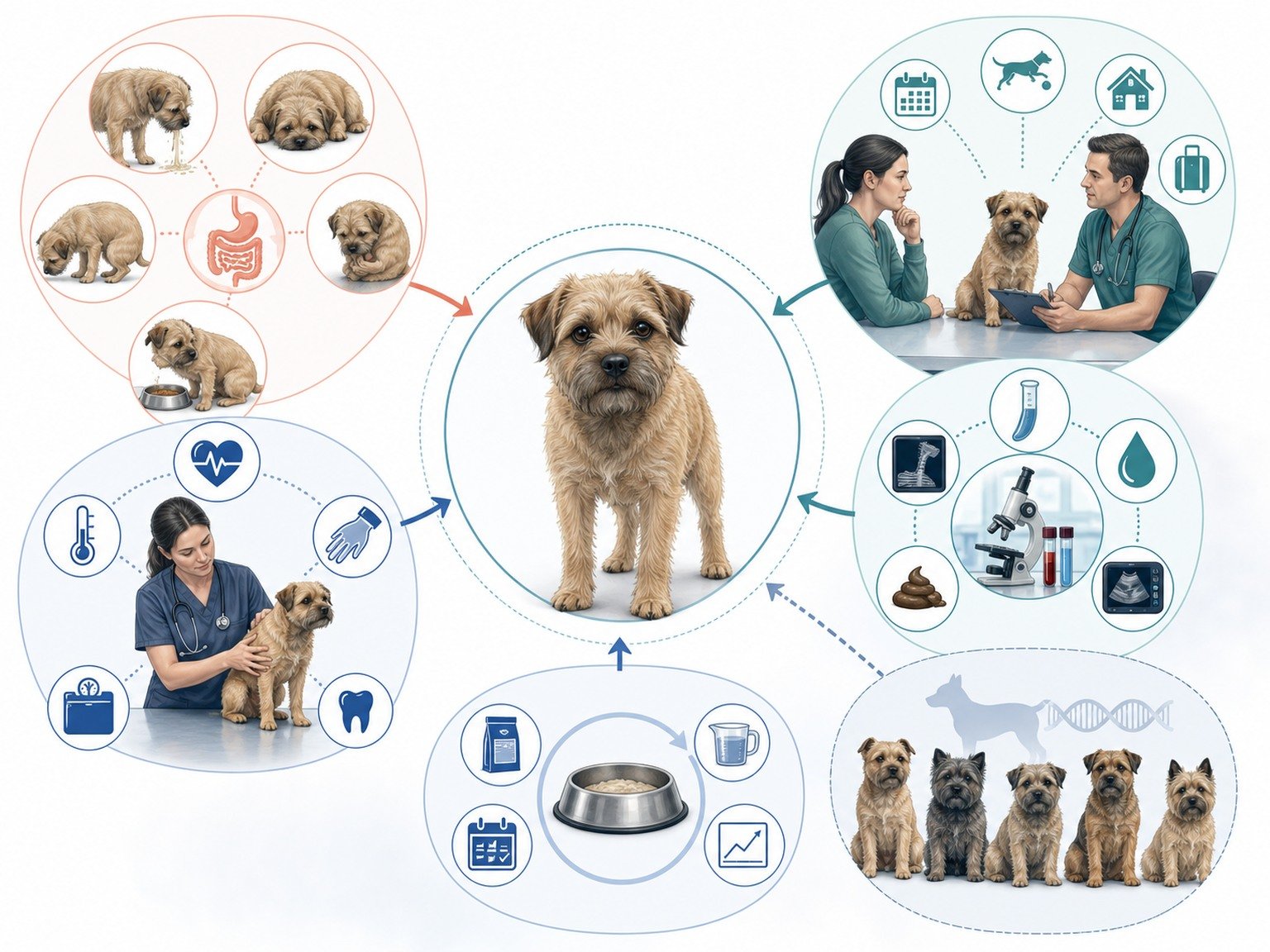
Use breed evidence precisely
A retrospective Yorkshire Terrier cohort described a severe protein-losing enteropathy phenotype. It supports awareness in that defined population; it does not show that all Yorkshire Terriers, terriers, or small dogs have the syndrome. [3]
Prospective work in Soft-coated Wheaten Terriers examines a recognized predisposition to protein-losing enteropathy. Biomarker findings in an at-risk breed cannot be transferred to unrelated small breeds or used by owners to diagnose disease. [4]
Pancreatitis literature reports suspected dietary, metabolic, medication, disease, and breed associations. Causation is complex and many cases remain idiopathic, so the review does not support a universal low-fat rule for every small dog. [2]
Expect a structured evaluation
The veterinarian may use history, examination, fecal or parasite assessment, blood and urine tests, pancreatic or endocrine testing, imaging, diet response, or referral depending on the case. No single list fits every dog, and test order reflects urgency and prior findings.
ACVIM-endorsed guidance frames chronic inflammatory enteropathy as a diagnosis of exclusion and discusses systematic evaluation and treatment response. The term chronic describes duration and recurrence; it does not identify one cause. [1]
Ask what each test could change, which conditions are being excluded, and when gastroenterology or nutrition referral is appropriate. Keep copies of laboratory trends, imaging, diet trials, medication response, and histopathology if performed.
Make nutrition changes interpretable
Diet choice depends on diagnosis, nutritional adequacy, life stage, calorie need, body condition, concurrent disease, and the purpose of the trial. Do not assume grain-free, limited ingredient, novel protein, low fat, homemade, or raw is appropriate from the sensitive-stomach label.
A controlled diet trial requires exact product identification, avoidance of unapproved foods and flavored items, duration and endpoints provided by the veterinarian, and a plan for accidental exposure. This article gives no diet protocol.
Track weight and body condition because small absolute changes may be clinically meaningful even when they look modest. Contact the clinic when intake falls, vomiting recurs, stool worsens, pain appears, or the dog cannot follow the plan.
Prepare for a focused veterinary conversation
Bring a concise timeline, short natural-movement or symptom videos when safe, the exact names and photographs of every food, treat, medication, and supplement label, and notes about appetite, water intake, stool, sleep, activity, comfort, and behavior. Include recent injuries, travel, boarding, diet changes, missed medication, and previous test results. A complete record helps the veterinary team separate a repeatable pattern from a single impression.
Decide in advance what you need from the visit: an urgency decision, a diagnosis plan, a nutrition review, a pain or mobility assessment, or a monitored trial. Ask what result would change the plan and what finding would rule an option out. This keeps research and product information in the right role. Evidence can shape questions and expectations, but it cannot determine what is safe for an individual dog without the history and examination.
Owner tool
Build a recurring-sign record
On a phone, swipe across the table to see every column.
| Checkpoint | Record | Why it helps |
|---|---|---|
| Pattern | Timing, frequency, recovery | Defines recurrence |
| Whole dog | Appetite, pain, weight, activity | Shows impact |
| Context | Breed, diet, drugs, exposures | Guides questions |
| Evaluation | Tests, diet trial, response | Preserves evidence |
Better questions, calmer next steps
Questions to ask your veterinarian
- What diagnoses are still being considered?
- Does this breed association apply to this individual?
- Which tests or controlled diet step comes next?
- What would make referral appropriate?
- Which signs require same-day or emergency care?
FAQ
Do small dogs always have sensitive stomachs?
No. Size is context, not a diagnosis.
Does a breed association predict my dog's outcome?
No. It may guide vigilance but cannot diagnose an individual.
Should every small dog eat low fat?
No. The cited review does not support a universal rule.
Can repeated food switching find the answer?
It can obscure patterns and interfere with a controlled evaluation.
When are recurring signs important?
Persistent, recurrent, severe, or otherwise concerning signs deserve veterinary assessment.
Sources
- Journal of Veterinary Internal Medicine: ACVIM-Endorsed Chronic Inflammatory Enteropathy Guidance. Structured diagnosis-of-exclusion framework.
- Journal of Veterinary Internal Medicine: New Insights Into Pancreatitis in Dogs. Heterogeneous risk associations and causation limits.
- Journal of Veterinary Internal Medicine: Protein-Losing Enteropathy in Yorkshire Terriers. Defined retrospective breed cohort.
- Journal of Veterinary Internal Medicine: Pre-Clinical Enteropathy in Soft-Coated Wheaten Terriers. Defined breed predisposition and generalizability limits.
