


A small dog is not simply a large dog with every amount divided down. Small portions make treats, chews, toppers, and flavored medications a larger share of daily calories. Tiny bodies can access dropped pills, gum, food wrappers, toys, and foreign material that owners overlook. Puppies and dogs with illness may have less reserve when repeated vomiting, diarrhea, or refusal limits intake. Dental pain can change eating, while obesity can be hidden by coat or an owner's expectation that a toy breed should look rounded. These are reasons for precision and early communication, not reasons to diagnose every sign as low blood sugar or to give sugar, electrolyte drinks, human medication, or a supplement at home. Begin with a complete diet, an exact history, body and oral assessment, and a clear triage plan. A breed tendency can inform the differential diagnosis, but only the veterinary workup identifies the cause.
Short answer
Use small measurements and a low threshold for professional advice
AAHA nutrition guidance recommends a complete diet history, body and muscle condition assessment, and individualized feeding plan. In a small dog, apparently minor extras or imprecise measuring can represent a meaningful share of energy and nutrients. [1]
- Start with the dog's history, complete diet, current treatment, and the exact question being asked.
- Separate an observed association from evidence that an intervention causes a useful clinical outcome.
- Use measurable observations and a planned review instead of testimonials or vague wellness claims.
- Contact a veterinarian promptly when signs are severe, escalating, persistent, or affecting normal function.
Safety first
Small dogs can lose stability quickly when intake and fluids fail
Contact a veterinarian promptly for repeated vomiting or diarrhea, blood, a painful or enlarged abdomen, weakness, shaking, marked sleepiness, refusal of food, inability to keep water down, suspected foreign material or toxin, or a concerning change in a puppy. Seek urgent care for collapse, seizure, breathing difficulty, pale gums, severe pain, or rapid deterioration. Do not force food, water, sugar, or medicine.
- Do not use this article to diagnose a condition or calculate treatment.
- Do not delay care for collapse, breathing difficulty, severe pain, repeated vomiting, blood, or rapid decline.
- Do not start, stop, combine, or replace veterinary treatment based on a product claim.
Veterinary note
This article is educational and does not diagnose, treat, prescribe, or replace care from a licensed veterinarian. Your dog’s history, examination, diet, medications, and current signs determine what is appropriate.
Measure the complete diet, not just the main meal
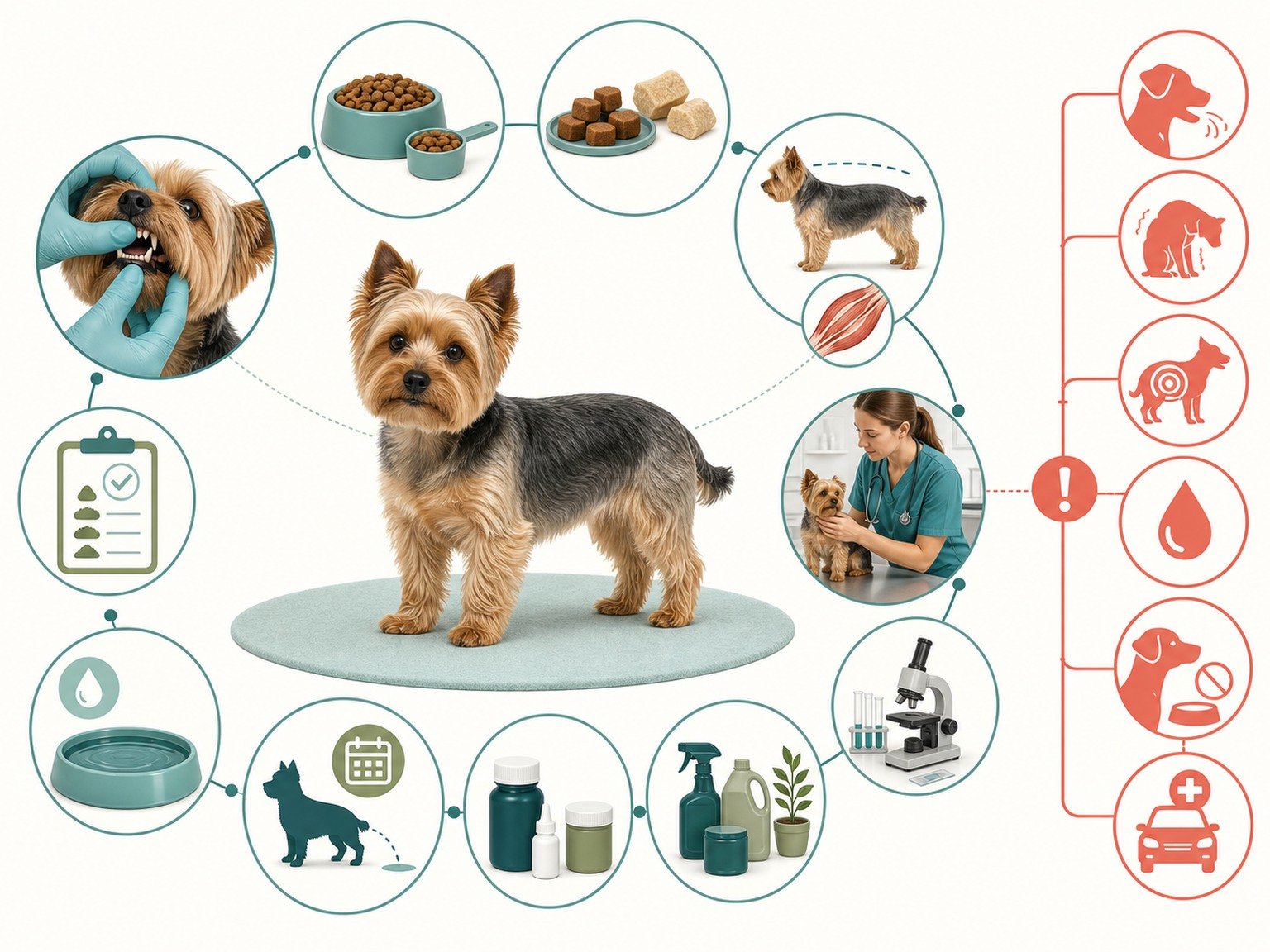
Use a gram scale or the most precise practical measure recommended for the food. Record the exact product, amount, meal timing, treats, dental chews, toppers, table food, supplements, and food used for medication. Recheck after a formula or package change.
A single chew or spoonful can be proportionally large for a small dog. Keep noncomplete extras within the veterinary nutrition plan and avoid reducing the complete food so far that essential nutrient intake is compromised.
Assess body condition and muscle condition with hands as well as eyes. Ask the veterinary team for a target and a measured adjustment; rapid or unexplained weight change requires investigation rather than improvised calorie correction. [1]
Include teeth, swallowing, and feeding behavior in the history
A dog who approaches food but drops it, chews on one side, paws at the mouth, swallows repeatedly, or prefers only soft food may have oral pain, nausea, swallowing difficulty, or another problem. Do not label the dog picky without examination.
Distinguish vomiting from regurgitation when possible. Record effort, timing relative to meals, appearance, undigested food, coughing, breathing changes, and video if it can be captured safely. That distinction can change the diagnostic pathway.
Offer calm separation from other pets and an accessible stable bowl. Do not use repeated food substitutions to chase appetite for days, because constant changes can worsen GI signs and obscure the original pattern.
Secure small hazards and record every exposure
Dropped human medication, xylitol-containing gum or candy, nicotine products, cannabis, batteries, string, small toys, wrappers, and concentrated supplements can be dangerous. Store products closed and high, inspect the floor, and keep bags and visitors' belongings inaccessible. [3]
If an exposure may have occurred, call a veterinarian or animal poison service with the dog, substance, estimated amount, time, signs, and packaging. Do not wait for symptoms or induce vomiting unless specifically directed.
Bring the full medication and product list to the visit. A tiny tablet fragment or dosing-device error can matter, while scaling another dog's amount by weight is not a safe treatment method.
Track patterns without normalizing recurrent illness
Record stool consistency and frequency, vomiting, appetite, water, urine, energy, pain, weight, diet, travel, stress, parasites, medications, and whether other animals or people are ill. Recurrent signs deserve assessment even when each episode seems mild.
Digestive signs can reflect diet intolerance, parasites, infection, obstruction, pancreatitis, inflammatory disease, endocrine or liver disease, medication effects, and other conditions. Breed associations can prioritize tests but cannot confirm a diagnosis. [4]
AAFCO label guidance helps owners identify nutritional adequacy and whether a food is complete for a life stage or intended only for intermittent or supplemental feeding. The front label alone cannot answer that question. [2]
Prepare for a focused veterinary conversation
Bring a concise timeline, short natural-movement or symptom videos when safe, the exact names and photographs of every food, treat, medication, and supplement label, and notes about appetite, water intake, stool, sleep, activity, comfort, and behavior. Include recent injuries, travel, boarding, diet changes, missed medication, and previous test results. A complete record helps the veterinary team separate a repeatable pattern from a single impression.
Decide in advance what you need from the visit: an urgency decision, a diagnosis plan, a nutrition review, a pain or mobility assessment, or a monitored trial. Ask what result would change the plan and what finding would rule an option out. This keeps research and product information in the right role. Evidence can shape questions and expectations, but it cannot determine what is safe for an individual dog without the history and examination.
Owner tool
Create a precise small-dog record
On a phone, swipe across the table to see every column.
| Checkpoint | What to record | Why it matters |
|---|---|---|
| Intake | Food grams, extras, water | Measures exposure |
| Eating | Interest, chewing, swallowing | Adds oral context |
| Output | Stool, vomit, urine, timing | Defines pattern |
| Triage | Energy, pain, blood, hydration | Guides urgency |
Better questions, calmer next steps
Questions to ask your veterinarian
- How should I measure this dog's complete daily intake?
- Could dental or swallowing pain explain the eating change?
- Which breed or age risks affect the workup?
- What signs require an urgent visit?
- What should I do if food or water cannot stay down?
FAQ
Do small dogs need frequent snacks to prevent low blood sugar?
Not universally. Feeding needs depend on age and health; concerning weakness needs veterinary guidance.
Can I give honey to a shaky dog?
Do not delay care or give a home treatment unless a veterinary professional directs it.
Are soft stools normal for toy breeds?
No. Recurrent stool change deserves a history and assessment.
Can I estimate portions with a scoop?
A gram scale is often more precise for small daily amounts.
Is picky eating just a personality trait?
It can also reflect pain, nausea, or disease, especially when behavior changes.
Sources
- American Animal Hospital Association: 2021 Nutrition and Weight Management Guidelines. Diet history, body condition, and feeding plans.
- Association of American Feed Control Officials: Reading Pet Food Labels. Nutritional adequacy and feeding-purpose statements.
- World Small Animal Veterinary Association: Global Nutrition Toolkit. Nutrition assessment and food selection.
- Merck Veterinary Manual: Disorders of the Stomach and Intestines in Dogs. Digestive sign and disease context.
- U.S. Food and Drug Administration: Who Do You Call if You Have a Pet Emergency?. Emergency and poison contact pathways.
