

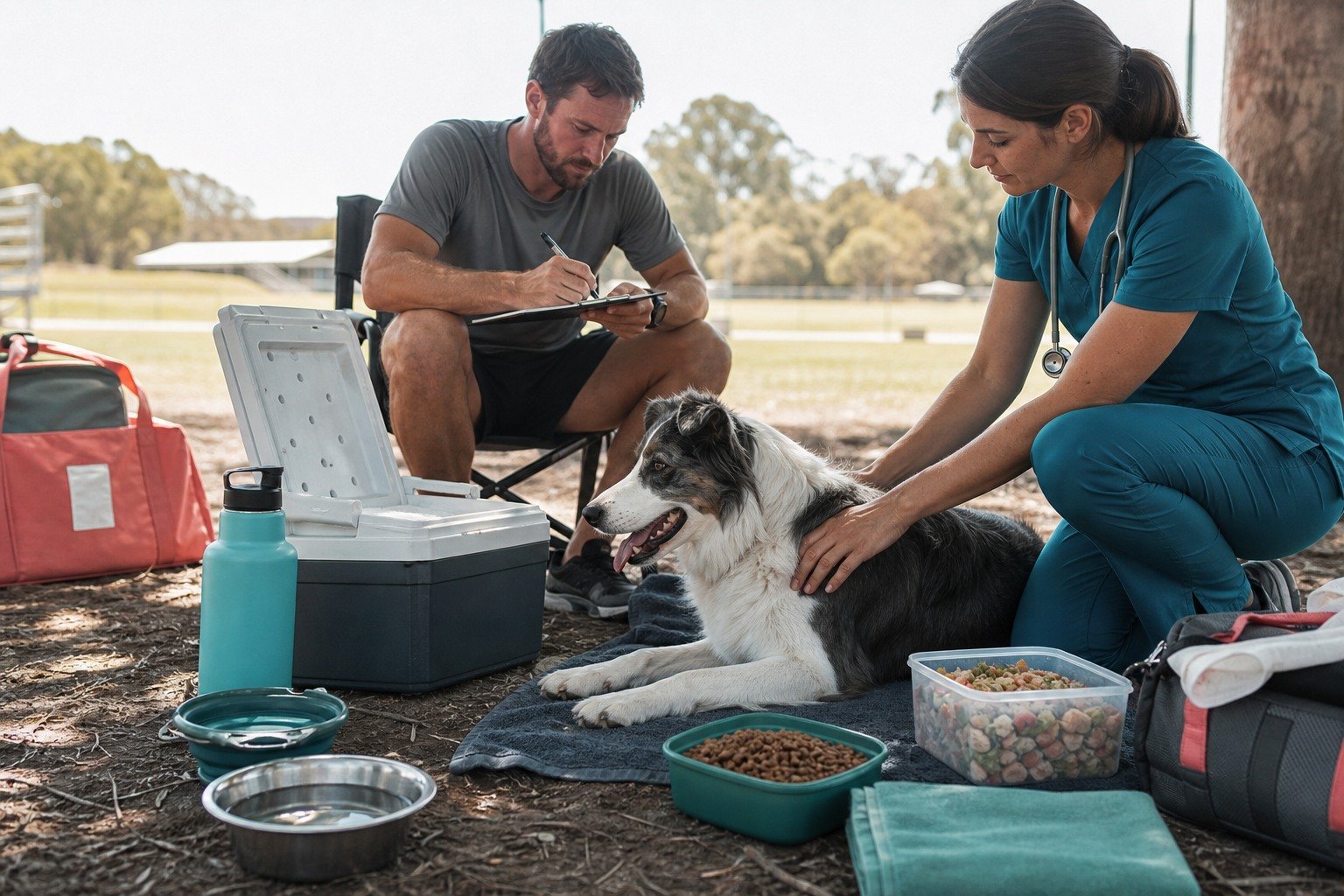
Hard exercise changes blood flow, temperature, hormones, appetite, water balance, and gastrointestinal function. Travel, excitement, schedule disruption, unfamiliar water, diet changes, parasites, medication, and underlying disease can produce similar signs. That means loose stool after an event is context to investigate, not proof of exercise stress and not a reason to automatically add a probiotic, acid suppressant, electrolyte product, or performance supplement. Research in racing sled dogs shows that strenuous exercise can be associated with gastric lesions and altered gastrointestinal markers, but those findings come from a highly specific population and do not define home treatment for every active dog. Build the plan with a veterinarian around the sport, environment, body condition, health, diet, conditioning, and recovery. Know the dog's baseline, change one variable at a time when safe, and treat heat illness, collapse, repeated vomiting, blood, or severe pain as urgent.
Short answer
Support the whole athlete, then investigate departures from baseline
Canine endurance studies have documented exercise-associated gastric injury and gastrointestinal changes in racing sled dogs. These findings support careful conditioning, monitoring, and veterinary planning, but they cannot be generalized into a supplement or medication protocol for every active dog. [1] [2]
- Start with the dog's history, complete diet, current treatment, and the exact question being asked.
- Separate an observed association from evidence that an intervention causes a useful clinical outcome.
- Use measurable observations and a planned review instead of testimonials or vague wellness claims.
- Contact a veterinarian promptly when signs are severe, escalating, persistent, or affecting normal function.
Safety first
Heat illness, collapse, repeated GI signs, and poor recovery are not training problems
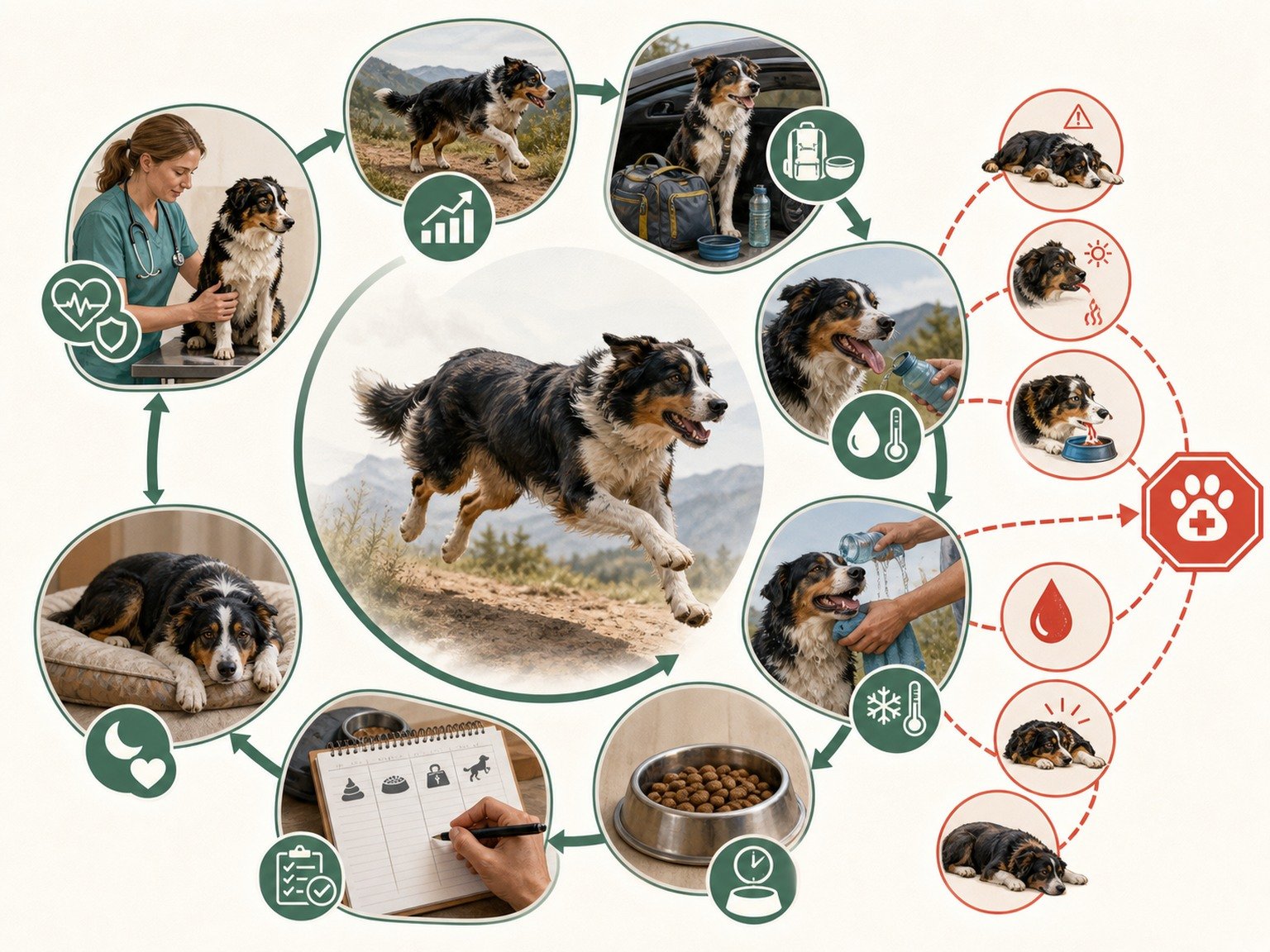
Stop activity and seek urgent veterinary care for collapse, confusion, severe weakness, breathing distress, seizures, very red, blue, or pale gums, repeated vomiting, bloody diarrhea, severe abdominal pain, a swollen abdomen, or failure to recover normally. Move away from heat while arranging care, follow professional cooling instructions, and never force water or food into a distressed dog.
- Do not use this article to diagnose a condition or calculate treatment.
- Do not delay care for collapse, breathing difficulty, severe pain, repeated vomiting, blood, or rapid decline.
- Do not start, stop, combine, or replace veterinary treatment based on a product claim.
Veterinary note
This article is educational and does not diagnose, treat, prescribe, or replace care from a licensed veterinarian. Your dog’s history, examination, diet, medications, and current signs determine what is appropriate.
Establish a health and training baseline
Before demanding work, discuss cardiovascular, respiratory, orthopedic, neurologic, and gastrointestinal history, medications, travel, parasite exposure, prior heat illness, and the sport's specific workload with the veterinary team. A dog can look enthusiastic while compensating for pain or disease.
Condition progressively across distance, speed, terrain, weather, load, surfaces, skills, and recovery. Sudden workload changes can affect appetite, stool, sleep, soreness, and injury risk; fitness in one activity does not automatically transfer to another.
Record resting appetite, weight, body and muscle condition, stool, water, urine, resting respiratory pattern, behavior, and usual recovery. Without a baseline, normal event-day variation and a clinically important change are harder to separate.
Plan complete nutrition and meal timing for the individual dog
Use a complete diet appropriate to life stage and energy demand. Measure the whole intake, including training rewards, treats, chews, toppers, and supplements, and monitor body and muscle condition over the season.
Meal size and timing should fit the dog, sport, intensity, travel, and veterinary plan. Avoid introducing unfamiliar foods, rich treats, or multiple products near an important event, when an adverse response would be difficult to interpret.
Do not copy a sled-dog feeding or medication protocol for a recreational runner, agility dog, hunting dog, or working dog. Studies of elite endurance populations answer narrow questions under specific conditions.
Protect hydration access and heat safety
Provide appropriate opportunities to drink before, during, and after work according to the veterinary and event plan. Record environment, humidity, acclimation, workload, drinking, urination, and recovery rather than assuming every performance change is dehydration. [3]
No supplement prevents heat illness. Dogs with airway limitations, obesity, age-related change, illness, certain medications, poor acclimation, or prior heat injury may need a more conservative plan. Shift timing, shade, rest, surface, and intensity before relying on a product.
A distressed, vomiting, confused, weak, or poorly coordinated dog may not swallow safely. Do not force water, food, ice, or an oral product. Begin safe first aid only as directed while arranging urgent veterinary treatment.
Use GI observations to trigger review, not self-treatment
Track stool frequency and consistency, urgency, blood or mucus, vomiting, appetite, abdominal comfort, weight, pace, temperature context, travel, diet, parasites, medication, and time to normal recovery. Note whether signs appear during work, immediately after, or the next day.
A study of racing Alaskan sled dogs found exercise-associated changes in gastric permeability and lesion severity; another small prospective study used capsule endoscopy after endurance racing. Sample, population, preventive medication, and study design limit broad application. [1] [2]
Persistent or recurrent signs require a workup for dietary, infectious, parasitic, inflammatory, obstructive, metabolic, medication-related, and other causes. A product that suppresses or masks a sign can delay the correct diagnosis.
Prepare for a focused veterinary conversation
Bring a concise timeline, short natural-movement or symptom videos when safe, the exact names and photographs of every food, treat, medication, and supplement label, and notes about appetite, water intake, stool, sleep, activity, comfort, and behavior. Include recent injuries, travel, boarding, diet changes, missed medication, and previous test results. A complete record helps the veterinary team separate a repeatable pattern from a single impression.
Decide in advance what you need from the visit: an urgency decision, a diagnosis plan, a nutrition review, a pain or mobility assessment, or a monitored trial. Ask what result would change the plan and what finding would rule an option out. This keeps research and product information in the right role. Evidence can shape questions and expectations, but it cannot determine what is safe for an individual dog without the history and examination.
Owner tool
Build an active-dog GI and recovery log
On a phone, swipe across the table to see every column.
| Checkpoint | What to record | Why it matters |
|---|---|---|
| Load | Sport, duration, intensity, terrain | Defines demand |
| Environment | Heat, humidity, travel, water | Adds context |
| GI | Stool, vomit, appetite, pain | Tracks signs |
| Recovery | Breathing, behavior, next-day state | Finds risk |
Better questions, calmer next steps
Questions to ask your veterinarian
- Is this dog healthy and conditioned for the planned work?
- How should meals and water opportunities fit this activity?
- What recovery pattern is normal for this dog?
- Which signs mean stop and seek urgent care?
- Do recurrent signs require testing before the next event?
FAQ
Is post-exercise diarrhea normal?
It can occur, but recurrence, blood, pain, or systemic signs need veterinary assessment.
Should sport dogs take an acid suppressant?
Only under a veterinarian's individual plan; do not copy research protocols.
Can an electrolyte supplement prevent heat illness?
No. Heat safety and urgent response remain essential.
Should I force water after hard exercise?
No. Provide safe access for a stable dog; never force oral intake into a distressed dog.
Does one sled-dog study apply to agility dogs?
Not automatically. Population, workload, diet, and methods differ.
Sources
- Journal of Veterinary Internal Medicine: GI Protein Loss, Gastric Injury, and Strenuous Exercise in Sled Dogs. Exercise-associated gastric and gastrointestinal findings.
- Journal of Small Animal Practice: GI Health in Racing Sled Dogs Using Capsule Endoscopy. Prospective endurance-race GI observations and limitations.
- American Animal Hospital Association: 2021 Nutrition and Weight Management Guidelines. Individual nutrition and body-condition assessment.
- World Small Animal Veterinary Association: Global Nutrition Toolkit. Diet history and food evaluation.
- Companion Animal Parasite Council: General Guidelines. Individualized parasite risk, travel, and prevention.
