Large-breed dogs need the same fundamentals as other dogs: a complete diet appropriate to life stage, measured portions, safe transitions, parasite prevention, a healthy body condition, and veterinary evaluation of persistent signs. Size alone does not diagnose a sensitive stomach or justify a special supplement. One distinction deserves urgent attention: large, giant, and especially deep-chested dogs have greater risk for gastric dilatation-volvulus, or GDV, a rapidly progressive emergency in which the stomach dilates and may rotate. Owners should know the warning pattern before it occurs and discuss individual risk and preventive gastropexy with their veterinarian. Routine soft stool, gas, vomiting, appetite change, or weight loss can have many causes and should not be folded into a bloat story without assessment. Keep the daily plan simple, record trends, and know when observation must give way to immediate care.
Short answer
Build a steady feeding routine and learn the GDV emergency pattern
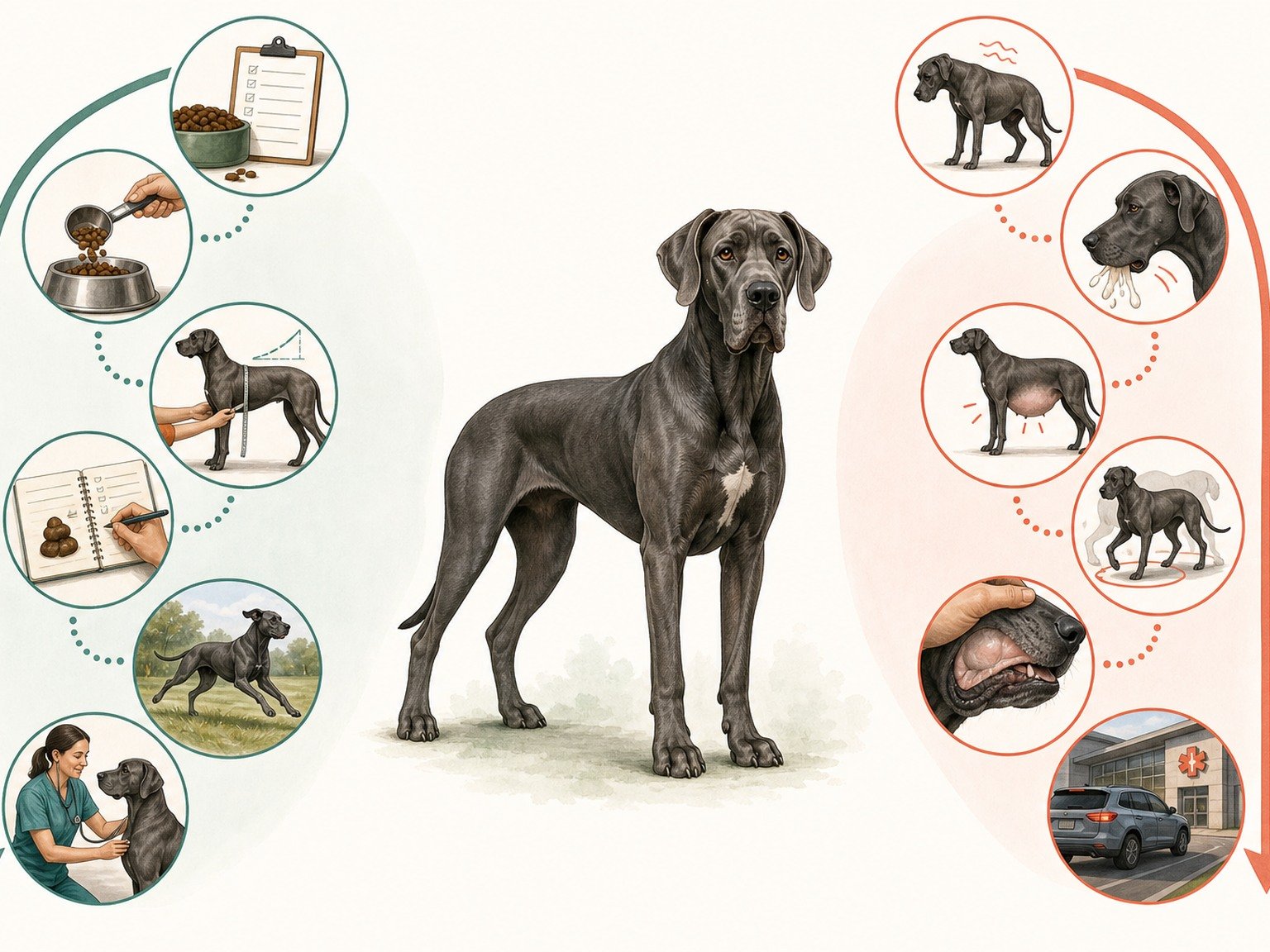
ACVS describes GDV as a life-threatening emergency associated with deep-chested conformation, large or giant size, age, family history, and other factors. Unproductive retching, drooling, restlessness, abdominal distension, weakness, or collapse require immediate veterinary attention. [1]
- Start with the dog's history, complete diet, current treatment, and the exact question being asked.
- Separate an observed association from evidence that an intervention causes a useful clinical outcome.
- Use measurable observations and a planned review instead of testimonials or vague wellness claims.
- Contact a veterinarian promptly when signs are severe, escalating, persistent, or affecting normal function.
Safety first
Unproductive retching and a swelling abdomen mean go now
Seek emergency veterinary care immediately for repeated attempts to vomit without producing material, rapid abdominal enlargement, severe restlessness, excessive drooling, weakness, pale gums, breathing difficulty, or collapse. Do not wait for the abdomen to look dramatically swollen, offer a home remedy, force food or water, or attempt decompression. Time affects outcome.
- Do not use this article to diagnose a condition or calculate treatment.
- Do not delay care for collapse, breathing difficulty, severe pain, repeated vomiting, blood, or rapid decline.
- Do not start, stop, combine, or replace veterinary treatment based on a product claim.
Veterinary note
This article is educational and does not diagnose, treat, prescribe, or replace care from a licensed veterinarian. Your dog’s history, examination, diet, medications, and current signs determine what is appropriate.
Match complete nutrition to life stage and body condition
For puppies expected to become large adults, use a food labeled complete and balanced for growth including growth of large-size dogs when appropriate. Do not add calcium or mineral products unless the veterinary team has identified a specific need; excess energy or altered mineral balance can disrupt controlled growth.
For adults, measure the complete diet, treats, chews, toppers, and supplements. Track body condition and muscle condition rather than relying on breed charts or the amount suggested by a cup alone. Weight gain and rapid eating deserve practical review, not an automatic digestive product.
WSAVA's nutrition toolkit emphasizes diet history, nutritional assessment, and questions about manufacturer expertise and quality control. Bring the food label and exact daily amounts to the veterinary visit. [2]
Create a calm, observable meal routine
Feed in a location where the dog is not competing, guarding, gulping from stress, or stealing another animal's food. If rapid intake is a concern, ask the veterinary team about a suitable feeder and meal pattern for this individual dog.
Avoid abrupt diet changes. When a change is not medically urgent, follow the transition recommended for the dog and record stool, vomiting, appetite, water, behavior, treats, medication, and access to trash or foreign objects.
Do not treat one feeding rule as proven prevention for every dog. Research on GDV risk factors is observational and sometimes conflicting. Discuss meal frequency, activity around meals, bowl setup, family history, prior surgery, and anxiety with the veterinarian rather than relying on a universal internet formula.
Separate ordinary digestive tracking from GDV triage
For non-emergency signs, record frequency, duration, stool appearance, vomiting versus regurgitation, appetite, weight, pain, diet, treats, travel, stress, parasites, and medication. Photographs can help the clinic understand a transient sign.
Persistent or recurrent vomiting, diarrhea, gas, appetite change, abdominal discomfort, or weight loss may reflect dietary, infectious, parasitic, inflammatory, obstructive, pancreatic, endocrine, medication-related, or other disease. Breed and size do not replace diagnostic work.
GDV is different: ACVS and Merck describe rapid progression, shock, and the need for immediate medical and surgical intervention. A dog can be critically ill before an owner is certain the stomach has twisted. [1] [3]
Discuss individual prevention and gastropexy before a crisis
Ask whether chest shape, breed, age, first-degree relatives, eating pattern, temperament, or planned abdominal surgery changes this dog's risk. Nearly any breed can develop gastric dilatation, so emergency signs still matter outside classic breeds.
Preventive gastropexy may be recommended for dogs at higher risk and can sometimes be performed with another planned procedure. It is a surgical decision with benefits and risks; gastropexy helps prevent volvulus but does not guarantee that gastric dilatation can never occur.
After gastropexy, owners still need to recognize abdominal distress and follow veterinary feeding and recovery guidance. Do not assume a prior procedure makes retching, distension, pain, or collapse safe to monitor at home. [4] [5]
Prepare for a focused veterinary conversation
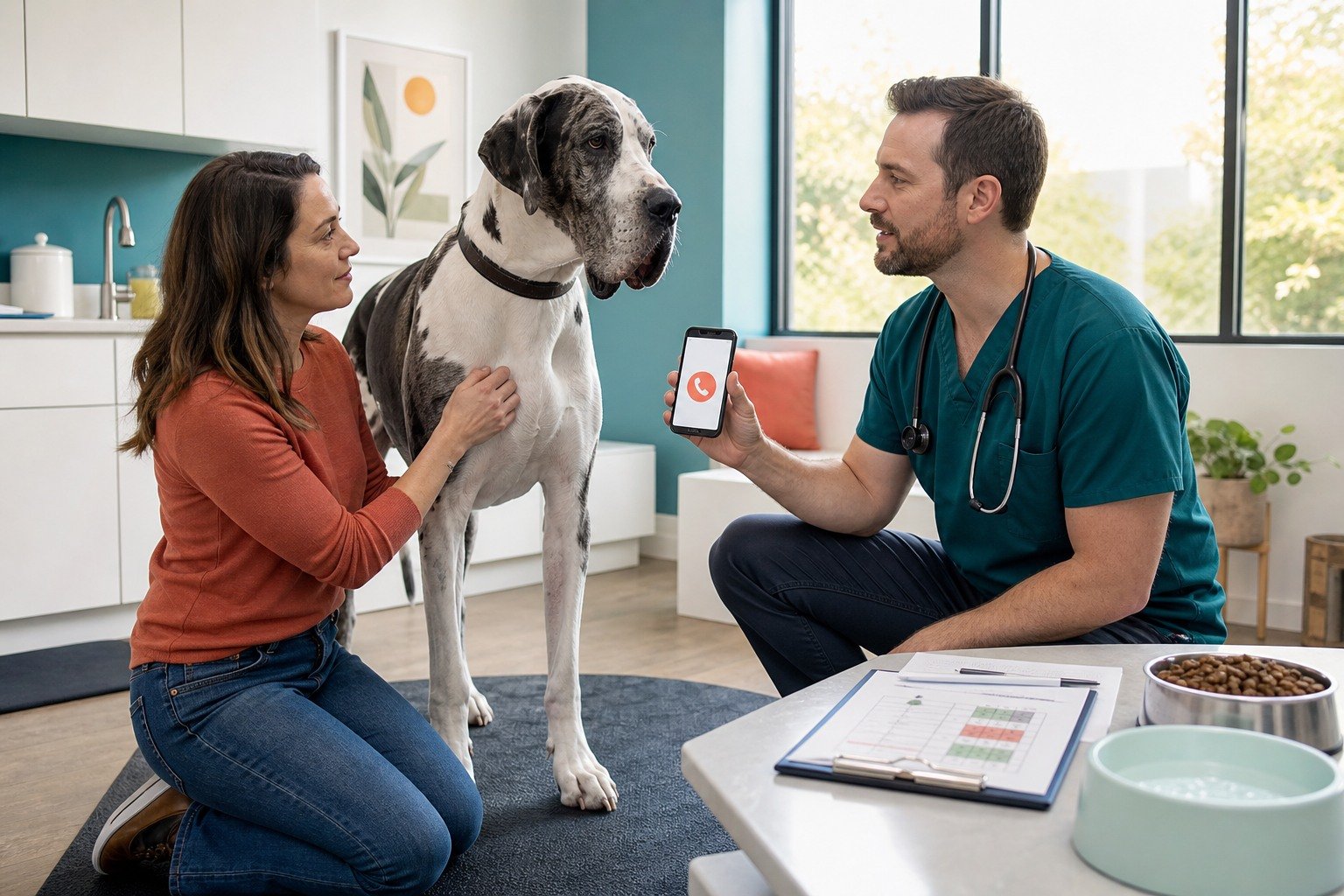
Bring a concise timeline, short natural-movement or symptom videos when safe, the exact names and photographs of every food, treat, medication, and supplement label, and notes about appetite, water intake, stool, sleep, activity, comfort, and behavior. Include recent injuries, travel, boarding, diet changes, missed medication, and previous test results. A complete record helps the veterinary team separate a repeatable pattern from a single impression.
Decide in advance what you need from the visit: an urgency decision, a diagnosis plan, a nutrition review, a pain or mobility assessment, or a monitored trial. Ask what result would change the plan and what finding would rule an option out. This keeps research and product information in the right role. Evidence can shape questions and expectations, but it cannot determine what is safe for an individual dog without the history and examination.
Owner tool
Keep a large-dog digestion and safety record
On a phone, swipe across the table to see every column.
| Checkpoint | What to record | Why it matters |
|---|---|---|
| Meals | Food, amount, time, pace | Finds patterns |
| Output | Stool, vomiting, appetite, weight | Defines change |
| Context | Treats, stress, exercise, medicines | Supports assessment |
| GDV plan | Risk, signs, ER route, gastropexy | Protects response |
Better questions, calmer next steps
Questions to ask your veterinarian
- Is the complete diet appropriate for life stage and expected adult size?
- Which feeding details should we change for this dog?
- What signs need same-day evaluation versus emergency care?
- Does family history or chest shape change GDV risk?
- Should we discuss preventive gastropexy?
FAQ
Do all large dogs have sensitive stomachs?
No. Size does not diagnose a digestive disorder.
Can a raised bowl prevent GDV?
Do not assume it can; discuss the individual feeding setup with your veterinarian.
Does gastropexy prevent all bloat?
It is intended to prevent volvulus, but gastric dilatation and other emergencies can still occur.
Should I give calcium to a large-breed puppy?
Not unless the veterinary nutrition plan specifically directs it.
Can I monitor dry heaving for an hour?
No. Unproductive retching in an at-risk dog is an emergency.
Sources
- American College of Veterinary Surgeons: Gastric Dilatation-Volvulus. GDV risk, signs, treatment, and gastropexy.
- World Small Animal Veterinary Association: Global Nutrition Toolkit. Nutrition assessment and food evaluation.
- Merck Veterinary Manual: Gastric Dilation and Volvulus in Small Animals. GDV epidemiology, findings, and emergency treatment.
- Association of American Feed Control Officials: Reading Pet Food Labels. Life-stage and large-size growth adequacy statements.
- American Animal Hospital Association: 2021 Nutrition and Weight Management Guidelines. Body condition, diet history, and individualized nutrition.
