

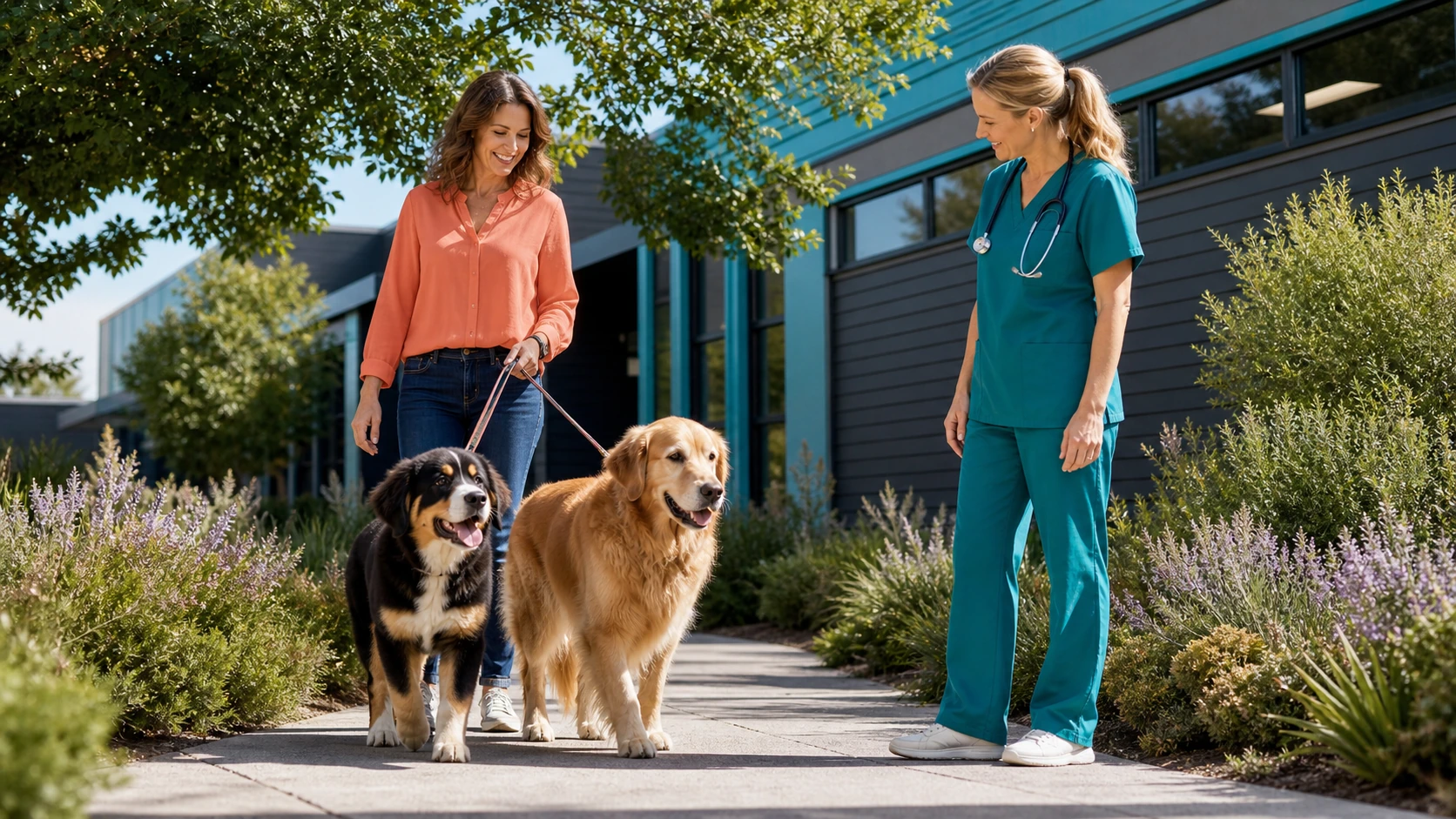
Large and giant breeds place substantial forces through growing and adult joints. Genetics influence developmental orthopedic disease, while excess energy, inappropriate calcium, rapid weight gain, poor conditioning, and injury can modify risk. Prevention cannot eliminate inherited disease, but careful growth, complete nutrition, lean condition, and early attention to movement create a stronger foundation.
Short answer
Aim for steady development, not maximum growth
Large-breed puppies need a complete diet formulated for growth including growth of large-size dogs. Excess energy and calcium can increase developmental orthopedic risk; adult-maintenance food and unbalanced home diets can also fail growing-puppy requirements. The goal is a lean puppy following its genetic growth curve, not a small puppy or a rapidly oversized puppy. [1] [2]
- Choose a complete large-breed growth diet with the veterinary team and avoid unplanned calcium or vitamin D supplements.
- Use body condition and growth trend, not a breed-chart target alone, to adjust feeding.
- Build strength and coordination with consistent age-appropriate movement while avoiding fatigue and repetitive high impact.
Safety first
Growing-dog pain and lameness deserve examination
Contact a veterinarian promptly for persistent or sudden lameness, limb swelling, severe pain, reluctance to rise, fever, trauma, a change in limb shape, knuckling or dragging, collapse, or rapidly declining activity. Restrict strenuous exercise after an acute change and do not assume growing pains are harmless.
- Do not add calcium, bone meal, vitamin D, or mineral products to a complete growth diet without veterinary nutrition direction.
- Do not force distance, jumping, repetitive stairs, or running beside a vehicle through fatigue or discomfort.
- Do not wait for a constant limp before discussing repeated hesitation, stiffness, or gait change.
Veterinary note
This article is educational and does not diagnose, treat, prescribe, or replace care from a licensed veterinarian. Your dog’s history, examination, diet, medications, and current signs determine what is appropriate.
Control energy and mineral exposure during growth
Large-breed skeletons grow quickly and remain immature for longer than those of small dogs. Puppies absorb calcium less selectively early in life, making excess especially concerning. Research and nutrition guidance link excessive energy and calcium with greater expression of developmental orthopedic problems in susceptible large breeds. [1] [2]
Feed a measured complete growth diet carrying the appropriate large-size growth suitability statement. Treats, chews, toppers, and supplements count toward total energy and nutrients. Adult maintenance diets are not a safer shortcut; they may provide inappropriate amounts or balance for growth. Home-prepared diets require formulation by a qualified veterinary nutrition professional.
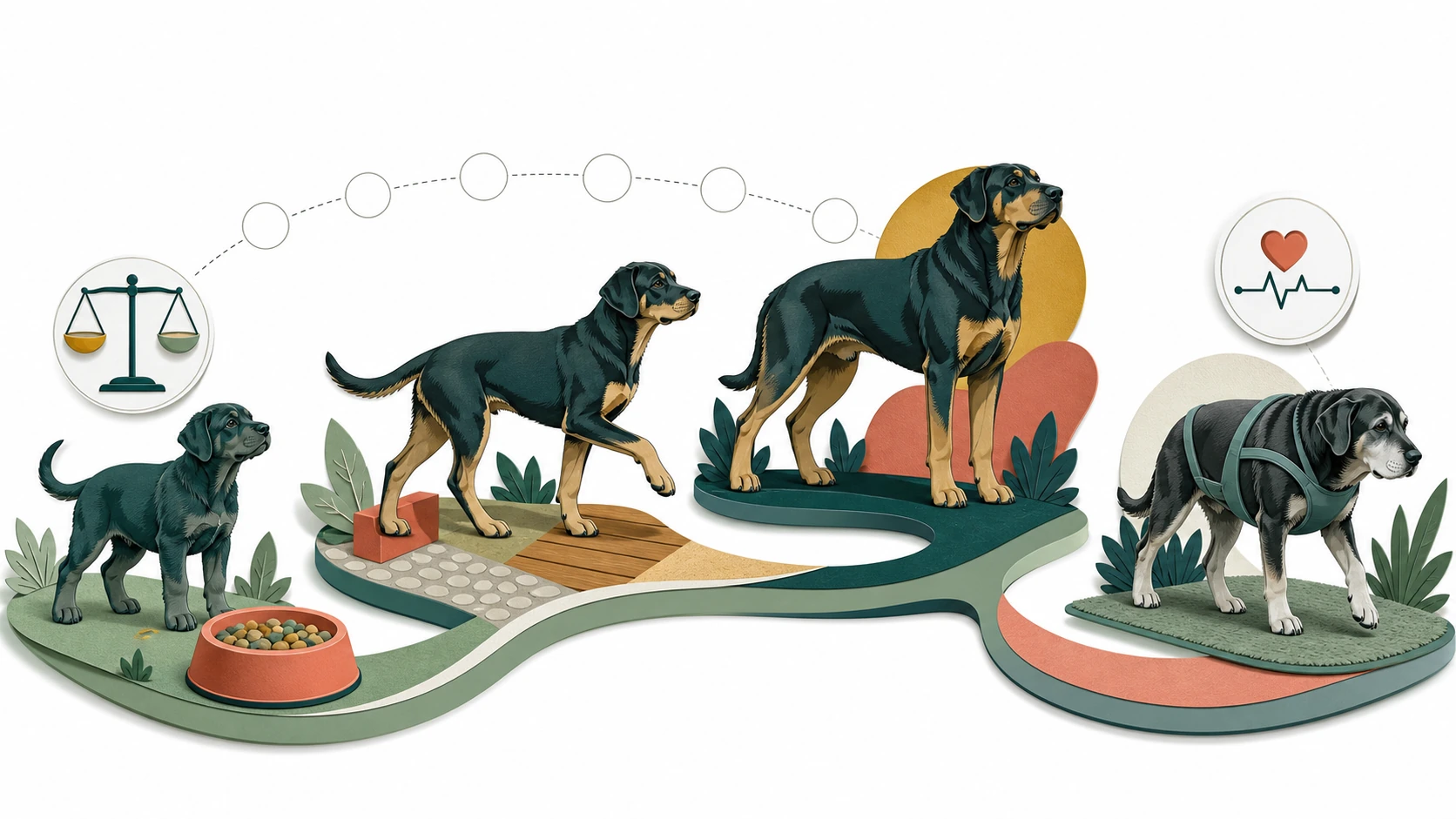
Use body condition and growth trend as practical controls
A scale number cannot distinguish frame, fat, and muscle. The veterinary team uses body condition score, muscle condition, growth rate, and breed maturity to interpret weight. Ribs should be readily palpable with a visible waist and abdominal tuck appropriate to conformation. Photographs from above and the side can help track gradual change. [3]
Measure food consistently and review all calorie sources. Feeding guides are starting points, not guarantees. Adjustments should preserve nutritional adequacy; simply feeding much less of a non-weight-management food can reduce essential nutrient intake. Illness, parasites, endocrine disease, medication, and pain can also affect growth or weight.
Match movement to maturity and the individual dog
Puppies need movement for coordination, muscle, bone, behavior, and healthy exploration. Favor self-paced play, varied surfaces, short walks, training, and rest. Repetitive high-impact jumping, forced endurance, and slippery footing may add avoidable load, especially when a puppy is tired or poorly conditioned.
Adult large-breed dogs benefit from consistent conditioning rather than occasional intense weekends. Warm up, build duration gradually, maintain nails and paws, and vary activity. A dog with dysplasia, osteoarthritis, injury, or neurologic disease needs an individualized plan rather than generic breed exercise advice. [4] [5]
Screen early and shape the home environment
Discuss breed and family risk, growth, gait, and screening timing at puppy visits. Hip and elbow evaluation methods answer different questions and require correct positioning. Early signs may include bunny hopping, shortened stride, shifting weight, difficulty rising, reluctance on stairs, or reduced endurance, but none is diagnostic alone. [4]
Traction runners, stable steps or ramps, supportive rest areas, and sensible car access can reduce slips and awkward transitions. These aids do not prevent inherited disease, but they can improve day-to-day safety. Keep the dog at a lean condition and preserve muscle with appropriate activity.
Continue monitoring into adulthood and senior years. Developmental disease can lead to osteoarthritis long after puppyhood, and large dogs may mask discomfort. A repeatable mobility baseline gives the veterinary team better information than waiting for crisis.
Prepare for a focused veterinary conversation
Bring a concise timeline, short natural-movement or symptom videos when safe, the exact names and photographs of every food, treat, medication, and supplement label, and notes about appetite, water intake, stool, sleep, activity, comfort, and behavior. Include recent injuries, travel, boarding, diet changes, missed medication, and previous test results. A complete record helps the veterinary team separate a repeatable pattern from a single impression.
Decide in advance what you need from the visit: an urgency decision, a diagnosis plan, a nutrition review, a pain or mobility assessment, or a monitored trial. Ask what result would change the plan and what finding would rule an option out. This keeps research and product information in the right role. Evidence can shape questions and expectations, but it cannot determine what is safe for an individual dog without the history and examination.
Owner tool
Plan large-breed joint support by life stage
On a phone, swipe across the table to see every column.
| Life stage | Priority | Watch for |
|---|---|---|
| Puppy | Controlled growth and complete nutrition | Rapid gain or gait change |
| Adolescent | Coordination and gradual conditioning | Fatigue or repeated lameness |
| Adult | Lean condition and consistent strength | Stiffness and recovery change |
| Senior | Comfort, muscle, traction, reassessment | Rising and endurance decline |
Better questions, calmer next steps
Questions to ask your veterinarian
- Is this food appropriate for growth including large-size dogs?
- How should we track body and muscle condition through maturity?
- Which activities fit this dog's age, conformation, and current fitness?
- Would hip or elbow screening change a decision now?
- Which subtle movement changes should trigger an earlier visit?
FAQ
Should large-breed puppies eat adult food?
No. They need a complete growth diet with appropriate large-size growth nutrient control.
Should calcium be added?
Not to a complete commercial growth diet unless a veterinary nutrition professional identifies a specific need.
Is exercise dangerous for large puppies?
Appropriate movement is beneficial; forced, repetitive, high-impact loading and fatigue are different concerns.
Can prevention eliminate hip dysplasia?
No. Genetics remain important, although weight, nutrition, and loading can modify expression.
When does a large dog become fully mature?
Timing varies by breed and individual; growth and physical maturation extend beyond a simple birthday cutoff.
Sources
- Veterinary Sciences: Nutrient Composition of Adult and Senior Dog Diets. Large-breed growth diet and calcium context.
- Canadian Veterinary Journal: Dietary Imbalances in a Large Breed Puppy. Energy, calcium, phosphorus, vitamin D, and growth risks.
- American Animal Hospital Association: 2021 Nutrition and Weight Management Guidelines. Individual nutrition and body-condition assessment.
- American College of Veterinary Surgeons: Canine Hip Dysplasia. Developmental hip disease and screening.
- American College of Veterinary Surgeons: Osteoarthritis in Dogs. Risk, signs, and multimodal joint care.
