


Excess body fat changes joint health mechanically and biologically. More mass increases load, while adipose tissue participates in inflammatory signaling. For a dog with osteoarthritis, weight management can improve mobility and may reduce lameness, but it does not erase structural disease or replace pain treatment, rehabilitation, or diagnosis. The safest plan protects lean tissue and complete nutrition while pursuing a steady trend.
Short answer
Weight is one modifiable part of a multimodal joint plan
A prospective study of obese dogs with osteoarthritis found improved lameness after modest weight reduction, though the small uncontrolled design limits certainty. AAHA guidance recommends individualized nutritional assessment, measured feeding, monitoring, and a team approach. The goal is not rapid loss; it is sustainable fat loss while maintaining muscle, nutrition, and quality of life. [1] [2]
- Use body condition and muscle condition with weight; the scale alone is incomplete.
- Measure every calorie source and preserve a complete diet rather than improvising a crash restriction.
- Address pain so the dog can move safely, and track function alongside weight change.
Safety first
Rapid loss, weakness, or refusal to eat needs veterinary attention
Contact the veterinary team for refusal to eat, repeated vomiting or diarrhea, marked weakness, collapse, rapid unplanned weight loss, excessive thirst or urination, breathing difficulty, severe pain, inability to rise, or a sudden mobility decline. Weight gain or resistance to loss can also reflect disease or medication effects.
- Do not crash diet, skip essential meals, or use human weight-loss products.
- Do not increase exercise through pain or withdraw pain medication to make activity count.
- Do not shame household members; make the feeding system measurable and shared.
Veterinary note
This article is educational and does not diagnose, treat, prescribe, or replace care from a licensed veterinarian. Your dog’s history, examination, diet, medications, and current signs determine what is appropriate.
Assess fat, muscle, and function together
Body condition score estimates fat cover using ribs, waist, abdominal tuck, and other landmarks. Muscle condition evaluates loss over the spine, skull, shoulders, and pelvis. A dog can be overweight and still have meaningful muscle loss, especially with chronic pain or aging. Both measures influence the plan. [2] [3]
Record weight on the same scale when possible, but interpret the trend with examination, hydration, growth or age, and disease. Hypothyroidism, hyperadrenocorticism, medications, reduced mobility, and feeding drift can affect weight. Joint pain can create a cycle of less movement, muscle loss, and further functional difficulty.
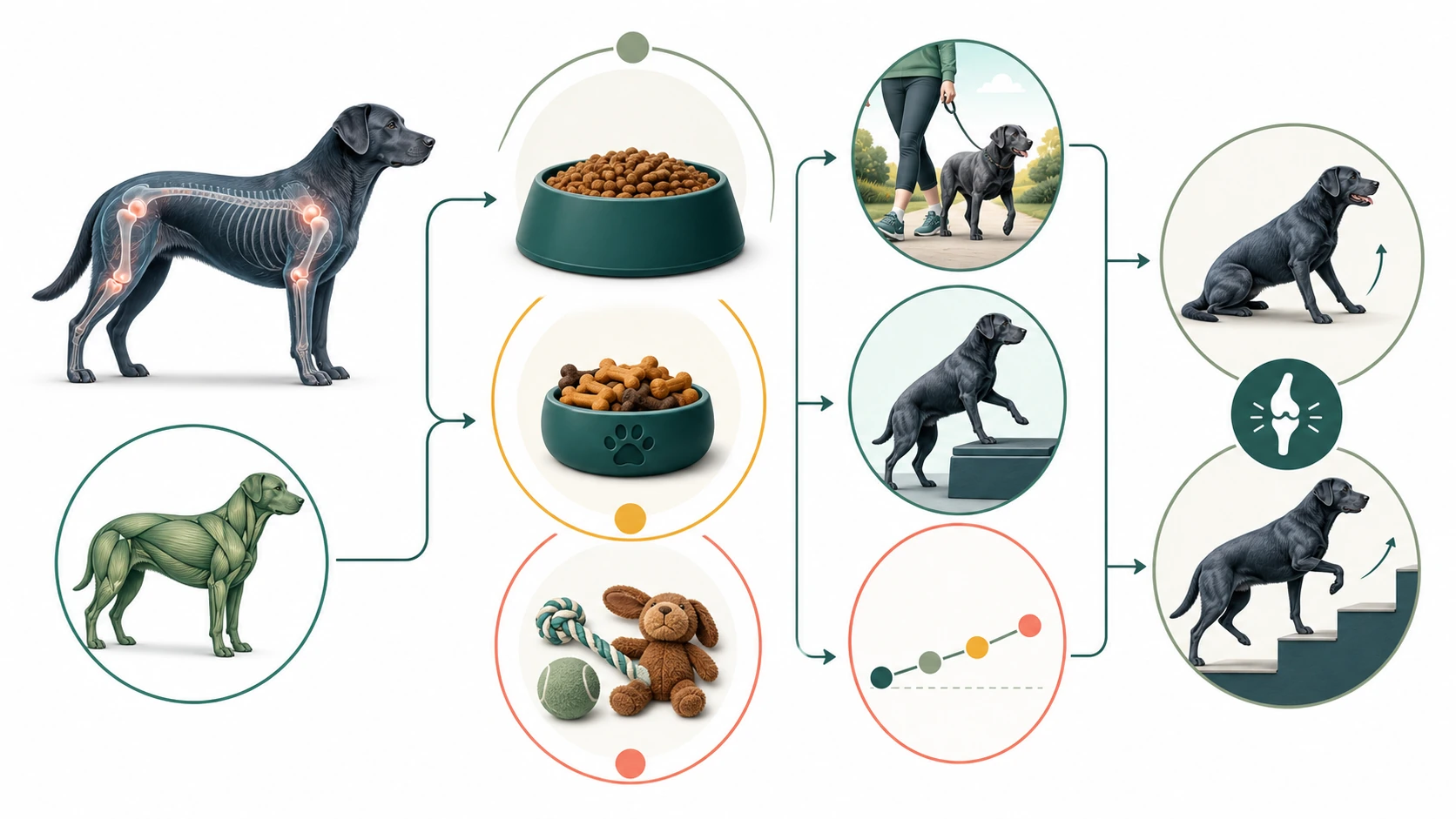
Create a complete and measurable feeding plan
Start with the exact main diet, measured amount, treats, table food, chews, toppers, supplements, medication carriers, and food obtained from other people or pets. Use a gram scale when practical. Feeding-cup estimates and package guides can be imprecise, and seemingly small extras accumulate. [2]
The veterinary team may choose a therapeutic weight-management diet to support satiety and nutrient intake during energy restriction. Simply feeding a much smaller amount of a maintenance food can reduce protein, vitamins, and minerals. Diet choice also considers gastrointestinal, kidney, urinary, endocrine, allergy, and medication needs.
Protect movement while weight changes
Exercise supports muscle, conditioning, enrichment, and energy expenditure, but a painful dog needs an appropriate starting point. Short consistent walks, controlled strengthening, rehabilitation, or aquatic exercise may fit some dogs; others need diagnostic work or pain stabilization first. Increase only one variable at a time. [3] [4]
Track rising, pace, stairs, sleep, willingness, recovery, and flare frequency. The lameness study suggests function may improve after a modest loss in some obese dogs with osteoarthritis, but individual response varies and other treatment may still be needed. Weight loss is not proof that pain has resolved. [1]
Design the household system for adherence
Assign one daily food allowance and decide who measures it. Portion treats from that allowance or use nonfood rewards such as attention, sniffing, play, grooming, or access to a favorite place when appropriate. Keep a simple record so duplicate meals and hidden extras are visible.
Set recheck timing in advance. The team can adjust energy, diet, exercise, and pain care based on the actual trend. Plateaus are information, not failure: confirm measurement, adherence, activity, medical factors, and whether the target remains appropriate. Avoid changing everything simultaneously.
Use neutral language focused on comfort and health. Owners are more likely to sustain a plan that fits budget, schedule, household routines, and the dog's preferences. The best theoretical plan is ineffective if it cannot be followed safely.
Prepare for a focused veterinary conversation
Bring a concise timeline, short natural-movement or symptom videos when safe, the exact names and photographs of every food, treat, medication, and supplement label, and notes about appetite, water intake, stool, sleep, activity, comfort, and behavior. Include recent injuries, travel, boarding, diet changes, missed medication, and previous test results. A complete record helps the veterinary team separate a repeatable pattern from a single impression.
Decide in advance what you need from the visit: an urgency decision, a diagnosis plan, a nutrition review, a pain or mobility assessment, or a monitored trial. Ask what result would change the plan and what finding would rule an option out. This keeps research and product information in the right role. Evidence can shape questions and expectations, but it cannot determine what is safe for an individual dog without the history and examination.
Owner tool
Track weight and mobility together
On a phone, swipe across the table to see every column.
| Measure | How to record | Why it matters |
|---|---|---|
| Weight | Same scale and interval | Direction and rate |
| Body condition | Standard score and photos | Fat change |
| Muscle condition | Veterinary score | Lean-tissue protection |
| Function | Rising, pace, stairs, recovery | Meaningful joint outcome |
Better questions, calmer next steps
Questions to ask your veterinarian
- What are this dog's body and muscle condition scores?
- Could disease, medication, or pain be affecting weight?
- Which complete diet supports the planned energy reduction?
- What activity is safe at the current pain and fitness level?
- How often will weight, muscle, and mobility be reassessed?
FAQ
Can weight loss cure arthritis?
No. It may improve function and reduce load but does not erase structural joint disease.
Should I feed much less of the current food?
Large restriction can compromise nutrient intake; use a veterinary feeding plan.
Are treats forbidden?
Not necessarily. They must be counted and fit the complete plan.
What if exercise hurts?
Contact the veterinarian; pain control and a modified activity or rehabilitation plan may be needed.
Why track muscle?
Scale loss can include lean tissue, and muscle is important for joint support and function.
Sources
- BMC Veterinary Research: Effect of Weight Loss on Lameness in Obese Dogs with Osteoarthritis. Prospective canine weight-loss and lameness findings.
- American Animal Hospital Association: 2021 Nutrition and Weight Management Guidelines. Individual assessment, feeding plans, and adherence.
- American College of Veterinary Surgeons: Osteoarthritis in Dogs. Weight, signs, diagnosis, and multimodal management.
- American Animal Hospital Association: 2022 Pain Management Guidelines for Dogs and Cats. Pain assessment and multimodal care.
- WSAVA: Global Nutrition Guidelines and Toolkit. Diet history, body condition, and muscle condition tools.
