

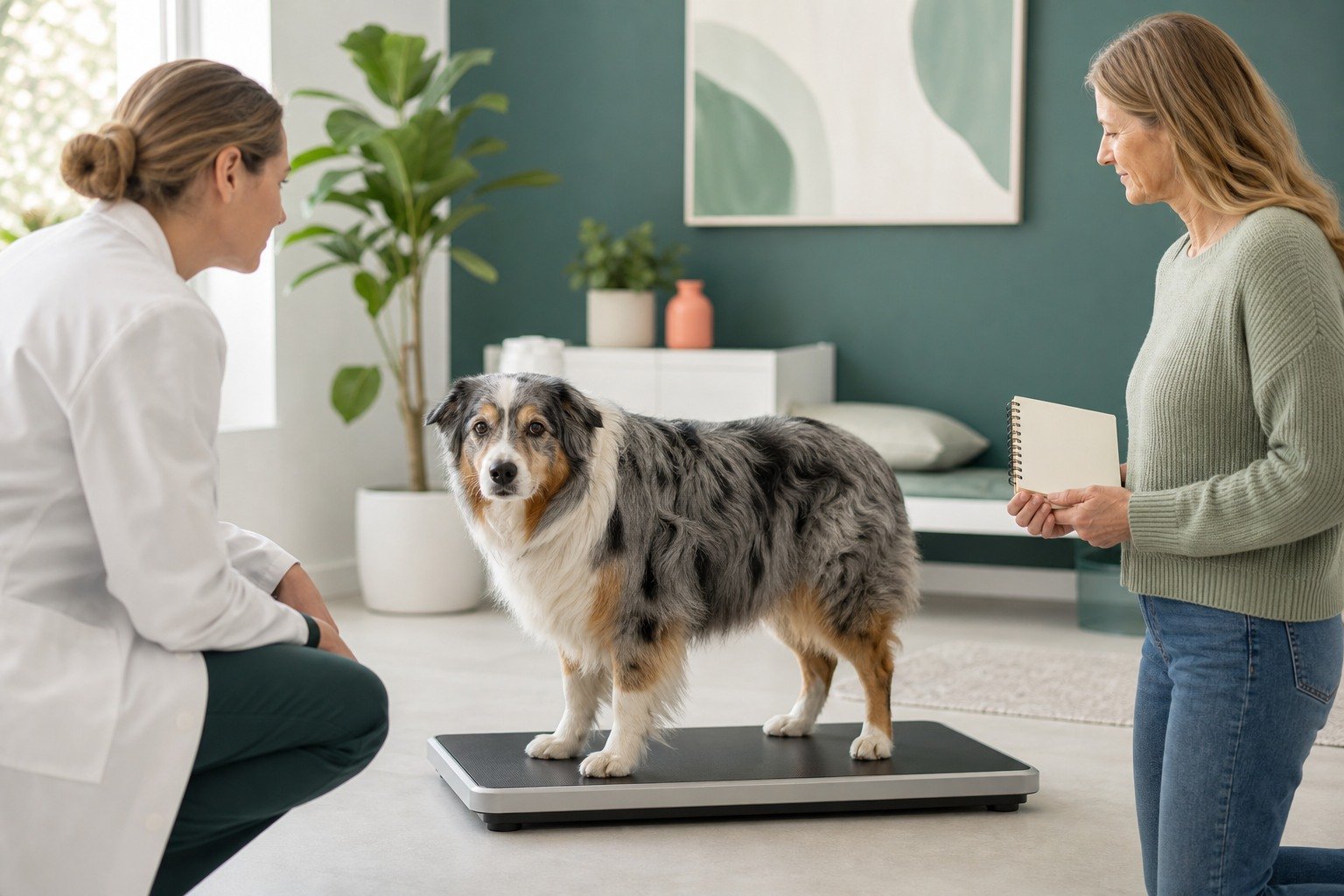
Senior dog weight management is not simply making the number on a scale lower. A veterinarian considers body weight, body condition, muscle condition, appetite, diet, treats, activity, mobility, dental health, medications, and disease context together. A dog can carry excess body fat and still lose muscle, or lose weight because of illness rather than a successful diet. Age-related sarcopenia and disease-associated cachexia are not the same process. That distinction matters because calorie targets, diet composition, protein decisions, activity, monitoring intervals, and treatment must be individualized. Owners can support care by tracking trends consistently and reporting unintended changes promptly, but a generic guide should never prescribe a target weight, calorie number, loss rate, diet brand, or medication change.
Short answer
Track weight, fat, and muscle as separate signals
AAHA and WSAVA nutrition guidance treats scale weight, body condition score, and muscle condition score as related but distinct. Muscle loss may be present even when body weight or body shape seems stable. A senior plan should identify whether the concern is excess fat, unintended loss, muscle loss, or a combination before goals are set. [1] [2] [3]
- Record timing, context, frequency, recovery, and effect on ordinary daily function.
- Use observations to prepare for assessment, not to assign a diagnosis or treatment at home.
- Bring current health, diet, medication, supplement, and prior-response details to the veterinary team.
- Agree on what to monitor, when to recheck, and which change requires faster care.
Safety first
Unintended weight or muscle loss needs timely veterinary evaluation
Contact a veterinarian for rapid or unexplained weight change, appetite loss, difficulty eating, vomiting, diarrhea, increased thirst or urination, weakness, collapse, breathing change, pain, marked fatigue, or visible muscle loss. Do not respond with a crash diet, extra calories, high-protein feeding, or supplements before the cause is assessed.
- Do not delay care for severe, sudden, escalating, or function-limiting changes.
- Do not start, stop, combine, or calculate treatment from a general article.
- Keep people and animals safely separated when behavior creates an immediate injury risk.
Veterinary note
This article is educational and does not diagnose, treat, prescribe, or replace care from a licensed veterinarian. Your dog’s history, examination, diet, medications, and current signs determine what is appropriate.
Measure more than the scale
Body weight is objective and useful when measured consistently, but it cannot show how much of the body is fat, lean tissue, fluid, or another change. Record the date, scale, recent meal context when relevant, and trend rather than reacting to one small fluctuation.
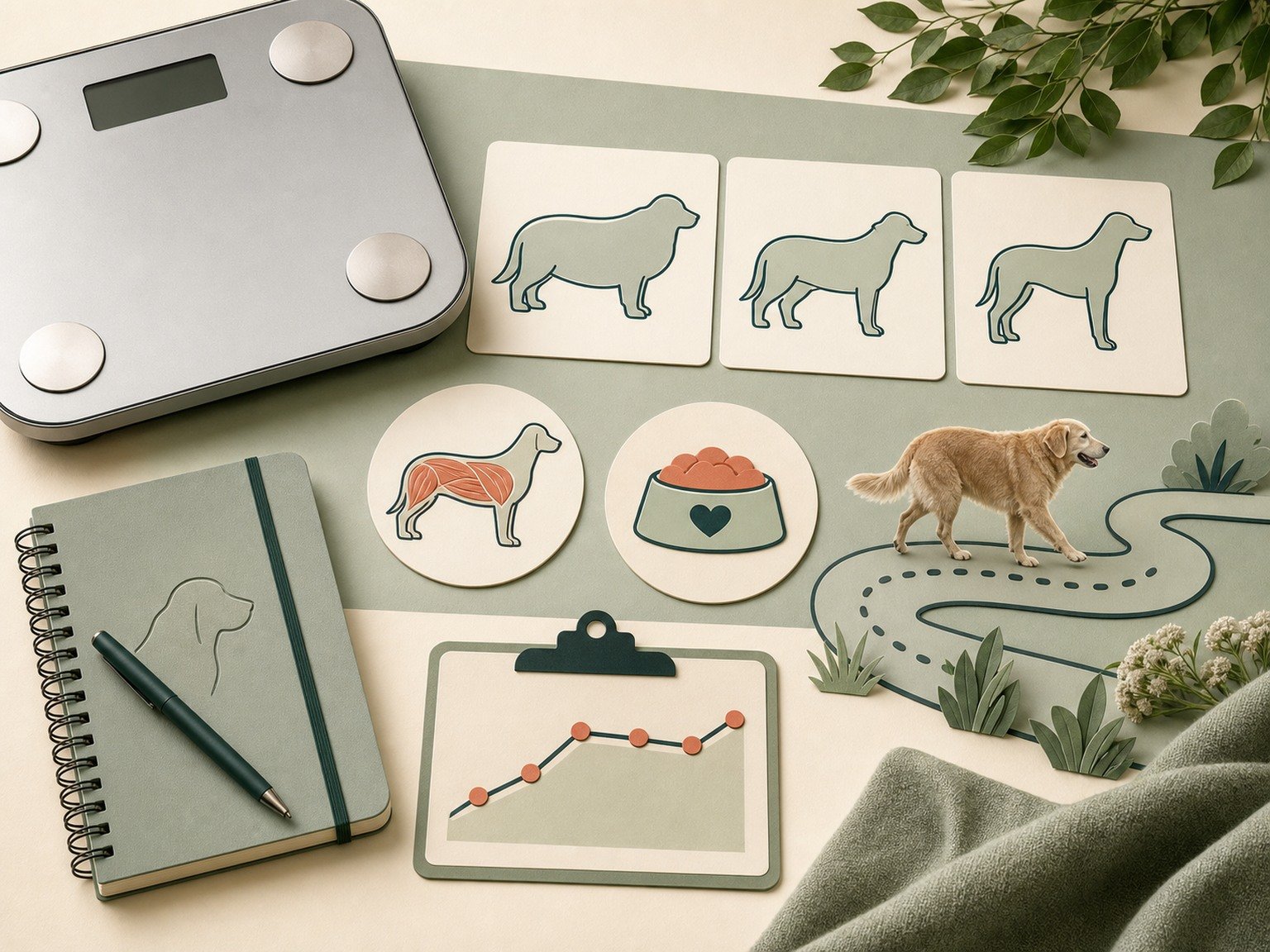
Body condition scoring estimates fat stores by looking and feeling for features such as ribs, waist, and abdominal tuck. Muscle condition scoring separately examines muscle over areas such as the spine, shoulder blades, skull, and pelvis. Ask the veterinary team to demonstrate both on your dog. [1] [3]
A dog may have a high body condition score and muscle loss at the same time. That combination is easy to miss if the conversation focuses only on pounds. Repeated assessment helps reveal whether the plan is protecting lean tissue while addressing excess fat.
Distinguish excess fat from unintended loss
Excess body fat can affect health and mobility, but a weight-reduction goal still requires a complete nutrition and medical assessment. Treats, table food, dental chews, supplements, food used for medication, and feeding by multiple household members all belong in the intake.
Unintended loss can reflect reduced intake, dental pain, gastrointestinal disease, endocrine disease, kidney or liver disease, cancer, medication effects, impaired absorption, or other problems. The pattern cannot be assigned from appearance or age alone.
AAHA senior guidance emphasizes repeated body and muscle condition assessment because older dogs can experience excess fat, overall weight loss, or muscle change. Report a trend rather than assuming that becoming thinner is desirable in a senior dog. [2]
Keep sarcopenia and cachexia conceptually separate
Sarcopenia refers to age-associated loss of lean mass, while cachexia is associated with disease and metabolic change. The terms overlap in visible muscle loss but are not interchangeable, and neither should be diagnosed from a photograph. [4]
Appetite can be normal, increased, or decreased in different conditions. Mobility limitation can also reduce activity without explaining the whole trend. Veterinary history, examination, and selected testing help determine which questions matter.
Do not set a generic protein target or assume that every senior food is appropriate. Kidney, liver, gastrointestinal, endocrine, dental, and other conditions can change nutrition decisions. The veterinary team or a board-certified veterinary nutritionist can individualize the plan.
Create a monitored plan without body shame
Use neutral functional goals: comfortable movement, preserved muscle, reliable appetite, improved body condition when appropriate, and maintenance of activities the dog values. Avoid language that blames the dog or caregiver; feeding routines are complex and can be changed more effectively with accurate data.
Measure food with the method the veterinary team recommends and record all extras, but do not calculate calories from this article. The plan should specify the selected diet, amount, transition, monitoring interval, expected trend, and what would trigger reassessment.
Pair weight data with mobility, stamina, sleep, stool, appetite, and medication notes. A plan that changes the scale but worsens hunger, muscle, comfort, or function needs review. Never alter prescribed medication to influence appetite or weight without the prescriber.
Prepare for a focused veterinary conversation
Bring a concise timeline, short natural-movement or symptom videos when safe, the exact names and photographs of every food, treat, medication, and supplement label, and notes about appetite, water intake, stool, sleep, activity, comfort, and behavior. Include recent injuries, travel, boarding, diet changes, missed medication, and previous test results. A complete record helps the veterinary team separate a repeatable pattern from a single impression.
Decide in advance what you need from the visit: an urgency decision, a diagnosis plan, a nutrition review, a pain or mobility assessment, or a monitored trial. Ask what result would change the plan and what finding would rule an option out. This keeps research and product information in the right role. Evidence can shape questions and expectations, but it cannot determine what is safe for an individual dog without the history and examination.
Owner tool
Track senior body-composition trends
On a phone, swipe across the table to see every column.
| Checkpoint | Record | Why it helps |
|---|---|---|
| Weight | Same scale, date, trend | Adds objective context |
| Body condition | Vet-taught fat assessment | Separates fat from weight |
| Muscle | Vet-taught muscle assessment | Catches lean loss |
| Function | Appetite, mobility, sleep, stool | Links trend to health |
Better questions, calmer next steps
Questions to ask your veterinarian
- Is the concern fat, muscle, total weight, or several changes?
- Could disease, pain, dental health, or medication contribute?
- How should I measure food and track extras?
- What trend and monitoring interval are appropriate?
- What change should stop the plan and prompt reassessment?
FAQ
Is scale weight enough?
No. Body and muscle condition add different information.
Can an overweight dog lose muscle?
Yes. Excess fat and muscle loss can occur together.
Is weight loss always good for a senior dog?
No. Unintended loss requires evaluation.
Are sarcopenia and cachexia the same?
No. They have different contexts and need veterinary interpretation.
Can this guide set calories?
No. Calorie and diet decisions must be individualized.
Sources
- American Animal Hospital Association: 2021 Nutrition and Weight Management Guidelines. Complete nutritional assessment and individualized recommendations.
- American Animal Hospital Association: 2023 Senior Care Guidelines: Nutrition. Senior fat, weight, and muscle trends.
- World Small Animal Veterinary Association: Global Nutrition Guidelines and Toolkit. Separate body and muscle condition scoring.
- Journal of Veterinary Internal Medicine: Cachexia and Sarcopenia in Dogs and Cats. Distinct lean-mass-loss syndromes.
