

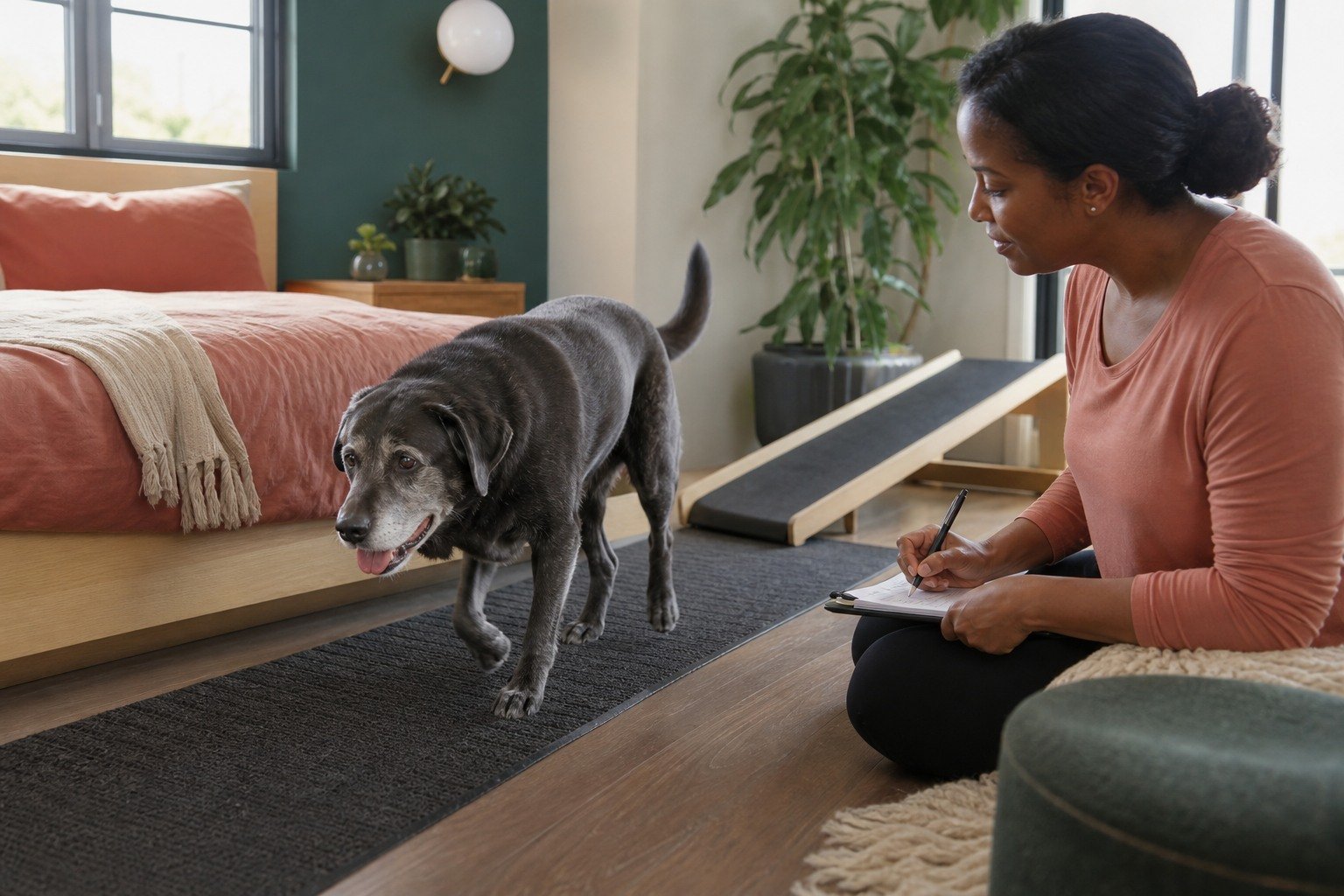
Chronic joint disease changes over time, but the diagnosis does not define the dog's entire life. Good care focuses on comfortable participation in meaningful activities while protecting safety, muscle, sleep, appetite, toileting, and social connection. Osteoarthritis and other joint conditions can create variable pain and function; a dog may have better and worse days without the underlying disease disappearing. Owners contribute essential observations because they see rising, walking, resting, stairs, toileting, play, and recovery at home. The veterinary plan may combine weight and muscle goals, environmental changes, rehabilitation, medication, and selected adjuncts. Every element needs a purpose, a monitoring method, and a review date. Include enjoyable activities as well as difficult ones so the record captures affection, sniffing, play, outdoor time, and family contact. Preserving positive experience is part of living well, not merely counting deficits. This article organizes long-term care without prescribing a drug, supplement, exercise, dose, or prognosis.
Short answer
Build chronic care around the activities that give the dog comfort and agency
AAHA chronic-pain guidance recommends combining owner observations with clinical assessment and repeatable tools such as client-specific outcome measures. COAST guidance similarly treats osteoarthritis as a staged condition requiring multimodal care and reassessment. [1] [2]
- Record the context, trigger, duration, recovery, and effect on daily function.
- Use observations to support veterinary assessment, not to diagnose or treat at home.
- Protect safety and predictability while avoiding punishment, flooding, and forced exposure.
- Agree on measurable outcomes, a review date, and clear urgent-contact signs.
Safety first
A chronic diagnosis does not make sudden decline routine
Contact a veterinarian for new or worsening lameness, pain, swelling, appetite change, sleep disruption, falls, medication problems, loss of toileting ability, or reduced engagement. Seek urgent care for inability to stand, severe pain, major trauma, collapse, breathing difficulty, a hot swollen joint, dragging limbs, or rapid deterioration.
- Do not delay care for sudden, severe, escalating, or function-limiting change.
- Do not start, stop, combine, divide, or calculate treatment from this article.
- Use physical separation and professional help when people or animals could be injured.
Veterinary note
This article is educational and does not diagnose, treat, prescribe, or replace care from a licensed veterinarian. Your dog’s history, examination, diet, medications, and current signs determine what is appropriate.
Define living well in the dog's own activities
Choose several activities that matter to this dog, such as rising, walking to toilet, sniffing, greeting family, resting comfortably, entering a vehicle, or participating in gentle play. Describe what normal, difficult, and impossible look like instead of relying on a vague good-day label.
Validated pain and function instruments can structure follow-up, but they do not replace examination. AAHA notes that owners may contextualize chronic changes and delay action, which is why repeatable questions and client-specific outcomes are useful. [1]
Track frequency, assistance, surface, weather, recovery, sleep, appetite, and behavior. A single energetic moment does not prove pain control, and one quiet day does not by itself prove treatment failure.
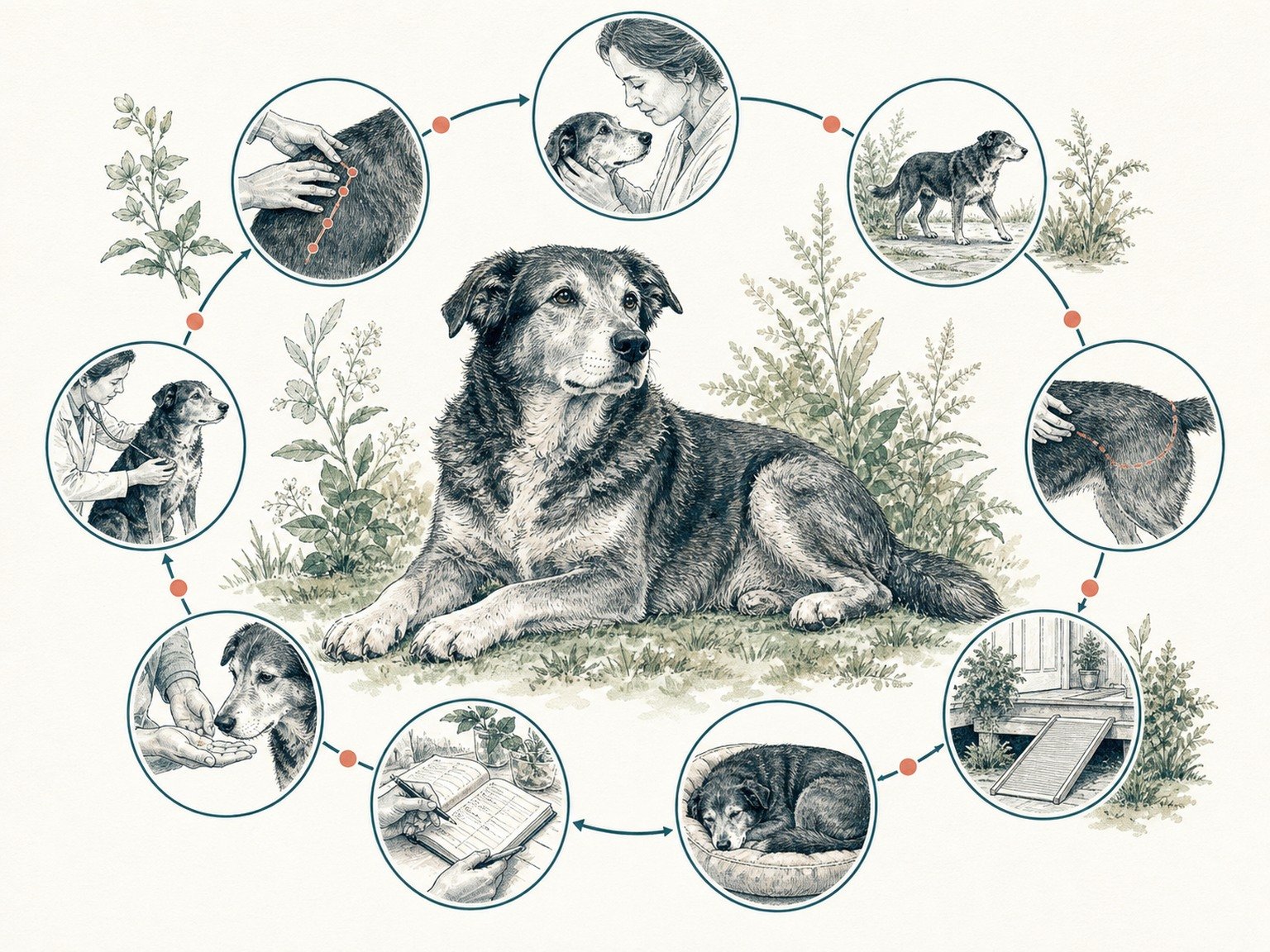
Coordinate body condition, muscle, movement, and rest
Maintain a veterinary-defined body-condition goal while monitoring muscle separately. Excess weight adds load, but rapid restriction can reduce muscle and nutrients. Use measured food and scheduled weigh-ins rather than visual guesswork.
Movement should be regular, tolerable, and matched to diagnosis. Rehabilitation may support strength, balance, and function, yet evidence varies by modality; exercises and progression should be individualized by qualified professionals. [3]
Provide uninterrupted sleep and recovery. Note nighttime restlessness, repeated repositioning, panting at rest, or difficulty settling because sleep change may be part of chronic pain assessment rather than simply aging.
Make the home easier without removing all choice
Create nonslip routes to food, water, rest, toileting, and family areas. Block unsafe stairs or jumping, improve lighting, maintain nails and paws, and use approved ramps or support only when fit and technique are safe.
Place beds where the dog can choose social contact or quiet. Ensure entry is low and stable, covers are washable, and the dog can change position. An adaptation is useful only if the dog can use it without fear or added strain.
Review hazards after a fall, move, furniture change, or seasonal surface change. Home modifications reduce barriers; they do not diagnose pain or replace treatment when function declines.
Use medication and reassessment as one connected plan
Keep one current list of every prescribed drug, preventive, supplement, and topical product. Give medicines exactly as directed and report vomiting, diarrhea, appetite change, sedation, agitation, balance problems, or other suspected effects.
Multimodal care may use more than one approach, but more treatments are not automatically better. AAHA prioritizes therapies by evidence and patient need, and the plan should identify what each element is expected to change. [4]
Schedule rechecks before supplies run out. Bring the function record, videos, weight, medication list, and questions about laboratory monitoring, rehabilitation, home changes, and what finding should trigger a new diagnostic plan.
Prepare for a focused veterinary conversation
Bring a concise timeline, short natural-movement or symptom videos when safe, the exact names and photographs of every food, treat, medication, and supplement label, and notes about appetite, water intake, stool, sleep, activity, comfort, and behavior. Include recent injuries, travel, boarding, diet changes, missed medication, and previous test results. A complete record helps the veterinary team separate a repeatable pattern from a single impression.
Decide in advance what you need from the visit: an urgency decision, a diagnosis plan, a nutrition review, a pain or mobility assessment, or a monitored trial. Ask what result would change the plan and what finding would rule an option out. This keeps research and product information in the right role. Evidence can shape questions and expectations, but it cannot determine what is safe for an individual dog without the history and examination.
Owner tool
Create a chronic joint-disease quality-of-life record
On a phone, swipe across the table to see every column.
| Checkpoint | Record | Why it helps |
|---|---|---|
| Function | Three meaningful daily activities | Measures participation |
| Comfort | Sleep, posture, pain behaviors | Tracks burden |
| Plan | Food, movement, medication, home | Coordinates care |
| Review | Trend, effects, goals, date | Guides change |
Better questions, calmer next steps
Questions to ask your veterinarian
- Which activities should we use as outcome measures?
- Is body and muscle condition appropriate?
- What movement is encouraged or restricted?
- Which medication effects require a call?
- When should we reassess the diagnosis or plan?
FAQ
Can chronic joint disease be cured?
Many conditions are managed rather than cured.
Should a dog rest all day?
Usually not; movement is individualized.
Is one good day proof treatment worked?
No. Follow a trend.
Do all dogs need supplements?
No. Use a defined purpose and review.
When is quality of life poor?
Assess comfort, function, engagement, and change with the veterinary team.
Sources
- American Animal Hospital Association: Chronic Pain Assessment in Dogs. Owner and clinical pain assessment.
- Frontiers in Veterinary Science: COAST Consensus Guidelines. Staged multimodal OA care.
- Veterinary Medicine and Science: Physiotherapy for Canine Osteoarthritis. Rehabilitation evidence and limits.
- American Animal Hospital Association: Acute vs Chronic Pain. Tiered pain-management framework.
- BMC Veterinary Research: Risk Factors for Canine Osteoarthritis. Risk-factor and body-weight context.
