


Fear and anxiety are not one personality type or one life-stage problem. Puppies are learning what is safe during sensitive developmental periods. Adolescents and adults may show inherited tendencies, learned responses, inadequate coping, pain, illness, or anxiety tied to specific contexts. Senior dogs can develop new fear because of pain, sensory loss, sleep disruption, cognitive change, or medical disease. The same visible behavior, such as hiding, barking, freezing, house-soiling, or refusing food, can have different causes. Good care identifies the setting, body language, intensity, recovery, and functional effect; screens for health contributors; prevents rehearsal and injury; and uses humane, reward-based behavior support. Disease prevention and behavior development should be planned together in puppies, while adult and senior plans should be updated after illness, injury, sensory change, household disruption, or new medication. This guide does not diagnose anxiety or prescribe exposure, medication, supplements, or training intensity.
Short answer
Interpret behavior through development, health, context, and recovery
Early positive socialization can support later resilience, but exposure must remain safe and not overwhelm a fearful puppy. Across all ages, AVSAB recommends reward-based methods and rejects aversive techniques because punishment can increase fear and compromise welfare. [1] [2]
- Record the context, trigger, duration, recovery, and effect on daily function.
- Use observations to support veterinary assessment, not to diagnose or treat at home.
- Protect safety and predictability while avoiding punishment, flooding, and forced exposure.
- Agree on measurable outcomes, a review date, and clear urgent-contact signs.
Safety first
Sudden fear, panic, aggression, or senior behavior change needs assessment
Contact a veterinarian for new or escalating fear, inability to settle, appetite or sleep change, house-soiling, pain signs, sensory change, disorientation, escape attempts, aggression, or loss of normal function. A dog who suddenly reacts differently may be painful or ill even when the trigger appears behavioral. Seek urgent help for self-injury, collapse, breathing difficulty, suspected toxin, seizure, severe pain, or immediate bite risk.
- Do not delay care for sudden, severe, escalating, or function-limiting change.
- Do not start, stop, combine, divide, or calculate treatment from this article.
- Use physical separation and professional help when people or animals could be injured.
Veterinary note
This article is educational and does not diagnose, treat, prescribe, or replace care from a licensed veterinarian. Your dog’s history, examination, diet, medications, and current signs determine what is appropriate.
Puppies: build safe familiarity without flooding
The early socialization period is important, but socialization means controlled positive learning, not forcing every puppy to meet every person or dog. Pair manageable novelty with choice, distance, rest, and rewards while following infectious-disease guidance.
Research and AVSAB guidance support early appropriate exposure and positive training. A puppy who freezes, hides, refuses food, struggles to escape, or remains distressed is not benefiting from more intensity and should receive veterinary guidance. [1] [3]
Protect sleep, predictable routines, gentle handling, and safe confinement skills. Avoid punishment for fear, accidents, vocalization, or avoidance because these responses communicate a need rather than defiance.
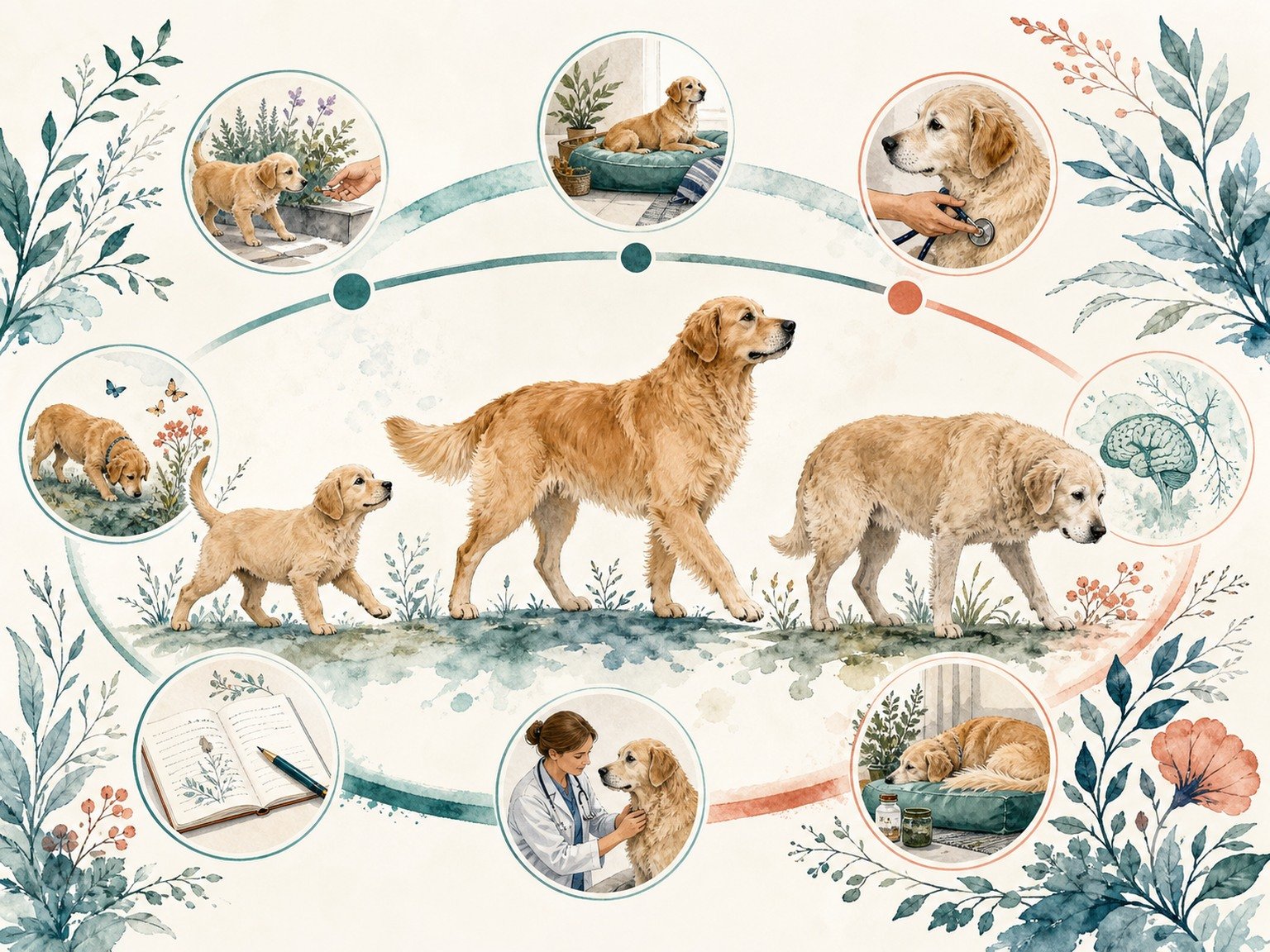
Adolescents and adults: map triggers and recovery
Record what happened before, during, and after the behavior: people, dogs, noises, location, distance, restraint, owner departure, resource, weather, pain, and recovery time. Video can help when recording is safe.
Developmental change can reveal fear or reactivity that was not obvious earlier, but age alone does not prove the cause. Ask about pain, gastrointestinal signs, skin disease, endocrine conditions, medication effects, sleep, and recent life changes.
Management prevents repeated panic while treatment is designed. Use distance, visual barriers, predictable routes, and reward-based skill building. Do not flood the dog or deliberately provoke a reaction to measure severity.
Senior dogs: investigate the body as well as the environment
New noise fear, clinginess, irritability, nighttime waking, house-soiling, or reluctance can reflect pain, reduced hearing or vision, cognitive dysfunction, or another medical condition. Do not dismiss these changes as normal aging.
Senior-care guidance emphasizes pain and cognitive screening because subtle behavior may be the first sign. Bring a timeline of sleep-wake cycles, navigation, interactions, elimination, appetite, activity, and response to familiar cues. [4]
Improve lighting, traction, predictable routes, and easy access to rest and toileting. Avoid repeatedly rearranging the environment, startling a sleeping dog, or forcing interaction when sensory information is limited.
At every stage: use humane treatment and measurable goals
A veterinary behavior plan may combine environmental management, behavior modification, treatment of medical contributors, and prescription medication. The combination depends on diagnosis, severity, safety, and the dog's ability to learn.
AVSAB states that serious fear and anxiety require a treatment plan and that reward-based methods offer the best welfare and learning profile. Aversive collars, physical corrections, intimidation, and dominance methods are not appropriate. [2]
Measure outcomes such as eating, settling, recovery, sleep, safe walks, comfortable handling, or tolerated absence. Reassess when improvement stalls, adverse effects occur, or the trigger pattern changes.
Prepare for a focused veterinary conversation
Bring a concise timeline, short natural-movement or symptom videos when safe, the exact names and photographs of every food, treat, medication, and supplement label, and notes about appetite, water intake, stool, sleep, activity, comfort, and behavior. Include recent injuries, travel, boarding, diet changes, missed medication, and previous test results. A complete record helps the veterinary team separate a repeatable pattern from a single impression.
Decide in advance what you need from the visit: an urgency decision, a diagnosis plan, a nutrition review, a pain or mobility assessment, or a monitored trial. Ask what result would change the plan and what finding would rule an option out. This keeps research and product information in the right role. Evidence can shape questions and expectations, but it cannot determine what is safe for an individual dog without the history and examination.
Owner tool
Build a life-stage anxiety map
On a phone, swipe across the table to see every column.
| Checkpoint | Record | Why it helps |
|---|---|---|
| Stage | Development, health, sensory context | Frames causes |
| Trigger | Setting, distance, body language | Defines pattern |
| Recovery | Time, appetite, sleep, function | Measures burden |
| Plan | Management, training, review | Guides support |
Better questions, calmer next steps
Questions to ask your veterinarian
- Which medical causes should we rule out?
- Is this response expected for the life stage?
- What management prevents distress now?
- Who should design behavior modification?
- What outcome and review date should we use?
FAQ
Do puppies outgrow fear?
Not reliably; respond early and gently.
Is adult anxiety caused by poor training?
Not necessarily; causes are multifactorial.
Is senior anxiety normal aging?
No. Medical and cognitive causes need review.
Should I expose a dog until it calms down?
No. Flooding can worsen fear.
Can medication support training?
Sometimes, under veterinary direction.
Sources
- American Veterinary Society of Animal Behavior: Puppy Socialization Position Statement. Safe early socialization.
- American Veterinary Society of Animal Behavior: Humane Dog Training Position Statement. Reward-based treatment and aversive risks.
- Veterinary Medicine and Science: Puppy Parties and Early Socialization. Developmental evidence.
- American Animal Hospital Association: 2023 Senior Care Guidelines. Senior pain and cognition screening.
- Veterinary Sciences: Therapy and Prevention of Noise Fears. Noise fear, age, pain, and treatment evidence.
