

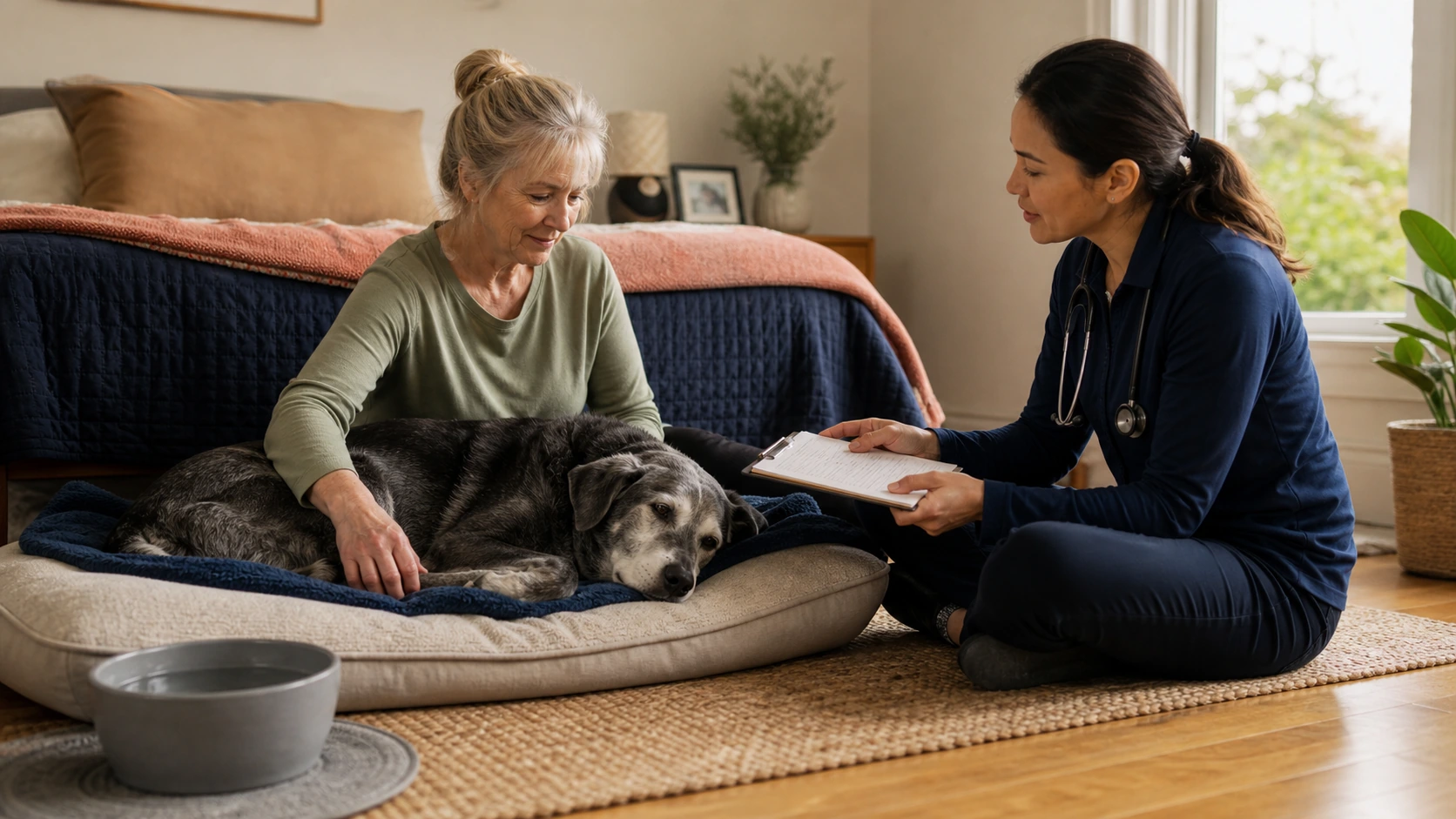
Comfort-focused care is not the absence of care. It is a deliberate veterinary plan to reduce suffering, preserve meaningful function and connection where possible, support caregivers, and prepare for change. No checklist or score can make an automatic decision for every dog. The useful framework combines the dog's diagnosis and response with daily observations, family values, practical limits, and a clear crisis pathway.
Short answer
A comfort plan should work on an ordinary day and during a crisis
Veterinary hospice and palliative care address pain and other symptoms, mobility, nutrition and hydration, hygiene, environment, interaction, caregiver needs, and anticipatory planning. Quality-of-life tools can organize observations, but they do not create a universal threshold or replace veterinary judgment and family discussion. Plans should name reassessment points and urgent signs before a difficult night occurs. [1] [2]
- Define what comfort and meaningful daily activities look like for this individual dog.
- Track trends across pain, breathing, appetite, hydration, elimination, mobility, sleep, interaction, and recovery.
- Keep written daytime, after-hours, transport, and crisis instructions where every caregiver can find them.
Safety first
Breathing distress, uncontrolled pain, collapse, or repeated crisis needs immediate help
Contact a veterinarian or emergency service immediately for struggling to breathe, blue or very pale gums, uncontrolled pain, repeated collapse, seizures, uncontrolled bleeding, inability to urinate, persistent vomiting with weakness, severe agitation or panic, major trauma, or another acute crisis. Follow the veterinary team's existing emergency plan when one is available.
- Do not change doses, combine medications, or use human pain medicines without veterinary direction.
- Do not use a quality-of-life score as an automatic euthanasia instruction or wait for every category to become poor.
- Do not leave transport, after-hours contacts, caregiver roles, and body-care decisions until an emergency.
Veterinary note
This article is educational and does not diagnose, treat, prescribe, or replace care from a licensed veterinarian. Your dog’s history, examination, diet, medications, and current signs determine what is appropriate.
Define comfort in observable terms
Comfort is broader than the absence of crying. Dogs may express pain or distress through posture, guarding, panting at rest, pacing, inability to settle, withdrawal, irritability, altered sleep, reduced grooming, food refusal, changed breathing, or loss of normal participation. The same sign can have several causes, so the veterinary team should interpret the pattern.
Choose a few activities meaningful to this dog: greeting a family member, resting in a chosen place, eating with interest, toileting without panic, enjoying gentle contact, or moving to water. Record whether the dog can initiate, complete, and recover from them. This creates a shared language without reducing the dog to a number.
IAAHPC hospice and palliative-care guidance frames end-of-life care as an interdisciplinary process that includes symptom control, communication, care planning, caregiver support, and ethical attention. It is not a template for one predetermined outcome. [1]

Use quality-of-life tools as conversation aids
A diary or structured scale can reveal trends that memory misses during stressful weeks. Track pain or distress, breathing, appetite, hydration, nausea, elimination, mobility, sleep, cleanliness, interaction, confusion, and recovery after activity. Record what intervention was used and whether it helped.
There is no scientifically universal score at which every family must make the same decision. Tools differ in construction and validation, and owner experience is affected by anticipatory grief, sleep loss, finances, caregiving ability, and uncertainty. A review of quality-of-life assessment in companion animals highlights both usefulness and measurement challenges. [2]
Bring the record to scheduled reassessments and earlier after meaningful decline. Ask which changes may be reversible, which are expected, which indicate suffering, and what options fit the dog's condition and the family's capacity.
Build the home plan around symptoms and function
The veterinarian may address pain, nausea, appetite, breathing, anxiety, seizures, elimination, skin care, wound care, mobility, nutrition, hydration, and sleep according to diagnosis. This guide cannot provide medication protocols. Written instructions should state purpose, timing, common concerns, missed-dose steps, storage, and who to call.
Make food, water, toileting, rest, and family contact accessible without forcing participation. Use stable traction and bedding, maintain a comfortable temperature, assist only with demonstrated techniques, and protect skin from moisture or pressure. Preserve choice whenever possible. A dog who turns away, cannot settle, or no longer tolerates a routine needs reassessment rather than pressure.
Caregiver burden is a clinical reality. Research on pet-owner burden during serious illness shows that practical and emotional strain can affect the experience of care. Asking for respite, help with transport, clearer instructions, or a plan that matches capacity is not abandonment. [3]
Prepare before the crisis and revisit the plan
Write down the primary clinic, after-hours service, travel time, transport method, medication list, diagnosis summary, and decisions already discussed. Clarify which signs mean call now, go now, or arrange a same-day visit. Decide who can authorize care if the primary owner is unavailable.
Discuss the possible course of disease and what a natural crisis might look like, including breathing distress, bleeding, seizures, collapse, or uncontrolled pain. Ask about available palliative changes, hospice support, euthanasia options, location, sedation process, family presence, aftercare, and costs. Information supports consent; it does not compel a decision.
End-of-life decisions are individualized ethical and clinical judgments. Studies of owner experience and veterinary communication emphasize preparation, clear information, empathy, and support. [4] [5] Reassess the plan as the dog's response, family circumstances, or priorities change. A compassionate plan remains specific enough to act on and flexible enough to honor the individual.
Prepare for a focused veterinary conversation
Bring a concise timeline, short natural-movement or symptom videos when safe, the exact names and photographs of every food, treat, medication, and supplement label, and notes about appetite, water intake, stool, sleep, activity, comfort, and behavior. Include recent injuries, travel, boarding, diet changes, missed medication, and previous test results. A complete record helps the veterinary team separate a repeatable pattern from a single impression.
Decide in advance what you need from the visit: an urgency decision, a diagnosis plan, a nutrition review, a pain or mobility assessment, or a monitored trial. Ask what result would change the plan and what finding would rule an option out. This keeps research and product information in the right role. Evidence can shape questions and expectations, but it cannot determine what is safe for an individual dog without the history and examination.
Owner tool
Build a daily comfort and crisis record
On a phone, swipe across the table to see every column.
| Domain | Daily observation | Escalation question |
|---|---|---|
| Comfort | Rest, posture, pain behaviors | Can distress be relieved? |
| Body function | Breathing, eating, drinking, elimination | Is this urgent? |
| Connection | Chosen activities and interaction | What remains meaningful? |
| Plan | Response to care and caregiver capacity | When is reassessment due? |
Better questions, calmer next steps
Questions to ask your veterinarian
- Which signs suggest suffering or a reversible problem?
- What can we adjust today, and how will we judge response?
- Which signs mean call, same-day care, or emergency transport?
- How can our plan reflect the dog's priorities and our caregiving capacity?
- What should we understand now about hospice, euthanasia, and aftercare options?
FAQ
Is comfort care the same as doing nothing?
No. It is active symptom, function, environment, communication, and crisis planning.
Does a quality-of-life score make the decision?
No. It organizes observations but does not replace individualized discussion.
Should I wait until every day is bad?
No universal rule fits every dog; discuss trends, suffering, crises, and response with the vet.
Can plans change?
Yes. Reassessment is essential as signs, response, and family capacity change.
What belongs in a crisis plan?
Contacts, transport, urgent signs, medications, authorization, options, and after-hours instructions.
Sources
- International Association for Animal Hospice and Palliative Care: Animal Hospice and Palliative Care Guidelines. Hospice principles, care planning, communication, and caregiver support.
- Animals: Quality-of-Life Assessment in Companion Animals. Uses and limitations of quality-of-life measurement.
- Veterinary Sciences: Caregiver Burden in Owners of Seriously Ill Companion Animals. Practical and emotional caregiver impacts.
- Frontiers in Veterinary Science: Owner Experience and End-of-Life Decision Making. Owner perspectives, preparation, and communication.
- American Veterinary Medical Association: Pet Euthanasia. Owner-facing veterinary discussion and preparation context.
