

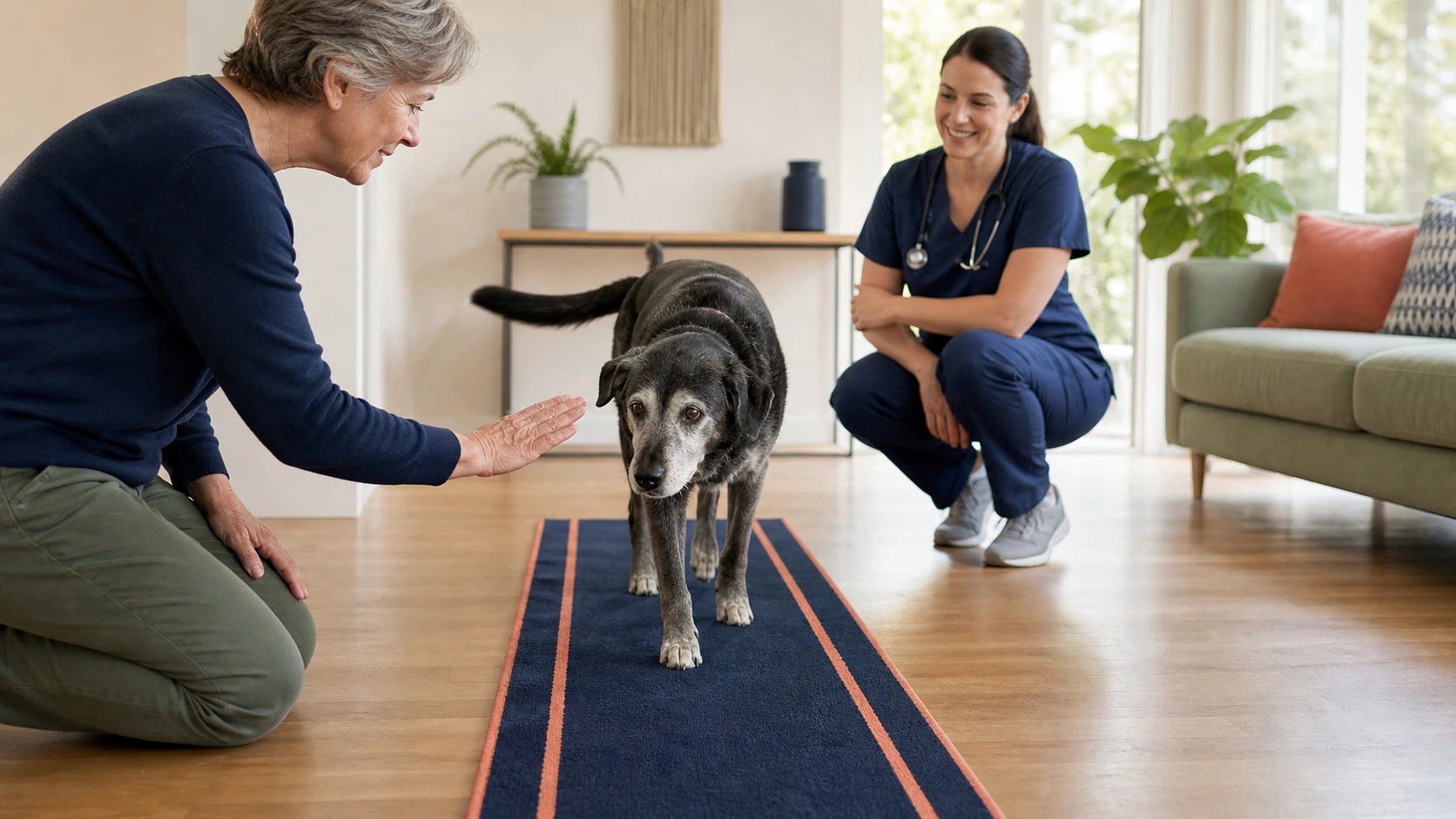
Older dogs may navigate differently because of vision loss, hearing loss, pain, cognitive change, medication effects, or more than one issue. Gradual adaptation can hide impairment until the environment changes. Owners can make routes and cues more predictable, but sudden, painful, one-sided, or rapidly progressive changes require prompt veterinary assessment rather than an assumption of normal aging.
Short answer
Sensory change can be gradual, but sudden or painful signs are not wait-and-see problems
Hearing loss may show as reduced response to familiar sounds, deeper sleep, startling when touched, or difficulty locating sound. Vision change may show as hesitation in dim light, collisions, altered stair use, or difficulty finding objects. Lens aging, cataract, retinal disease, glaucoma, ear disease, neurologic problems, and cognitive change have different implications, so examination matters. [1] [2] [3]
- Record whether the change is sudden or gradual, one-sided or both-sided, painful or comfortable, and different by light or location.
- Keep floors, routes, furniture, gates, bowls, and sleep areas predictable while the dog is assessed.
- Pair established verbal, visual, tactile, and scent cues without startling or testing the dog unsafely.
Safety first
A painful eye or sudden sensory loss needs urgent veterinary care
Seek prompt or emergency care for a red or blue-looking eye, squinting, severe tearing, a suddenly enlarged eye, abrupt blindness, eye trauma, unequal pupils with new signs, sudden head tilt, falling, circling, inability to stand, seizures, collapse, severe ear pain, or rapid deterioration.
- Do not put leftover drops, human eye products, peroxide, oils, or instruments into the eye or ear.
- Do not test hearing with loud sounds close to the dog or surprise a sleeping dog to see whether it reacts.
- Do not rearrange the home or introduce unguarded stairs, pools, balconies, or unfamiliar obstacles during adaptation.
Veterinary note
This article is educational and does not diagnose, treat, prescribe, or replace care from a licensed veterinarian. Your dog’s history, examination, diet, medications, and current signs determine what is appropriate.
Describe the pattern precisely
For hearing, note response to the door, food preparation, a familiar voice, environmental sounds, and cues from different directions without deliberately startling the dog. A dog may respond to vibration, air movement, another animal, or visual context rather than the sound itself. Deafness can be conductive, sensorineural, congenital, acquired, partial, or complete. [1]
For vision, record performance in bright and dim light, familiar and unfamiliar spaces, doorways, thresholds, steps, moving objects, and food or water location. Look for discharge, redness, cloudiness, squinting, rubbing, swelling, and pupil changes. Video can help when captured safely on a level route.
Also note sleep-wake changes, disorientation, house soiling, altered social behavior, pain, medication changes, and mobility. Cognitive and sensory changes can overlap. One study of aging dogs illustrates the value and limitations of combined owner questionnaires and sensory or cognitive measures; neither substitutes for diagnosis. [4]
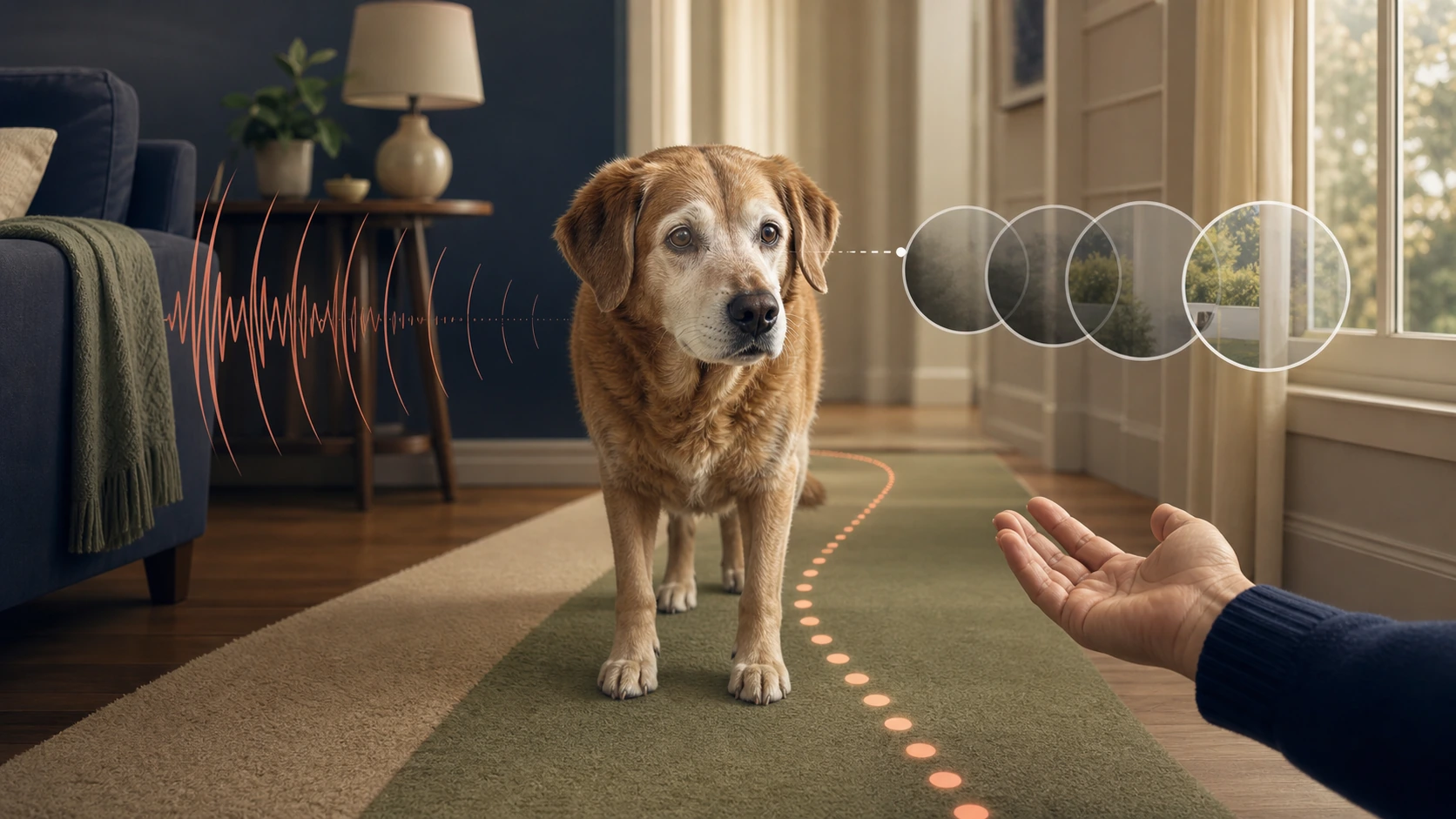
Do not treat every cloudy eye as the same condition
Age-related nuclear or lenticular sclerosis can make the lens look bluish-gray while often preserving substantial functional vision. Cataracts are lens opacities that may impair vision and have varied causes. Appearance alone is not enough for an owner to distinguish them reliably, and a veterinary eye examination may be needed. [2]
Glaucoma involves increased pressure and can be painful and vision-threatening. Redness, squinting, tearing, corneal haze, an enlarged-looking eye, or sudden visual loss require urgent care. Waiting for a routine visit can cost comfort and vision. The MSD Veterinary Manual emphasizes that glaucoma is an emergency concern. [3]
Retinal disease, inflammation, trauma, lens displacement, systemic disease, and neurologic conditions can also affect vision. The correct pathway depends on onset, pain, examination findings, and sometimes specialist testing.
Adapt cues and the environment without creating new hazards
Keep a continuous nonslip route between bed, water, food, exit, and family spaces. Use stable high-contrast mats at important locations, secure stairs, block pools and balconies, improve even lighting, and avoid clutter. Do not rely on raised platforms or makeshift obstacles. Introduce changes one at a time and observe confidence.
For hearing change, approach within the dog's field of view, create a gentle floor vibration from a distance, or use an already trained visual cue. For vision change, use consistent verbal cues, scent landmarks that are safe, and light tactile contact only after announcing your presence. Every household member should use the same signals.
A recent systematic review of sensory decline in aging dogs found a developing but heterogeneous evidence base. Practical adaptations are reasonable, yet owners should not mistake them for treatment of the cause or assume one protocol has been proven for every senior dog. [5]
Use the veterinary visit to separate causes
The veterinarian may examine the eyes, ears, neurologic function, mobility, pain, and cognition, then recommend tests or referral based on findings. Hearing assessment can include otoscopy and specialized testing such as brainstem auditory evoked response when indicated. Eye assessment may include tear testing, staining, pressure measurement, retinal examination, or ophthalmology referral.
Bring a timeline, medication list, home videos, and notes about the contexts in which the dog succeeds or struggles. Ask whether the finding is painful, progressive, treatable, manageable, or likely to change safety. Ask what monitoring interval and emergency signs apply.
Adaptation can be excellent when routes, cues, and expectations remain predictable. The goal is not to test the dog's limits. It is to preserve agency, reduce surprise, identify treatable disease, and revise support as function changes.
Prepare for a focused veterinary conversation
Bring a concise timeline, short natural-movement or symptom videos when safe, the exact names and photographs of every food, treat, medication, and supplement label, and notes about appetite, water intake, stool, sleep, activity, comfort, and behavior. Include recent injuries, travel, boarding, diet changes, missed medication, and previous test results. A complete record helps the veterinary team separate a repeatable pattern from a single impression.
Decide in advance what you need from the visit: an urgency decision, a diagnosis plan, a nutrition review, a pain or mobility assessment, or a monitored trial. Ask what result would change the plan and what finding would rule an option out. This keeps research and product information in the right role. Evidence can shape questions and expectations, but it cannot determine what is safe for an individual dog without the history and examination.
Owner tool
Map sensory changes without startling the dog
On a phone, swipe across the table to see every column.
| Context | Observe safely | Record |
|---|---|---|
| Sound | Natural familiar cues | Direction and response |
| Light | Bright versus dim routes | Hesitation or collision |
| Eye or ear | Visible comfort signs | Redness, discharge, pain |
| Function | Level familiar path | Confidence and recovery |
Better questions, calmer next steps
Questions to ask your veterinarian
- Does the pattern suggest eye, ear, neurologic, cognitive, or mobility disease?
- Is this painful, urgent, progressive, or potentially treatable?
- Which tests or specialist referral would change the plan?
- Which home adaptations are safe for this dog's mobility?
- What signs require same-day or emergency care?
FAQ
Is every cloudy eye a cataract?
No. Lens aging and cataracts differ, and an examination may be needed.
How can I test hearing at home?
Do not use startling sounds; record natural responses and let the veterinarian assess.
Can hearing or vision loss look like cognitive decline?
Yes. The patterns can overlap and may coexist.
Should furniture stay in the same place?
Predictability often helps while the dog adapts and is assessed.
Is a red painful eye urgent?
Yes. Pain, redness, haze, enlargement, or sudden visual loss needs prompt care.
Sources
- MSD Veterinary Manual: Deafness in Dogs. Types, signs, and diagnostic context for canine hearing loss.
- MSD Veterinary Manual: Disorders of the Lens in Dogs. Lens aging, cataracts, and examination context.
- MSD Veterinary Manual: Glaucoma in Dogs. Painful urgent eye signs and disease context.
- Frontiers in Veterinary Science: Sensory and Cognitive Measures in Aging Dogs. Aging-dog sensory and cognitive assessment context.
- Animals: Sensory Decline and Cognitive Aging in Dogs. Review of aging, sensory function, and evidence limitations.
