

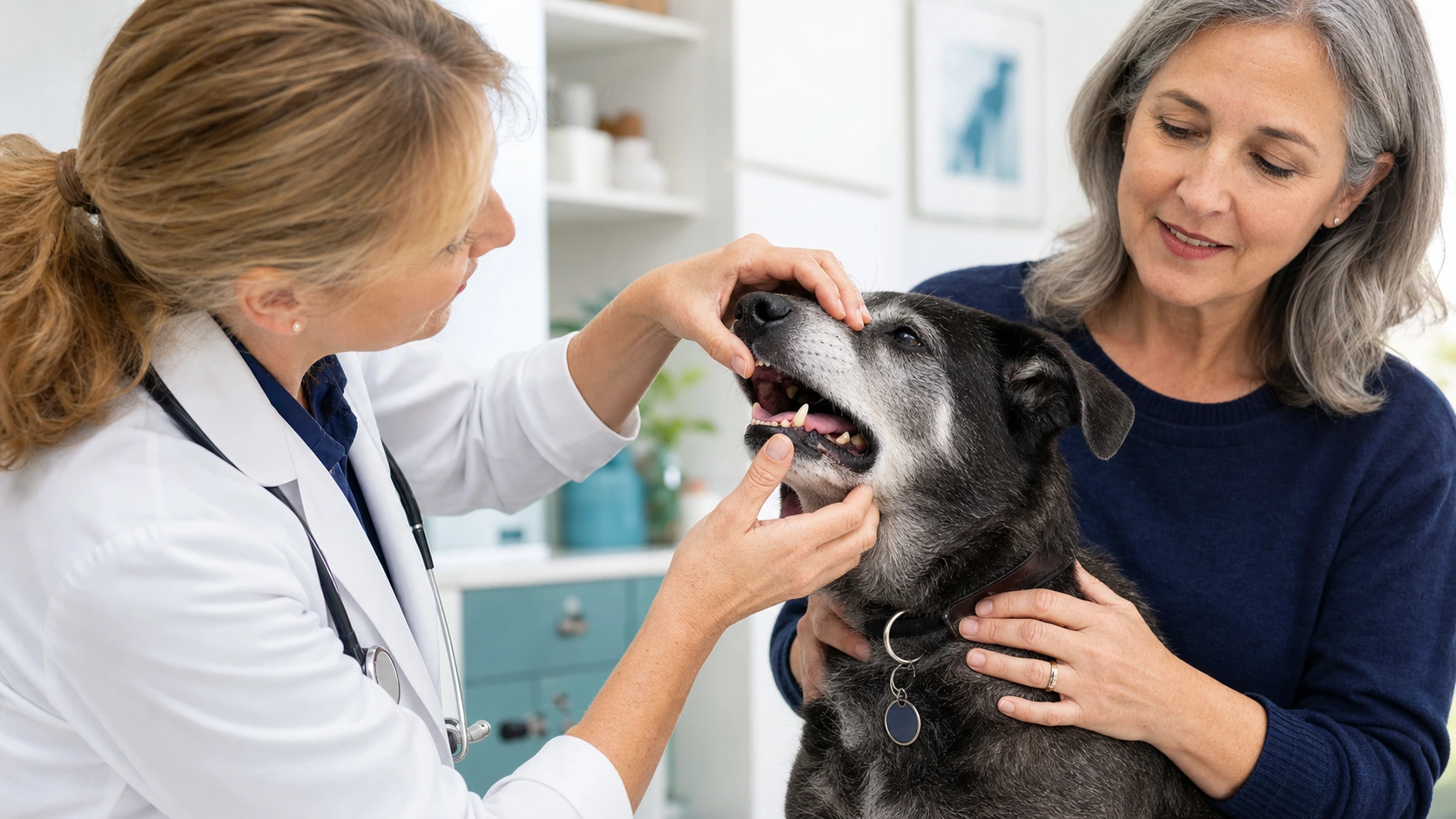
Dental disease is common in older dogs, but age alone neither diagnoses oral pain nor automatically rules out appropriate care. Owners can notice changes and support daily prevention, while veterinarians determine what an awake exam can reveal, whether a complete anesthetized assessment is indicated, how risk should be reduced, and which findings change treatment priorities.
Short answer
Visible tartar is only one part of a senior dog's oral-health picture
Bad breath, difficulty eating, dropping food, facial swelling, oral bleeding, pawing at the mouth, and behavior change deserve veterinary attention. An awake oral screening is useful, but a complete dental examination includes probing and charting, and intraoral imaging may reveal disease below the gumline. Decisions about anesthesia and treatment should be individualized rather than based on age alone. [1] [2]
- Watch eating mechanics, food preference, grooming, sleep, social behavior, and willingness to have the face touched.
- Ask what can and cannot be determined during an awake oral exam.
- Discuss preanesthetic assessment, monitoring, pain control, imaging, treatment priorities, and recovery as one coordinated plan.
Safety first
Swelling, bleeding, inability to eat, and severe pain need prompt care
Contact a veterinarian promptly for facial or jaw swelling, uncontrolled oral bleeding, a broken tooth, sudden refusal or inability to eat, repeated gagging, marked pain, pus, trauma, weakness, collapse, or breathing difficulty. Emergency services may be needed after major trauma, heavy bleeding, or airway concern.
- Do not scrape tartar at home or use sharp instruments in a dog's mouth.
- Do not give human pain medicines, numbing gels, mouthwash, or toothpaste.
- Do not assume bad breath is an unavoidable part of aging or that a normal appetite rules out oral pain.
Veterinary note
This article is educational and does not diagnose, treat, prescribe, or replace care from a licensed veterinarian. Your dog’s history, examination, diet, medications, and current signs determine what is appropriate.
Notice function, not only appearance
Owners often first notice odor or visible deposits, yet oral disease can also change how a dog approaches food, chews, carries toys, grooms, sleeps, or interacts. Some dogs continue eating despite substantial discomfort. Record side preference, dropped kibble, slower meals, preference for soft food, mouth rubbing, drooling, and changes in facial handling.
Other conditions can mimic or compound dental signs. Oral masses, fractured teeth, foreign material, jaw disease, nausea, neurologic problems, and systemic illness may alter eating or odor. Photographs taken safely can document a visible change, but forcing the mouth open can cause pain or a bite. A veterinary examination is the appropriate next step.
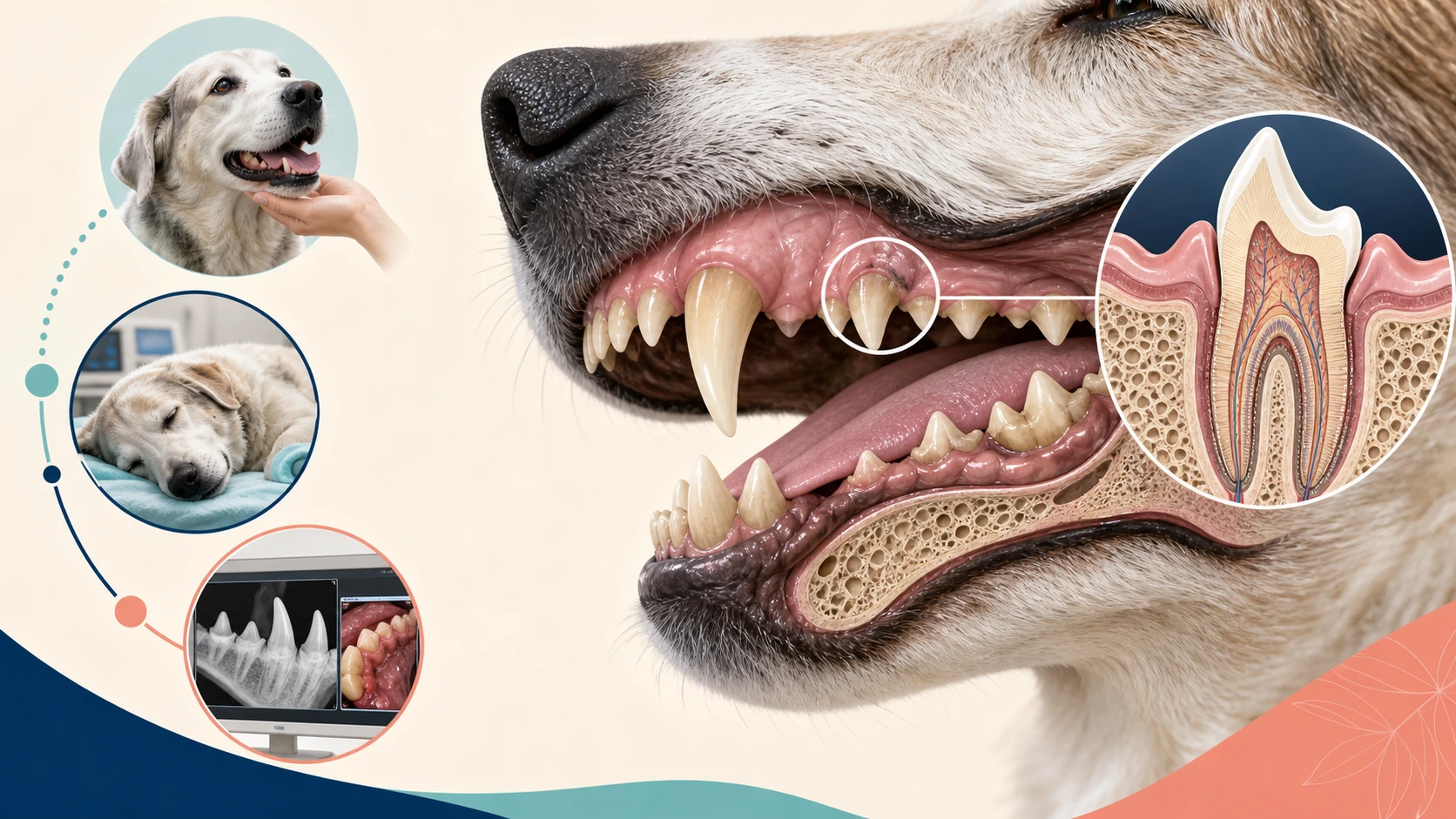
Understand awake screening and complete assessment
An awake oral examination can identify visible plaque, calculus, gingival inflammation, fractured teeth, asymmetry, masses, and obvious pain. It cannot fully inspect every surface, probe periodontal pockets accurately, chart under the gumline, or obtain diagnostic dental radiographs in a conscious dog. WSAVA dental guidance describes comprehensive assessment as more than surface cleaning. [1]
Intraoral imaging matters because roots, supporting bone, retained material, resorptive changes, and some fractures are not visible from the crown. A prospective study found clinically relevant additional findings from full-mouth radiographs in dogs, including teeth without obvious external pathology. The exact benefit for one dog depends on the exam and plan. [2]
So-called anesthesia-free cleaning may remove visible calculus while leaving disease below the gumline unassessed and untreated. It can create a cleaner appearance without a complete examination, imaging, chart, protected airway, or treatment plan. AVDC owner guidance explains these boundaries. [3]
Individualize anesthesia and procedure planning
Chronological age is one factor, not a single pass-or-fail test. Risk assessment considers heart and lung function, kidney and liver status, endocrine disease, neurologic condition, medications, previous anesthesia, current infection, hydration, temperament, and the expected procedure. Testing and consultation are selected for the individual patient.
Ask how the team will monitor circulation, oxygenation, ventilation, temperature, and recovery; how the airway is protected; how pain is anticipated; and how findings may change the scope of treatment. Staging or prioritizing care may be appropriate in some patients. The aim is not zero risk, which no procedure can promise, but informed benefit-risk planning and risk reduction. [1] [4]
Build prevention and recovery around the dog
Home dental care is most useful when it is safe, tolerated, and consistent. Veterinary-approved tooth brushing is often central, but painful mouths need evaluation before training or handling. Introduce touch and equipment gradually. Dental diets, chews, or other tools should be selected for the dog's chewing style, calorie needs, swallowing risk, medical conditions, and verified purpose, not marketing alone.
After a procedure, follow the written plan for food texture, activity, medication, oral handling, and recheck. Call about persistent bleeding, swelling, vomiting, inability to drink, marked lethargy, breathing changes, or uncontrolled pain. Keep a current dental chart and imaging record so future teams can compare findings.
Periodontal disease has local and systemic associations, but observational associations do not prove that dental treatment prevents a specific distant disease in an individual dog. Use precise claims: oral care supports comfort and health, while diagnosis and treatment decisions rest on the complete veterinary picture. [5]
Prepare for a focused veterinary conversation
Bring a concise timeline, short natural-movement or symptom videos when safe, the exact names and photographs of every food, treat, medication, and supplement label, and notes about appetite, water intake, stool, sleep, activity, comfort, and behavior. Include recent injuries, travel, boarding, diet changes, missed medication, and previous test results. A complete record helps the veterinary team separate a repeatable pattern from a single impression.
Decide in advance what you need from the visit: an urgency decision, a diagnosis plan, a nutrition review, a pain or mobility assessment, or a monitored trial. Ask what result would change the plan and what finding would rule an option out. This keeps research and product information in the right role. Evidence can shape questions and expectations, but it cannot determine what is safe for an individual dog without the history and examination.
Owner tool
Prepare a senior-dog dental record
On a phone, swipe across the table to see every column.
| Observation | Record | Why it helps |
|---|---|---|
| Eating | Speed, side, dropped food | Shows function |
| Mouth | Odor, bleeding, swelling | Shows change |
| Behavior | Touch, sleep, social shifts | May reveal discomfort |
| Plan | Exam, imaging, monitoring | Clarifies next steps |
Better questions, calmer next steps
Questions to ask your veterinarian
- What can you determine while my dog is awake?
- Which findings make intraoral imaging important?
- How is anesthetic risk being individualized and reduced?
- How will pain, airway, temperature, and recovery be managed?
- Which home-care method fits my dog's mouth and health?
FAQ
Is bad breath normal in an older dog?
Persistent odor can reflect oral disease and deserves veterinary assessment.
Can an awake cleaning treat periodontal disease?
Surface cleaning cannot replace complete examination, probing, charting, and indicated imaging.
Is a dog too old for dental care?
Age alone is not the decision; risk and expected benefit are individualized.
Does eating normally rule out dental pain?
No. Dogs may continue eating despite painful oral disease.
Should I scrape tartar at home?
No. Sharp tools can injure tissue and do not assess disease below the gumline.
Sources
- World Small Animal Veterinary Association: Global Dental Guidelines. Comprehensive dental assessment and care principles.
- Frontiers in Veterinary Science: Diagnostic Yield of Full-Mouth Dental Radiography in Dogs. Additional findings from intraoral imaging.
- American Veterinary Dental College: Animal Owner Resources. Owner guidance and anesthesia-free dentistry boundaries.
- American Veterinary Medical Association: Pet Dental Care. Signs, prevention, and veterinarian-led care.
- Veterinary Sciences: Periodontal Disease in Dogs. Disease mechanisms, associations, and evidence context.
