

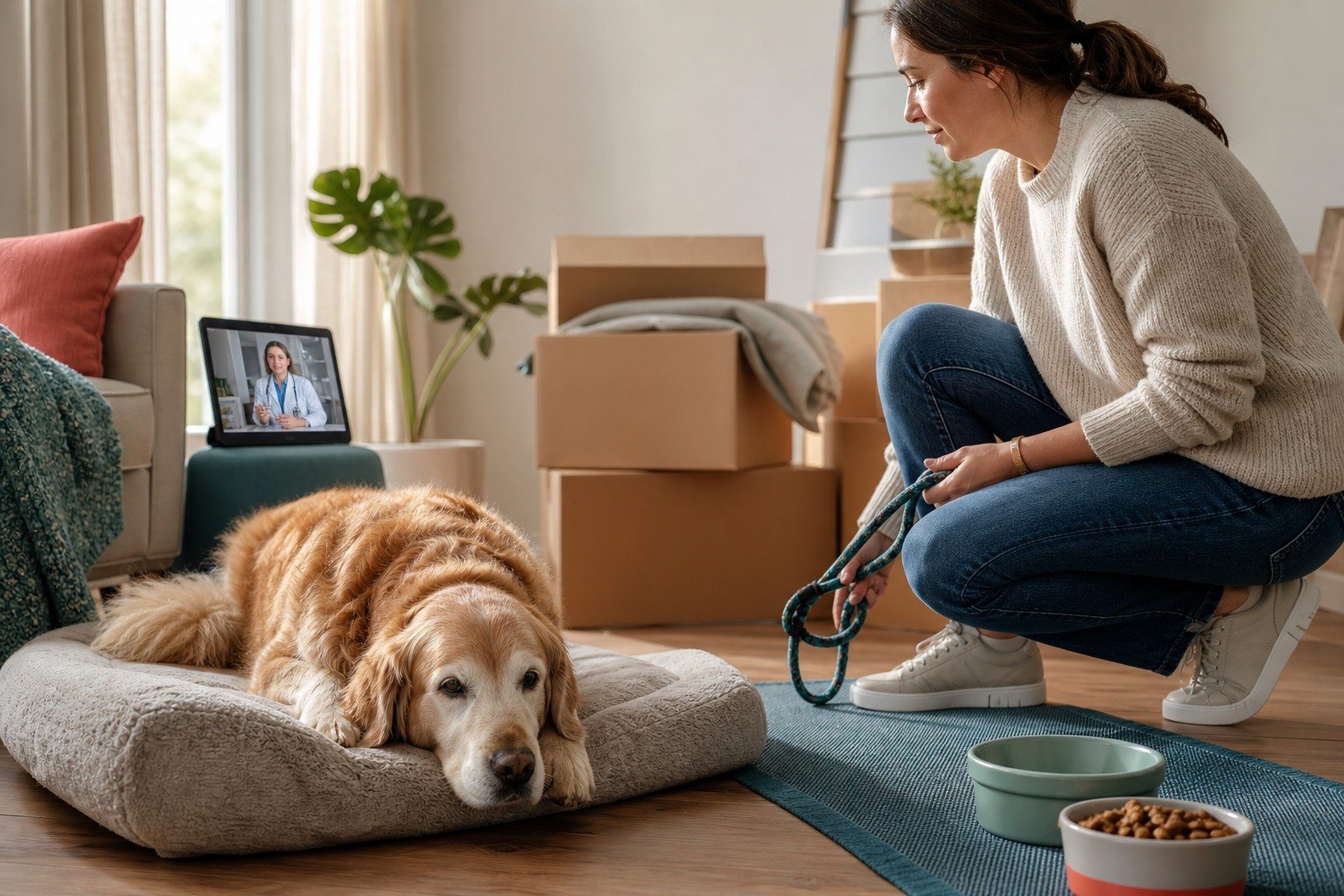
Moving, bereavement, a new caregiver, household changes, travel, or a disrupted schedule can affect any dog. In a senior dog, the same transition may intersect with pain, reduced hearing or vision, cognitive change, chronic disease, medication timing, toileting needs, or loss of muscle and balance. Do not assume that withdrawal, vocalization, clinginess, house-soiling, nighttime waking, or appetite change is purely emotional or simply old age. Establish a veterinary baseline, identify the parts of the former routine that can remain stable, and change the environment in manageable steps. Track daily function and recovery without imposing a universal adjustment timeline. The aim is not to recreate the old life exactly; it is to preserve comfort, access, agency, and meaningful connection while the veterinary plan addresses new or worsening health needs.
Short answer
Anchor change with health context, familiar cues, and accessible routines
AAHA senior-care guidance emphasizes individualized assessment of pain, cognition, mobility, nutrition, chronic disease, quality of life, and caregiver capacity. A major life change should trigger closer observation, not a diagnosis based on behavior alone. [1] [2]
- Record timing, context, intensity, recovery, and changes in daily function.
- Use observations to support veterinary assessment, not to diagnose or treat at home.
- Protect predictable routines, physical safety, rest, and access to essential resources.
- Agree on measurable outcomes, a review date, and clear urgent-contact signs.
Safety first
Sudden decline during a transition may be medical
Contact a veterinarian for new appetite or thirst change, vomiting, diarrhea, house-soiling, nighttime distress, disorientation, pain, falls, weakness, breathing change, or loss of normal interaction. Seek urgent care for collapse, repeated vomiting, inability to stand or urinate, seizure, severe pain, breathing difficulty, major trauma, or rapid deterioration.
- Do not delay care for sudden, severe, escalating, or function-limiting change.
- Do not start, stop, combine, divide, or calculate treatment from this article.
- Use physical separation and professional help whenever a person or animal could be injured.
Veterinary note
This article is educational and does not diagnose, treat, prescribe, or replace care from a licensed veterinarian. Your dog’s history, examination, diet, medications, and current signs determine what is appropriate.
Define the change and the dog's current baseline
List what changed: home, people, animals, schedule, walking route, sleeping area, caregiver, transport, or access. Add the date and whether multiple changes occurred together.
Arrange veterinary review for meaningful new behavior or function change. Senior assessment may include history, physical and neurologic examination, pain and mobility evaluation, body and muscle condition, oral health, sensory function, laboratory testing, medication review, and cognitive screening.
Record the dog's normal eating, drinking, elimination, sleep, movement, social behavior, and enjoyable activities before judging adjustment. A baseline makes trend review more reliable.
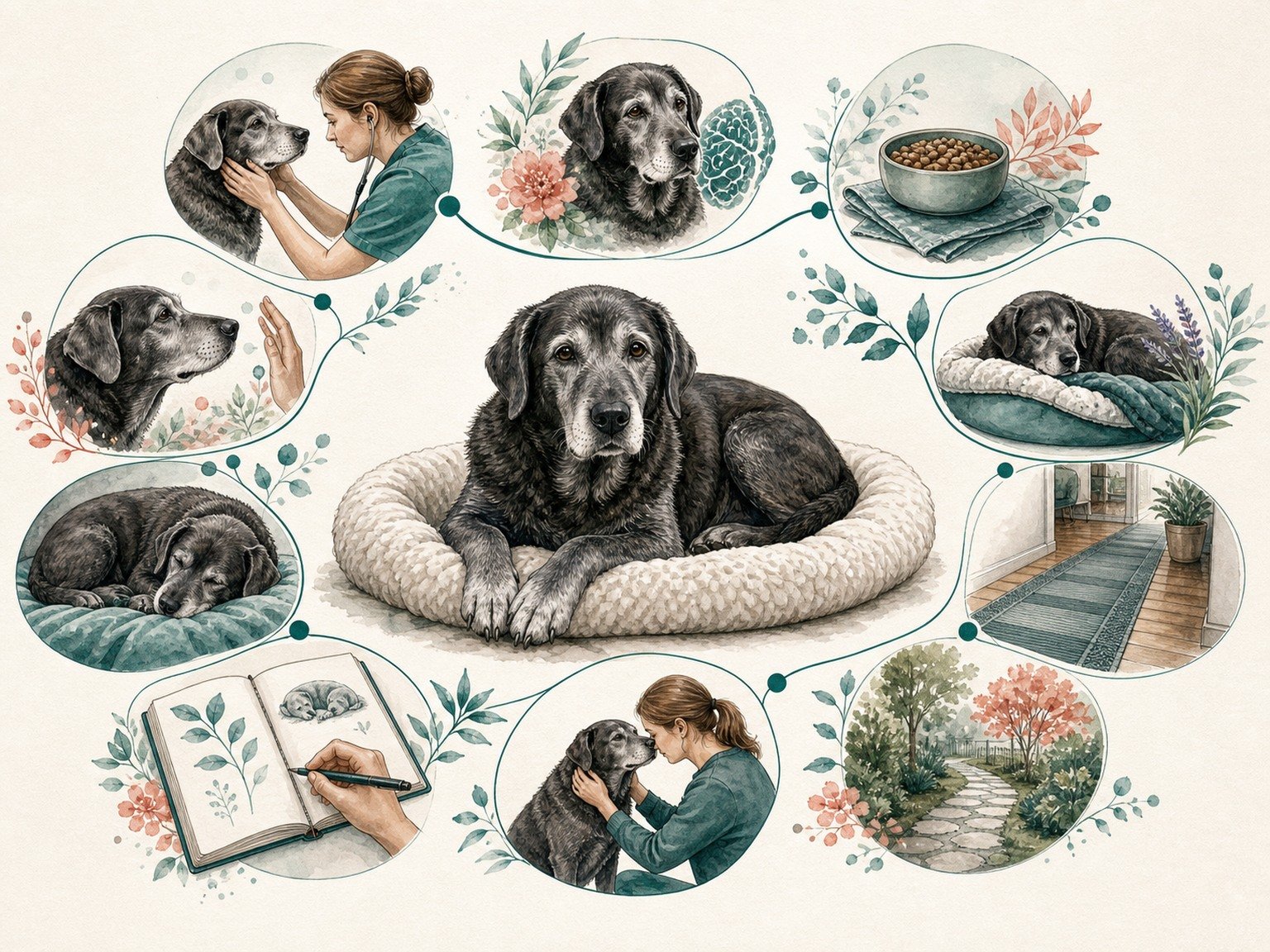
Preserve familiar anchors while adapting the environment
Keep meal, medication, toileting, rest, and gentle activity timing consistent where practical. Bring familiar bedding and use familiar cues, bowls, and walking equipment when they remain safe and appropriate.
Create well-lit nonslip routes to water, food, toileting, rest, and family areas. Block stairs or gaps that have become hazardous and avoid repeatedly moving furniture for a dog with reduced vision or cognition.
Offer a quiet retreat and allow social choice. Some seniors seek more proximity while others need uninterrupted rest. Do not force greetings, exploration, or interaction to prove that the dog is coping.
Change gradually and support function
Introduce one manageable change at a time when circumstances allow. Short exploration followed by rest may be easier than full access to an unfamiliar environment. Reduce intensity when the dog cannot eat, orient, settle, or recover.
Maintain veterinarian-approved movement to protect strength and toileting access, but do not prescribe a new exercise program from general advice. Frailty, pain, heart or respiratory disease, and neurologic problems change what is safe. [3]
Measure food rather than estimating, watch water and elimination, and weigh the dog as directed. Stress can affect behavior and appetite, but persistent change needs medical assessment rather than watchful waiting alone.
Review the trend and caregiver capacity
Use a short daily log of sleep, appetite, elimination, movement, interaction, confusion, pain behaviors, and recovery after activity. Include positive experiences so quality of life is not reduced to deficits. Compare the same activities at similar times instead of treating one unusually active or quiet period as the whole trend.
Ask whether the plan is feasible for every caregiver. Simplify instructions, use one current medication list, prepare backup help, and tell the clinic about financial, transport, or handling barriers before they disrupt care. Written handoffs matter when a new person takes over meals, medication, toileting, or observation.
Reassess when the dog worsens, new signs appear, or progress stalls. There is no evidence-based deadline by which every senior dog should adjust to a major life change. [4] [5]
Prepare for a focused veterinary conversation
Bring a concise timeline, short natural-movement or symptom videos when safe, the exact names and photographs of every food, treat, medication, and supplement label, and notes about appetite, water intake, stool, sleep, activity, comfort, and behavior. Include recent injuries, travel, boarding, diet changes, missed medication, and previous test results. A complete record helps the veterinary team separate a repeatable pattern from a single impression.
Decide in advance what you need from the visit: an urgency decision, a diagnosis plan, a nutrition review, a pain or mobility assessment, or a monitored trial. Ask what result would change the plan and what finding would rule an option out. This keeps research and product information in the right role. Evidence can shape questions and expectations, but it cannot determine what is safe for an individual dog without the history and examination.
Owner tool
Build a senior life-change record
On a phone, swipe across the table to see every column.
| Checkpoint | Record | Why it helps |
|---|---|---|
| Change | What, when, and how much | Frames context |
| Function | Food, sleep, movement, toileting | Finds decline |
| Environment | Routes, light, rest, access | Reduces barriers |
| Review | Trend, goals, next visit | Guides care |
Better questions, calmer next steps
Questions to ask your veterinarian
- Which medical causes should we screen for?
- What routine should remain stable?
- Which home changes improve safe access?
- How much movement is appropriate now?
- Which changes require an earlier recheck?
FAQ
How long should adjustment take?
There is no universal deadline.
Is clinginess normal after change?
It can occur, but new behavior needs health context.
Should I keep every routine identical?
Preserve helpful anchors while adapting unsafe or impractical parts.
Can I use a calming supplement?
Discuss purpose, evidence, interactions, and monitoring with the veterinarian first.
Is confusion simply old age?
No. Disorientation deserves veterinary assessment.
Sources
- American Animal Hospital Association: 2023 Senior Care Guidelines. Senior assessment and individualized care.
- American Animal Hospital Association: Assessing Senior Pet Quality of Life. Repeated comfort and function observations.
- Veterinary Sciences: Rehabilitation of Geriatric Patients. Mobility, frailty, environment, and individualized rehabilitation.
- Animals: Lifestyle and Environmental Needs of Aging Dogs. Aging, routine, environment, and welfare.
- Frontiers in Veterinary Science: Canine Geriatric Syndrome. Frailty and multidimensional senior assessment.
