

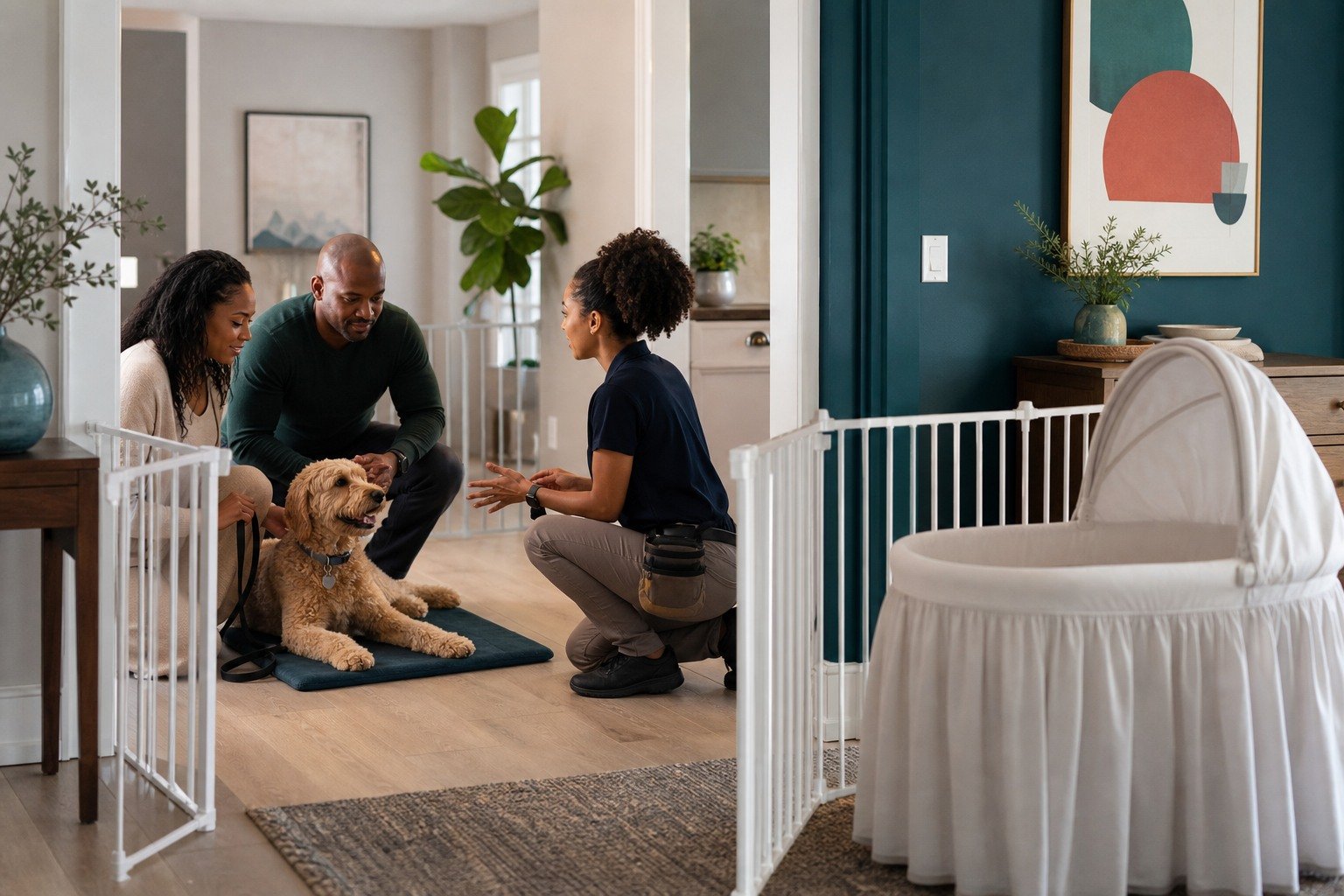
A new baby changes sound, movement, scent, sleep, visitors, furniture, and caregiver attention. Those changes can be difficult for a dog who already startles, guards resources, struggles with handling, or needs a highly predictable routine. The goal is not to make the dog love every baby-related event. It is to prevent access that could become unsafe, preserve the dog's ability to rest and retreat, and build calm associations at an intensity the dog can handle. Start before the due date with a veterinary examination, a detailed behavior history, secure physical barriers, identification, and a realistic division of caregiver duties. A dog with a bite history, predatory behavior toward small animals, severe resource guarding, panic, or escalating aggression needs individual professional assessment. Even a familiar, gentle dog must never be left alone with a baby. This guide supports preparation and observation; it cannot predict behavior, diagnose anxiety, or replace a veterinary or qualified behavior plan.
Short answer
Prepare for safety and predictability, not a forced friendship
AVMA prevention guidance says infants and small children should never be left alone with a dog. Behavior guidance also supports reward-based learning, careful management, and veterinary assessment when fear or aggression is present. [1] [2]
- Record timing, context, intensity, recovery, and changes in daily function.
- Use observations to support veterinary assessment, not to diagnose or treat at home.
- Protect predictable routines, physical safety, rest, and access to essential resources.
- Agree on measurable outcomes, a review date, and clear urgent-contact signs.
Safety first
Separate first when body language, history, or supervision is uncertain
Use a closed door, securely installed gate, or another reliable barrier if the dog stiffens, freezes, stares, growls, guards, lunges, chases, cannot disengage, or repeatedly attempts to reach the baby. Contact a veterinarian or veterinary behavior professional promptly. Seek urgent help after a bite, escape injury, collapse, breathing difficulty, seizure, suspected toxin exposure, or any situation in which immediate safety cannot be maintained.
- Do not delay care for sudden, severe, escalating, or function-limiting change.
- Do not start, stop, combine, divide, or calculate treatment from this article.
- Use physical separation and professional help whenever a person or animal could be injured.
Veterinary note
This article is educational and does not diagnose, treat, prescribe, or replace care from a licensed veterinarian. Your dog’s history, examination, diet, medications, and current signs determine what is appropriate.
Before birth: establish the medical and behavior baseline
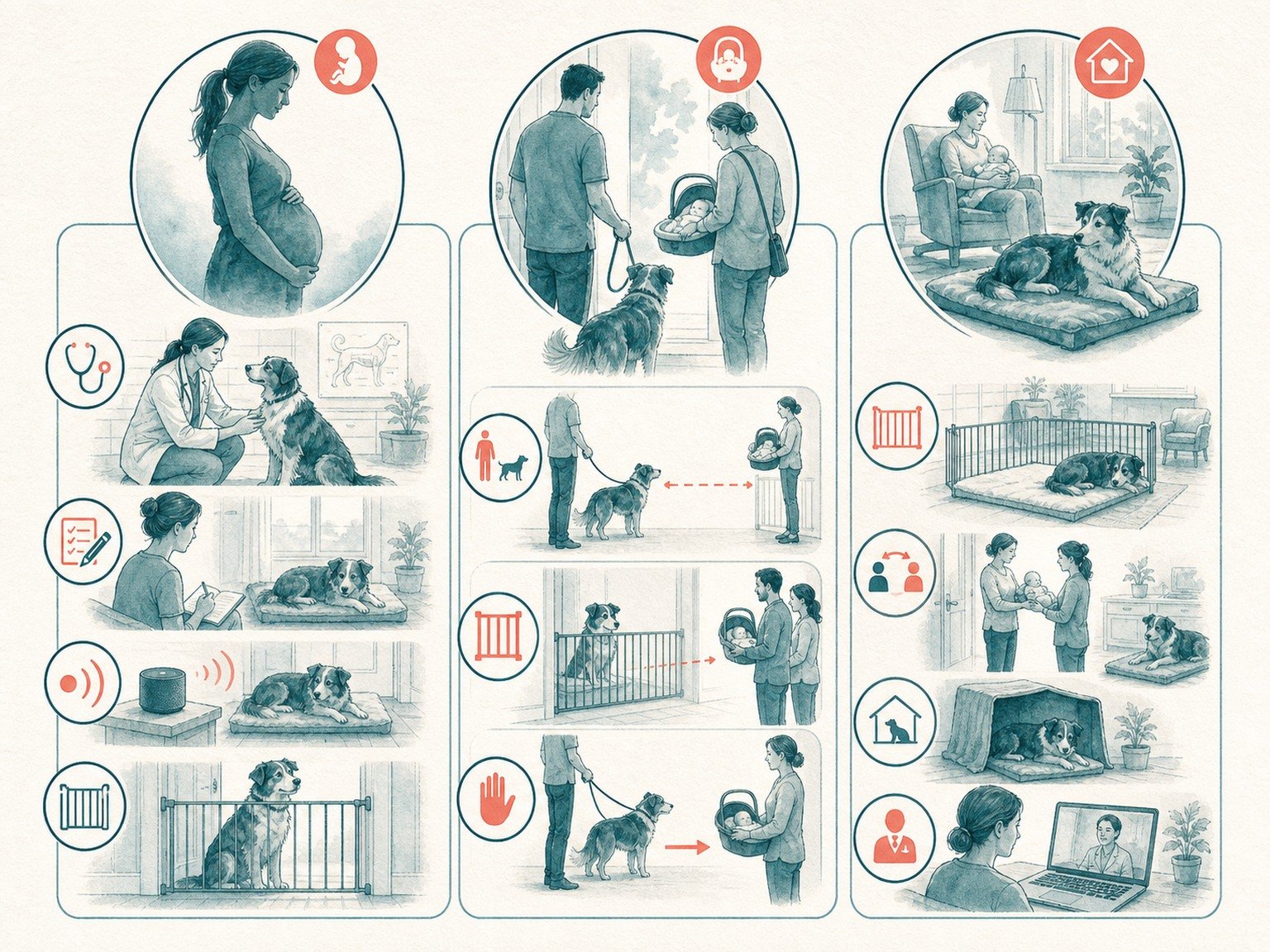
Schedule a veterinary visit early enough to discuss pain, skin or gastrointestinal discomfort, sensory problems, medications, sleep, previous fear, handling sensitivity, guarding, chasing, and reactions to children. Sudden or severe behavior change can have a medical contributor.
Describe behavior in observable terms: trigger, distance, posture, vocalization, ability to eat, recovery, and whether the dog can move away. Include earlier bites or near misses without minimizing them. A qualified behavior referral may be needed before the baby arrives.
Update identification and preventive care, rehearse who will feed, walk, medicate, and supervise the dog, and identify emergency contacts. Plans fail when every task depends on one exhausted caregiver.
Build barriers, stations, and routines before they are urgently needed
Create a quiet dog-only rest area with water, comfortable bedding, and protection from crawling children and visitors. Teach the dog to move to the area with rewards and choice. The space must not be used as punishment.
Install gates and verify that adults can operate them while carrying supplies. Keep the baby's sleep and floor areas physically separate from the dog. A barrier supplements active adult supervision; it does not make an interaction automatically safe.
Gradually introduce tolerated furniture, equipment, schedule changes, and low-volume recordings. Stop or reduce intensity if the dog freezes, hides, pants, paces, refuses food, vocalizes, or cannot recover. Flooding is not preparation.
Homecoming and early weeks: preserve distance and choice
Settle the dog behind a barrier before the baby enters. Keep the first arrival quiet and avoid placing the baby near the dog's face or forcing a greeting. Reward calm behavior at a safe distance and end the session before arousal rises.
One alert adult should actively supervise any shared space. Active supervision means watching both dog and baby and being ready to intervene; it is not cooking, sleeping, using a phone, or assuming another adult is watching. When attention shifts, separate them.
Protect meals, chews, toys, beds, medication, and rest. Do not punish growling or avoidance. Those signals provide safety information; punishment can suppress warning behavior without changing the underlying discomfort.
As the baby changes: reassess instead of assuming success
Rolling, reaching, crawling, squealing, dropping food, and unsteady walking create new triggers. A dog who was comfortable with a stationary newborn may react differently to fast, unpredictable movement.
Record appetite, sleep, elimination, pacing, hiding, guarding, startle, proximity seeking, and recovery. Video only from a safe setup. Share trends with the veterinary team rather than deliberately testing the dog's tolerance.
Review barriers, dog exercise and enrichment, caregiver capacity, and the emergency plan at each developmental change. Humane training and treatment may improve coping, but no program makes unsupervised baby-dog contact appropriate. [3] [4] [5]
Prepare for a focused veterinary conversation
Bring a concise timeline, short natural-movement or symptom videos when safe, the exact names and photographs of every food, treat, medication, and supplement label, and notes about appetite, water intake, stool, sleep, activity, comfort, and behavior. Include recent injuries, travel, boarding, diet changes, missed medication, and previous test results. A complete record helps the veterinary team separate a repeatable pattern from a single impression.
Decide in advance what you need from the visit: an urgency decision, a diagnosis plan, a nutrition review, a pain or mobility assessment, or a monitored trial. Ask what result would change the plan and what finding would rule an option out. This keeps research and product information in the right role. Evidence can shape questions and expectations, but it cannot determine what is safe for an individual dog without the history and examination.
Owner tool
Create a new-baby dog safety map
On a phone, swipe across the table to see every column.
| Checkpoint | Record | Why it helps |
|---|---|---|
| History | Fear, guarding, bites, health | Defines risk |
| Environment | Doors, gates, rest zones | Controls access |
| Interaction | Distance, body language, recovery | Guides exposure |
| Support | Vet, behavior referral, backup care | Sustains plan |
Better questions, calmer next steps
Questions to ask your veterinarian
- Which medical contributors should we assess before birth?
- Does this history require a veterinary behavior referral?
- What body language means we should increase distance?
- How should we practice baby-related change without flooding?
- What is our bite or escape emergency plan?
FAQ
Can my dog sniff the newborn?
Only if the individualized plan and active supervision make it appropriate; never force contact.
Is a baby gate enough?
No. Use reliable barriers plus active adult supervision.
Should I punish growling?
No. Separate safely and seek professional help.
Will baby-sound recordings prevent anxiety?
No. They are only one optional, low-intensity preparation tool.
Can a trusted dog be left with a sleeping baby?
No. Never leave an infant or small child alone with a dog.
Sources
- American Veterinary Medical Association: Dog Bite Prevention. Supervision and bite-prevention guidance.
- American Animal Hospital Association: Canine and Feline Behavior Management Guidelines. Veterinary behavior assessment and management.
- American Veterinary Society of Animal Behavior: Humane Dog Training Position Statement. Reward-based training and aversive-method limits.
- Journal of the American Veterinary Medical Association: Parental Knowledge of Dog Behavior and Child-Dog Interaction. Supervision and parent knowledge context.
- American Veterinary Medical Association: A Community Approach to Dog Bite Prevention. Risk reduction and community prevention framework.
