

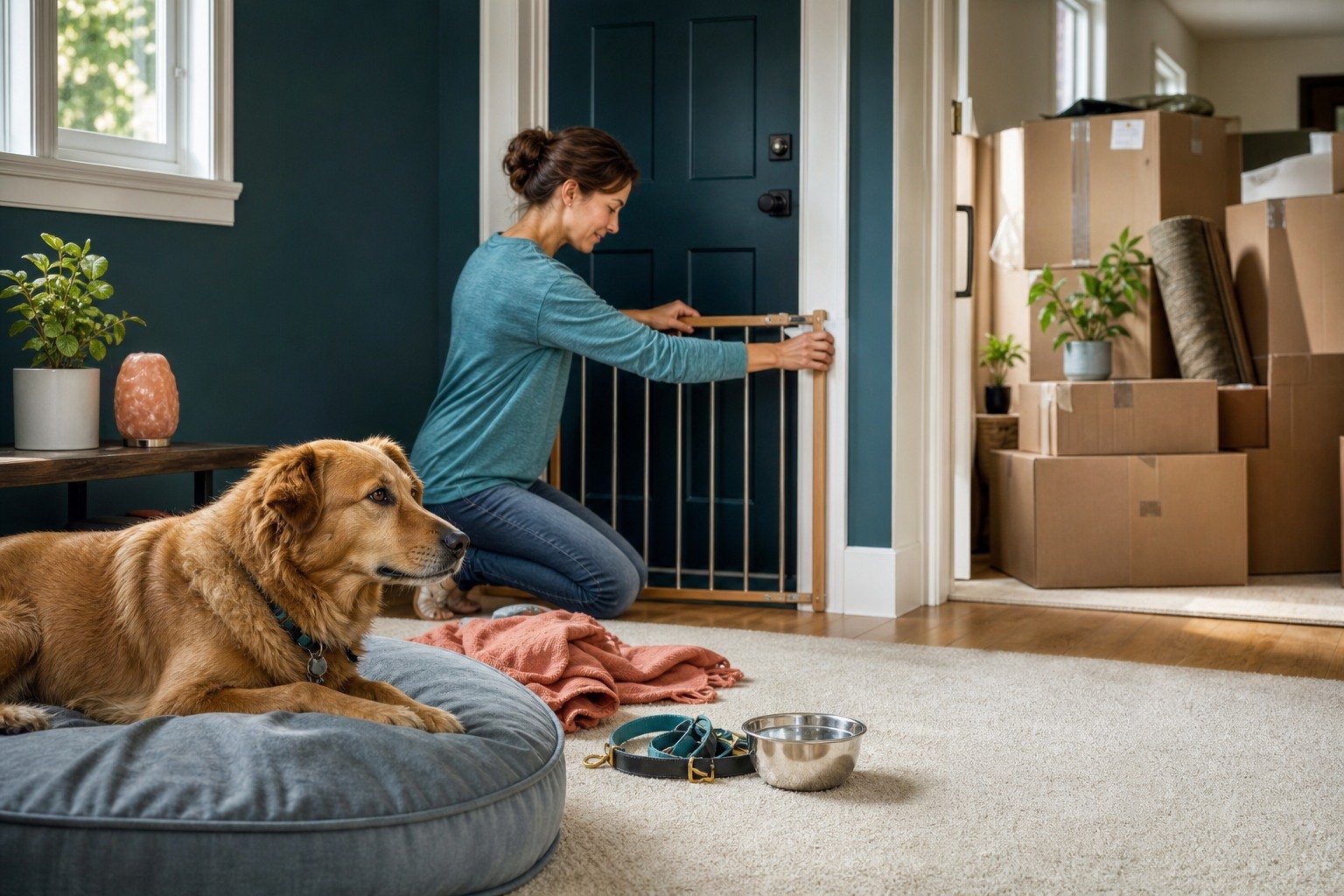
Moving changes smells, sounds, routes, people, doors, schedules, sleeping places, and owner attention all at once. Packing and repair work can begin the disruption weeks before travel, while movers and open doors create an immediate escape risk. An anxious dog may pant, pace, hide, vocalize, refuse food, guard, eliminate, cling, freeze, or try to flee. Preparation should begin with veterinary review, identification and records, a realistic transport plan, gradual exposure to moving materials when tolerated, and a secure quiet zone. On moving day, one responsible handler and redundant barriers are more important than participation in the activity. At the new home, start small, preserve familiar routines, supervise exploration, and monitor recovery without forcing adaptation to a calendar.
Short answer
Treat the move as a sequence of safety transitions, not one stressful day
AAHA guidance highlights updated microchip and tag information, early acclimation when possible, familiar routines, and escape prevention. Broader anxiety guidance supports predictable safe spaces and veterinary help when distress is severe. [1] [2]
- Record the context, trigger, duration, recovery, and effect on daily function.
- Use observations to support veterinary assessment, not to diagnose or treat at home.
- Protect safety and predictability while avoiding punishment, flooding, and forced exposure.
- Agree on measurable outcomes, a review date, and clear urgent-contact signs.
Safety first
Escape attempts, panic, self-injury, or inability to function needs professional help
Contact a veterinarian before the move for severe existing anxiety or after the move for persistent appetite loss, vomiting, diarrhea, house-soiling, sleep disruption, aggression, or inability to settle. Seek urgent help for escape injury, collapse, breathing difficulty, repeated vomiting, suspected toxin, severe pain, or immediate bite risk.
- Do not delay care for sudden, severe, escalating, or function-limiting change.
- Do not start, stop, combine, divide, or calculate treatment from this article.
- Use physical separation and professional help when people or animals could be injured.
Veterinary note
This article is educational and does not diagnose, treat, prescribe, or replace care from a licensed veterinarian. Your dog’s history, examination, diet, medications, and current signs determine what is appropriate.
Before the move: establish health, identity, and logistics
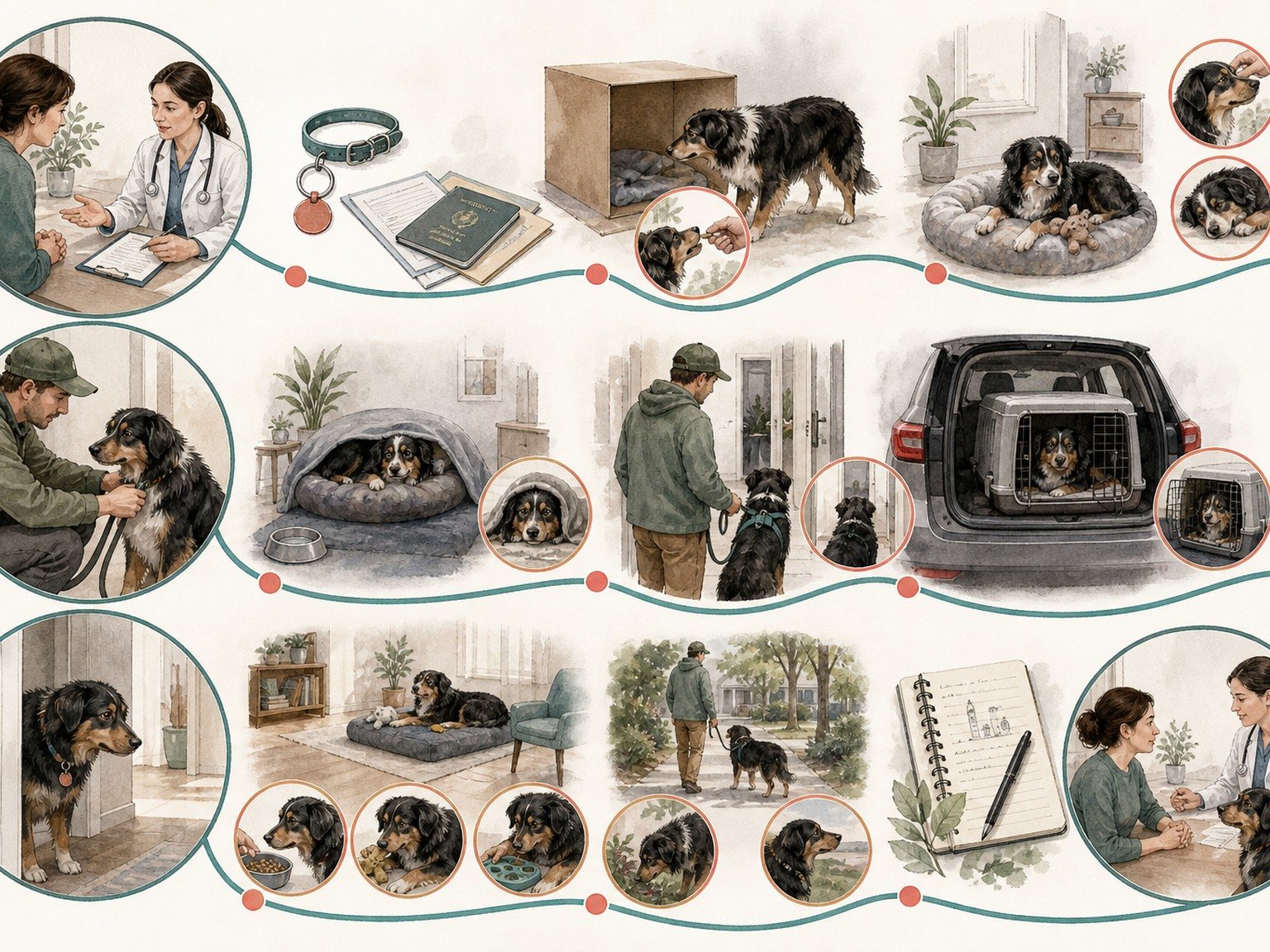
Schedule veterinary review early enough to discuss anxiety history, motion sickness, medication, prescriptions, records, destination risks, and whether a behavior plan needs time to begin. Do not trial a new sedative on moving day without instructions.
Verify the microchip number and registry contact, fit a secure collar or harness, prepare current tags, and keep recent photographs and records accessible. Identification is a backup, not permission to use an open-door setup. [1]
Choose the travel method, quiet-zone location, handlers, toilet breaks, food and medication timing, emergency clinic, and destination setup. Confirm legal or carrier requirements for long-distance travel.
Introduce change gradually when the dog can stay comfortable
Bring out boxes and packing materials in small amounts, preserve clear walking paths, and pair tolerable changes with normal routines. If the dog freezes, hides, stops eating, or cannot recover, reduce intensity rather than pushing through.
Maintain meals, medication, walks, rest, and alone-time plans as consistently as possible. Packing often changes human schedules before the address changes, and that disruption can aggravate separation-related distress. [2]
Create a quiet area with familiar bedding, water, safe enrichment, and sound buffering. A crate is appropriate only for a dog already comfortable with it and when the transport or safety plan requires it; panic confinement can cause injury.
Moving day: use redundant barriers and one accountable handler
Keep the dog away from movers, open doors, tools, debris, cleaners, and stacked boxes. Use a closed room plus a gate or another redundant barrier, post a clear human-facing notice, and assign one adult to the dog.
Transport in the preplanned secured setup. Never allow the dog loose in a moving vehicle or unattended in unsafe heat or cold. Carry medication, water, cleanup supplies, records, and emergency contacts rather than packing them away.
At each transfer, attach the secure leash before a door opens. Verify gates, fencing, windows, screens, and exterior doors at the new property before exploration.
After arrival: start small and watch the recovery trend
Set up a familiar rest, food, water, and toileting routine before opening access to the whole home. Let the dog explore at a comfortable pace and prevent unsupervised access to boxes, balconies, pools, gaps, chemicals, and unfamiliar animals.
Use quiet predictable walks and avoid overwhelming greetings, daycare, dog parks, or parties during early adjustment. Familiar scent and routine can help, but no evidence-based three-day or three-week deadline fits every dog.
Record eating, drinking, elimination, sleep, pacing, vocalization, hiding, interaction, walks, and recovery. Contact the veterinary team when distress persists or worsens; medication and behavior modification may be appropriate parts of an individualized plan. [3] [4]
Prepare for a focused veterinary conversation
Bring a concise timeline, short natural-movement or symptom videos when safe, the exact names and photographs of every food, treat, medication, and supplement label, and notes about appetite, water intake, stool, sleep, activity, comfort, and behavior. Include recent injuries, travel, boarding, diet changes, missed medication, and previous test results. A complete record helps the veterinary team separate a repeatable pattern from a single impression.
Decide in advance what you need from the visit: an urgency decision, a diagnosis plan, a nutrition review, a pain or mobility assessment, or a monitored trial. Ask what result would change the plan and what finding would rule an option out. This keeps research and product information in the right role. Evidence can shape questions and expectations, but it cannot determine what is safe for an individual dog without the history and examination.
Owner tool
Create a moving-day dog safety plan
On a phone, swipe across the table to see every column.
| Checkpoint | Record | Why it helps |
|---|---|---|
| Before | Vet, ID, records, transport, routine | Prepares risk |
| Zone | Room, gate, bedding, handler | Prevents escape |
| Transfer | Leash, vehicle, doors, supplies | Controls transitions |
| After | Small area, routine, log, review | Tracks adjustment |
Better questions, calmer next steps
Questions to ask your veterinarian
- Should we begin a behavior or medication plan before moving?
- How should this dog travel safely?
- Which barriers and handler roles are required?
- What routine should remain unchanged?
- Which post-move signs require reassessment?
FAQ
Should my dog watch the movers?
Usually a secure quiet zone is safer.
Can I use a crate for the first time?
No. Panic confinement can worsen distress.
How quickly should a dog settle?
There is no universal deadline.
Should I change food during the move?
Avoid unnecessary change unless directed.
When should I update the microchip?
Before moving and again when contact details change.
Sources
- American Animal Hospital Association: How Can I Make Moving Easier for My Pet?. Identification and moving preparation.
- American Animal Hospital Association: Separation Anxiety in Pets. Routine change, safe space, and professional care.
- American Veterinary Society of Animal Behavior: Humane Dog Training Position Statement. Humane anxiety treatment.
- American Animal Hospital Association: Canine Life Stage Guidelines. Life-stage health and behavior planning.
- Veterinary Sciences: Therapy and Prevention of Noise Fears. Management, training, medication, and pain context.
