

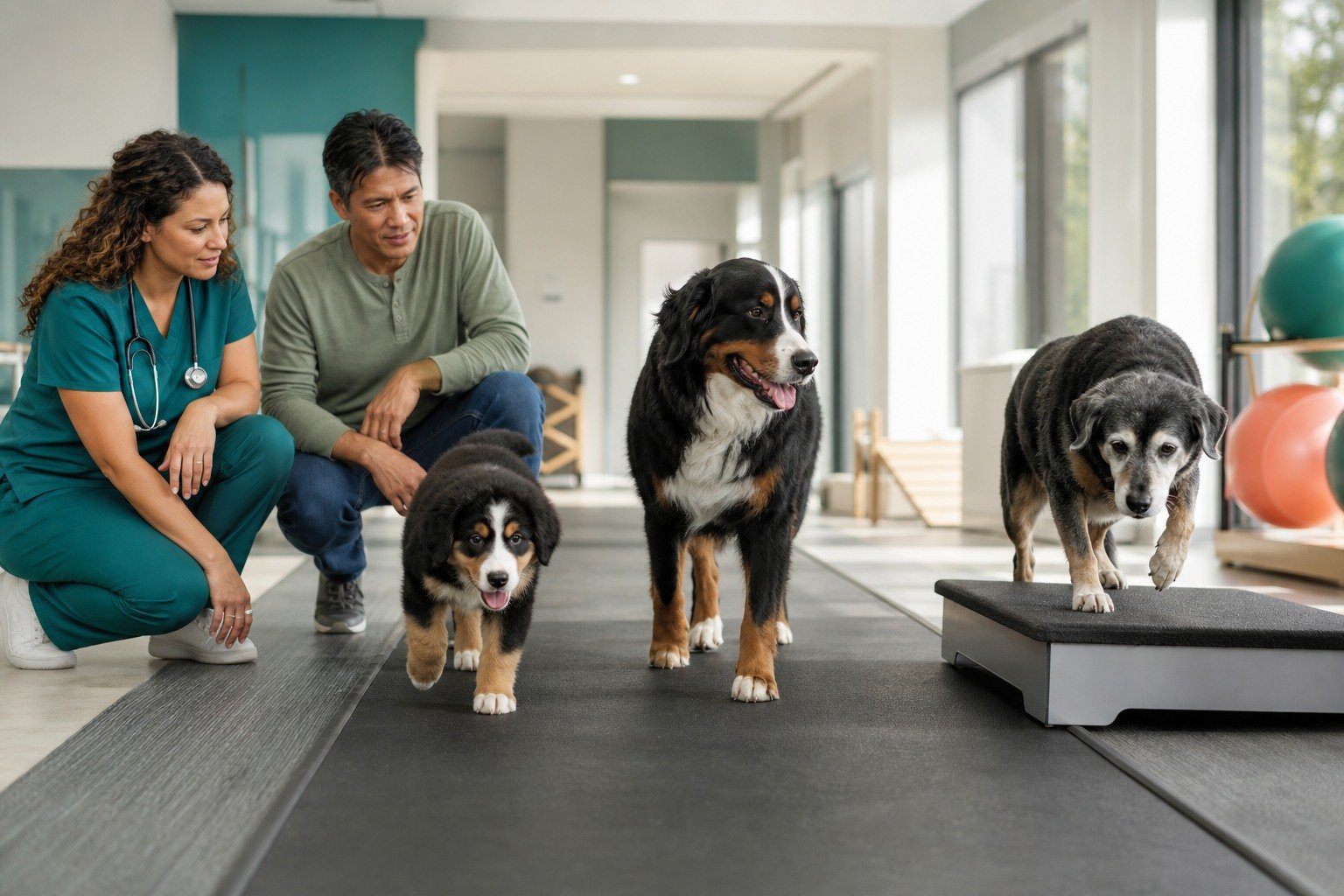
Joint health is a lifelong interaction among genetics, conformation, growth, nutrition, body condition, muscle, activity, injury, disease, environment, and aging. A puppy needs controlled growth and developmentally appropriate movement, not forced conditioning. An adult dog benefits from a stable lean condition, gradual fitness, varied tolerable activity, and early attention to changes. A senior dog may need pain assessment, muscle preservation, safer footing, and home adaptations, but age alone does not explain every decline. Research identifies risk factors for osteoarthritis while also showing that not every factor is modifiable and not every intervention prevents disease. The practical goal is to know the dog's normal function, reduce avoidable strain, recognize change early, and build a veterinary plan for the individual life stage.
Short answer
Use a life-stage baseline to notice meaningful change before function is lost
Systematic review evidence links canine osteoarthritis risk with age, body weight, breed, sex or neuter status in some populations, and joint disease or injury. These associations do not predict an individual outcome, but they support lifelong body-condition management, appropriate activity, and early veterinary assessment. [1] [2]
- Record the dog's baseline, current routine, exact diet and products, and any recent change.
- Use observations to support veterinary assessment, not to diagnose or choose treatment at home.
- Keep every household member working from the same written plan and restrictions.
- Agree on measurable outcomes, a review date, and clear urgent-contact signs.
Safety first
Sudden lameness or loss of function is not normal aging
Contact a veterinarian for persistent limping, stiffness, reluctance, altered gait, difficulty rising, reduced activity, pain with handling, muscle loss, or behavior change. Seek urgent care for inability to bear weight, severe pain, major trauma, a hot swollen joint, neurologic weakness, dragging limbs, collapse, or rapid decline.
- Do not delay care for sudden, severe, escalating, or function-limiting signs.
- Do not start, stop, combine, divide, or calculate treatment from this article.
- Preserve exact labels, discharge instructions, exposure details, and a concise timeline.
Veterinary note
This article is educational and does not diagnose, treat, prescribe, or replace care from a licensed veterinarian. Your dog’s history, examination, diet, medications, and current signs determine what is appropriate.
Puppyhood: support growth without trying to engineer perfect joints
Feed a complete and balanced growth diet appropriate to expected adult size and keep the puppy in a healthy body condition. Avoid adding calcium, minerals, or supplements to a complete diet unless a veterinarian directs it; nutrient excess and imbalance can disrupt normal skeletal development.
Movement should build coordination, confidence, and muscle through age-appropriate play, exploration, and gradual skill development. Repetitive high-impact work, forced distance, unsafe jumping, and fatigue are different from self-paced movement. Exact limits depend on breed, size, health, surfaces, and the activity, not a universal minutes-per-month formula.
Discuss breed-related screening and any abnormal stance, gait, pain, or reluctance early. Developmental joint disease may involve inherited risk and conformation that an owner did not cause. Early evaluation creates options; it should not be framed as blame. [1]
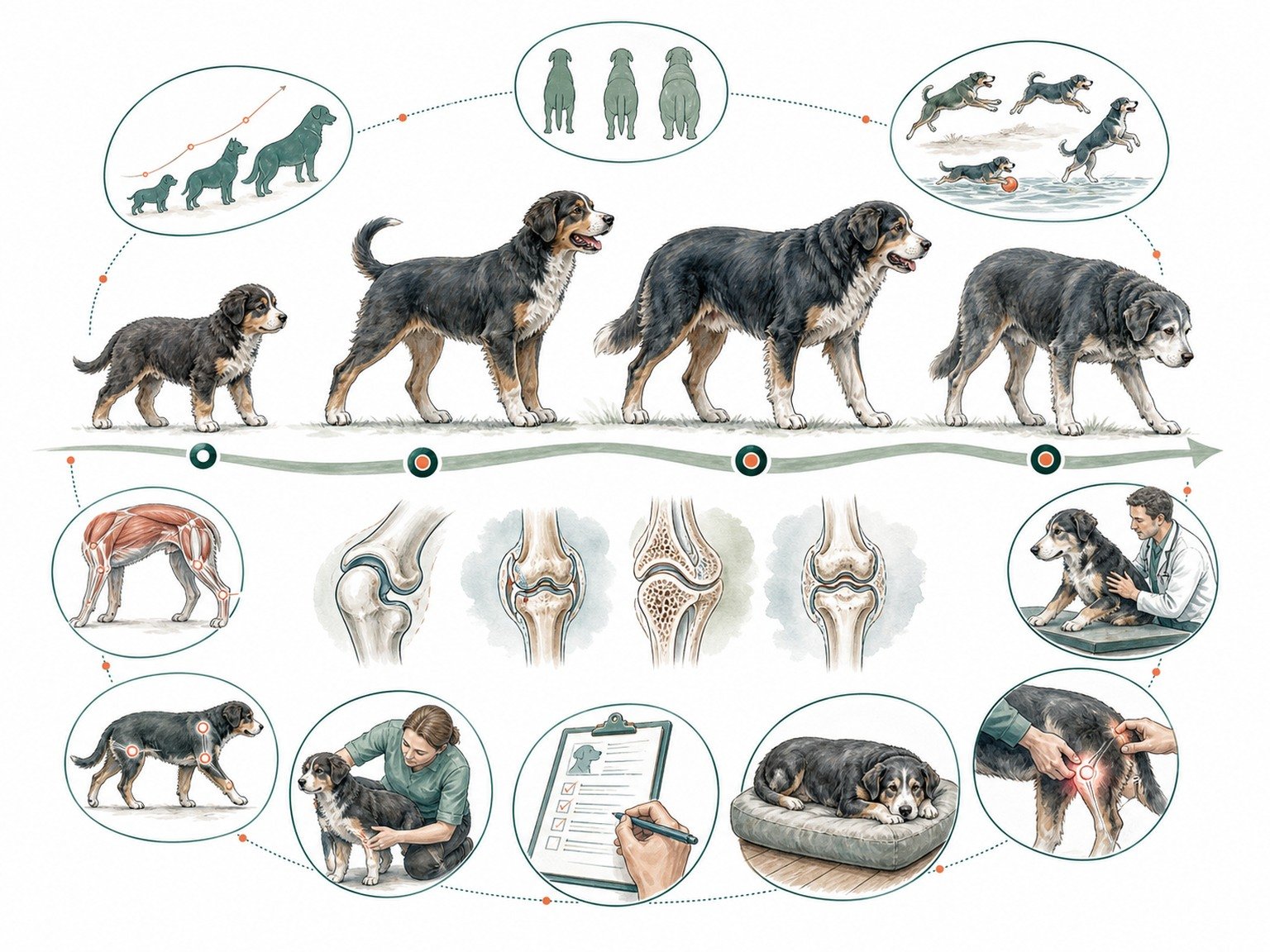
Adulthood: protect capacity with lean condition and gradual fitness
Establish an adult baseline for walking, running, stairs, jumping, play, recovery, posture, and willingness. Short videos on the same surface and route can make subtle change easier to recognize, but they do not replace orthopedic and neurologic examination.
Keep body condition lean and monitor muscle, not weight alone. Excess body weight increases mechanical load and is repeatedly associated with osteoarthritis risk and progression. Weight plans should preserve adequate nutrients and muscle through measured food and veterinary guidance. [1] [3]
Increase distance, speed, terrain, sport skills, and load gradually. Warm-up, recovery, rest, paw care, harness fit, and safe footing matter. Weekend intensity after a sedentary week is not the same as consistent conditioning, especially after illness or time off.
Senior years: separate aging from pain and disease
Aging can change endurance and recovery, but reluctance, sleep disruption, house-soiling, irritability, withdrawal, or difficulty settling may reflect pain or another illness. Do not assume a senior dog is simply slowing down before assessment.
Senior support can include shorter tolerable activity, strength and balance work prescribed for the patient, ramps or step alternatives, nonslip paths, accessible food and water, supportive rest areas, nail and paw care, and help entering vehicles. Adaptations should increase safe choice without forcing movement.
Multimodal osteoarthritis management may combine weight and muscle goals, environmental changes, rehabilitation, medication, and selected adjuncts. COAST recommendations emphasize stage-based, reassessed care rather than a single permanent solution. [2]
At every stage: measure function and revise the plan
Track the tasks that matter to the dog: rising, toileting, walking, play, stairs, car access, grooming, sleep, work, and social participation. Record frequency, duration, recovery, surface, weather, and whether assistance was needed.
Ask which finding is orthopedic, neurologic, systemic, or uncertain; whether imaging or laboratory work is useful; what activity remains encouraged; and how success will be measured. Pain guidelines emphasize proactive assessment and regular reassessment because animals cannot describe their experience directly. [4]
A life-stage plan changes after growth, neutering, weight change, injury, surgery, illness, pregnancy, new work, retirement, or a home move. Updating the baseline is a sign of good care, not evidence that the previous plan failed.
Prepare for a focused veterinary conversation
Bring a concise timeline, short natural-movement or symptom videos when safe, the exact names and photographs of every food, treat, medication, and supplement label, and notes about appetite, water intake, stool, sleep, activity, comfort, and behavior. Include recent injuries, travel, boarding, diet changes, missed medication, and previous test results. A complete record helps the veterinary team separate a repeatable pattern from a single impression.
Decide in advance what you need from the visit: an urgency decision, a diagnosis plan, a nutrition review, a pain or mobility assessment, or a monitored trial. Ask what result would change the plan and what finding would rule an option out. This keeps research and product information in the right role. Evidence can shape questions and expectations, but it cannot determine what is safe for an individual dog without the history and examination.
Owner tool
Keep a joint-health baseline across life stages
On a phone, swipe across the table to see every column.
| Checkpoint | Record | Why it helps |
|---|---|---|
| Growth | Diet, condition, gait, play, screening | Supports development |
| Adult | Fitness, workload, recovery, injury | Protects capacity |
| Senior | Pain signs, muscle, access, sleep | Preserves function |
| Review | Video, goals, exam, next check | Updates plan |
Better questions, calmer next steps
Questions to ask your veterinarian
- What is normal function for this life stage and breed?
- Is body and muscle condition appropriate?
- Which movement should continue, change, or stop?
- Does this dog need screening, imaging, or rehabilitation?
- What functional outcome should we reassess?
FAQ
Can puppy exercise cause all future joint disease?
No. Risk is multifactorial, though unsafe overload can matter.
Do joint supplements prevent arthritis?
Evidence does not support a universal prevention promise.
Is limping normal after hard play?
Persistent or recurrent limping needs assessment.
Is slowing down normal in seniors?
Pain and disease must be considered.
What is the best lifelong goal?
Maintain comfortable function and respond early to change.
Sources
- BMC Veterinary Research: Risk Factors for Canine Osteoarthritis: A Systematic Review. Osteoarthritis risk factors and evidence limits.
- Frontiers in Veterinary Science: COAST Development Group Consensus Guidelines. Life-stage and stage-based OA management.
- Veterinary Sciences: Osteoarthritis Management in Growing Dogs. Growth, nutrition, development, and early management.
- Journal of Feline Medicine and Surgery: 2022 AAHA Pain Management Guidelines. Pain assessment and reassessment principles.
- Veterinary Medicine and Science: Physiotherapy for Canine Osteoarthritis: Systematic Review. Rehabilitation evidence and limitations.
