

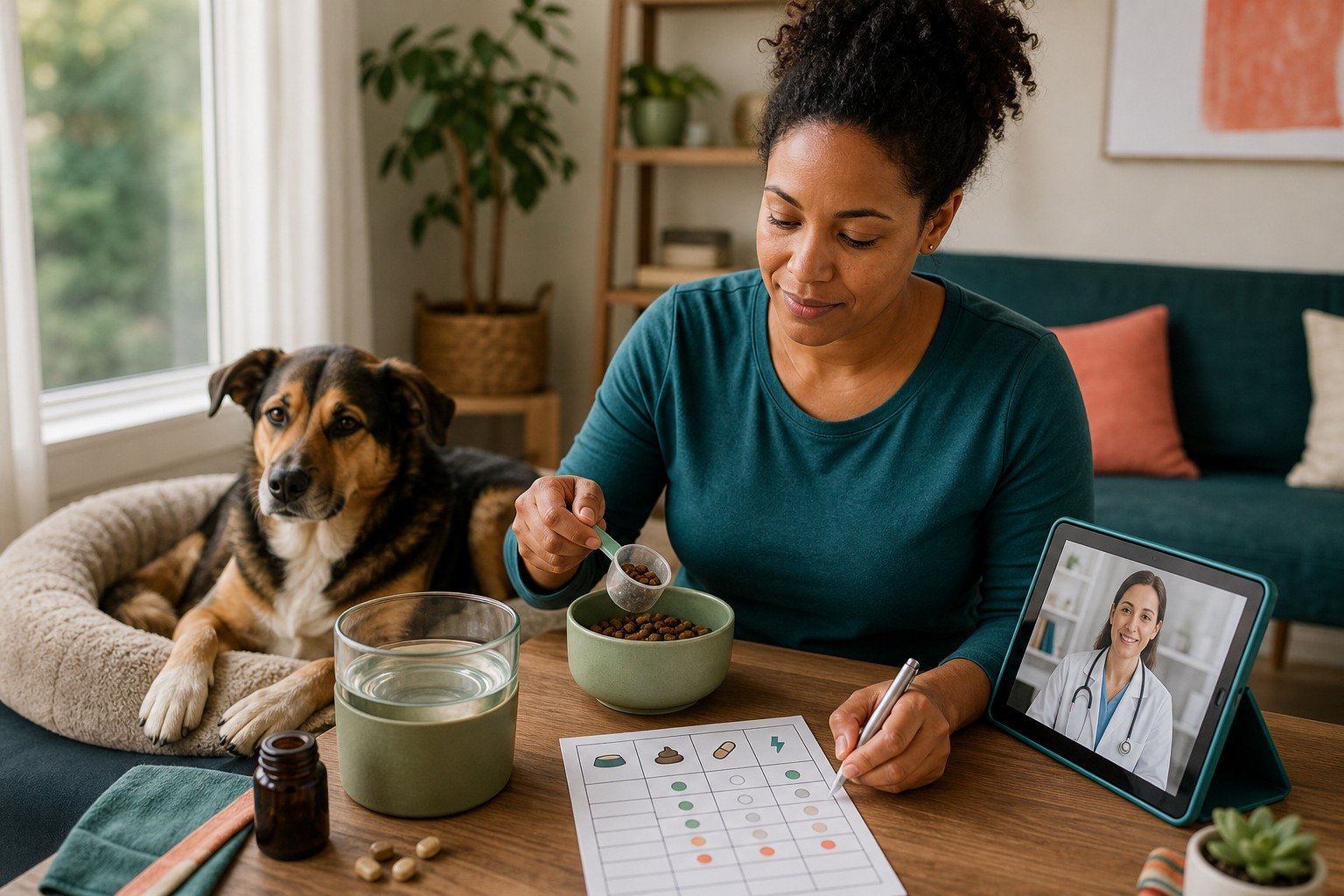
Recovery after vomiting, diarrhea, hospitalization, infection, surgery, medication exposure, pancreatitis, or another gastrointestinal illness is not a universal microbiome reset. The right plan depends on what caused the illness, what tests found, whether dehydration or nutrient loss occurred, which medicines were prescribed, and whether another disease is present. Some dogs resume normal food quickly; others need a specific therapeutic diet, measured transition, feeding tube plan, or closer monitoring. Owners help by following written discharge instructions exactly, keeping food and medication consistent, tracking appetite, water, stool, vomiting, weight, comfort, and energy, and reporting changes early. This guide supports that conversation without prescribing a food, probiotic, antibiotic, dose, or recovery timeline.
Short answer
Treat recovery as continuation of the veterinary plan, not a separate home experiment
Evidence-based acute-diarrhea guidance prioritizes hydration, appropriate nutrition, and patient-specific supportive care while discouraging routine antimicrobial use in dogs with mild or moderate acute diarrhea when systemic illness is absent. Recovery choices still depend on the original diagnosis and current examination. [1] [2]
- Record the dog's baseline, current routine, exact diet and products, and any recent change.
- Use observations to support veterinary assessment, not to diagnose or choose treatment at home.
- Keep every household member working from the same written plan and restrictions.
- Agree on measurable outcomes, a review date, and clear urgent-contact signs.
Safety first
Relapse, dehydration, pain, or systemic decline deserves prompt reassessment
Contact the treating clinic for repeated vomiting or diarrhea, blood or black stool, worsening appetite, weight loss, marked lethargy, pain, fever concern, medication problems, or failure to follow the expected discharge course. Seek urgent care for collapse, severe weakness, a painful or distended abdomen, repeated unproductive retching, breathing difficulty, inability to keep water down, or rapid deterioration.
- Do not delay care for sudden, severe, escalating, or function-limiting signs.
- Do not start, stop, combine, divide, or calculate treatment from this article.
- Preserve exact labels, discharge instructions, exposure details, and a concise timeline.
Veterinary note
This article is educational and does not diagnose, treat, prescribe, or replace care from a licensed veterinarian. Your dog’s history, examination, diet, medications, and current signs determine what is appropriate.
Begin with the diagnosis, discharge goals, and current risk
Read the discharge summary before changing food or routine. Record the working or confirmed diagnosis, important test results, hydration status, treatments received, medications due, feeding instructions, restrictions, follow-up date, and the signs that require an earlier call. If an instruction is unclear, ask the treating team rather than improvising.
Acute diarrhea ranges from self-limiting disease to illness with systemic compromise. ENOVAT guidance classifies severity using the whole patient, not stool appearance alone, and recommends against routine antimicrobials for mild and moderate cases without systemic disease. That stewardship principle does not mean antibiotics are never needed; it means the indication must be clinical. [1] [3]
Recovery risk changes with age, body size, pregnancy, immune status, chronic disease, recent surgery, foreign-body concern, toxin exposure, and the ability to eat and drink. A puppy, frail senior, or dog with diabetes, kidney disease, or endocrine disease may need a lower threshold for reassessment.
Rebuild intake with consistency rather than constant switching
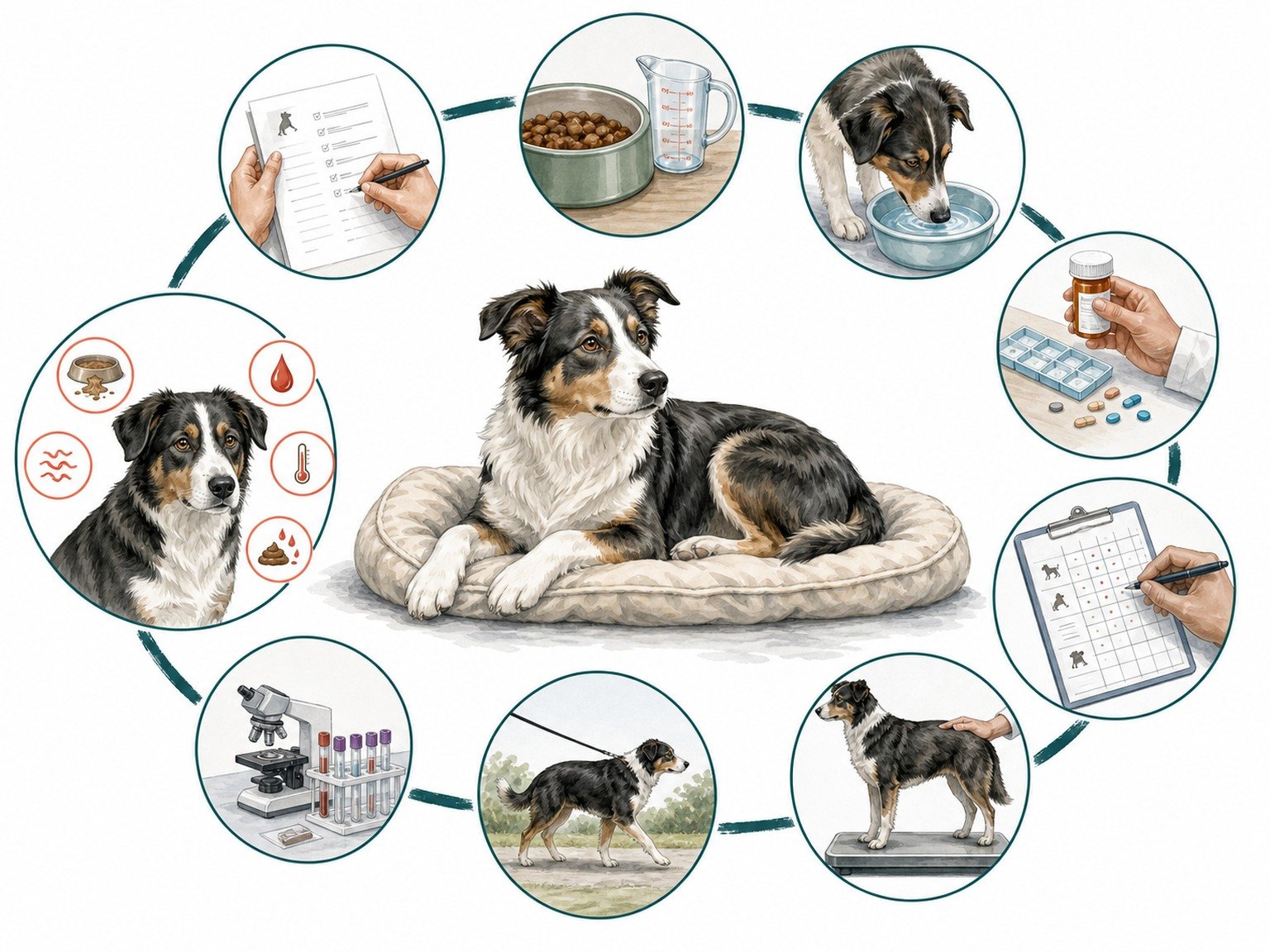
Use the exact diet, amount, frequency, texture, and transition that the veterinary team recommended. Sudden changes, rich treats, table food, chews, flavored supplements, and access to another pet's bowl can recreate signs or make the response impossible to interpret. Measure intake instead of estimating from a partly empty bowl.
Early enteral nutrition is often preferred when the gastrointestinal tract can be used, but the appropriate route and timing depend on the patient. A dog who refuses food, vomits meals, has swallowing difficulty, or was discharged with a tube needs direct clinic guidance rather than force-feeding or an online calorie target. [2]
Keep fresh water available unless the treating team gave a specific restriction. Record drinking, urination, gum moisture only as an observation, and whether water triggers vomiting. Owners cannot reliably grade dehydration at home from one sign, so declining intake or ongoing losses should prompt a call.
Track medications, stool, weight, and whole-dog function
Maintain one medication list with drug name, strength, dose as prescribed, time given, purpose, and any missed or vomited dose. Do not repeat a dose automatically, use leftover antibiotics, add an antidiarrheal, or stop a prescribed drug because stool changed without contacting the clinic.
Use a simple daily record for meals offered and eaten, water, vomiting, stool frequency and appearance, blood or mucus, urination, weight when practical, sleep, posture, comfort, interest, and activity. A trend across several observations is more useful than declaring one stool normal or abnormal.
Microbiome research describes altered communities in many gastrointestinal diseases, but a fecal result or supplement response does not independently establish recovery. Clinical improvement, nutrition, weight, examination, and indicated testing remain the meaningful context. [4]
Use reassessment to decide what comes next
At the scheduled recheck, bring the timeline, photographs when appropriate, food and medication labels, discharge papers, and questions about diet duration, transition, medication completion, laboratory monitoring, parasite testing, and activity. Report partial improvement as precisely as worsening signs.
Persistent or recurrent gastrointestinal signs may require a broader evaluation for dietary, parasitic, inflammatory, structural, pancreatic, endocrine, infectious, or neoplastic disease. The 2026 ACVIM chronic inflammatory enteropathy guidance emphasizes structured evaluation and response assessment rather than indefinite trial-and-error additions. [5]
Ask which result would count as recovery, what remains uncertain, whether weight or nutrient status needs attention, and when normal food, treats, exercise, travel, grooming, daycare, or boarding can resume. Recovery is complete when the patient-specific goals are met, not when a calendar date arrives.
Prepare for a focused veterinary conversation
Bring a concise timeline, short natural-movement or symptom videos when safe, the exact names and photographs of every food, treat, medication, and supplement label, and notes about appetite, water intake, stool, sleep, activity, comfort, and behavior. Include recent injuries, travel, boarding, diet changes, missed medication, and previous test results. A complete record helps the veterinary team separate a repeatable pattern from a single impression.
Decide in advance what you need from the visit: an urgency decision, a diagnosis plan, a nutrition review, a pain or mobility assessment, or a monitored trial. Ask what result would change the plan and what finding would rule an option out. This keeps research and product information in the right role. Evidence can shape questions and expectations, but it cannot determine what is safe for an individual dog without the history and examination.
Owner tool
Build a post-illness recovery record
On a phone, swipe across the table to see every column.
| Checkpoint | Record | Why it helps |
|---|---|---|
| Plan | Diagnosis, diet, medication, restrictions | Preserves instructions |
| Intake | Food, water, vomiting, urination | Tracks losses |
| Output | Stool, blood, frequency, comfort | Shows trend |
| Review | Weight, energy, recheck, questions | Guides next step |
Better questions, calmer next steps
Questions to ask your veterinarian
- What recovery milestones should we expect for this diagnosis?
- Which diet and transition instructions should remain unchanged?
- What should I do after a missed or vomited medication dose?
- Which change requires same-day or emergency care?
- What testing or recheck confirms adequate recovery?
FAQ
Should I reset my dog's microbiome after illness?
No universal reset protocol exists; follow the diagnosis-specific plan.
Does every dog need a probiotic after antibiotics?
No. Product, strain, purpose, and patient matter.
When can regular food return?
The treating team should set the transition.
Is one normal stool proof of recovery?
No. Use the whole clinical trend.
Can I save leftover medicine for recurrence?
No. New signs require fresh veterinary guidance.
Sources
- World Small Animal Veterinary Association: ENOVAT Guidelines for Antimicrobial Use in Canine Acute Diarrhea. Severity-based supportive care and antimicrobial stewardship.
- Veterinary Clinics of North America: Nutrition and Acute Gastrointestinal Disease. Nutrition and supportive-care context.
- ENOVAT: European Network for Optimization of Veterinary Antimicrobial Treatment. Development and use of veterinary antimicrobial guidance.
- Veterinary Sciences: Nutritional Management of Gastrointestinal Disease. Diet and microbiome evidence context.
- Journal of Veterinary Internal Medicine: ACVIM Guidelines for Chronic Inflammatory Enteropathy in Dogs. Structured evaluation of persistent disease.
