

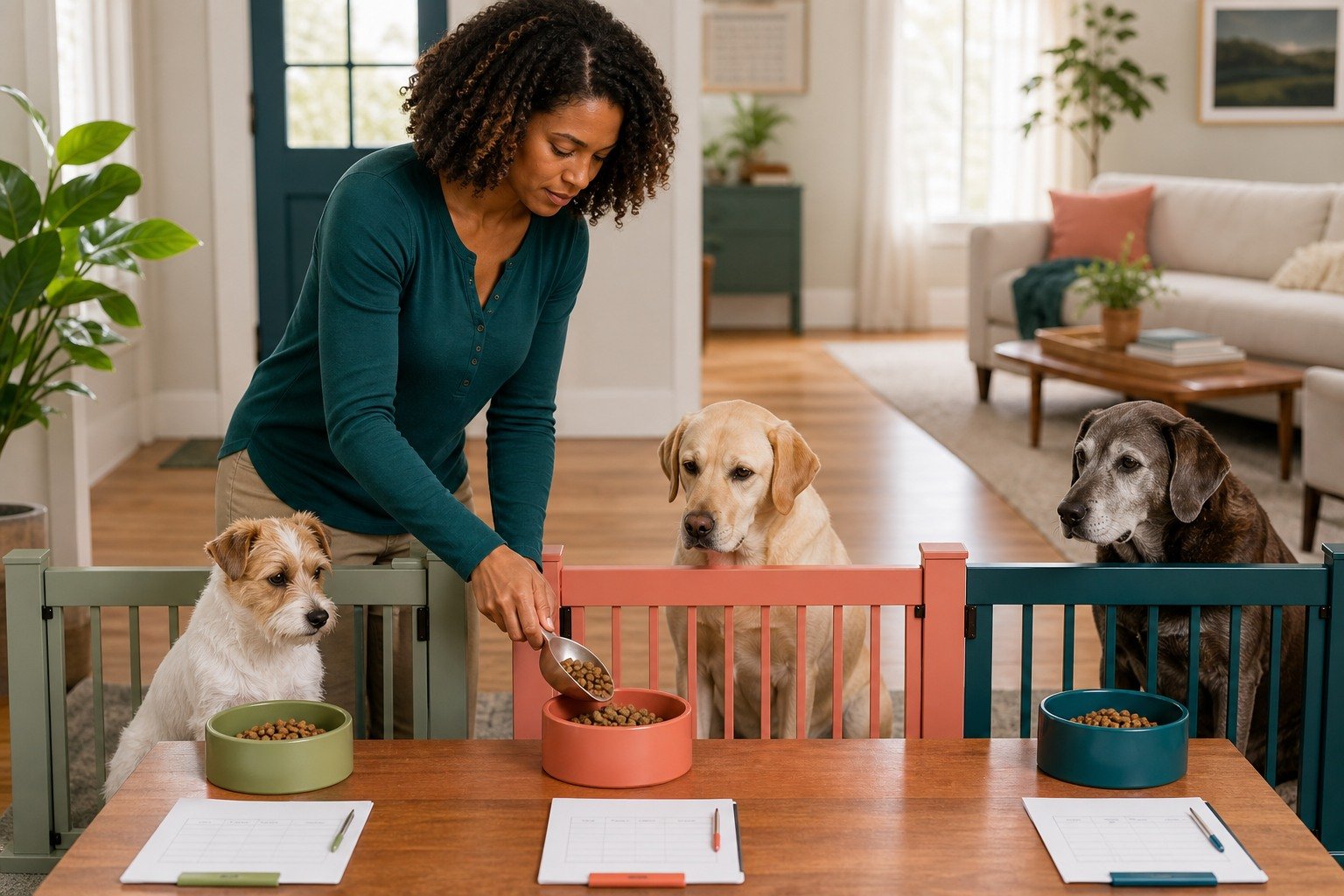
In a multi-dog home, digestive care can fail for logistical reasons even when every individual plan is sound. Dogs may swap bowls, steal treats, share flavored chews, drink from contaminated outdoor water, eat feces, access trash, receive duplicate medication, or hide which animal vomited or passed abnormal stool. Different life stages, body sizes, diseases, allergies, therapeutic diets, and medication schedules may require different routines. Separate feeding, clear identification, shared household records, secure storage, prompt waste cleanup, clean water, supervised transitions, and illness-control plans protect both safety and interpretability. These systems do not diagnose a contagious disease or justify treating every dog alike; they help the veterinary team know who was exposed and who changed.
Short answer
Manage each dog individually while tracking the household as one exposure system
Life-stage and nutrition guidance supports individualized diet and monitoring, while parasite references emphasize fecal-oral transmission, intermittent shedding, environmental contamination, and hygiene. Separate records and feeding reduce uncertainty but do not replace testing or diagnosis. [1] [2]
- Record the dog's baseline, current routine, exact diet and products, and any recent change.
- Use observations to support veterinary assessment, not to diagnose or create treatment at home.
- Keep every household member working from the same written plan and product list.
- Agree on measurable outcomes, a review date, and clear urgent-contact signs.
Safety first
Multiple dogs with vomiting or diarrhea can signal a shared urgent exposure
Contact a veterinarian promptly when more than one dog becomes ill, when signs persist, or when a puppy, senior, pregnant, immunocompromised, or medically complex dog is affected. Seek urgent care for collapse, severe weakness, repeated vomiting, black or bloody stool, breathing difficulty, suspected toxin, spoiled food, obstruction, or rapid deterioration.
- Do not delay care for sudden, severe, escalating, or function-limiting signs.
- Do not start, stop, combine, divide, or calculate treatment from this article.
- Preserve exact labels, lot information, exposure details, and a concise timeline.
Veterinary note
This article is educational and does not diagnose, treat, prescribe, or replace care from a licensed veterinarian. Your dog’s history, examination, diet, medications, and current signs determine what is appropriate.
Give every dog an identifiable feeding and medication lane
Use separate bowls, measured portions, feeding locations, and pickup times. Barriers, crates, rooms, or supervised distance can prevent swapping without creating conflict. Feed at a pace and setup appropriate to each dog's behavior and medical needs.
Color-code or label records, scoops, and storage containers for the humans, while keeping dog-facing equipment safe and simple. Record who prepared and gave each meal or medication so another household member does not repeat it.
A puppy growth diet, adult maintenance food, senior plan, weight-management diet, elimination trial, low-fat diet, or prescription therapeutic food should not be shared casually. Individual nutritional assessment remains necessary. [1]
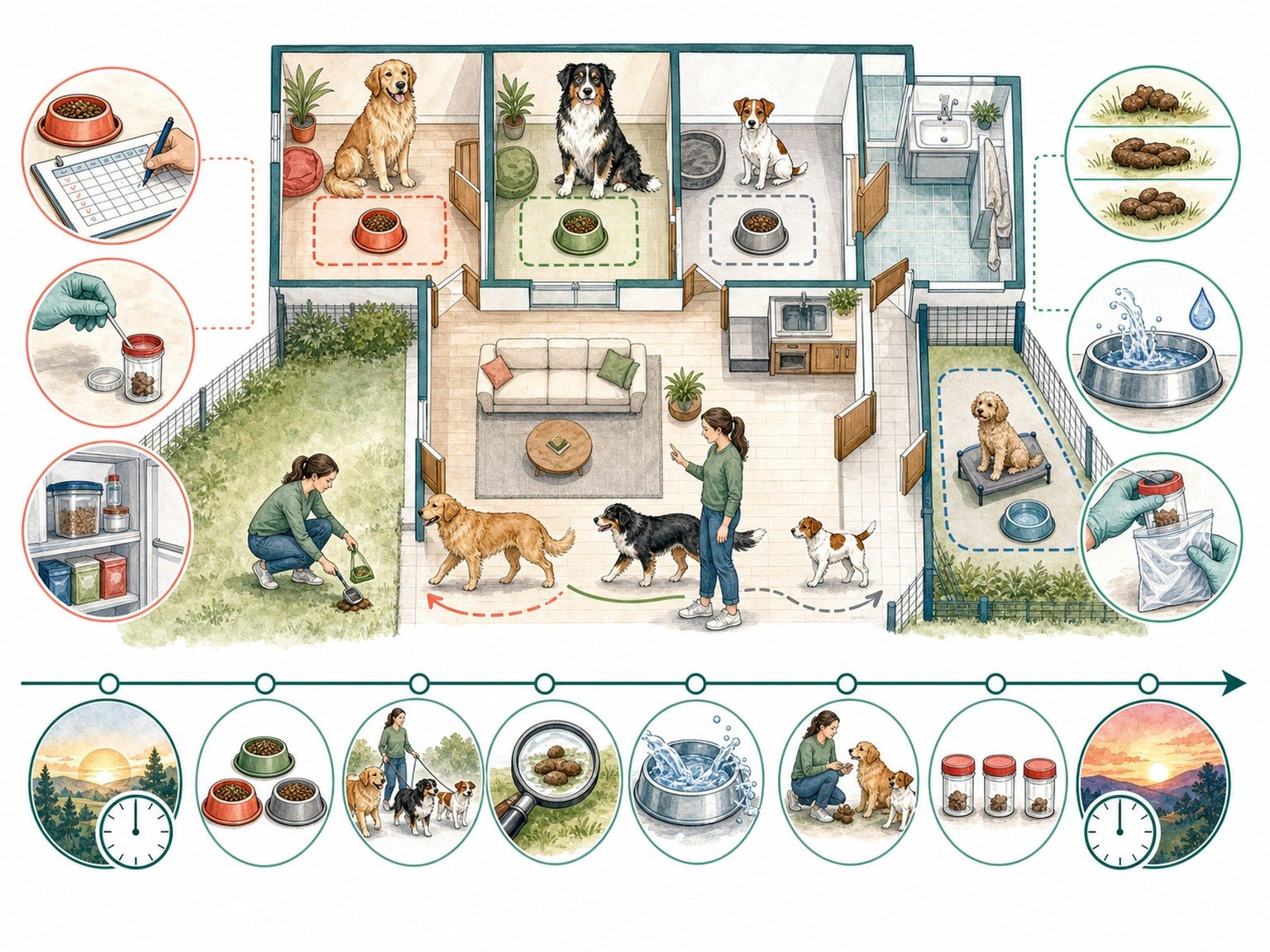
Make appetite, stool, vomiting, and exposure attributable
Observe each dog eating when possible and confirm leftovers before bowls are removed. Note appetite, speed, regurgitation, vomiting, stool, straining, mucus, blood, accidents, thirst, behavior, and activity under the correct dog.
During walks or yard time, use location, timing, supervision, or brief separation to identify stool. Prompt pickup reduces environmental contamination and allows a fresh sample to be linked to the correct dog when the veterinarian requests one.
Use one household timeline for shared food bags, treats, water sources, visitors, travel, boarding, pesticides, trash access, wildlife, and illness. A simultaneous pattern can change urgency and the diagnostic question.
Control parasites and hygiene without assuming every positive means disease
Giardia and other enteric organisms can spread through fecal contamination, and shedding can be intermittent. Clinical significance, testing, treatment, and retesting depend on signs, patient, household, and veterinary interpretation. [2] [3]
Clean bowls and preparation surfaces, provide fresh water, store food securely, wash hands after waste handling, and prevent access to feces when possible. Follow veterinary or public-health directions for disinfection rather than improvising concentrated chemicals around animals.
Do not automatically medicate every dog with leftover product or a shared dose. The veterinarian may recommend testing, treatment, hygiene, observation, or different plans for different household members.
Prepare an illness separation and reintroduction plan
When a dog is ill, use a practical separate area for food, water, rest, waste handling, and medication if advised. Separation should protect health without increasing fear, overheating, or unsafe confinement.
Preserve exact food and treat packages, lot numbers, samples when requested, medication records, and the shared timeline. Tell the clinic whether people or other animals have gastrointestinal signs and whether the household includes vulnerable individuals.
Reintroduce shared spaces, bowls, treats, and normal routines according to veterinary guidance. Continue individual observation after apparent recovery because recurrence, medication effects, and diet nonadherence may appear later.
Prepare for a focused veterinary conversation
Bring a concise timeline, short natural-movement or symptom videos when safe, the exact names and photographs of every food, treat, medication, and supplement label, and notes about appetite, water intake, stool, sleep, activity, comfort, and behavior. Include recent injuries, travel, boarding, diet changes, missed medication, and previous test results. A complete record helps the veterinary team separate a repeatable pattern from a single impression.
Decide in advance what you need from the visit: an urgency decision, a diagnosis plan, a nutrition review, a pain or mobility assessment, or a monitored trial. Ask what result would change the plan and what finding would rule an option out. This keeps research and product information in the right role. Evidence can shape questions and expectations, but it cannot determine what is safe for an individual dog without the history and examination.
Owner tool
Create a multi-dog digestive control board
On a phone, swipe across the table to see every column.
| Checkpoint | Record | Why it helps |
|---|---|---|
| Identity | Dog, bowl, diet, medication | Prevents mix-ups |
| Observation | Meal, stool, vomiting, behavior | Links signs |
| Exposure | Food lot, water, waste, travel | Finds shared risk |
| Response | Separation, sample, call, recheck | Coordinates care |
Better questions, calmer next steps
Questions to ask your veterinarian
- Which diet and feeding rules apply to each dog?
- How should we test or manage household parasite exposure?
- Which dog needs separation and for how long?
- What sample or product information should we preserve?
- What shared pattern requires urgent care?
FAQ
Can healthy dogs share bowls?
Separate feeding is safer when diets, appetite, or treatment differ.
Should every dog be treated if one has diarrhea?
Not automatically; seek veterinary guidance.
How do I know which dog passed abnormal stool?
Use supervised, timed, or separated elimination when needed.
Does Giardia always cause disease?
No. Significance depends on patient and context.
Can I give all dogs the same probiotic?
Not without a defined purpose and individual review.
Sources
- World Small Animal Veterinary Association: Global Nutrition Guidelines. Individual nutrition assessment.
- Merck Veterinary Manual: Giardiasis in Animals. Transmission, intermittent shedding, signs, and hygiene.
- Merck Veterinary Manual: Protozoal Digestive Disorders of Dogs. Fecal-oral exposure and environmental control.
- American Animal Hospital Association: Canine Life Stage Guidelines. Individual life-stage feeding and preventive care.
- Companion Animal Parasite Council: Giardia Guidelines. Household hygiene and zoonotic risk context.
