

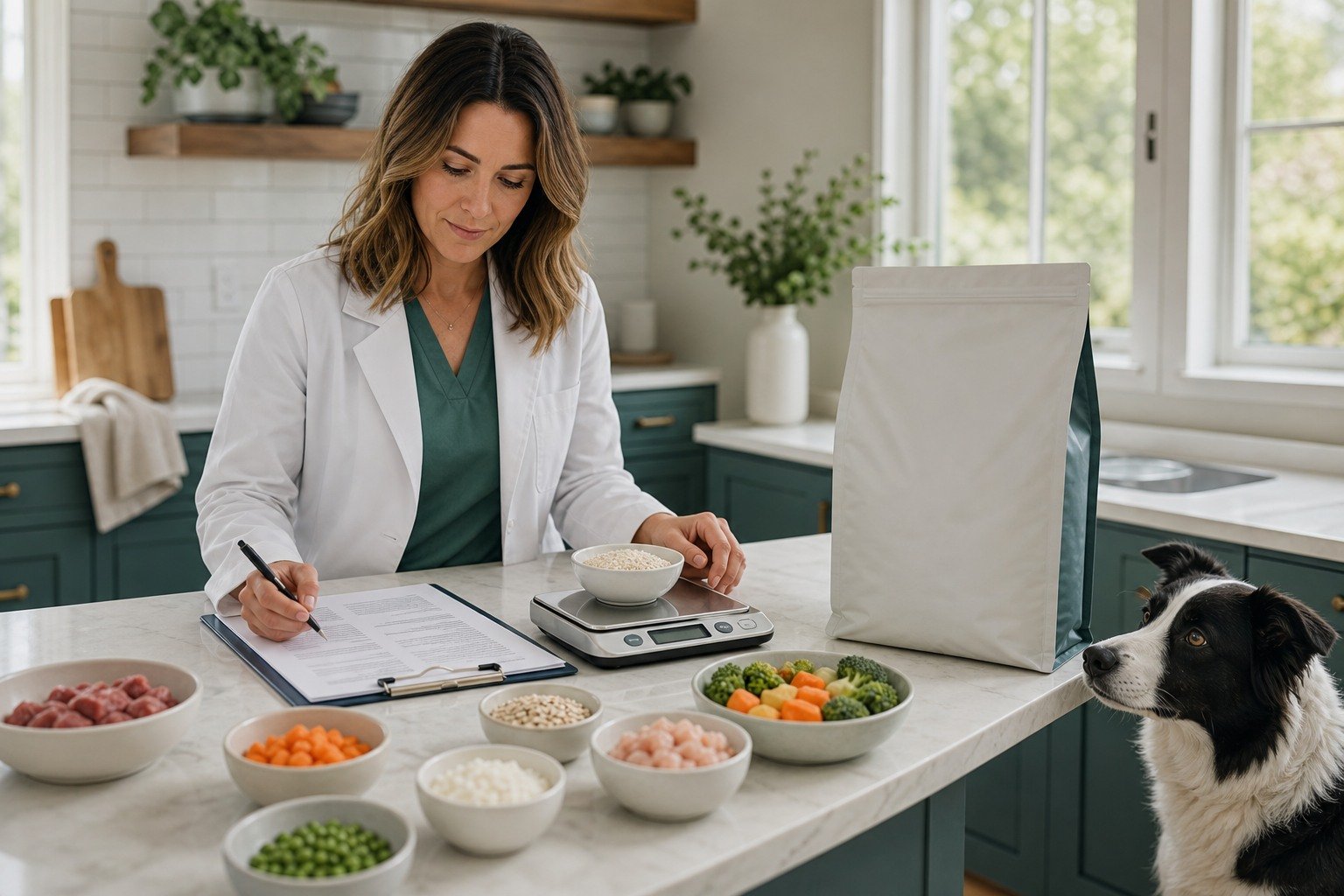
A home-cooked dog diet can be used in selected healthy or medically complex dogs, but it is not automatically gentler, more digestible, safer, or more nutritious than a complete commercial food. A list of meat, vegetables, rice, and oil does not show whether essential amino acids, fatty acids, vitamins, minerals, calories, and nutrient ratios meet the dog's needs. Published analyses have found deficiencies in many owner-sourced recipes. Ingredient substitutions, missing supplements, inaccurate volume measures, batch inconsistency, raw ingredients, and long-term health changes can further alter adequacy and safety. When a home-prepared diet is appropriate, it should be formulated for the individual by a qualified veterinary nutrition professional, followed exactly by weight, handled safely, and reassessed with body, muscle, stool, clinical, and laboratory monitoring.
Short answer
Home-cooked is a preparation method, not evidence of nutritional completeness
Studies evaluating recipes for adult dogs found that many failed to meet all essential nutrient recommendations. WSAVA nutrition guidance emphasizes complete diet history, formulation expertise, precise preparation, and monitoring rather than judging a diet by ingredient familiarity. [1] [2]
- Record the dog's baseline, current routine, exact diet and products, and any recent change.
- Use observations to support veterinary assessment, not to diagnose or create treatment at home.
- Keep every household member working from the same written plan and product list.
- Agree on measurable outcomes, a review date, and clear urgent-contact signs.
Safety first
Do not use an improvised recipe for a growing puppy, sick dog, or rapidly declining dog
Contact a veterinarian promptly for vomiting, diarrhea, appetite loss, weight or muscle loss, weakness, pain, poor puppy growth, increased thirst or urination, or a dog who cannot maintain intake. Seek urgent care for collapse, severe weakness, repeated vomiting, black or bloody stool, suspected toxin or obstruction, or rapid deterioration.
- Do not delay care for sudden, severe, escalating, or function-limiting signs.
- Do not start, stop, combine, divide, or calculate treatment from this article.
- Preserve exact labels, lot information, exposure details, and a concise timeline.
Veterinary note
This article is educational and does not diagnose, treat, prescribe, or replace care from a licensed veterinarian. Your dog’s history, examination, diet, medications, and current signs determine what is appropriate.
Separate ingredient appeal from complete nutrition
Dogs require nutrients in appropriate amounts and relationships, not a visually balanced plate. Nutritional adequacy depends on the complete formulation, energy intake, digestibility, bioavailability, life stage, disease, and how consistently the recipe is prepared.
An evaluation of 200 home-prepared dog-food recipes found that very few met all evaluated nutrient recommendations. The result does not prove every formulated home diet is inadequate; it shows why generic recipes and internet popularity are poor quality controls. [2]
A diet may produce normal-looking stool while remaining deficient or excessive in a nutrient. Stool is one monitoring signal, not a laboratory analysis or proof of long-term completeness.
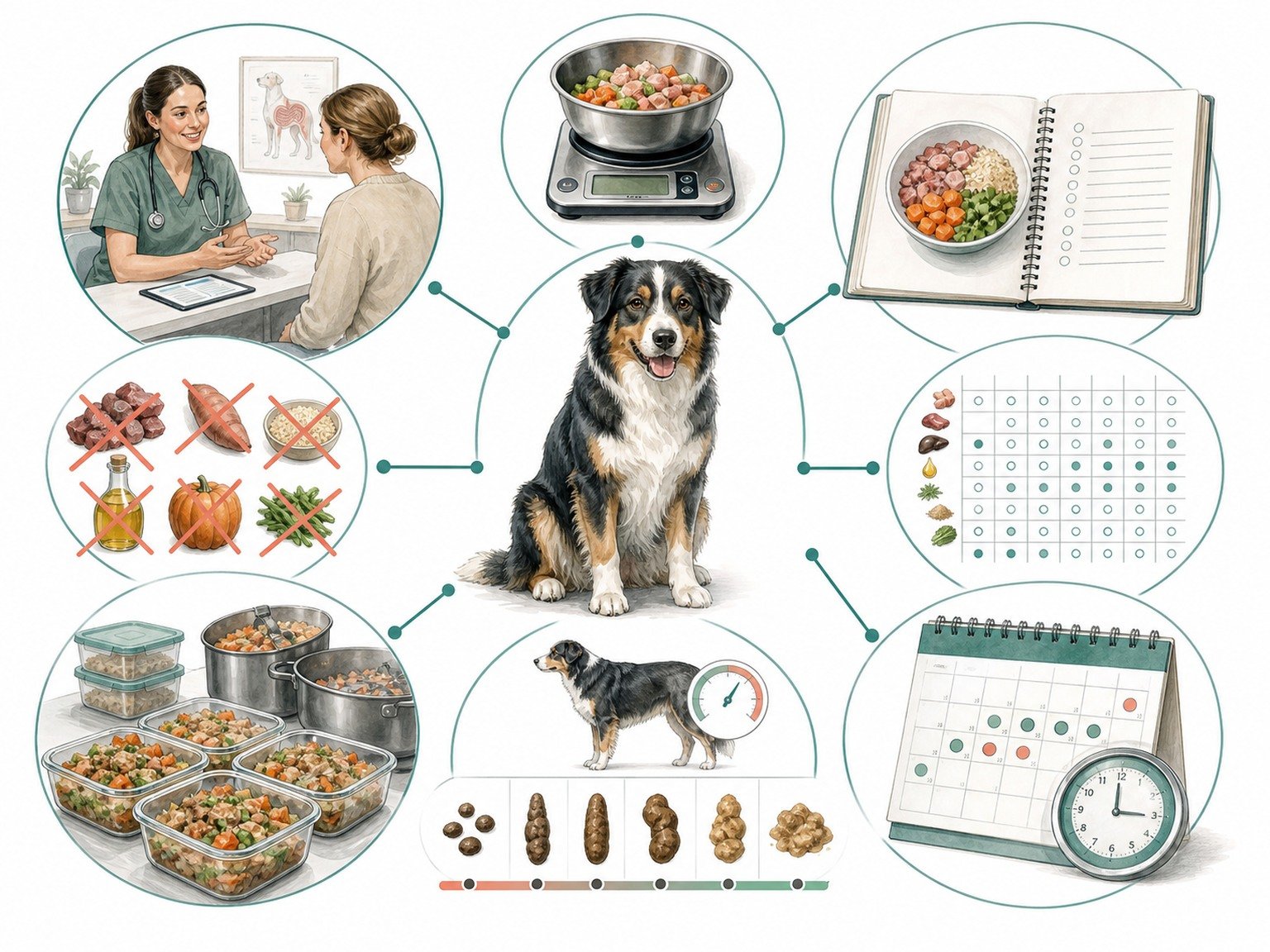
Use qualified formulation and exact execution
A veterinarian may recommend consultation with a board-certified veterinary nutritionist or equivalent qualified professional. The formulation should identify exact ingredients, weights, preparation, required supplements, yield, storage, feeding amount, and conditions that require reformulation. [1]
Use a gram scale and the specified ingredient form. Raw versus cooked weight, fat percentage, brand, cut, drained liquid, and cooking loss can materially change the recipe. Cups and handfuls are not interchangeable with weighed instructions.
Do not omit or replace the vitamin-mineral component, protein, oil, carbohydrate, or fiber because another ingredient sounds similar. Ask the formulator before any substitution, refusal workaround, or batch change.
Keep gut-health claims in proportion
A home-prepared therapeutic diet may be used during a veterinarian-directed diet trial or for a diagnosed condition, but benefit depends on the formulated characteristics and exclusive feeding, not on cooking at home itself. [3]
Novel protein, hydrolyzed protein, fiber, fat restriction, digestibility, and other diet categories address different questions. An owner should not infer the correct category from stool appearance or a social-media recipe.
Diet transitions, ingredient variability, treats, flavored medication, scavenging, and access to another pet's bowl can all affect digestive observations. Record them so response is not falsely assigned to the recipe.
Manage food safety, batches, and long-term review
Cook animal ingredients to safe temperatures, prevent cross-contamination, wash hands and surfaces, refrigerate or freeze according to the formulated plan, label batches, and discard questionable food. Raw feeding adds pathogen risk for dogs and people. [4]
Track recipe adherence, batch yield, intake, appetite, stool, vomiting, body weight, body and muscle condition, skin, coat, activity, and relevant laboratory results. Keep photographs of ingredient packages and lot information.
Reformulation may be needed with growth, pregnancy, aging, disease, medication, weight change, ingredient discontinuation, or altered appetite. A recipe is not a permanent prescription for every future condition.
Prepare for a focused veterinary conversation
Bring a concise timeline, short natural-movement or symptom videos when safe, the exact names and photographs of every food, treat, medication, and supplement label, and notes about appetite, water intake, stool, sleep, activity, comfort, and behavior. Include recent injuries, travel, boarding, diet changes, missed medication, and previous test results. A complete record helps the veterinary team separate a repeatable pattern from a single impression.
Decide in advance what you need from the visit: an urgency decision, a diagnosis plan, a nutrition review, a pain or mobility assessment, or a monitored trial. Ask what result would change the plan and what finding would rule an option out. This keeps research and product information in the right role. Evidence can shape questions and expectations, but it cannot determine what is safe for an individual dog without the history and examination.
Owner tool
Audit a home-prepared diet
On a phone, swipe across the table to see every column.
| Checkpoint | Record | Why it helps |
|---|---|---|
| Formula | Dog, purpose, exact recipe, author | Defines suitability |
| Execution | Gram weights, cooking, supplement, yield | Preserves adequacy |
| Safety | Handling, storage, batch, exposure | Reduces hazards |
| Review | Intake, stool, weight, muscle, labs | Guides reformulation |
Better questions, calmer next steps
Questions to ask your veterinarian
- Who formulated this recipe for this dog?
- Does it meet the correct life-stage and medical needs?
- Which ingredients and supplements cannot be substituted?
- How should batches be prepared and stored?
- What monitoring and reformulation schedule applies?
FAQ
Is chicken, rice, and vegetables a complete diet?
Not by itself.
Can I use an online recipe?
Generic recipes may be incomplete and not patient-specific.
Does home cooking cure gut disease?
No. It may be one veterinarian-directed diet format.
Can I swap similar ingredients?
Not without the formulator's approval.
Is raw home-prepared food better?
Raw feeding adds pathogen risk and is not inherently better.
Sources
- World Small Animal Veterinary Association: Global Nutrition Guidelines. Nutrition assessment and diet selection.
- Journal of the American Veterinary Medical Association: Evaluation of Recipes for Home-Prepared Maintenance Diets for Dogs. Nutrient adequacy of 200 recipes.
- Journal of Veterinary Internal Medicine: ACVIM Guidelines for Chronic Inflammatory Enteropathy in Dogs. Home-prepared therapeutic diet context.
- U.S. Food and Drug Administration: Raw Pet Food Diets Can Be Dangerous. Pathogen and handling risks.
- Merck Veterinary Manual: Nutritional Requirements of Small Animals. Essential nutrient and life-stage context.
