

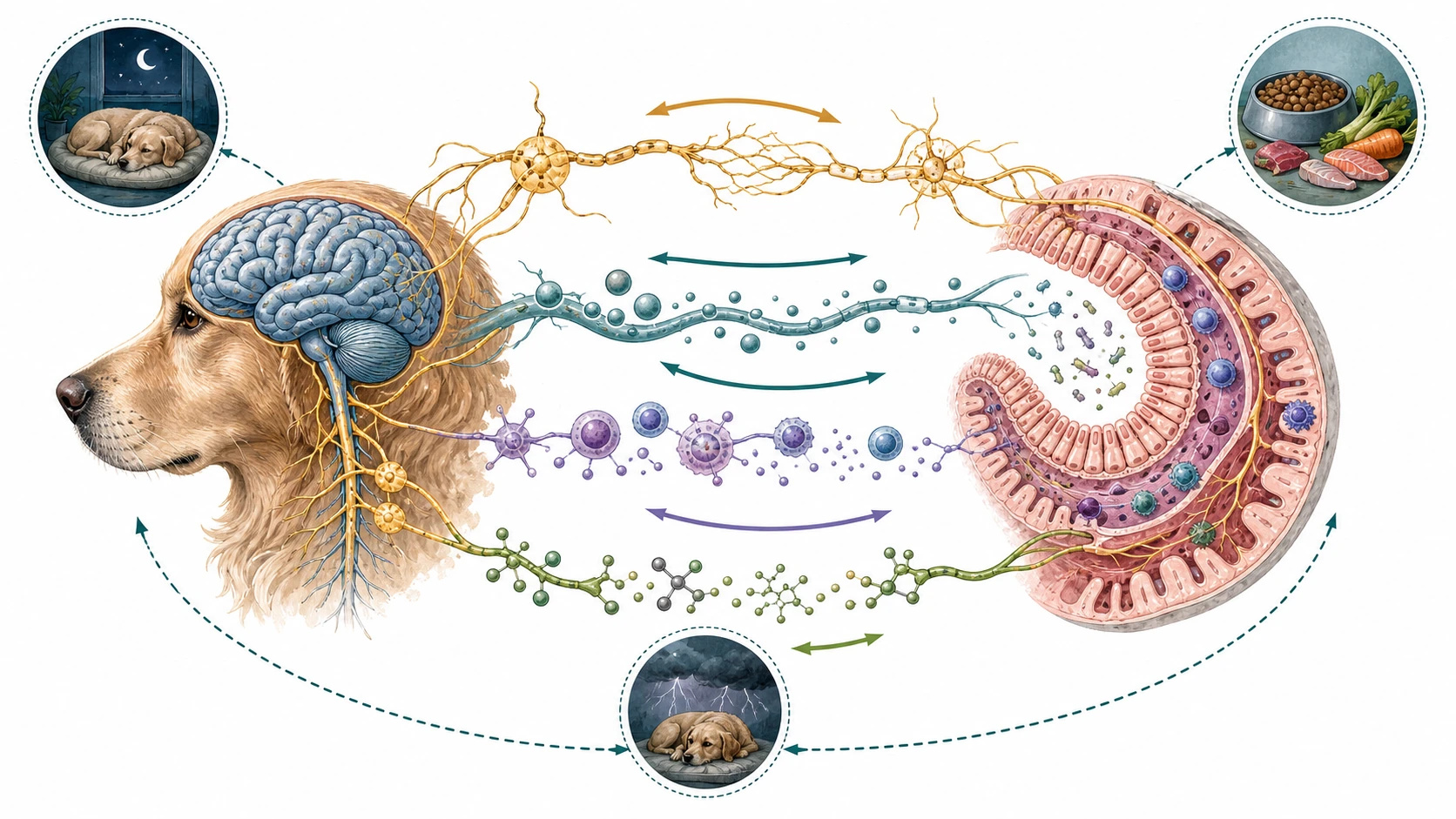
The intestine and brain exchange information through nerves, hormones, immune signals, microbial metabolites, and behavior. Stress can alter appetite, motility, stool, and microbial communities, while gastrointestinal pain can change sleep, posture, sociability, and coping. These links are biologically credible and increasingly studied in dogs, but they do not prove that a microbiome product treats anxiety or that stress explains every digestive sign.
Short answer
The relationship is bidirectional, complex, and still clinically emerging
A 2024 canine study found changes in fecal microbial community structure after acute transport and relocation stress. Other reviews describe associations between microbiome patterns and behavioral disorders, but differences between groups cannot show which came first or whether changing microbes will improve a meaningful outcome. Clinical applications remain experimental and product-specific. [1] [2]
- Track stress context and gastrointestinal signs on the same timeline without assuming causation.
- Rule out pain and medical disease before treating a behavior change as stress alone.
- Treat probiotic, diet, and microbiome claims as formulation- and outcome-specific evidence questions.
Safety first
Stress should not become a reason to miss gastrointestinal disease
Contact a veterinarian promptly for repeated vomiting, persistent or bloody diarrhea, black stool, abdominal pain or swelling, inability to keep water down, dehydration, weight loss, refusal to eat, fever, collapse, marked weakness, suspected toxin or foreign-body exposure, or a rapid behavior change. Seek urgent help for severe signs.
- Do not diagnose anxiety from diarrhea or diagnose gut disease from fear behavior alone.
- Do not use a calming probiotic, restrictive diet, or supplement in place of medical and behavioral assessment.
- Do not force exposure to a trigger to test whether a dog will get used to it.
Veterinary note
This article is educational and does not diagnose, treat, prescribe, or replace care from a licensed veterinarian. Your dog’s history, examination, diet, medications, and current signs determine what is appropriate.
Map the gut-brain axis without reducing it to microbes
The vagus and other nerves carry sensory and motor information. Stress hormones and autonomic activity can influence motility, secretion, blood flow, and immune function. Immune mediators and microbial metabolites can also influence neural and endocrine pathways. Food intake, medication, sleep, exercise, environment, and disease alter this network at the same time. [2] [3]
Microbiota are one part of the system. Sequencing studies describe relative abundance and diversity, not a simple inventory of good and bad organisms. Fecal samples also represent the distal gut more directly than the small intestine or mucosa. A group difference is a clue for research, not an individual dog's diagnosis.
Read the acute-stress study at the correct scale
In the acute-stress study, dogs experienced transport and relocation into a kennel environment. Researchers sampled feces before and after the stressor and found compositional changes alongside stress-related measures. The design supports an association between a defined acute event and short-term microbiome change. It does not show that all household stress produces the same pattern or that a supplement reverses it. [1]
Diet, housing, baseline temperament, prior experience, medications, sampling time, and individual variation can affect results. Microbiome data are compositional, and multiple comparisons can produce signals that need replication. Useful translation begins by stating exactly which dogs, stressor, samples, and outcomes were studied.
Keep behavior and gastrointestinal evaluation connected
A dog with abdominal discomfort may pace, hide, startle, guard space, resist handling, sleep poorly, or avoid activities. A frightened dog may eat differently or have transient stool changes. Both patterns deserve a history that includes timing, triggers, body posture, appetite, stool, vomiting, medication, diet, pain, sleep, and environmental change.
The veterinary examination looks for medical explanations and urgency. When a fear, anxiety, or stress disorder remains likely, a credentialed behavior professional can help assess triggers, learning history, safety, and a humane plan. Medical treatment and behavior modification may be coordinated; neither should be displaced by a gut-only story. [3] [4]
Evaluate microbiome-directed claims carefully
Ask whether a study tested the exact strain, combination, dose form, diet, duration, population, and outcome. A change in a microbial marker does not automatically mean less fear, less pain, or better quality of life. Reviews of canine behavioral microbiome research repeatedly call for larger controlled studies and standardized methods. [2] [4]
If the veterinary team recommends a diet or product for a defined gastrointestinal reason, establish a baseline and monitor stool, appetite, weight, adverse effects, and behavior without changing several variables at once. Product quality and interactions still matter. Stop signs and a recheck date should be explicit.
The most useful owner tool is a paired timeline. Record what happened before the sign, what the dog did, the digestive outcome, recovery time, food and medication exposure, and whether the pattern repeats. Correlation in one household remains an observation, but it can guide better diagnostic and behavior questions.
Prepare for a focused veterinary conversation
Bring a concise timeline, short natural-movement or symptom videos when safe, the exact names and photographs of every food, treat, medication, and supplement label, and notes about appetite, water intake, stool, sleep, activity, comfort, and behavior. Include recent injuries, travel, boarding, diet changes, missed medication, and previous test results. A complete record helps the veterinary team separate a repeatable pattern from a single impression.
Decide in advance what you need from the visit: an urgency decision, a diagnosis plan, a nutrition review, a pain or mobility assessment, or a monitored trial. Ask what result would change the plan and what finding would rule an option out. This keeps research and product information in the right role. Evidence can shape questions and expectations, but it cannot determine what is safe for an individual dog without the history and examination.
Owner tool
Track stress and gut signs on one timeline
On a phone, swipe across the table to see every column.
| Moment | Behavior context | Digestive context |
|---|---|---|
| Before | Trigger, choice, posture, arousal | Food, stool baseline, medication |
| During | Pacing, freezing, escape, recovery | Nausea, urgency, vomiting |
| After | Sleep, appetite, social change | Stool timing and form |
| Repeated pattern | Same trigger or new contexts | Frequency, weight, hydration |
Better questions, calmer next steps
Questions to ask your veterinarian
- Which medical causes or pain states should be ruled out first?
- Does this look like an acute stress response, a behavior disorder, GI disease, or more than one problem?
- Would diet or microbiome testing change clinical management?
- What exact evidence supports a proposed product or diet?
- Which signs require urgent care or behavior-safety changes?
FAQ
Can stress cause diarrhea in dogs?
Stress can affect motility and stool in some dogs, but diarrhea has many causes and persistent or severe signs need veterinary assessment.
Does dysbiosis cause anxiety?
Current canine studies show associations, not a single proven direction of causation.
Can probiotics treat anxiety?
Evidence is limited and product-specific; probiotics are not established replacements for medical and behavior care.
Is microbiome testing diagnostic?
Most consumer profiles do not provide a stand-alone diagnosis or treatment plan.
Who should evaluate both issues?
Start with a veterinarian and add a qualified behavior professional when fear, anxiety, or stress patterns need assessment.
Sources
- Scientific Reports: Impact of Acute Stress on the Canine Gut Microbiota. Prospective acute-stress and fecal microbiome findings.
- Veterinary Sciences: Gut-Brain Axis Impact on Canine Anxiety Disorders. Neural, immune, endocrine, metabolic pathways and clinical limits.
- Frontiers in Veterinary Science: Canine Chronic Enteropathy: Current State of the Art. GI disease, microbiome, barrier, and diagnostic context.
- Animals: The Relationship between Canine Behavioral Disorders and the Gut Microbiome. Behavior-microbiome evidence and research limitations.
- American Veterinary Society of Animal Behavior: Directory of Behavior Professionals. Qualified veterinary and animal behavior referral pathway.
