

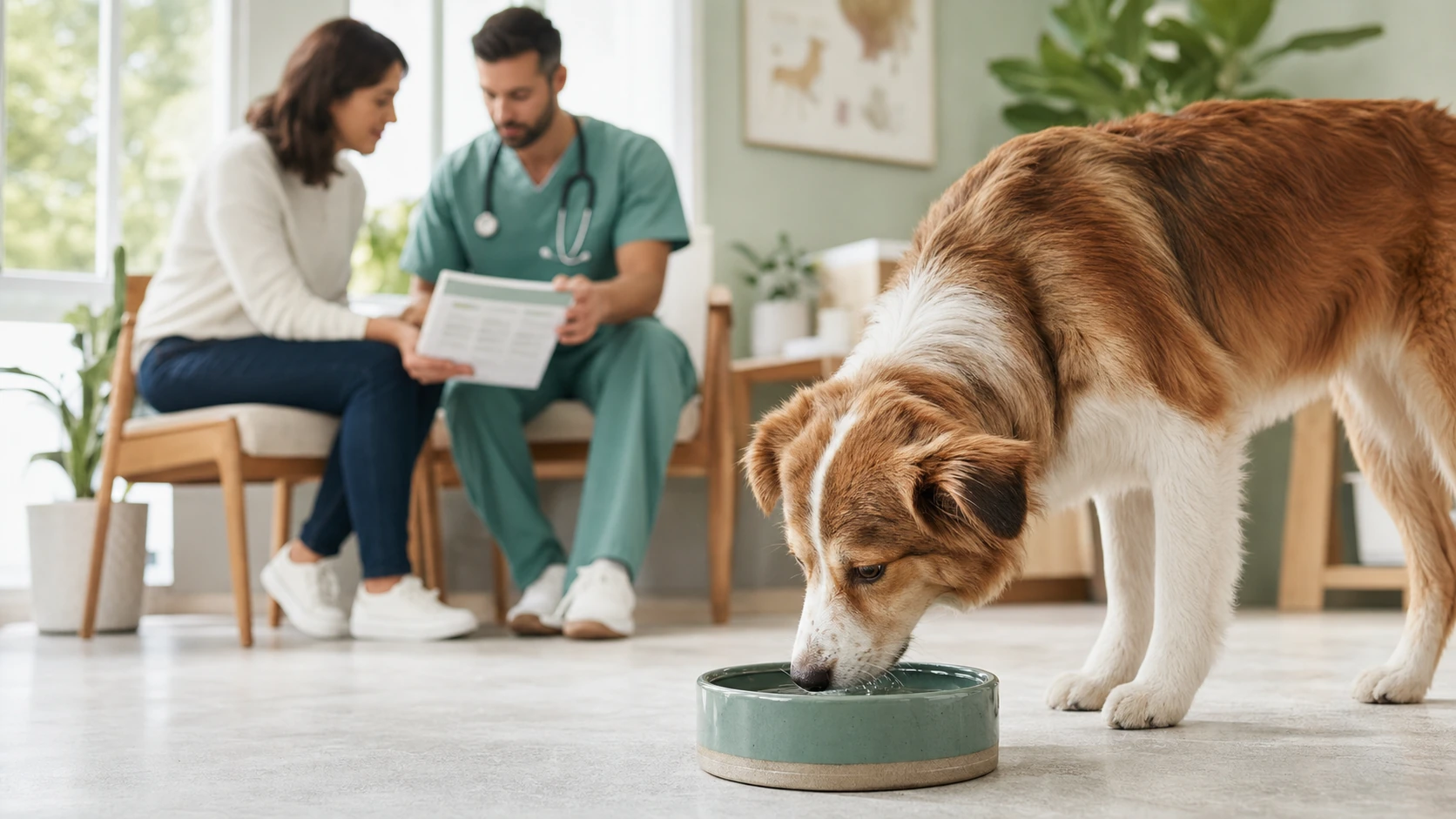
Water supports circulation, temperature regulation, cellular function, digestion, and waste removal. The gastrointestinal tract normally secretes and reabsorbs large volumes of fluid. Vomiting and diarrhea can interrupt that balance while also removing electrolytes and reducing intake. A dog may become dehydrated, hypovolemic, or both, and the difference matters to treatment.
Short answer
Hydration is a dynamic balance, not a single water-bowl target
Fluid status depends on intake, gastrointestinal absorption, urine, respiration, temperature, disease, body composition, and ongoing losses. Veterinary assessment combines history, weight change, mucous membranes, skin turgor, perfusion, urine and laboratory findings because no single home sign precisely measures dehydration. Older, very young, thin, or obese dogs can be especially difficult to assess by skin alone. [1] [2]
- Know the dog's normal drinking, urination, stool, appetite, and body weight rather than chasing a universal volume.
- Record each vomiting or diarrhea episode and whether water stays down.
- Treat lethargy, repeated losses, blood, pain, weakness, or suspected dehydration as reasons to call promptly.
Safety first
A dog who cannot replace ongoing losses may decline quickly
Seek prompt veterinary care for repeated vomiting or diarrhea, inability to keep water down, blood or black stool, tacky or very dry gums, sunken eyes, marked weakness, collapse, a painful or swollen abdomen, unproductive retching, fever, reduced urination, confusion, or suspected toxin or foreign-body exposure. Puppies, seniors, and dogs with kidney, heart, endocrine, or other disease need a lower threshold for care.
- Do not force water into a vomiting, weak, confused, or poorly swallowing dog.
- Do not give sports drinks, salt solutions, electrolyte powders, or home fluid therapy without veterinary direction.
- Do not rely on one skin-tent check to decide that a sick dog is safe at home.
Veterinary note
This article is educational and does not diagnose, treat, prescribe, or replace care from a licensed veterinarian. Your dog’s history, examination, diet, medications, and current signs determine what is appropriate.
Follow water through the digestive system
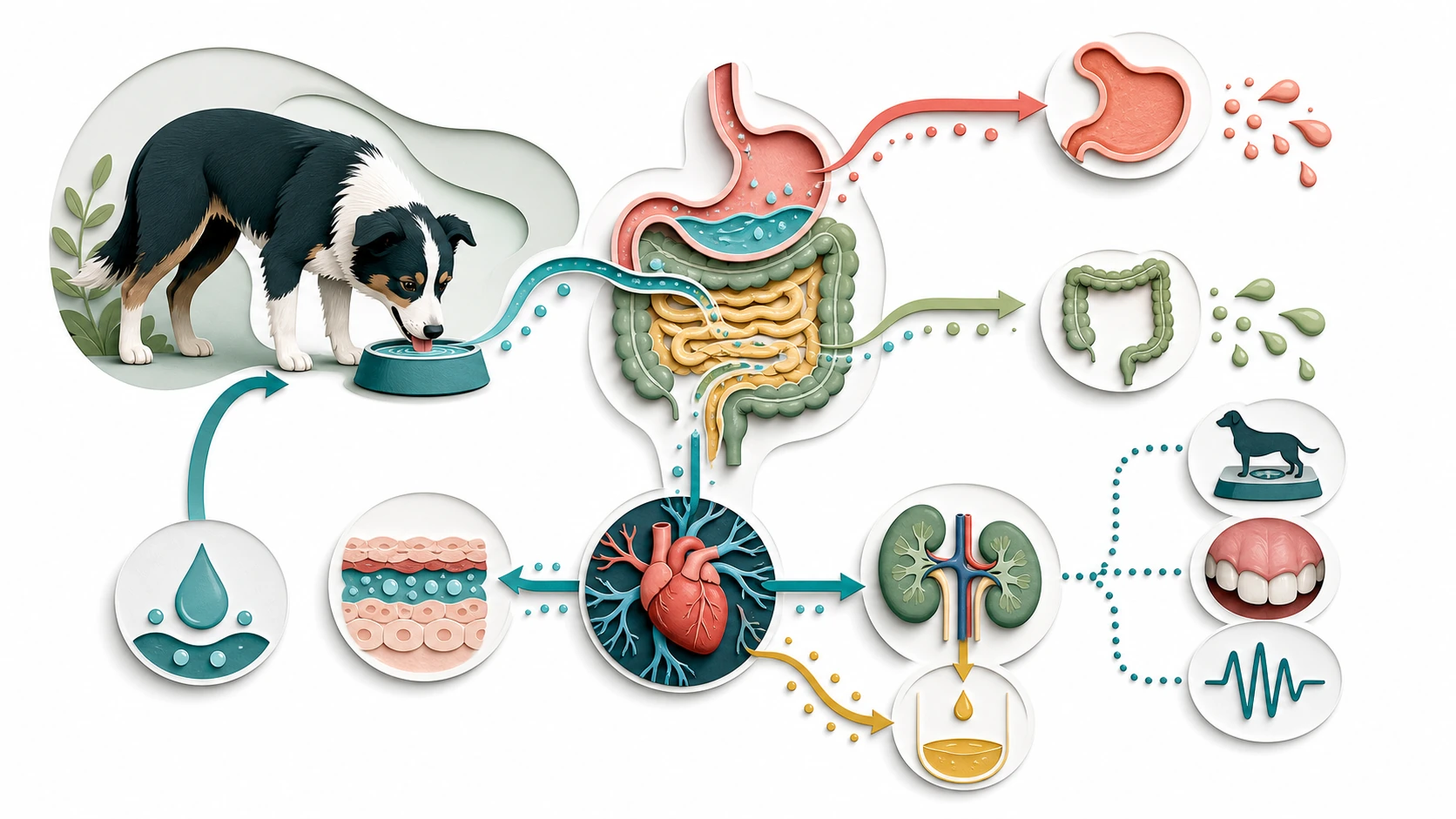
Water enters in drinks and food, while saliva, stomach, pancreas, liver, and intestine add fluid to the digestive tract. Most is reabsorbed before waste leaves the body. A review of vomiting and diarrhea fluid therapy notes that the canine gastrointestinal tract handles large internal fluid flows, which helps explain why severe losses can alter hydration and electrolytes rapidly. [1]
The colon can reclaim water, but inflammation, rapid transit, secretion, malabsorption, or damaged mucosa can overwhelm that function. Vomiting removes ingested fluid and gastrointestinal secretions; nausea can also reduce drinking. The resulting sodium, potassium, chloride, bicarbonate, and acid-base changes differ with the cause and location of loss, so treatment cannot be reduced to replacing plain water.
Distinguish dehydration from poor circulation
Dehydration refers mainly to water loss from interstitial and intracellular spaces. Hypovolemia is reduced circulating volume and impaired tissue perfusion. A dog can have one or both. Weak pulses, abnormal heart rate, altered mentation, cool extremities, and prolonged capillary refill can signal a circulation problem requiring immediate veterinary treatment. [2] [3]
Physical estimates are imperfect. Dry mucous membranes, skin tenting, eye position, demeanor, acute weight loss, urine changes, and laboratory results are interpreted together. Age and body condition alter skin and eye findings; nausea can increase saliva; third-space loss can impair circulation without an obvious skin change. [1] [2]
Monitor a stable dog without creating false reassurance
For a dog who is otherwise bright and has only a minor isolated change, record access to fresh water, drinking opportunities, food moisture, urination, stool, vomiting, appetite, activity, weather, medications, and body weight if safely available. Note the time and approximate character of each episode rather than repeatedly disturbing the dog to perform home tests.
There is no single daily water amount that safely fits every dog. Diet moisture, size, activity, lactation, environment, kidney function, endocrine disease, medications, fever, panting, and GI loss can change needs. A sudden sustained increase in drinking or urination also deserves veterinary evaluation; offering less water to reduce urination can be dangerous.
Do not use flavored broths or electrolyte products casually. Ingredients may add sodium, sugar, fat, allergens, or toxic onion and garlic compounds. If the veterinarian recommends oral intake during recovery, follow the exact product, amount, timing, and stop instructions for that dog.
Understand why fluid treatment is individualized
AAHA guidance separates resuscitation, rehydration, and maintenance and emphasizes repeated assessment. Route and composition depend on severity, perfusion, ability to tolerate oral intake, electrolytes, acid-base status, organ function, and ongoing losses. Severe dehydration or hypovolemia requires clinic-based care, often intravenous treatment. [3]
Fluids are treatments with risks. Too little may fail to restore circulation or replace losses; too much can be harmful, especially with heart, kidney, inflammatory, or low-protein disease. Monitoring may include body weight, heart rate, pulse quality, blood pressure, mucous membranes, urine output, breathing, electrolytes, and response over time. [1] [3]
At the visit, provide the timeline, number and appearance of episodes, water tolerance, urination, diet, medications, possible exposures, and baseline weight. This information helps the team estimate losses and investigate the cause instead of treating dehydration as an isolated problem.
Prepare for a focused veterinary conversation
Bring a concise timeline, short natural-movement or symptom videos when safe, the exact names and photographs of every food, treat, medication, and supplement label, and notes about appetite, water intake, stool, sleep, activity, comfort, and behavior. Include recent injuries, travel, boarding, diet changes, missed medication, and previous test results. A complete record helps the veterinary team separate a repeatable pattern from a single impression.
Decide in advance what you need from the visit: an urgency decision, a diagnosis plan, a nutrition review, a pain or mobility assessment, or a monitored trial. Ask what result would change the plan and what finding would rule an option out. This keeps research and product information in the right role. Evidence can shape questions and expectations, but it cannot determine what is safe for an individual dog without the history and examination.
Owner tool
Record fluid balance clues
On a phone, swipe across the table to see every column.
| Observation | Record | Why it matters |
|---|---|---|
| Intake | Drinking access and whether water stays down | Replacement capacity |
| GI losses | Vomiting and diarrhea timing and character | Ongoing water and electrolyte loss |
| Urination | Frequency, volume change, color | Kidney and endocrine clues |
| Whole dog | Activity, gums, pain, weight, breathing | Severity and perfusion context |
Better questions, calmer next steps
Questions to ask your veterinarian
- Does this dog appear dehydrated, hypovolemic, or both?
- Which cause of vomiting, diarrhea, or altered drinking is most concerning?
- Are electrolytes, kidney function, glucose, or acid-base status affected?
- Can oral intake be used safely, or is clinic-based fluid therapy needed?
- What monitoring and return precautions should we follow?
FAQ
How much water should my dog drink?
Needs vary widely with diet, size, activity, environment, health, and losses; use the dog's baseline and veterinary guidance.
Is the skin-tent test reliable?
It is only one subjective clue and can mislead in young, old, thin, or obese dogs.
Can diarrhea cause dehydration without vomiting?
Yes. Diarrhea can create substantial water and electrolyte loss.
Should I limit water when a dog vomits?
Call the veterinarian for individualized instructions; do not force or broadly restrict water on your own.
Are electrolyte drinks safe?
Human or homemade products may be unsuitable; use only a veterinarian-recommended plan.
Sources
- Veterinary Clinics of North America: Fluid and Electrolyte Therapy During Vomiting and Diarrhea. GI fluid dynamics, dehydration assessment, electrolytes, and individualized therapy.
- Merck Veterinary Manual: The Fluid Resuscitation Plan in Animals. Dehydration and perfusion findings plus assessment limitations.
- American Animal Hospital Association: 2024 Fluid Therapy Guidelines: Replacement and Maintenance. Current individualized fluid-therapy framework.
- Merck Veterinary Manual: Vomiting in Dogs. Causes and warning signs requiring examination.
- WSAVA: Canine Acute Diarrhea Guidelines Summary. Severity assessment and fluid-treatment triage.
