

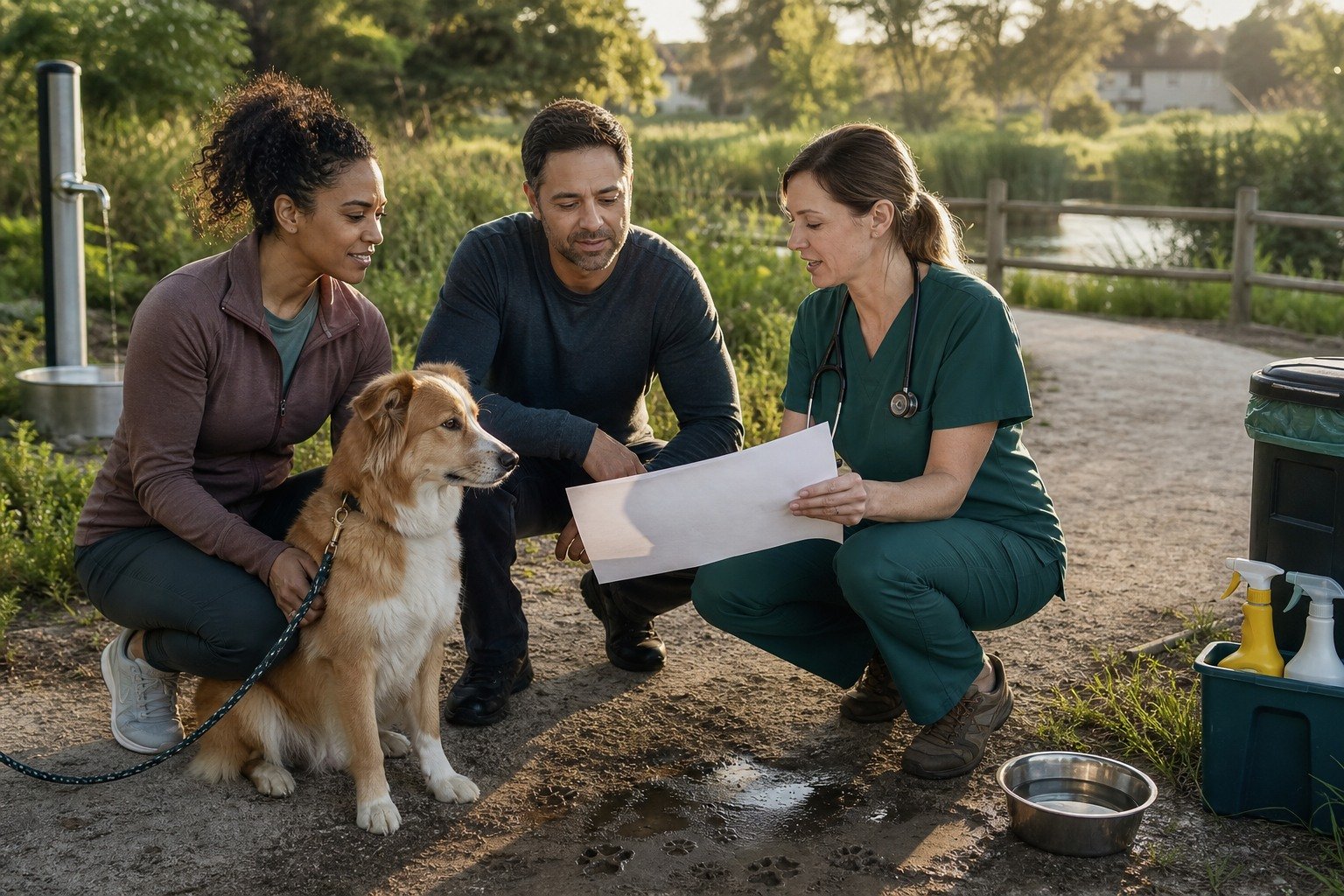
A dog's surroundings include more than weather or a backyard. Food handling, water sources, treats, medications, supplements, housing, sanitation, travel, boarding, animal contact, scavenging, soil, feces, and household changes can all belong in a digestive history. Research also explores how age, nutrition, host physiology, medication, and environment relate to the canine gut microbiota. Those relationships are complex: an association does not identify cause, direction, clinical importance, or treatment. A useful owner response is therefore not a detox, microbiome reset, or aggressive cleaning routine. It is a clear timeline that connects exposures with stool, vomiting, appetite, weight, pain, energy, and veterinary findings.
Short answer
Build an exposure history without assuming cause
Canine microbiome reviews describe nutrition, age, host factors, medication, and environment as possible influences while emphasizing major knowledge gaps. Chronic enteropathy is multifactorial, and parasite or food-safety decisions depend on the individual dog's history. Record what changed, when it changed, and what signs followed; let the veterinary assessment determine relevance. [1] [2] [3] [4]
- Start with the individual dog's baseline, complete history, and current veterinary plan.
- Use repeated observations to improve a veterinary discussion, not to diagnose or treat at home.
- Keep associations, population findings, and research endpoints within their actual limits.
- Escalate sudden, severe, persistent, progressive, or function-limiting signs promptly.
Safety first
Persistent digestive signs need veterinary assessment, not an environmental reset
Seek urgent care for collapse, severe weakness, repeated vomiting, inability to keep water down, a swollen painful abdomen, unproductive retching, substantial blood, breathing difficulty, suspected toxin or foreign-object exposure, or rapid decline. Contact the veterinarian promptly for persistent diarrhea, appetite loss, weight loss, dehydration, pain, fever, or worsening signs.
- Do not delay urgent care while completing a log, testing a theory, or looking for a lower-cost option.
- Do not start, stop, combine, divide, or calculate medication or supplements from this article.
- After a possible toxin, foreign object, overdose, or hazardous ingestion, contact veterinary or poison help promptly.
Veterinary note
This article is educational and does not diagnose, treat, prescribe, or replace care from a licensed veterinarian. Your dog’s history, examination, diet, medications, and current signs determine what is appropriate.
Define the environment broadly and precisely
Start with a dated inventory: regular food, treats, chews, supplements, medication, preventives, food storage, bowls, water, household products, renovations, yard treatments, travel, boarding, daycare, wildlife, livestock, communal areas, and scavenging. Record the specific change rather than writing environmental exposure. Details help the veterinarian judge plausibility and timing.
The developing canine microbiota is dynamic and may be influenced by maternal, dietary, environmental, and host factors, but puppy-focused findings cannot become a universal adult-dog risk model. [2] A microbiome difference may be a cause, consequence, marker, or unrelated feature. It does not diagnose a disease or identify a treatment by itself.
Chronic inflammatory enteropathy is also multifactorial. Reviews discuss interactions among the intestinal environment, immune responses, diet, genetics, microbiota, and other factors while noting unresolved mechanisms. [1] Avoid reducing persistent signs to dirty soil, stress, pollution, one food, or an imbalanced microbiome without veterinary evidence.
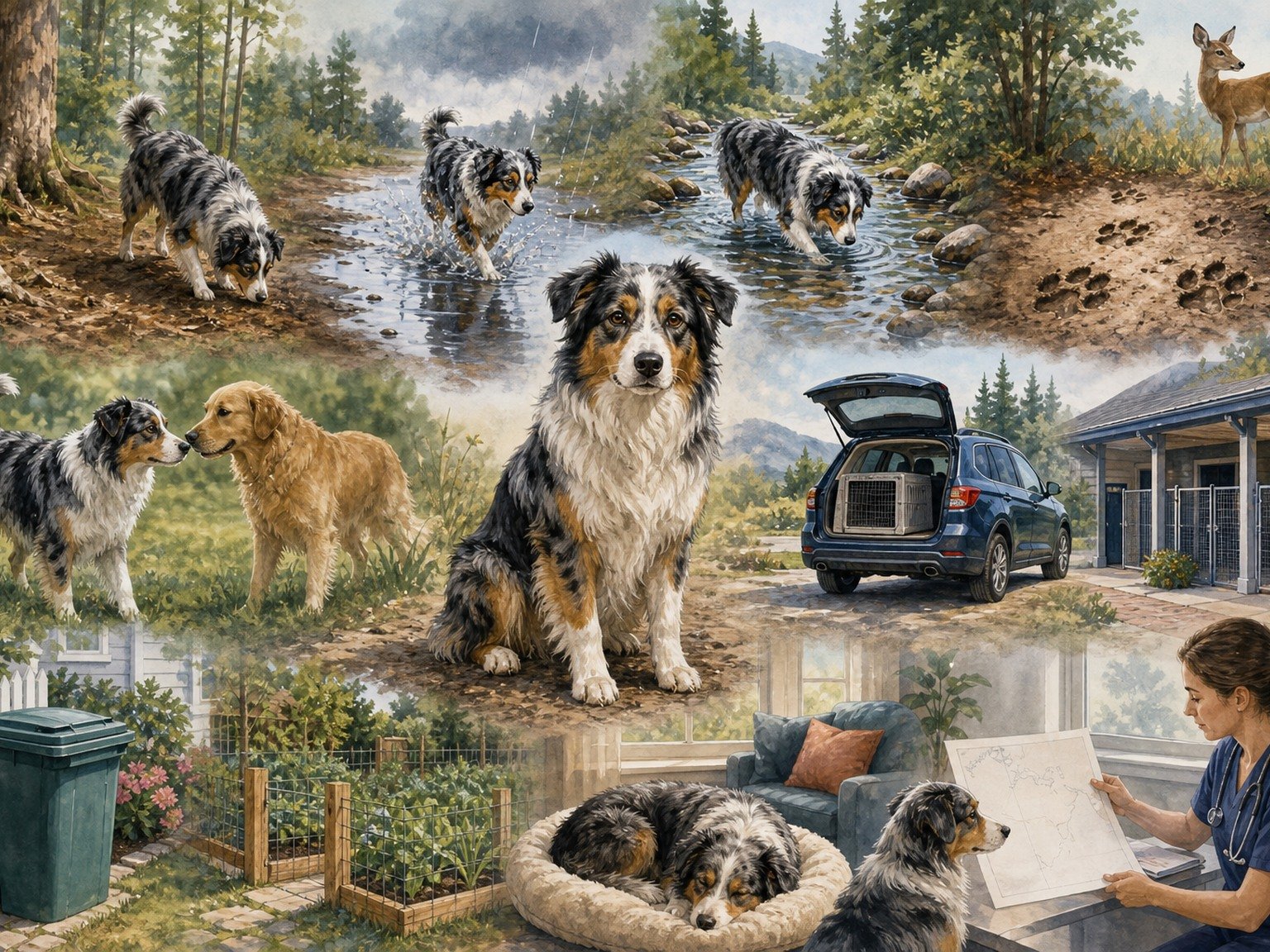
Record food, water, and sanitation details
Write down food names and lots when available, opening dates, storage method, changes in smell or texture, feeding tools, raw or cooked extras, table food, shared bowls, and access to trash or compost. CDC notes that pet food and treats can carry germs and recommends label-directed storage, clean utensils, hand hygiene, and recall awareness. [4]
List every usual and unusual water source: home tap, filtered water, wells, lakes, streams, puddles, communal bowls, travel water, and flood or runoff exposure. Do not infer infection from a water source. Timing and exposure help frame testing, but stool appearance and a home microbiome result cannot identify the organism or rule out other disease.
Use ordinary hygiene proportionate to the setting. Clean bowls and food-contact surfaces, store food as directed, remove feces promptly, and secure waste. Excessive disinfecting, abrupt diet restriction, fasting, or repeated product changes can create new problems and make the timeline harder to interpret.
Include travel, outdoor access, and animal contact
CAPC guidance asks veterinarians to consider geography, travel, outdoor access, animal contact, and individual health when planning parasite control and testing. [3] Record destinations, dates, lodging, boarding, new animals, hunting or scavenging, wildlife feces, and preventive history. A broad regional risk does not diagnose an individual dog.
Note whether signs began before, during, or after an exposure and whether another household animal was ill. Include symptom-free intervals and repeated episodes. This chronology helps distinguish a single event from a recurring pattern, while remaining honest about uncertainty and incomplete memory.
If the clinic requests a stool sample, follow its instructions for amount, container, timing, and storage. A test result answers only the organisms, method, and sample context evaluated. Do not start leftover dewormers, antibiotics, probiotics, or supplements while waiting unless the veterinary team directs it.
Turn observations into a veterinary timeline
Track stool frequency and appearance, vomiting, appetite, water intake, urination, abdominal discomfort, energy, weight, diet, medication, and exposure on the same dated page. Photos can document change, but they are supporting evidence rather than diagnosis. Preserve relevant packaging after a suspected ingestion or recall.
Bring the shortest useful summary: the dog's baseline, first change, sequence of exposures and signs, current food and medication list, prior episodes, and what has already been tried. Ask which exposures are medically meaningful, which tests fit the pattern, and what change should trigger earlier reassessment.
Do not use a commercial microbiome panel, detox, cleanse, supplement stack, homemade elimination plan, or disinfectant routine to prove and reverse an environmental cause. A strong record narrows questions; it does not replace examination, diagnostics, or individualized veterinary care.
Prepare for a focused veterinary conversation
Bring a concise timeline, short natural-movement or symptom videos when safe, the exact names and photographs of every food, treat, medication, and supplement label, and notes about appetite, water intake, stool, sleep, activity, comfort, and behavior. Include recent injuries, travel, boarding, diet changes, missed medication, and previous test results. A complete record helps the veterinary team separate a repeatable pattern from a single impression.
Decide in advance what you need from the visit: an urgency decision, a diagnosis plan, a nutrition review, a pain or mobility assessment, or a monitored trial. Ask what result would change the plan and what finding would rule an option out. This keeps research and product information in the right role. Evidence can shape questions and expectations, but it cannot determine what is safe for an individual dog without the history and examination.
Owner tool
Create an environmental digestive history
On a phone, swipe across the table to see every column.
| Checkpoint | What to record | Why it helps |
|---|---|---|
| Food and water | Products, lots, storage, extras, water sources | Defines intake |
| Place and contact | Travel, soil, feces, animals, boarding | Maps exposure |
| Dog | Stool, vomiting, appetite, pain, weight | Tracks effect |
| Timeline | Baseline, change, actions, tests, response | Supports review |
Better questions, calmer next steps
Questions to ask your veterinarian
- Which exposures are relevant to this dog's pattern?
- Does travel or lifestyle change parasite testing needs?
- Could medication, diet, or disease better explain the signs?
- What sample or records should I bring?
- Which changes require urgent or earlier reassessment?
FAQ
Does an environmental change prove it caused digestive signs?
No. Timing supports a question, not causation.
Can a microbiome test identify the cause?
Not by itself.
Should I disinfect the whole home?
Use proportionate food and fecal hygiene; ask about case-specific needs.
Does outdoor access mean parasites?
No, but it may affect individualized risk assessment.
Is a detox helpful?
Do not use one to diagnose or treat persistent signs.
Sources
- Frontiers in Veterinary Science: Canine Chronic Enteropathy: Current State-of-the-Art. Multifactorial disease and microbiome limits.
- Frontiers in Veterinary Science: Gut Microbiota Development in the Growing Dog. Age, nutrition, environment, host factors, and research gaps.
- Companion Animal Parasite Council: General Guidelines for Dogs and Cats. Geography, travel, exposure, testing, and prevention context.
- Centers for Disease Control and Prevention: About Pet Food Safety. Food handling, storage, hygiene, and recalls.
