

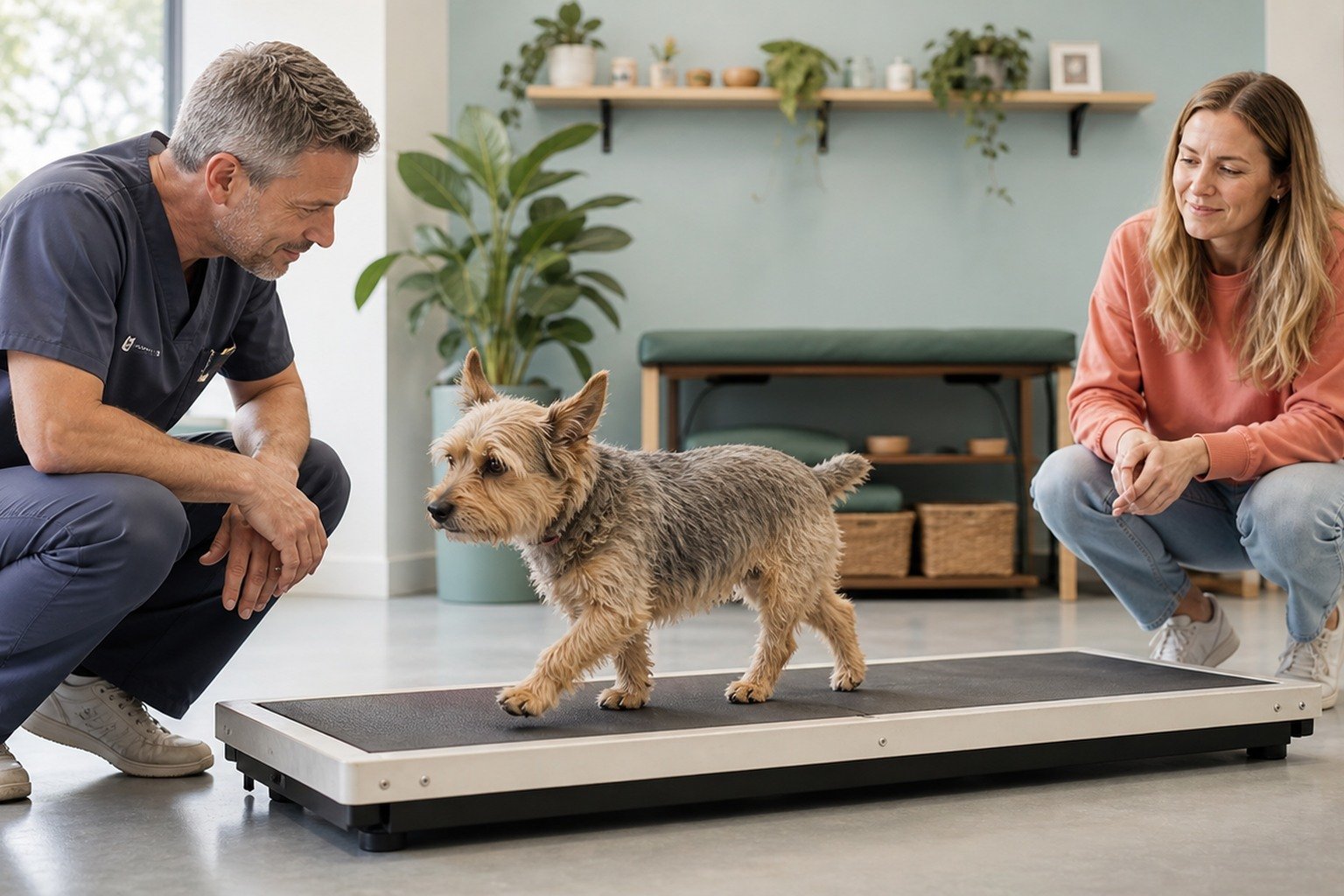
Small dogs are often carried over obstacles or expected to bounce back from a brief skip, but intermittent signs can still reflect orthopedic disease. Patellar luxation occurs when the kneecap moves outside its normal groove and is especially common in small breeds, yet it can also affect larger dogs or follow trauma. The familiar pattern of lifting a rear leg for several steps and then using it again is a clue, not a home diagnosis. Hip disease, cranial cruciate injury, fractures, spinal or neurologic problems, paw pain, and other conditions can look similar. Some patellar luxations are incidental and monitored; others cause pain, progressive lameness, limb change, or osteoarthritis and may require surgery. Grade alone does not replace the dog's symptoms, age, anatomy, other joint disease, and orthopedic assessment. Owners can improve traction, prevent uncontrolled jumps, maintain appropriate body condition, record function, and seek timely care without manipulating the kneecap.
Short answer
A skip deserves observation and examination, not home manipulation
ACVS explains that patellar luxation may be found incidentally or cause a characteristic temporary skip, progressive lameness, pain, osteoarthritis, and limb changes. Diagnosis is based on orthopedic palpation, with imaging used when needed to assess the entire limb and related disease. [1]
- Start with the individual dog's baseline, complete history, and veterinary plan.
- Record function and change over time instead of assigning a diagnosis from one sign.
- Use environment, nutrition, conditioning, and handling as coordinated supports, not substitutes for care.
- Escalate sudden, severe, persistent, or rapidly worsening signs promptly.
Safety first
Trauma, severe pain, weakness, or continuous non-weight-bearing needs prompt care
Seek urgent care after a fall or collision with severe pain, deformity, inability to bear weight, dragging limbs, loss of coordination, or rapid deterioration. Contact a veterinarian for repeated skipping, a persistent limp, swelling, crying, reluctance to jump, altered sitting, or reduced use of the leg. Do not push the kneecap into place or repeatedly flex the limb.
- Do not use this article to diagnose, manipulate a joint, or calculate treatment.
- Do not force activity, food, water, or handling when a dog is distressed or painful.
- Seek urgent veterinary care for collapse, breathing difficulty, severe pain, major trauma, or rapid decline.
Veterinary note
This article is educational and does not diagnose, treat, prescribe, or replace care from a licensed veterinarian. Your dog’s history, examination, diet, medications, and current signs determine what is appropriate.
Record the movement pattern without provoking it
Note which limb, when the skip begins, number of steps, activity, surface, speed, duration, return to normal use, pain, licking, swelling, and recovery. Capture a natural video if safe.
Do not repeatedly run, jump, turn, or use stairs to reproduce the sign. A dog may continue playing despite discomfort, and excitement can mask the pattern.
Bring prior injuries, growth history, weight trend, medications, and family or breed information. Patellar luxation is often developmental and may affect both knees, but trauma and other disease remain possible. [1]
Understand what patellar luxation does and does not explain
The patella is part of the extensor mechanism. In developmental disease, alignment of the femur, tibia, quadriceps, groove, and patellar tendon can contribute; it is not simply a loose cap floating in an otherwise normal limb.
A veterinarian grades stability during examination, but treatment decisions also consider symptoms, frequency, pain, progression, age, skeletal shape, other knee injury, and owner goals. An incidental low-grade finding may be monitored rather than automatically operated on.
Over time, repeated luxation can damage cartilage and contribute to osteoarthritis, and other structures may be strained. Conversely, a skip is not specific enough to exclude cruciate, hip, paw, or neurologic causes.
Make the home easier without promising correction
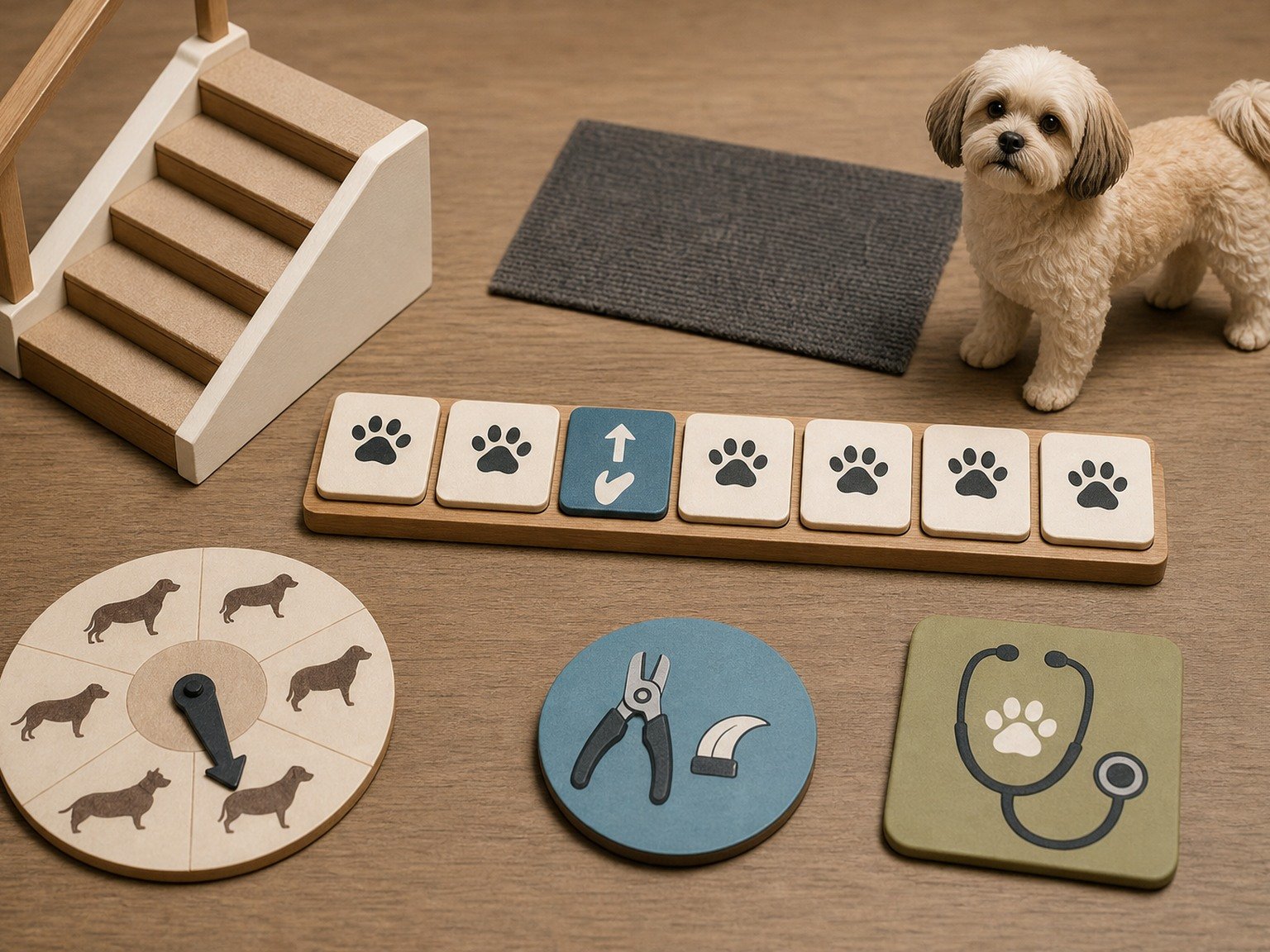
Use nonslip runners, stable steps or ramps when appropriate, good lighting, clear pathways, trimmed nails, and supervision around furniture. [3] Prevent uncontrolled leaps from heights, but do not impose cage rest without veterinary direction.
Maintain an individual healthy body condition with complete measured nutrition. [4] [5] A small treat can be a meaningful calorie share; weight optimization supports function but does not realign developmental anatomy.
Use only veterinarian-approved movement. Generic strengthening or stretching can be inappropriate with pain, instability, growth, spinal disease, or a concurrent cruciate injury.
Prepare for monitoring, referral, or surgery decisions
Ask what finding should prompt recheck, which activity limits apply, and whether radiographs, sedation, CT, or surgical referral are appropriate. Imaging can assess limb alignment and related hip or knee disease.
Surgery may combine soft-tissue balancing, groove deepening, tibial crest repositioning, or correction of bone deformity. The selected approach depends on the individual anatomy; this is not a procedure owners can compare from grade alone. [1]
After surgery, follow the surgeon's restriction, wound, medication, rehabilitation, and recheck plan exactly. A dog appearing energetic does not mean healing is complete.
Prepare for a focused veterinary conversation
Bring a concise timeline, short natural-movement or symptom videos when safe, the exact names and photographs of every food, treat, medication, and supplement label, and notes about appetite, water intake, stool, sleep, activity, comfort, and behavior. Include recent injuries, travel, boarding, diet changes, missed medication, and previous test results. A complete record helps the veterinary team separate a repeatable pattern from a single impression.
Decide in advance what you need from the visit: an urgency decision, a diagnosis plan, a nutrition review, a pain or mobility assessment, or a monitored trial. Ask what result would change the plan and what finding would rule an option out. This keeps research and product information in the right role. Evidence can shape questions and expectations, but it cannot determine what is safe for an individual dog without the history and examination.
Owner tool
Build a small-dog movement record
On a phone, swipe across the table to see every column.
| Checkpoint | What to record | Why it helps |
|---|---|---|
| Pattern | Limb, skip, duration, surface | Defines sign |
| Function | Rise, stairs, jump, play, toilet | Shows impact |
| Comfort | Pain, licking, swelling, rest | Adds urgency |
| Plan | Exam, grade, imaging, recheck | Guides action |
Better questions, calmer next steps
Questions to ask your veterinarian
- Is this patellar luxation or another cause?
- Are both knees or other joints involved?
- What activity and home changes are appropriate?
- What finding changes monitoring to referral?
- How do symptoms and anatomy affect treatment?
FAQ
Can I pop the kneecap back in?
No. Do not manipulate the joint at home.
Does every luxating patella need surgery?
No. Symptoms and individual findings guide decisions.
Is a skip harmless if it stops?
Not necessarily; repeated skipping deserves assessment.
Can weight loss cure luxation?
No. Appropriate body condition supports function but does not correct alignment.
Should I stop all activity?
Follow the individual veterinary plan rather than imposing complete rest.
Sources
- American College of Veterinary Surgeons: Patellar Luxations. Anatomy, signs, diagnosis, grading, and surgery.
- American College of Veterinary Surgeons: Cranial Cruciate Ligament Disease. Important differential and concurrent knee disease.
- American College of Veterinary Surgeons: Osteoarthritis in Dogs. Joint pain, function, and secondary OA.
- American Animal Hospital Association: Nonpharmacologic Modalities for Pain Management. Weight, movement, and rehabilitation context.
- American Animal Hospital Association: 2021 Nutrition and Weight Management Guidelines. Body condition and measured nutrition.
