

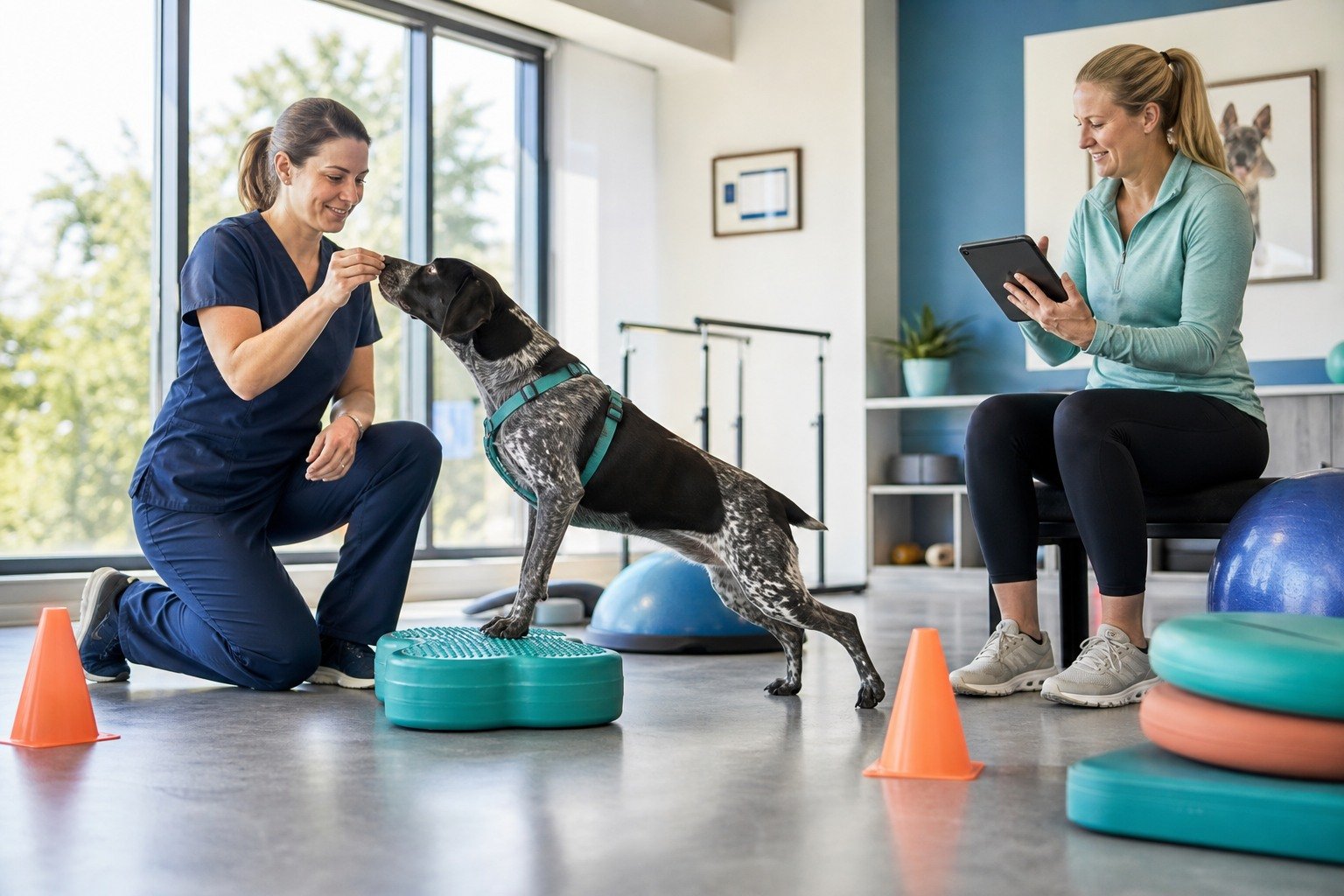
Athletic dogs can be intensely motivated and continue working through discomfort. A slower time, dropped bar, wide turn, shortened stride, changed jump, refusal, reduced endurance, or longer recovery can be a training observation, a pain clue, or a sign of illness. One performance change does not identify the structure, and a normal-looking walk does not clear a dog for high-load work. Joint support begins with veterinary screening, appropriate development, progressive conditioning, skill-specific strength and coordination, suitable surfaces and equipment, planned rest, complete nutrition, body and muscle condition, nail and paw care, and a clear return-to-sport pathway after injury. [4] Track workload and recovery together; sudden changes in speed, repetitions, distance, terrain, jumping, load, heat, travel, and competition can accumulate. Supplements cannot compensate for an unfit dog, unstable joint, poor surface, pain, or inadequate recovery.
Short answer
Treat performance change as data, not disobedience
A veterinary review of working-dog sports medicine emphasizes recognizing normal and abnormal posture and structure, physical fitness, injury prevention, and a staged recovery plan before returning to work. These principles require individual assessment, not a generic exercise list. [1]
- Start with the individual dog's baseline, complete history, and veterinary plan.
- Record function and change over time instead of assigning a diagnosis from one sign.
- Use environment, nutrition, conditioning, and handling as coordinated supports, not substitutes for care.
- Escalate sudden, severe, persistent, or rapidly worsening signs promptly.
Safety first
Stop work for acute lameness, collapse, severe pain, or neurologic change
End activity and seek prompt veterinary care for sudden non-weight-bearing lameness, major trauma, obvious swelling or deformity, severe pain, collapse, breathing distress, weakness, dragging limbs, loss of coordination, or heat illness. Do not test the dog again, stretch an injured limb, give human pain medicine, or allow another run to see whether the sign disappears.
- Do not use this article to diagnose, manipulate a joint, or calculate treatment.
- Do not force activity, food, water, or handling when a dog is distressed or painful.
- Seek urgent veterinary care for collapse, breathing difficulty, severe pain, major trauma, or rapid decline.
Veterinary note
This article is educational and does not diagnose, treat, prescribe, or replace care from a licensed veterinarian. Your dog’s history, examination, diet, medications, and current signs determine what is appropriate.
Establish a preseason and everyday baseline
Record sport, age, growth stage, prior injury, orthopedic and neurologic history, medications, body and muscle condition, resting posture, gait, paw and nail condition, equipment, surfaces, travel, and typical recovery.
Ask whether the dog needs orthopedic, cardiovascular, respiratory, neurologic, or laboratory assessment for the planned workload. Fitness for one sport does not prove readiness for another movement pattern.
Collect short consistent video of walk, trot, sit, stand, turns, and sport-specific tasks only when safe. Baseline footage supports comparison but does not replace examination.
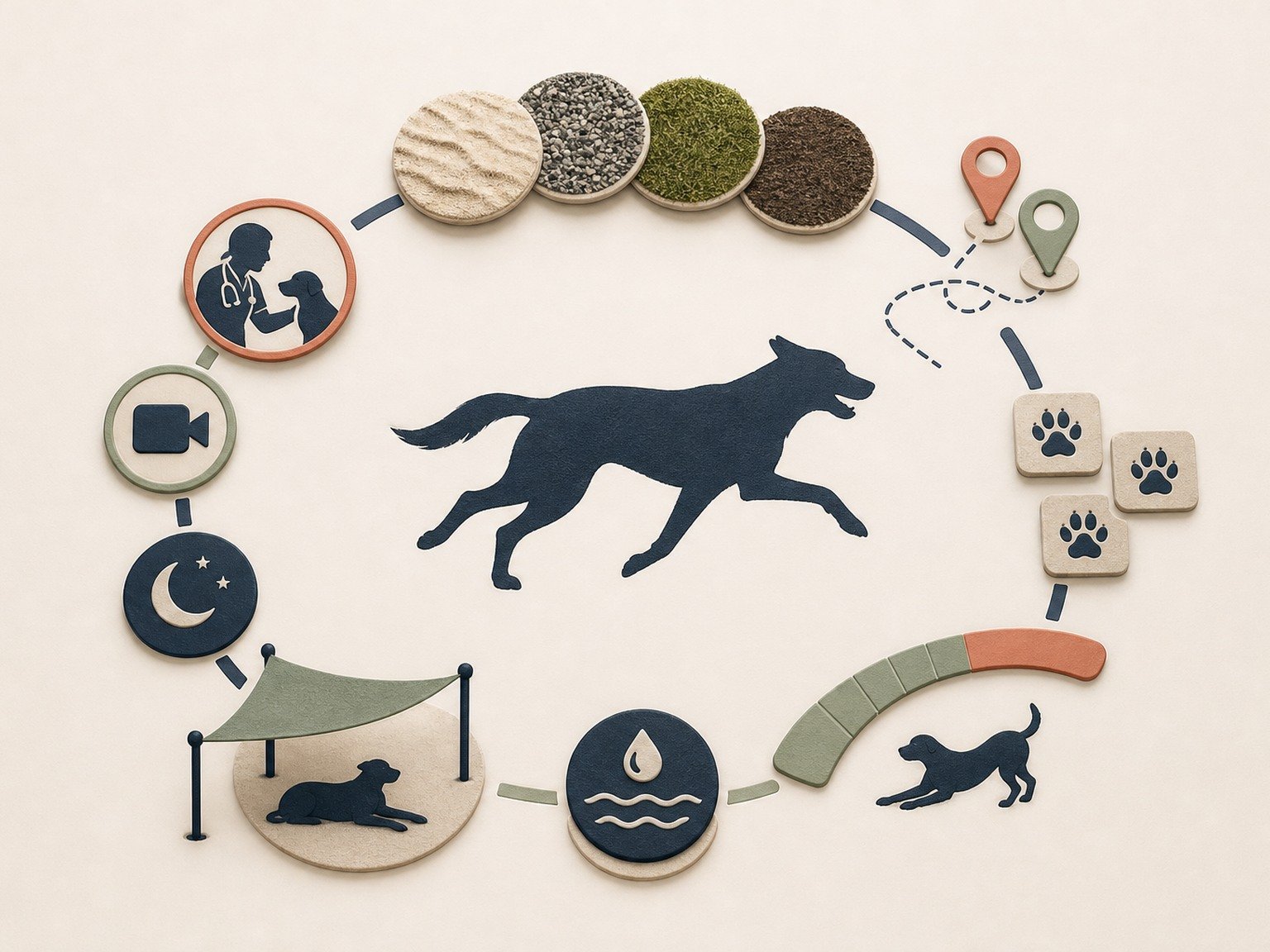
Progress workload across more than distance
Track duration, repetitions, speed, acceleration, deceleration, jumping, turning, load, terrain, surface, weather, travel, arousal, and recovery. Increasing several at once makes fatigue and injury signals harder to interpret.
Use warm-up, skill work, strength, endurance, and cooldown appropriate to the sport and dog under professional guidance. Avoid copying human routines or another dog's rehabilitation drills.
Young dogs, seniors, dogs returning from illness, and dogs with conformational or chronic disease considerations need different progression. Enthusiasm is not evidence that tissues are prepared.
Inspect technique, willingness, and recovery
Watch for shorter stride, altered foot placement, wide turns, hesitation, repeated lead changes, dropped performance, unusual barking or avoidance, difficulty settling, stiffness after rest, and next-day change.
Check paws, pads, nails, skin, and equipment fit after work. [3] Surface-related soreness, nail injury, heat, and harness restriction can alter movement but should not be assumed to explain persistent lameness.
Schedule rest and sleep, and reassess after travel or competition. [4] A dog that requires progressively longer to return to baseline should not have workload increased until the cause is understood.
Use a staged return after injury or pain
A return plan starts with diagnosis and control of pain and inflammation, then restores mobility, strength, coordination, endurance, skill, and sport exposure in measured stages. Calendar time alone does not establish readiness. Veterinary sports-medicine literature emphasizes a phased recovery and objective reassessment before a working dog resumes full demand. [1]
Use objective milestones selected by the veterinarian or rehabilitation professional. Functional rehabilitation must also account for age, comorbidity, environment, handler capacity, and the exact movement demands of the sport. [5] A dog can look sound at a walk while lacking strength or control for jumping, sprinting, or abrupt turns. [3]
Do not use pain medication, braces, supplements, or adrenaline at competition to bypass a failed milestone. Report setbacks and return to the prior safe stage rather than improvising progression.
Prepare for a focused veterinary conversation
Bring a concise timeline, short natural-movement or symptom videos when safe, the exact names and photographs of every food, treat, medication, and supplement label, and notes about appetite, water intake, stool, sleep, activity, comfort, and behavior. Include recent injuries, travel, boarding, diet changes, missed medication, and previous test results. A complete record helps the veterinary team separate a repeatable pattern from a single impression.
Decide in advance what you need from the visit: an urgency decision, a diagnosis plan, a nutrition review, a pain or mobility assessment, or a monitored trial. Ask what result would change the plan and what finding would rule an option out. This keeps research and product information in the right role. Evidence can shape questions and expectations, but it cannot determine what is safe for an individual dog without the history and examination.
Owner tool
Create a sport-dog load and recovery log
On a phone, swipe across the table to see every column.
| Checkpoint | What to record | Why it helps |
|---|---|---|
| Load | Speed, reps, turns, jumps, terrain | Quantifies work |
| Technique | Stride, placement, willingness | Finds change |
| Recovery | Breathing, stiffness, sleep, next day | Tests tolerance |
| Decision | Continue, reduce, stop, examine | Protects athlete |
Better questions, calmer next steps
Questions to ask your veterinarian
- Is this dog medically and physically ready for the sport?
- Which workload variables should be increased separately?
- What are this dog's objective recovery markers?
- Which performance changes require examination?
- What milestones govern return after injury?
FAQ
Can a motivated dog work through pain?
Yes. Motivation does not rule out injury.
Is rest alone enough after a limp?
Diagnosis and an individual recovery plan may be needed.
Do supplements prevent sport injuries?
No supplement replaces conditioning, surfaces, rest, and assessment.
Can I use a normal walk as clearance?
No. Sport demands can exceed what a walk reveals.
Should every dog do balance equipment?
No. Exercises must fit the dog, goal, and diagnosis.
Sources
- Veterinary Clinics of North America: Sports Medicine and Rehabilitation in Working Dogs. Fitness, injury prevention, posture, and staged recovery.
- American Animal Hospital Association: Nonpharmacologic Modalities for Pain Management. Movement, rehabilitation, and chronic pain context.
- American College of Veterinary Surgeons: Osteoarthritis in Dogs. Functional signs and orthopedic causes.
- American Animal Hospital Association: 2021 Nutrition and Weight Management Guidelines. Nutrition, body, and muscle condition.
- Veterinary Sciences: Rehabilitation of Geriatric Patients. Individualized function, environment, and rehabilitation principles.
