

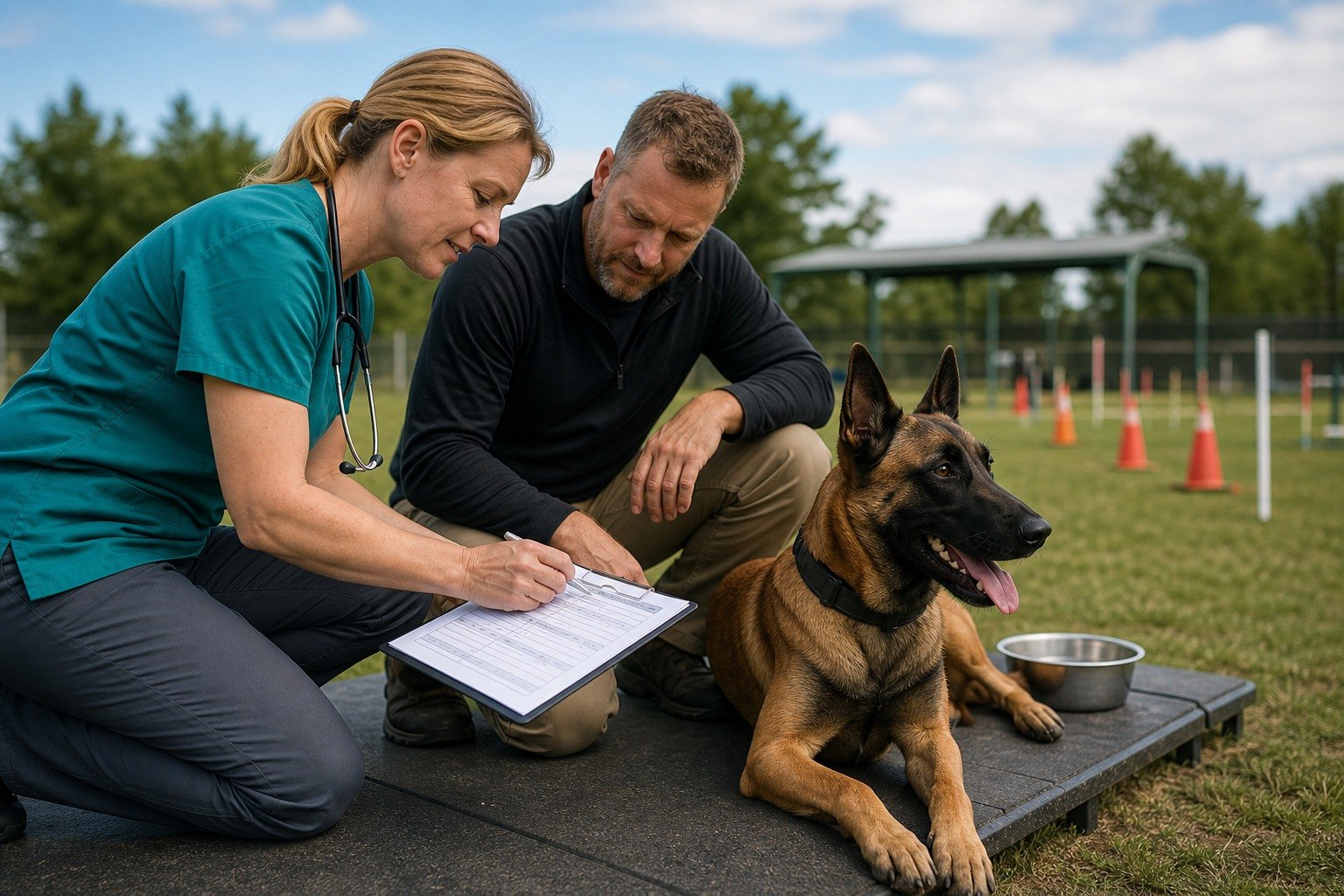
Canine athletes differ in task, duration, intensity, environment, training status, breed, age, diet, body condition, health, and recovery. A detection dog, sled dog, agility dog, field dog, and weight-pulling dog do not create one supplement population. Small studies may test one combined formulation and report heart rate, laboratory values, recovery measures, or a task-specific outcome. Those endpoints are not interchangeable. A statistical difference may be real within the experiment but still fail to establish meaningful performance, welfare, injury prevention, or long-term benefit. Read the exact methods and results before the conclusion or marketing summary. Then ask whether complete nutrition, conditioning, rest, heat management, pain assessment, and veterinary sports-medicine planning address the practical question more directly.
Short answer
One canine athlete study does not establish a universal performance product
Working-dog nutrition reviews start with complete balanced nutrition, body condition, task, workload, and individual health. Small canine supplement trials have examined specialized populations, combined formulations, biomarkers, recovery, and task performance with mixed findings. Transfer beyond the tested conditions is limited. [1] [2] [3]
- Start with the individual dog's baseline, complete diet, health history, and veterinary plan.
- Record exact products, ingredients, timing, purpose, and observed change instead of relying on category labels.
- Keep general evidence separate from a product-specific recommendation or treatment decision.
- Escalate sudden, severe, persistent, or rapidly worsening signs promptly.
Safety first
Supplements do not make pain, heat illness, collapse, or neurologic change safe
Stop activity and seek urgent veterinary care for collapse, breathing distress, heat-related illness, severe pain, inability to bear weight, weakness, loss of coordination, seizure, major trauma, or rapid deterioration. Do not use a supplement, stimulant, electrolyte product, or pain-masking strategy to continue work or return a dog to sport.
- Do not start, stop, combine, split, or calculate a product or medication from this article.
- Do not use a supplement to delay diagnosis, prescribed care, or urgent veterinary assessment.
- After a possible overdose, wrong-product exposure, or toxic ingestion, contact a veterinarian or animal poison service promptly.
Veterinary note
This article is educational and does not diagnose, treat, prescribe, or replace care from a licensed veterinarian. Your dog’s history, examination, diet, medications, and current signs determine what is appropriate.
Define the population and the work
Record breed or mix, age, sex, health, training level, body and muscle condition, complete diet, and prior injury. Then define the task in verbs: sprint, pull, track, climb, jump, balance, search, retrieve, swim, or work for prolonged periods in heat or cold.
A working-dog nutrition review emphasizes that work types and durations vary substantially even though every dog still needs complete balanced nutrition and appropriate body condition. [1] A result in one occupational or sport setting should not be generalized simply because another dog is active.
Check inclusion and exclusion criteria, sample source, baseline fitness, housing, acclimation, training, environment, and whether the dogs represent the population you care about. Fourteen young detection dogs cannot answer every question about senior agility dogs, weekend hikers, or endurance teams.
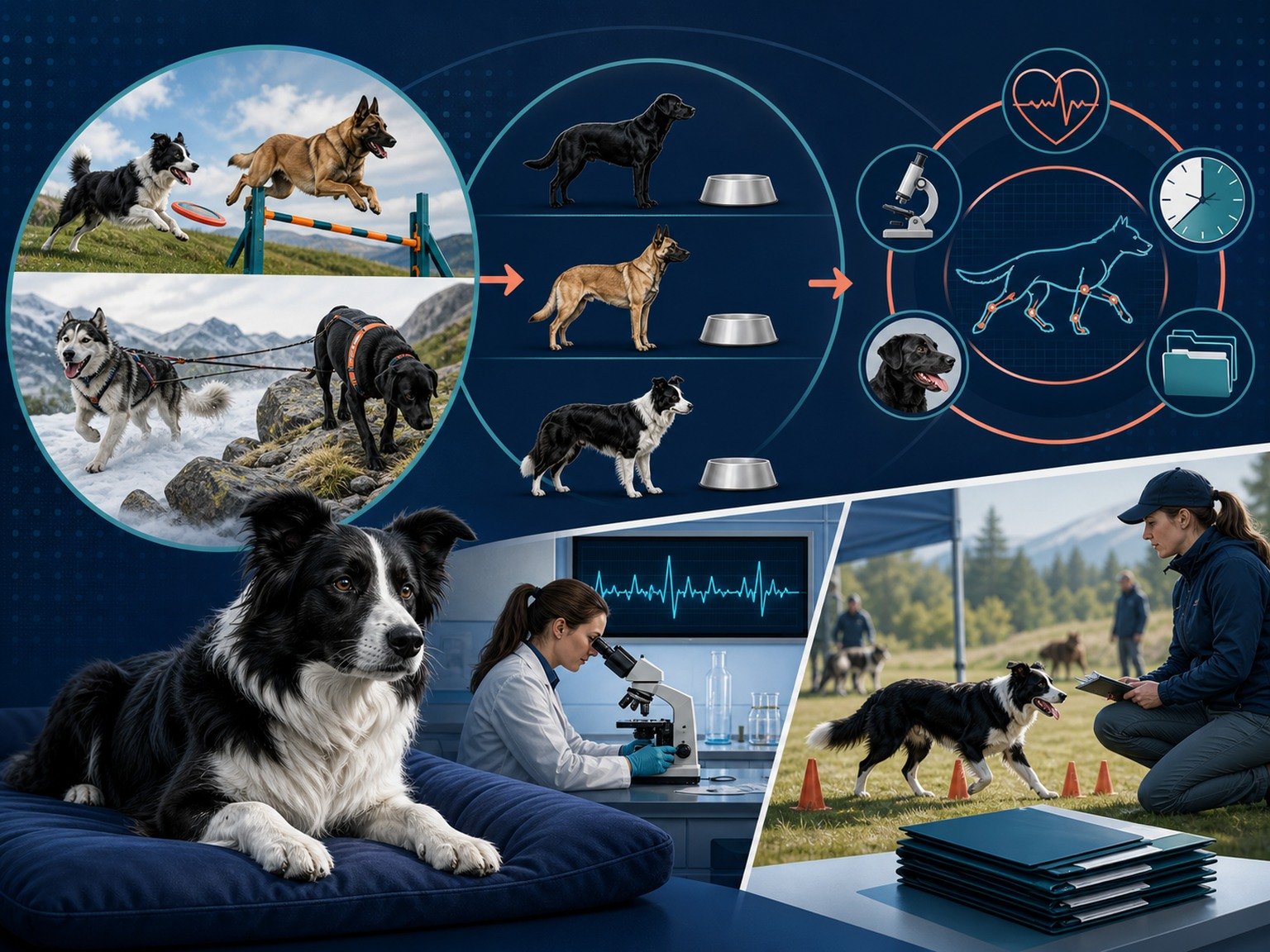
Identify the exact intervention and comparator
Write the full formulation, ingredient forms, amounts, administration, duration, diet, feeding timing, and comparator. A multi-ingredient blend cannot reveal which ingredient produced an outcome, and evidence for one blend does not validate another with similar front-label language.
One study of fourteen German Shepherd detection dogs tested a defined multi-ingredient supplement during training and reported selected recovery and laboratory differences. [2] Its small specialized population and combined formulation sharply limit product-wide and dog-wide conclusions.
A study of seventeen competitive weight-pulling dogs tested a post-exercise carbohydrate and protein supplement and did not find significant improvement in its primary single-day repeat-performance comparison. [3] That does not prove all recovery nutrition is useless; it limits what this particular experiment showed.
Separate outcomes that answer different questions
Task completion, speed, accuracy, power, endurance, heart-rate recovery, temperature, blood chemistry, inflammatory markers, soreness, gait, injury, behavior, and long-term health are different endpoints. Improvement in one cannot be silently converted into improvement in another.
Look for a prespecified primary outcome, appropriate timing, blinded assessment where feasible, complete reporting, effect size, confidence interval, and clinical relevance rather than only a p-value. A laboratory signal may generate a useful hypothesis without justifying a performance claim.
Check adverse events, withdrawals, missing data, welfare monitoring, and whether the design could detect harm. A study that finds no statistically significant adverse event in a small sample does not establish broad safety, especially for different formulations or dogs with medical conditions.
Assess bias, replication, and practical applicability
Review randomization, controls, blinding, sample-size reasoning, protocol registration when available, funding, author conflicts, and data transparency. Veterinary supplement reviews emphasize product verification and evidence quality, while ARRIVE reporting guidance helps readers identify essential design details. [4] [5]
Ask whether an independent team replicated the same formulation, task, and outcome. Repeated marketing citations may trace back to one small experiment. Replication across relevant populations matters more than the number of webpages repeating a conclusion.
Bring the research question to the veterinarian or sports-medicine team with the dog's actual diet, workload, environment, health, medication, and goals. Do not construct a pre-workout, post-workout, hydration, conditioning, dose, recovery, or return-to-sport protocol from these studies.
Prepare for a focused veterinary conversation
Bring a concise timeline, short natural-movement or symptom videos when safe, the exact names and photographs of every food, treat, medication, and supplement label, and notes about appetite, water intake, stool, sleep, activity, comfort, and behavior. Include recent injuries, travel, boarding, diet changes, missed medication, and previous test results. A complete record helps the veterinary team separate a repeatable pattern from a single impression.
Decide in advance what you need from the visit: an urgency decision, a diagnosis plan, a nutrition review, a pain or mobility assessment, or a monitored trial. Ask what result would change the plan and what finding would rule an option out. This keeps research and product information in the right role. Evidence can shape questions and expectations, but it cannot determine what is safe for an individual dog without the history and examination.
Owner tool
Read a canine athlete supplement study
On a phone, swipe across the table to see every column.
| Checkpoint | What to record | Why it helps |
|---|---|---|
| Population | Dogs, task, health, training, setting | Tests relevance |
| Intervention | Exact formulation, diet, comparator, duration | Defines exposure |
| Outcome | Primary measure, effect, adverse events | Limits claim |
| Trust | Controls, funding, replication, transparency | Tests confidence |
Better questions, calmer next steps
Questions to ask your veterinarian
- Does the study population match this dog's task and health?
- Was the exact formulation tested against an appropriate comparator?
- Was the primary outcome meaningful for real work?
- Were adverse events, funding, and conflicts reported?
- Has an independent team replicated the result?
FAQ
Does a biomarker change prove better performance?
No. Biomarkers and real-world function are different outcomes.
Can a study of one blend support another brand?
No. Formulation and quality differences matter.
Does no reported harm prove safety?
No, especially in a small or short study.
Do active dogs need supplements?
Activity alone does not establish need.
Can research provide a universal recovery protocol?
Not from these limited task-specific studies.
Sources
- Veterinary Clinics of North America: Nutrition of Working Dogs. Task diversity, complete nutrition, body condition, and performance context.
- PLOS ONE: Dietary Supplements and Fitness in Detection Dogs. Small multi-ingredient study in young German Shepherd detection dogs.
- Journal of Nutritional Science: Post-Exercise Supplement in Weight-Pulling Dogs. Task-specific controlled performance and laboratory outcomes.
- Nutrition Today: Veterinary Pet Supplements and Nutraceuticals. Study design, product identity, quality, safety, funding, and evidence limits.
- ARRIVE Guidelines: The ARRIVE Guidelines 2.0. Essential animal-research design and reporting elements.
