

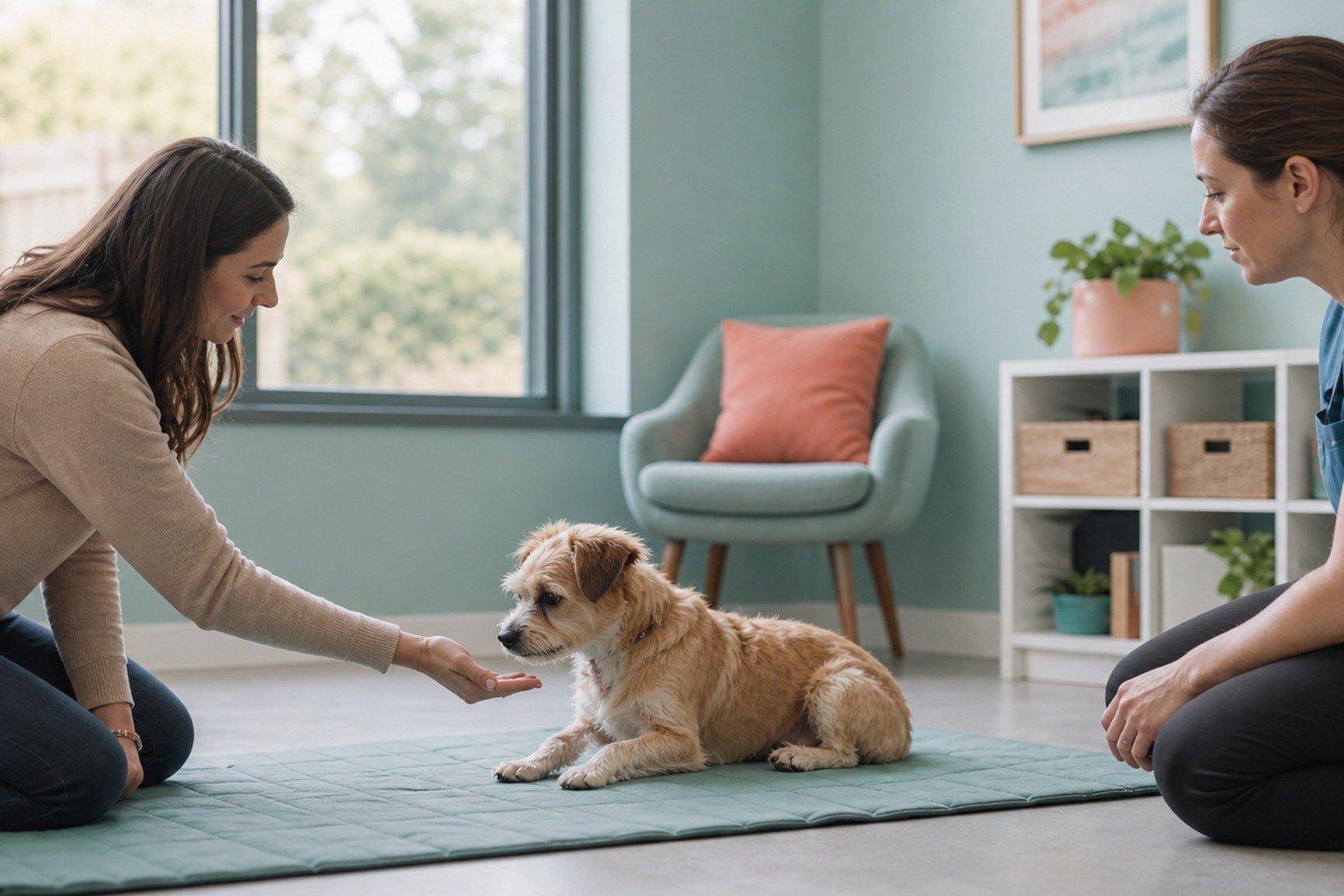
Small dogs can show the same fear, anxiety, panic, avoidance, and recovery problems as larger dogs, but people may overlook them because barking seems less dangerous or the dog can be picked up and moved. Repeated lifting, cornering, reaching, dressing, carrying, crowding, or forced greetings can remove control and hide early signals. Population studies can describe breed-level patterns, yet they do not diagnose one dog or prove that small size causes anxiety. Start with context: what happened before, what the dog did, what the body looked like, whether pain or illness changed, and how long recovery took. Protect choice and distance, rule out medical contributors, and use reward-based professional care. Do not punish growling or keep exposing the dog until the behavior stops; silence can reflect inhibition or shutdown rather than comfort.
Short answer
Take small-dog distress seriously before it escalates
Research links social and activity context with reported non-social fearfulness and finds breed-level variation, but these observational associations do not prescribe exposure or predict one dog. Medical history, learning, environment, handling, and individual behavior remain essential. [1] [2]
- Start with the individual dog's baseline, history, environment, and veterinary plan.
- Record context, function, and recovery instead of assigning a diagnosis from one sign.
- Use calm management and reward-based support without forced exposure or punishment.
- Escalate sudden, severe, persistent, or rapidly worsening changes promptly.
Safety first
A small body does not make panic, pain, or bite risk harmless
Contact a veterinarian promptly for sudden behavior change, severe panic, repeated escape attempts, self-injury, inability to settle, appetite or sleep disruption, suspected pain, disorientation, or escalating aggression. Use secure separation when injury is possible. Do not pick up, pin, chase, corner, or continue touching a distressed dog to show who is in charge.
- Do not use this article to diagnose anxiety, pain, digestive disease, or an orthopedic condition.
- Do not force movement, exposure, food, water, or handling when a dog is distressed or painful.
- Seek urgent veterinary care for collapse, breathing difficulty, severe pain, major trauma, or rapid decline.
Veterinary note
This article is educational and does not diagnose, treat, prescribe, or replace care from a licensed veterinarian. Your dog’s history, examination, diet, medications, and current signs determine what is appropriate.
Notice the signals that are easy to dismiss
Record freezing, crouching, leaning away, hiding, climbing onto a person, trembling, scanning, lip licking, yawning, pinned ears, wide eyes, tucked posture, refusal, barking, growling, snapping, house-soiling, appetite change, disrupted sleep, and recovery. The same movement can have different meanings in different contexts.
People often laugh at or film a small dog's warning behavior, then repeat the trigger. That pattern can teach the dog that subtle signals do not create distance. A growl is information, not proof of a bad temperament. End the pressure safely and let the veterinary and behavior team interpret the sequence.
Keep a timeline of trigger distance, approach direction, handling, noise, surface, people, animals, restraint, treats, pain clues, and what helped the dog regain baseline. AAHA guidelines support routine behavior screening and early intervention rather than waiting for behavior to become dangerous or chronic. [3]
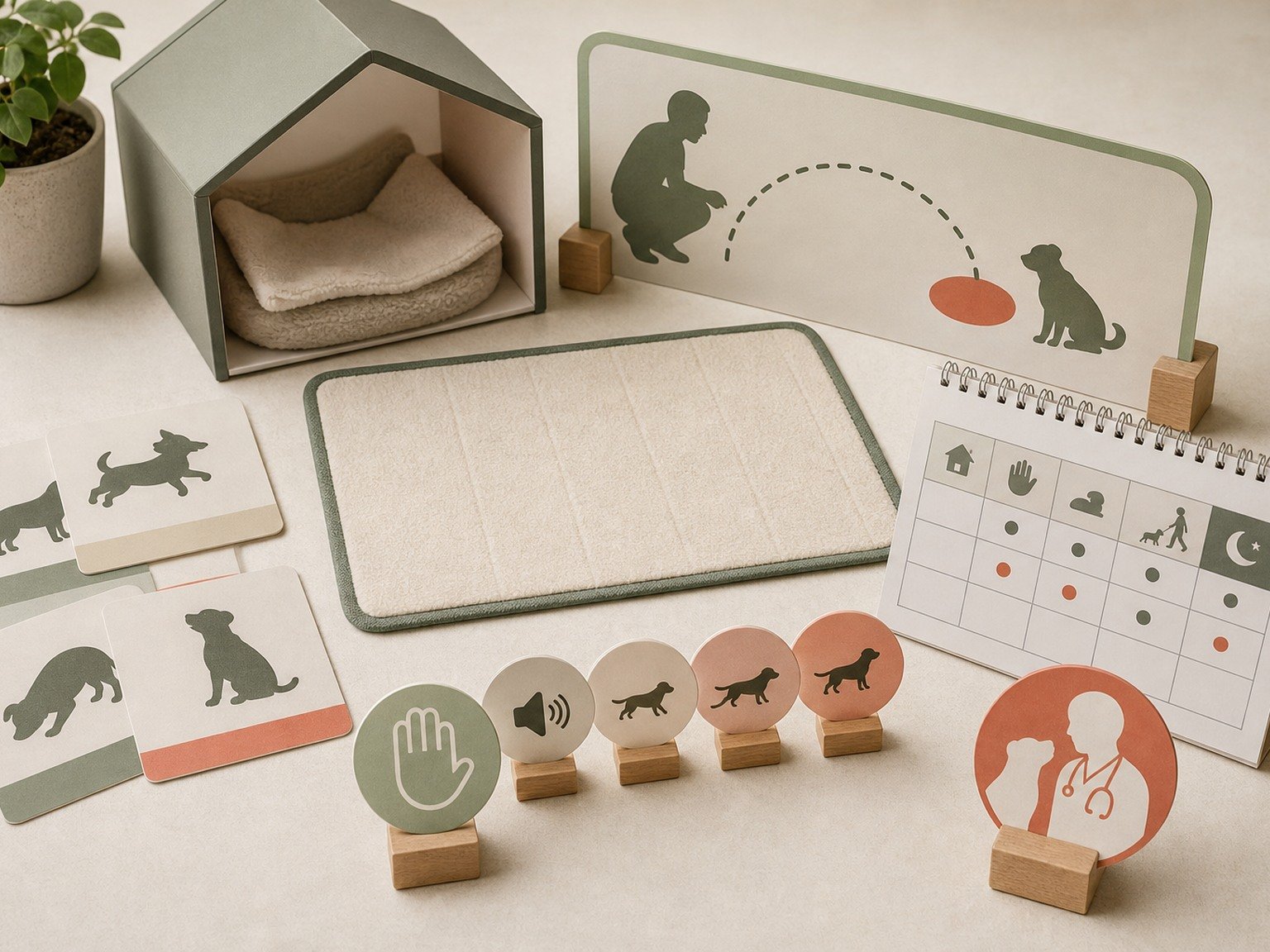
Check health and handling history together
Dental pain, patellar or spinal discomfort, skin or ear disease, gastrointestinal signs, sensory loss, endocrine or neurologic disease, medication effects, and previous injury can change behavior. A dog who resists a harness, grooming, stairs, lifting, or touch needs medical assessment before the behavior is treated as stubbornness.
Describe exactly how the dog is picked up, carried, restrained, groomed, clothed, placed in a carrier, and handled around children. Small dogs may experience frequent uninvited touch because adults can physically move them. Cooperative care builds predictability and participation, but the plan must be tailored to the dog's health and safety.
Do not use food refusal during a scary event as proof that the dog is untrainable. Refusal can indicate high arousal, nausea, pain, or insufficient distance. Report appetite outside the trigger too, because a general change may point to illness rather than a narrow behavior problem.
Build safe choice into everyday routines
Provide a secure retreat that is not used for punishment, predictable sleep and toileting opportunities, clear household rules about approaching and lifting, and enough distance from visitors, dogs, traffic, noise, and busy entrances. Supervise children closely and prevent hugging, chasing, cornering, or carrying without an adult plan.
Use barriers, leashes, carriers, and elevated surfaces only when they are safely fitted and not trapping the dog next to a trigger. A carrier can be a retreat when conditioned positively, but placing a fearful dog in one for forced exposure is different. Practice at a level where the dog can choose and recover.
An active and social lifestyle was associated with lower reported non-social fearfulness in one large observational study, but association does not prove that more exposure will treat fear. [1] Flooding a distressed dog can worsen welfare. The appropriate activity and social plan depends on health, history, context, and professional assessment.
Choose reward-based help and measure recovery
AVSAB recommends reward-based methods and rejects aversive tools and psychological or physical punishment. [4] Do not use leash corrections, shaker devices, spray, shock, yelling, intimidation, or forced confrontation to stop barking or growling. Suppression can remove warning signals without changing fear.
Ask the veterinarian whether referral to a veterinary behaviorist or qualified reward-based professional is appropriate. Treatment may combine management, behavior modification, medical care, and sometimes medication. No over-the-counter product, wrap, pheromone, supplement, or chew is a universal answer, and none should delay assessment.
Measure progress through lower intensity, greater comfortable distance, shorter recovery, improved sleep and appetite, more voluntary participation, and fewer unsafe situations. A dog who becomes quiet but remains tense or avoids normal activities has not necessarily improved. Keep the safety plan active while goals are reviewed. [5]
Prepare for a focused veterinary conversation
Bring a concise timeline, short natural-movement or symptom videos when safe, the exact names and photographs of every food, treat, medication, and supplement label, and notes about appetite, water intake, stool, sleep, activity, comfort, and behavior. Include recent injuries, travel, boarding, diet changes, missed medication, and previous test results. A complete record helps the veterinary team separate a repeatable pattern from a single impression.
Decide in advance what you need from the visit: an urgency decision, a diagnosis plan, a nutrition review, a pain or mobility assessment, or a monitored trial. Ask what result would change the plan and what finding would rule an option out. This keeps research and product information in the right role. Evidence can shape questions and expectations, but it cannot determine what is safe for an individual dog without the history and examination.
Owner tool
Build a small-dog choice and recovery log
On a phone, swipe across the table to see every column.
| Checkpoint | What to record | Why it helps |
|---|---|---|
| Context | Approach, touch, noise, place | Defines trigger |
| Signals | Freeze, retreat, voice, refusal | Finds early warning |
| Choice | Exit, mat, carrier, distance | Protects control |
| Recovery | Time, appetite, sleep, baseline | Measures welfare |
Better questions, calmer next steps
Questions to ask your veterinarian
- Could pain or illness explain this handling or behavior change?
- Which early signals mean the dog needs space?
- How should lifting and cooperative care be handled?
- Which professional credentials fit this case?
- What recovery markers will show meaningful progress?
FAQ
Do small dogs bark because they are spoiled?
That label does not explain the behavior; context and health must be assessed.
Should I pick up a frightened small dog?
Use the individual safety plan; uninvited lifting can increase distress or injury risk.
Is growling harmless in a small dog?
It is important communication and can precede a bite.
Will more socialization cure fear?
Forced exposure is not treatment; use a tailored reward-based plan.
Can a calming product replace behavior care?
No. Products do not replace diagnosis, management, or professional treatment.
Sources
- Scientific Reports: Active and Social Life and Non-social Fearfulness in Pet Dogs. Observational activity, socialization, and fearfulness associations.
- PLOS ONE: Dog Behavior Co-varies With Height, Bodyweight and Skull Shape. Population morphology-behavior correlations with individual limits.
- American Animal Hospital Association: Canine and Feline Behavior Management Guidelines. Behavior screening, distress signs, medical assessment, and intervention.
- American Veterinary Society of Animal Behavior: Humane Dog Training Position Statement. Reward-based training and risks of aversive methods.
- Merck Veterinary Manual: Animal Welfare. Welfare context and punishment-related evidence.
