

A dog who drools, pants, whines, vomits, freezes, or refuses the car may be experiencing motion sickness, conditioned fear, physical discomfort, unsafe restraint, heat, unfamiliar environments, or several factors together. A useful plan identifies when signs begin, what the dog experiences before movement, and how the response changes across the journey.
Short answer
Travel distress is not one diagnosis and should be assessed before a long trip
Motion sickness can produce nausea, salivation, restlessness, retching, and vomiting, while fear may begin when keys appear, the car door opens, or the engine starts. These patterns can reinforce each other. Veterinary guidance is especially important when signs are severe, new, worsening, or accompanied by medical concerns. [1] [2]
- Record whether signs begin before entry, before movement, during turns or braking, or only at the destination.
- Practice with a parked, cool vehicle and secure restraint before adding short movement, provided the dog remains comfortable.
- Plan temperature, ventilation, water, breaks, identification, destination rules, and emergency contacts.
Safety first
Never test travel tolerance in heat, traffic, or a medical crisis
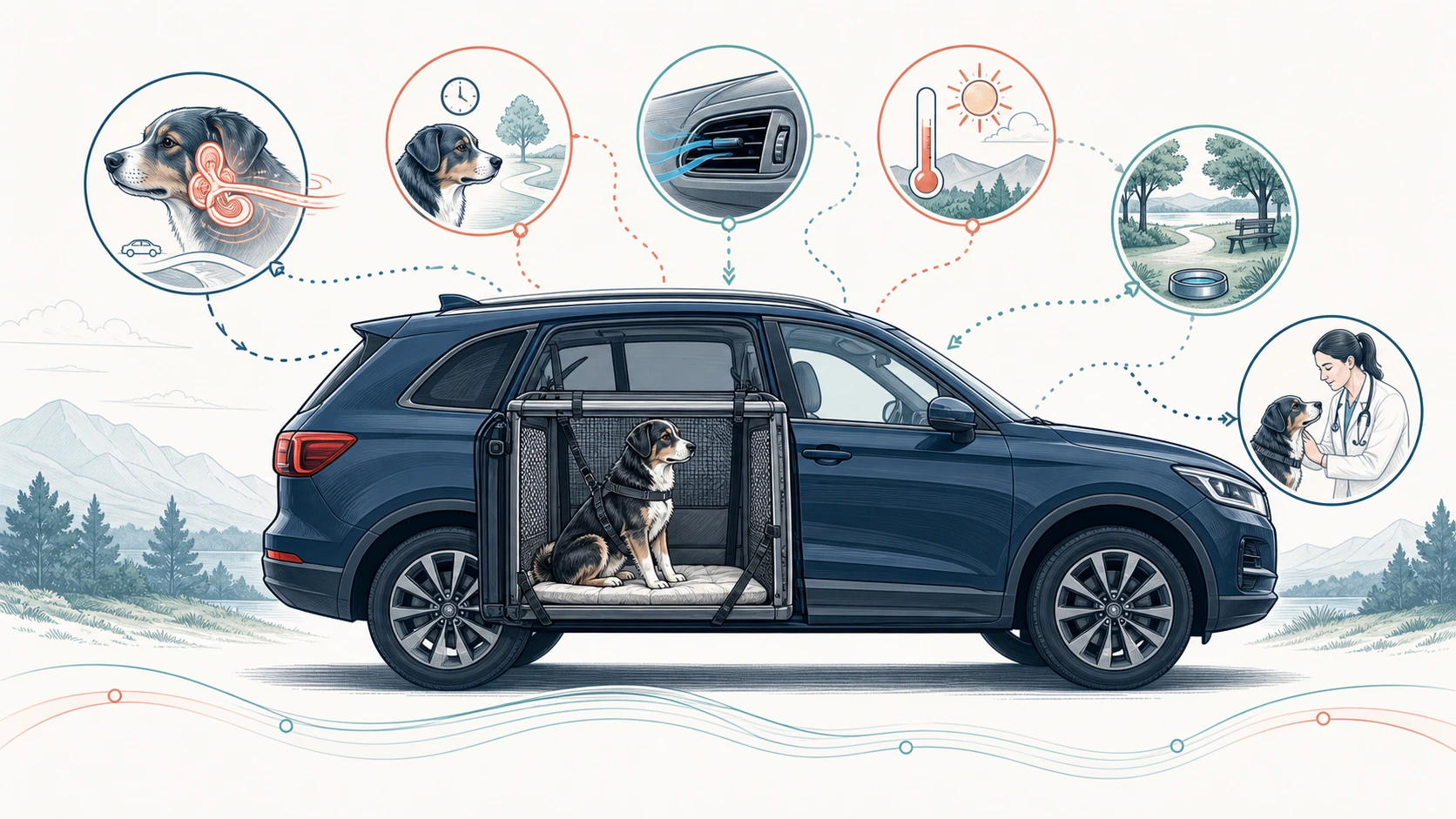
Seek urgent veterinary help for collapse, breathing difficulty, heat exposure, pale or blue gums, repeated vomiting with weakness, suspected aspiration, severe diarrhea, injury, toxin exposure, or altered consciousness. Stop travel safely when distress, restraint failure, or illness creates immediate risk.
- Never leave a dog unattended in a vehicle where temperature or security can become unsafe.
- Do not allow a dog to ride loose, on a driver's lap, or with the head outside a window.
- Do not give human motion-sickness or sedating medication without veterinary direction.
Veterinary note
This article is educational and does not diagnose, treat, prescribe, or replace care from a licensed veterinarian. Your dog’s history, examination, diet, medications, and current signs determine what is appropriate.
Separate anticipation, motion, and destination
Observe the sequence. Does the dog avoid the driveway, resist the harness, drool in a parked car, become ill only after movement, react to turns, or recover immediately when the vehicle stops? Does distress occur on every trip or mainly before a veterinary visit? This timeline helps the veterinarian weigh nausea, fear, pain, and learned associations.
Motion sickness involves sensory mismatch related to movement and can be accompanied by nausea and autonomic signs. Anxiety can develop around previous nausea or frightening trips, so reducing nausea may not automatically erase learned fear. Conversely, behavior practice does not treat an underlying medical problem. [1]
Build comfort in stationary steps
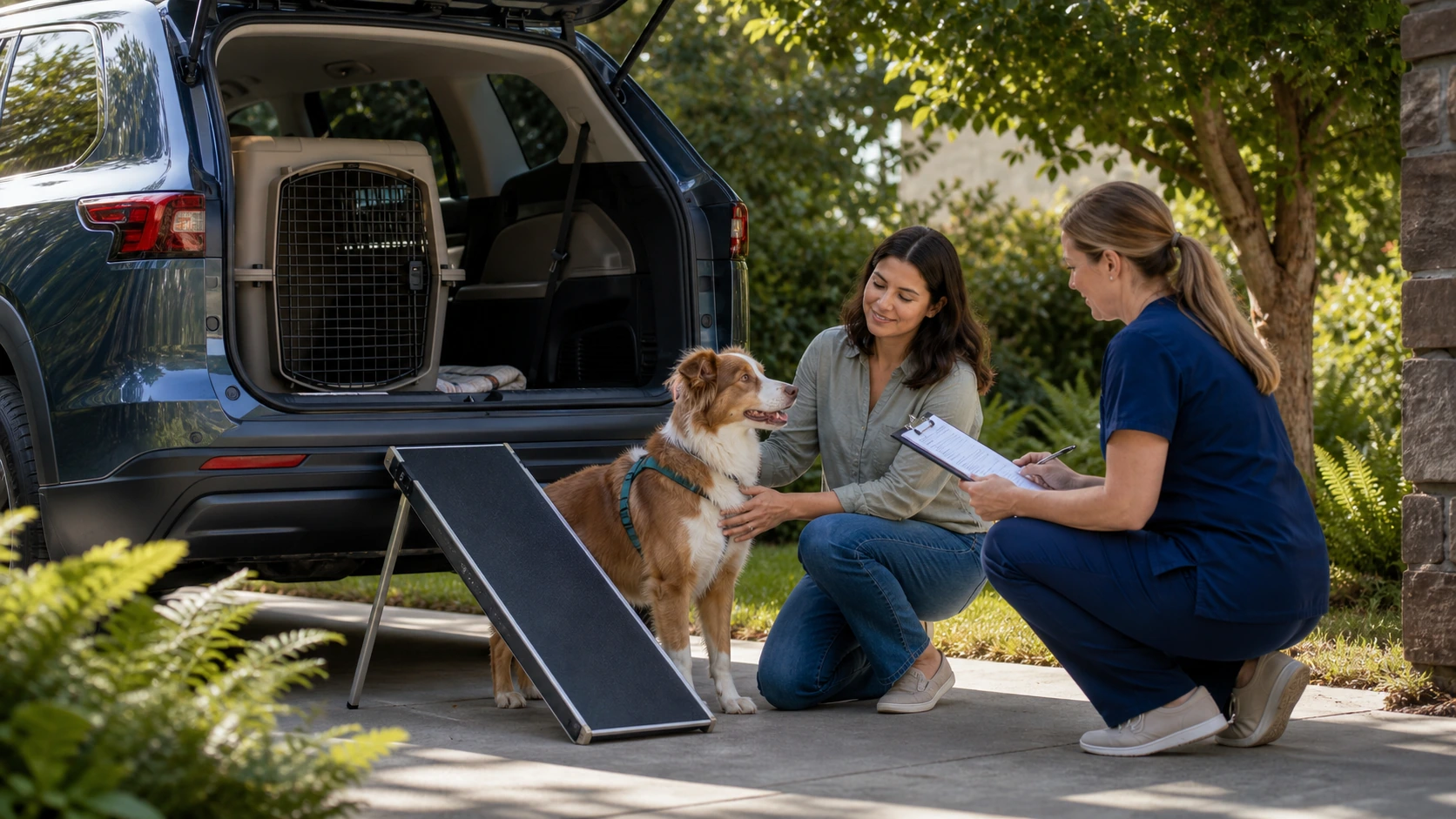
Begin only when the vehicle is parked, off, cool, and secured. Let the dog approach, retreat, enter, or use a ramp without pressure. Practice the restraint or carrier separately if possible. End while the dog remains able to eat, explore, and recover. A dog that freezes, refuses, struggles, or escalates needs an easier step.
Add engine sound, door movement, and very short motion one variable at a time. Early pleasant trips may matter: an owner survey found associations between travel problems, early experience, and journey context, but the convenience sample cannot prove cause. The practical lesson is to create safe, gradual experiences rather than guarantee prevention. [2]
Design the physical trip
Use an appropriate secured restraint or travel carrier, nonslip footing, climate control, ventilation, and a plan for safe loading. Keep the driver's area clear. Schedule breaks based on journey length and the dog's health, but use secure handling before any door opens. Bring water, food if advised, medications, records, waste supplies, identification, and destination contacts. [3]
Puppies, seniors, brachycephalic dogs, dogs with heart or respiratory disease, pregnant dogs, and dogs with pain, neurologic disease, or recent surgery may need additional planning or may not be appropriate for some journeys. Airline and border requirements need direct verification; this article does not replace carrier or regulatory rules.
Coordinate a veterinary and behavior plan
The veterinarian can evaluate nausea, ear or vestibular disease, pain, gastrointestinal illness, medication effects, and other medical contributors. Medication may be considered, but product selection, timing, trialing, contraindications, and dose require the dog's medical record. Never wait for a travel day to discover an unexpected effect.
For learned fear, reward-based work should remain below the reaction threshold. Forced loading or repeated long trips can deepen the association. A qualified behavior professional can help when the dog panics, cannot be safely restrained, generalizes fear, or has destination-specific anxiety. [4] [5]
Track salivation, panting, posture, food acceptance, vocalization, nausea, vomiting, elimination, ability to rest, and recovery after each step. Change one variable when possible and decide in advance what sign means stop, go back, contact the veterinarian, or cancel the trip.
Prepare for a focused veterinary conversation
Bring a concise timeline, short natural-movement or symptom videos when safe, the exact names and photographs of every food, treat, medication, and supplement label, and notes about appetite, water intake, stool, sleep, activity, comfort, and behavior. Include recent injuries, travel, boarding, diet changes, missed medication, and previous test results. A complete record helps the veterinary team separate a repeatable pattern from a single impression.
Decide in advance what you need from the visit: an urgency decision, a diagnosis plan, a nutrition review, a pain or mobility assessment, or a monitored trial. Ask what result would change the plan and what finding would rule an option out. This keeps research and product information in the right role. Evidence can shape questions and expectations, but it cannot determine what is safe for an individual dog without the history and examination.
Owner tool
Locate where travel distress begins
On a phone, swipe across the table to see every column.
| Stage | Observe | Possible question |
|---|---|---|
| Before entry | Avoidance, posture, appetite | Learned anticipation? |
| Parked car | Drooling, freezing, restraint response | Fear, pain, or heat? |
| Vehicle moving | Nausea, retching, balance | Motion sickness? |
| Destination | Recovery and context | Place-specific fear? |
Better questions, calmer next steps
Questions to ask your veterinarian
- Does the timeline suggest motion sickness, fear, pain, or overlap?
- Which restraint setup is safe for this dog and vehicle?
- Should any medication be trialed before travel day?
- What signs require stopping or cancelling the trip?
- How should we adapt the plan for age or medical conditions?
FAQ
Can a dog be both carsick and anxious?
Yes. Nausea can create learned fear, and fear can occur before motion begins.
Should I feed before travel?
Ask your veterinarian; timing depends on health, journey, nausea history, and medication.
Is a short drive always safe practice?
Only after parked-car steps are comfortable and medical and restraint concerns are addressed.
Can my dog ride with its head out the window?
No. It increases injury, debris, escape, and restraint risks.
When should travel be postponed?
Postpone when illness, heat, unsafe restraint, severe distress, or destination conditions cannot be managed safely.
Sources
- MSD Veterinary Manual: Motion Sickness in Animals. Mechanisms, signs, overlap, and veterinary assessment.
- Veterinary Record: A Survey of Travel-Related Problems in Dogs. Owner-reported travel patterns and study limits.
- Animals: Road Transportation Responses of Transport-Naive Beagles. Behavioral and physiological responses in a small experimental group.
- MSD Veterinary Manual: Traveling by Car with Pets. High-level restraint, preparation, and travel safety.
- American Veterinary Society of Animal Behavior: Position Statements. Reward-based, least-aversive behavior guidance.
