

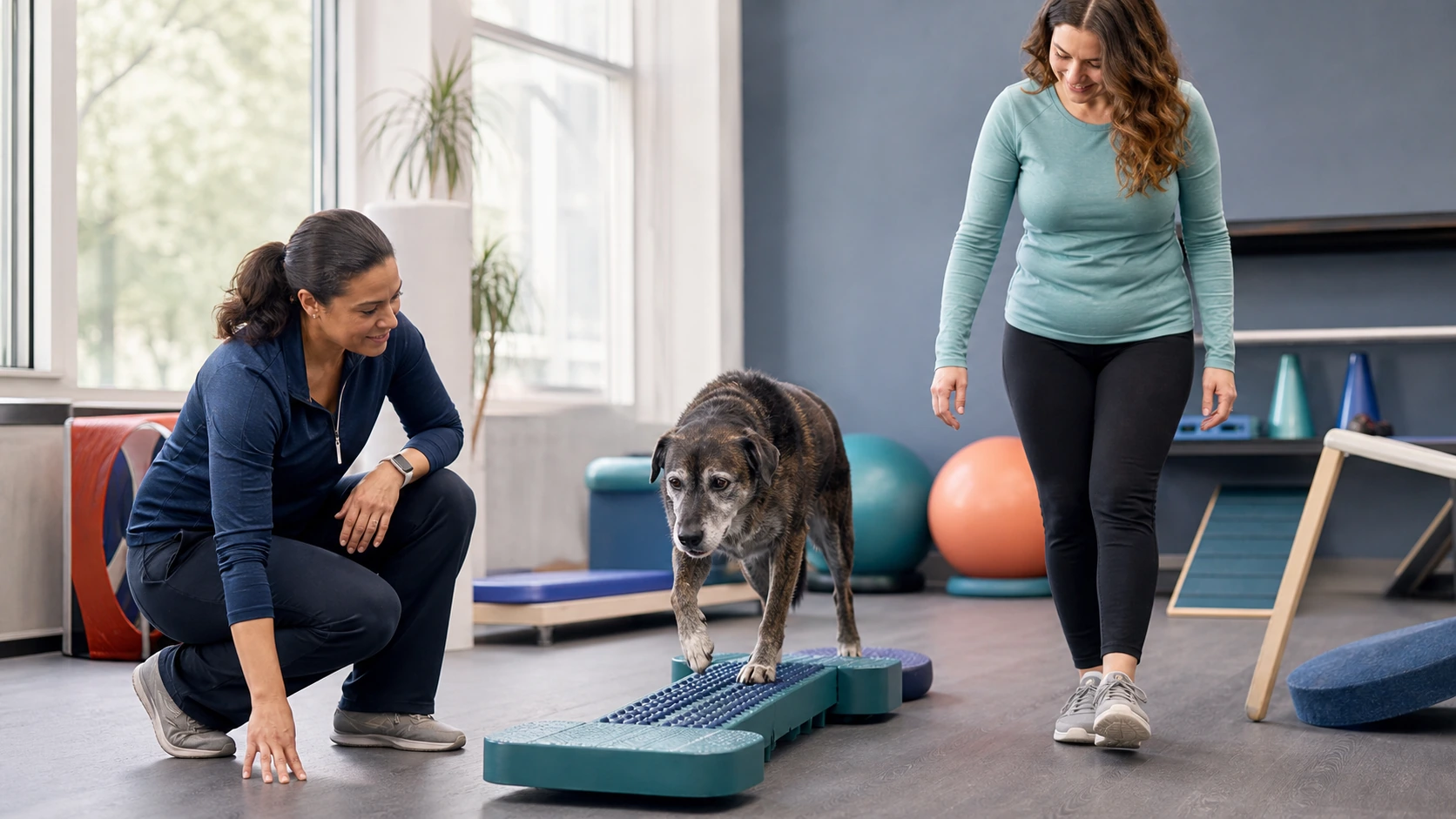
Veterinary rehabilitation is an individualized, goal-based part of medical care. It may combine assessment, therapeutic movement, environmental changes, manual techniques, aquatic work, and other selected modalities. The useful question is not whether rehabilitation is good in the abstract, but whether a defined plan fits this dog's diagnosis, healing stage, pain, neurologic function, daily life, and measurable goals.
Short answer
Rehabilitation is a coordinated clinical process, not a generic exercise class
A rehabilitation plan begins with a veterinary diagnosis and functional baseline, then selects activities or modalities for a stated goal. Evidence is not equally strong for every diagnosis or technique. A systematic review of postoperative canine cruciate rehabilitation found substantial risk of bias and limited or conflicting evidence for several interventions, so plans should be specific, monitored, and revised rather than sold as universal packages. [1] [2]
- Ask who diagnosed the problem, who sets restrictions, and how the rehabilitation provider communicates with the veterinary team.
- Define functional outcomes such as rising, walking, turning, toileting, or comfortable participation rather than a vague promise of recovery.
- Verify credentials, scope, safety procedures, home instructions, reassessment timing, and stop rules.
Safety first
New or worsening function needs reassessment, not a harder session
Contact a veterinarian promptly for inability to stand, sudden non-weight-bearing lameness, severe or escalating pain, major swelling, trauma, dragging or knuckling paws, loss of coordination, collapse, breathing difficulty, fever, wound changes, or loss of bladder or bowel control. Emergency signs require immediate care.
- Do not begin exercises copied from another dog's plan or continue through pain, panic, exhaustion, or deteriorating gait.
- Do not assume that water, massage, laser, balance equipment, or another modality is suitable because it is available.
- Do not let rehabilitation replace needed diagnosis, surgery, medication, wound care, or specialist follow-up.
Veterinary note
This article is educational and does not diagnose, treat, prescribe, or replace care from a licensed veterinarian. Your dog’s history, examination, diet, medications, and current signs determine what is appropriate.
Understand the clinical starting point
The same mobility sign can reflect joint disease, a ligament or tendon injury, spinal or peripheral nerve disease, muscle loss, pain elsewhere, systemic illness, excess body weight, or more than one problem. Diagnosis, tissue stability, healing stage, pain control, sensation, strength, balance, endurance, behavior, and home demands shape what is safe. [3]
The rehabilitation assessment may document gait, posture, limb use, range of motion, muscle condition, pain responses, transfers, balance, endurance, and familiar activities. Measurements should connect to everyday function. A change on equipment is less meaningful if the dog is still unable to rise, toilet, or walk comfortably at home.
Know what rehabilitation may include
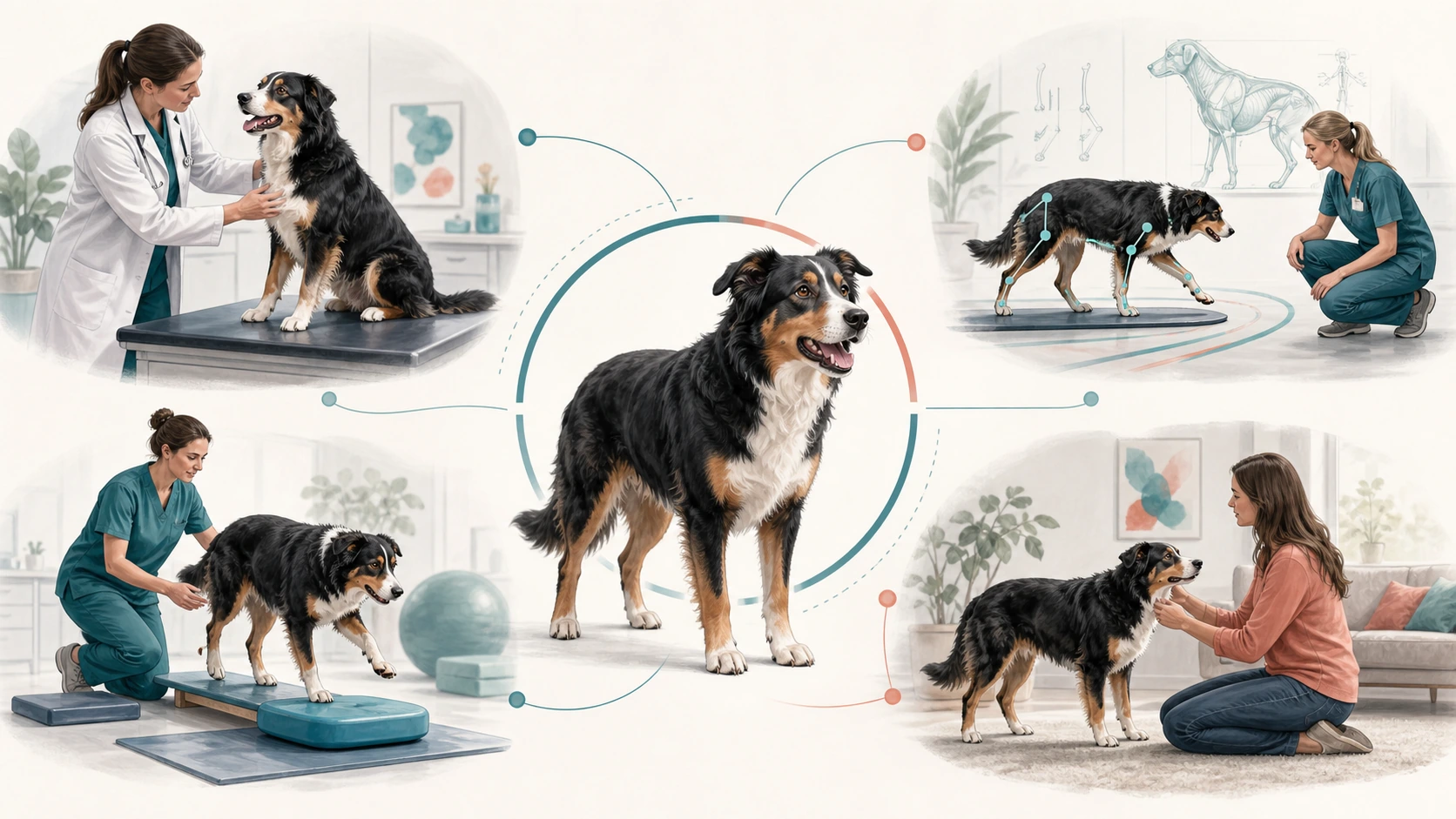
Programs may use controlled therapeutic exercise, manual techniques, aquatic exercise, heat or cold, neuromuscular or physical-agent modalities, assistive equipment, weight management, and environmental modification. These are categories, not a menu every dog needs. Water depth, speed, resistance, surface, repetition, assistance, and recovery can change the physical demand. [4]
Availability is not evidence. A modality supported for a specific postoperative population cannot automatically be generalized to every orthopedic, neurologic, geriatric, or weight-related condition. Ask what evidence applies to the diagnosis and goal, what uncertainty remains, and what simpler alternatives exist.
Verify credentials and team communication
The American College of Veterinary Sports Medicine and Rehabilitation is a veterinary specialty college with an approved board-certification pathway for veterinarians. Other rehabilitation credentials and professional scopes vary. Owners should verify education, licensure, veterinary oversight, emergency procedures, and communication rather than relying on a title alone. [1]
The primary veterinarian, surgeon or neurologist when involved, rehabilitation professional, and owner should share restrictions, medication changes, wound status, goals, and progress. Clarify who can diagnose, prescribe, change activity restrictions, and respond to a setback. The plan should not leave the owner to reconcile conflicting instructions.
Turn a plan into observable progress
Choose a few repeatable measures: time or assistance needed to rise, quality of level walking, slips, stair use when permitted, comfortable toileting, rest after activity, and willingness to participate. Record the session and the next day because overload can appear later. More repetitions or longer sessions are not automatically better.
A useful home plan states the task, surface, assistance, frequency range, expected response, stop signs, and review date without inviting improvisation. Progress one variable at a time. A flare, medication change, new neurologic sign, surgery update, weight change, or loss of confidence may require a different plan.
Rehabilitation can support comfort and function within multimodal care, but it cannot guarantee recovery. International osteoarthritis consensus guidance emphasizes flexible, patient-specific management and reassessment while acknowledging varied evidence across interventions. [3] [5]
Prepare for a focused veterinary conversation
Bring a concise timeline, short natural-movement or symptom videos when safe, the exact names and photographs of every food, treat, medication, and supplement label, and notes about appetite, water intake, stool, sleep, activity, comfort, and behavior. Include recent injuries, travel, boarding, diet changes, missed medication, and previous test results. A complete record helps the veterinary team separate a repeatable pattern from a single impression.
Decide in advance what you need from the visit: an urgency decision, a diagnosis plan, a nutrition review, a pain or mobility assessment, or a monitored trial. Ask what result would change the plan and what finding would rule an option out. This keeps research and product information in the right role. Evidence can shape questions and expectations, but it cannot determine what is safe for an individual dog without the history and examination.
Owner tool
Evaluate a rehabilitation plan
On a phone, swipe across the table to see every column.
| Plan element | What to ask | What to record |
|---|---|---|
| Clinical reason | Which diagnosis and restriction guide this? | Baseline function |
| Provider | What credentials and scope apply? | Communication contacts |
| Intervention | Why this activity or modality? | Comfort and gait |
| Recheck | What outcome changes the plan? | Same-day and next-day response |
Better questions, calmer next steps
Questions to ask your veterinarian
- What diagnosis and healing stage define current restrictions?
- Which functional outcome are we trying to change?
- What evidence supports this intervention for this condition?
- Who should I contact after a setback or new sign?
- Which provider credentials and veterinary oversight apply?
FAQ
Is rehabilitation the same as exercise advice?
No. Veterinary rehabilitation uses clinical assessment, diagnosis-linked goals, restrictions, monitoring, and reassessment.
Does every dog need an underwater treadmill?
No. Aquatic work is one possible modality and must fit the dog, diagnosis, goal, and safety screen.
How quickly should results appear?
There is no universal timeline; healing, diagnosis, baseline function, plan adherence, and response all matter.
Can rehabilitation replace pain treatment or surgery?
No. It may complement indicated care but should not displace diagnosis or treatment.
What should I bring to an appointment?
Bring records, medication and supplement lists, restrictions, videos captured safely, home-surface details, and your functional priorities.
Sources
- American College of Veterinary Sports Medicine and Rehabilitation: About ACVSMR. Veterinary specialty scope and credential context.
- Veterinary Surgery: Systematic Review of Postoperative Rehabilitation after Canine Cruciate Surgery. Condition-specific evidence and risk-of-bias limits.
- Frontiers in Veterinary Science: International Consensus Guidelines for Canine Osteoarthritis Treatment. Patient-specific multimodal planning and reassessment.
- Veterinary Sciences: Physiotherapeutic Strategies and Current Evidence for Canine Osteoarthritis. Rehabilitation modalities, mechanisms, and evidence limits.
- American College of Veterinary Surgeons: Osteoarthritis in Dogs. Diagnostic and multimodal mobility-care context.
