



Melatonin for Dogs: An Evidence-Based Owner Overview
Melatonin is a hormone involved in biological timing, but a familiar name does not make every human or pet product suitable for a dog. The reason for use, the exact…

Valerian Root for Dogs: What the Research Shows
Valerian appears in some products marketed for canine calm, but marketing familiarity is not ingredient-specific evidence. The directly relevant trial in this research packet tested a combination containing tryptophan, valerian,…

Travel Anxiety in Dogs: Preparation and Vet Guidance
A dog who drools, pants, whines, vomits, freezes, or refuses the car may be experiencing motion sickness, conditioned fear, physical discomfort, unsafe restraint, heat, unfamiliar environments, or several factors together.…

Thunderstorm Anxiety in Dogs: A Vet-First Overview
A storm is not one sound. Thunder may arrive with changing barometric pressure, wind, rain, static, vibration, darkness, flashes, household activity, and the owner's own preparation. Some dogs react before…

Noise Phobia in Dogs: Signs, Triggers, and Vet Approaches
Dogs may startle at a sudden sound, but a clinically important noise problem is more than one jump or bark. Intensity, persistence, anticipation, escape behavior, generalization, recovery, and effects on…
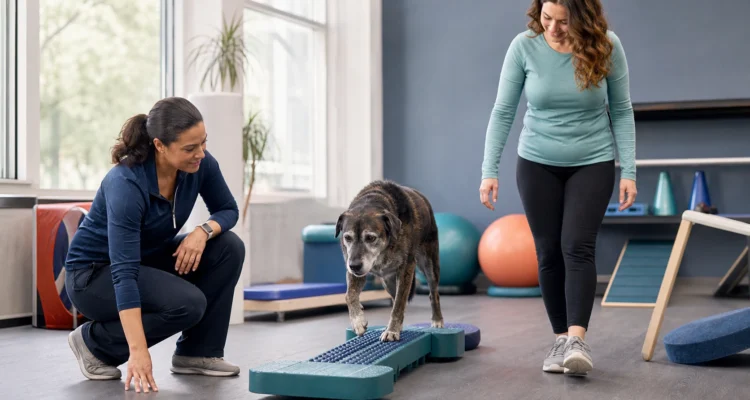
Veterinary Rehabilitation for Dogs: An Owner’s Introduction
Veterinary rehabilitation is an individualized, goal-based part of medical care. It may combine assessment, therapeutic movement, environmental changes, manual techniques, aquatic work, and other selected modalities. The useful question is…
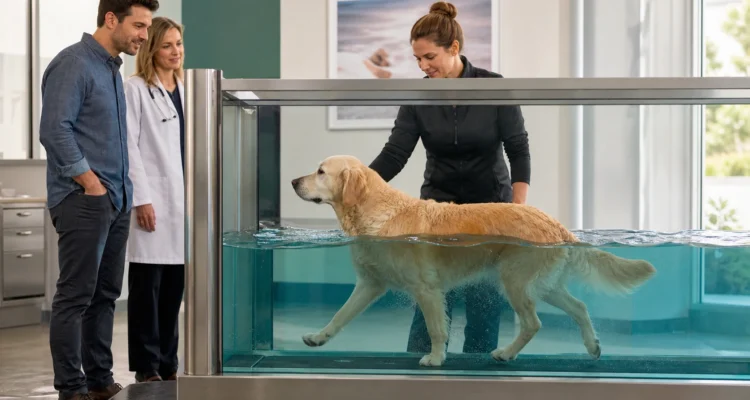
Hydrotherapy for Dogs with Mobility Concerns: What to Know
Hydrotherapy uses water's buoyancy, resistance, pressure, and temperature as part of rehabilitation or conditioning. An underwater treadmill allows controlled walking at selected depth and speed, while swimming produces a different…
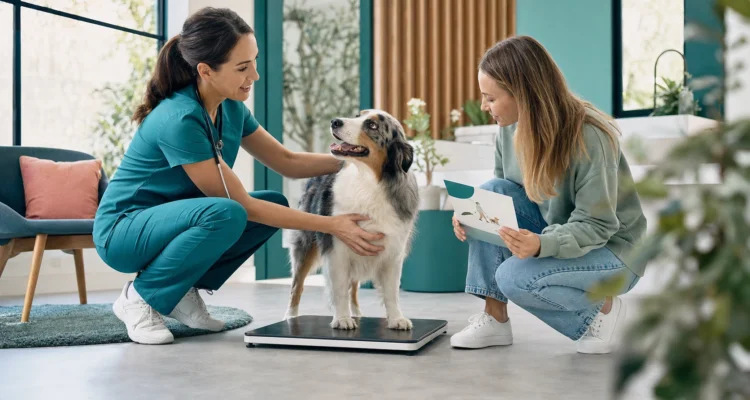
Weight Management and Canine Joint Health
Excess body fat changes joint health mechanically and biologically. More mass increases load, while adipose tissue participates in inflammatory signaling. For a dog with osteoarthritis, weight management can improve mobility…
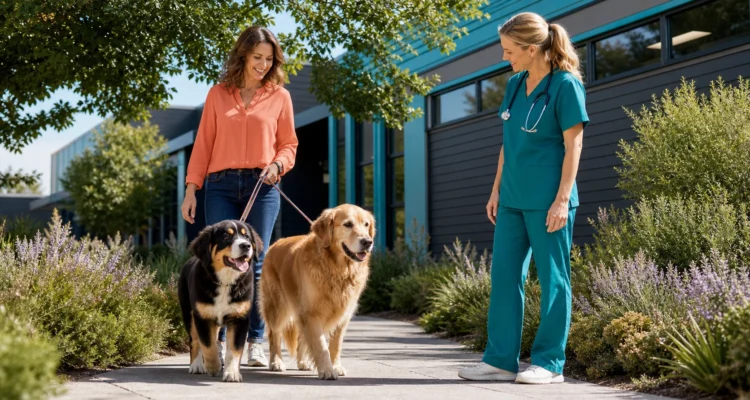
Large Breed Dogs and Joint Health: Key Considerations
Large and giant breeds place substantial forces through growing and adult joints. Genetics influence developmental orthopedic disease, while excess energy, inappropriate calcium, rapid weight gain, poor conditioning, and injury can…

Hip Dysplasia in Dogs: An Owner’s Information Guide
Canine hip dysplasia is a developmental orthopedic disorder in which abnormal hip joint laxity and incongruity can lead to instability, remodeling, pain, and osteoarthritis. Genetics are important, while growth, body…