


New Baby and Dog Anxiety: A Vet-First Transition Guide
A new baby changes sound, movement, scent, sleep, visitors, furniture, and caregiver attention. Those changes can be difficult for a dog who already startles, guards resources, struggles with handling, or…

Moving House with an Anxious Dog: Owner Preparation Guide
Moving changes smells, sounds, routes, people, doors, schedules, sleeping places, and owner attention all at once. Packing and repair work can begin the disruption weeks before travel, while movers and…

Grief and Loss in Dogs: What Behavioral Research Indicates
After an animal or human companion dies or leaves, a dog may eat differently, sleep more or less, search, vocalize, cling, withdraw, play less, seem fearful, or show no obvious…
Multi-Dog Households and Anxiety: When Dogs Trigger Each Other
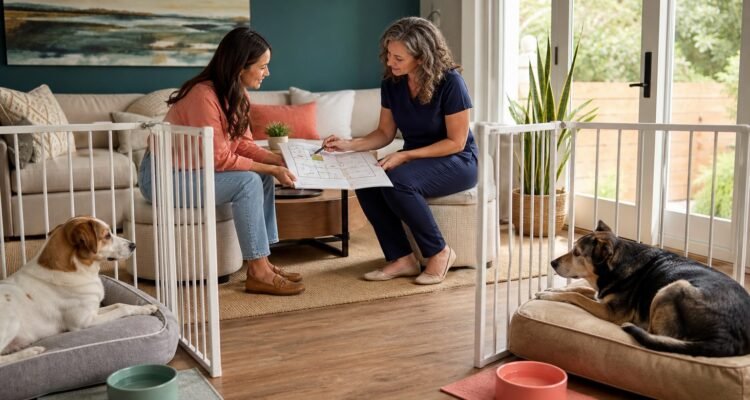
Dogs in one home can influence each other's arousal, fear, barking, resource access, sleep, and recovery. One dog may react to a noise, visitor, fence event, owner arrival, food, toy,…

Anxiety Across Life Stages: Puppies, Adults, and Senior Dogs
Fear and anxiety are not one personality type or one life-stage problem. Puppies are learning what is safe during sensitive developmental periods. Adolescents and adults may show inherited tendencies, learned…

How Dog Anxiety Affects the Human-Animal Bond and Owner Wellbeing
Living with a dog who panics, cannot be left alone, reacts to people or animals, fears routine sounds, or struggles with handling can reshape the owner's day. Sleep, work, travel,…

Anxiety Wraps and Pressure Products for Dogs: What Evidence Exists
Pressure wraps and compression garments are marketed as calming tools for noise fear, separation-related distress, generalized anxiety, travel, and veterinary visits. A 2024 systematic review found only four eligible canine…

Counter-Conditioning and Desensitization for Anxious Dogs
Desensitization and counter-conditioning are related but distinct behavior-change processes. Desensitization presents a trigger at a low enough intensity that the dog can remain safe and able to learn, then changes…

Medication Options for Dog Anxiety: What Vets May Discuss
Medication can be appropriate when anxiety compromises welfare, safety, daily function, or the ability to learn, but there is no universal anxiety drug. Veterinarians distinguish baseline medication intended to alter…

Questions to Ask Your Vet About Dog Anxiety
Anxiety is an emotional state, not one behavior or one diagnosis. Panting, pacing, hiding, freezing, scanning, barking, destructive behavior, escape attempts, elimination, aggression, appetite changes, and inability to settle can…