

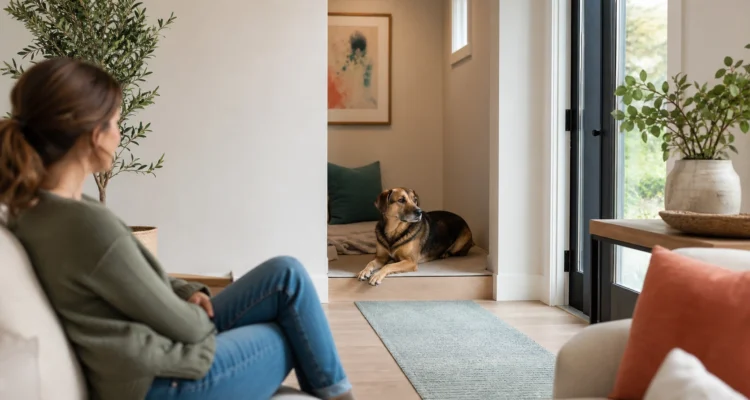
Creating a Calming Environment for an Anxious Dog
A calm environment is not a silent room, a crate, or a collection of calming products. It is a home setup that makes daily events more predictable, lowers avoidable trigger…

L-Theanine for Dogs: What the Research Says
L-theanine is an amino acid associated with tea plants and included in some products marketed for canine calming. Interest is understandable, but the practical question is narrower than whether L-theanine…

Calming Supplements for Dogs: An Evidence-Based Overview
Calming supplements are marketed for thunderstorms, travel, separation, handling, sleep, and everyday stress, but those situations are not one diagnosis. Ingredients, formulas, study designs, product consistency, and individual risks vary…
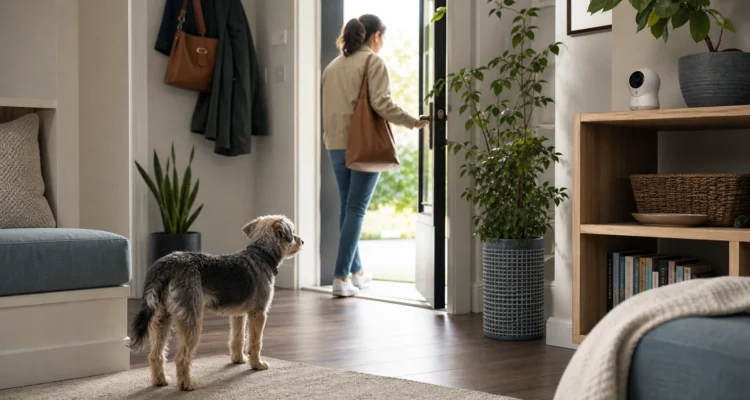
Separation Anxiety in Dogs: What Owners Should Know
Separation-related problems are behaviors that occur when a dog is alone or separated from an important person. They are not all caused by the same emotion. Fear, panic, frustration, confinement…

Dog Anxiety: Types, Triggers, and Vet-First Approaches
Anxiety is anticipation of a threat or adverse event, while fear is a response to a perceived current threat. Owners often see them overlap. The important task is not to…

Dog Anxiety and Calming Glossary: Key Terms Owners Should Know
This glossary translates common canine behavior language into careful owner terms. It is not a diagnostic tool, severity score, exposure plan, medication guide, or product list. A word may describe…

Building a Productive Vet and Behaviorist Relationship for Your Anxious Dog
Owners contribute longitudinal observations; veterinarians assess medical contributors and direct medical care; qualified behavior professionals analyze behavior and teach humane plans within their scope. Productive collaboration depends on accurate records,…

Common Myths About Dog Anxiety: What the Evidence Actually Shows
Myth-busting should reduce harm without creating a new blanket rule. Each claim needs an evidence verdict, an explicit limit, and patient-specific context. Population findings do not predict one dog, a…

Dog Anxiety FAQ: Answers to the Most-Asked Owner Questions
This FAQ is a navigation layer, not a behavior diagnosis or treatment plan. It helps owners describe a change, identify immediate safety needs, and find the next professional question. It…

First-Time Dog Owner’s Guide to Anxiety and Calming
A first dog brings unfamiliar body language, routines, and uncertainty. Begin with safe observation, not a test of obedience or a diagnosis. Record what happened before, during, and after a…