

Questions to Ask Your Vet About Your Dog’s Joint Health
A productive joint-health appointment begins before the exam. Record what changed, when it happens, which activities are difficult, how long stiffness lasts, whether the dog slips or hesitates, and what…

Gut Health and Canine Immunity: What Research Indicates
The intestinal tract is not only a digestive tube. Its physical barrier, mucus, immune cells, microbial community, and microbial metabolites continually interact. Canine studies and veterinary reviews describe roles in…

Diarrhea in Dogs: What Owners Should Know
Diarrhea is increased water in feces and may involve changed frequency, volume, urgency, mucus, blood, or straining. Causes range from dietary change, scavenging, stress, and parasites to infection, toxins, foreign…

Constipation in Dogs: Causes, Signs, and When to Call the Vet
Constipation means difficult, infrequent, or absent passage of feces, but owners can confuse it with urinary straining, diarrhea-related tenesmus, pain, or repeated posturing. Causes include dehydration, ingestion of poorly digested…
Canine Inflammatory Bowel Disease: An Owner Information Overview
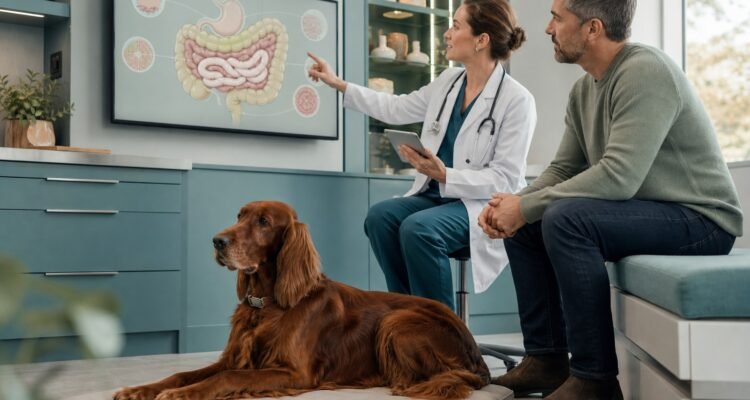
Inflammatory bowel disease has historically been used broadly for dogs with chronic gastrointestinal signs and intestinal inflammation, but current veterinary language often favors chronic inflammatory enteropathy and response-based classification. Chronic…

Questions to Ask Your Vet About Your Dog’s Digestive Health
Digestive signs can come from the gastrointestinal tract or from disease elsewhere in the body. Diarrhea, constipation, vomiting, appetite change, weight loss, abdominal discomfort, bloating, bleeding, straining, dehydration, and behavior…

Dog Supplement FAQs: Answers to the Most Common Owner Questions
Dog supplement questions rarely have universal yes-or-no answers. A veterinary nutritional assessment considers the individual dog, complete diet, feeding management, health, medications, and clinical goal. Products marketed for animals do…

Natural vs Synthetic Dog Supplements: What the Distinction Actually Means
Natural and synthetic are context-dependent source or manufacturing terms, not clinical verdicts. FDA animal-product classification depends on composition, intended use, and claims rather than a simple source label. Ingredient safety…

When to Stop Giving a Dog a Supplement: Guidance from Vets
There is no universal trial duration, symptom-free period, or lack-of-benefit threshold for dog supplements. A useful decision starts with a defined purpose, baseline, target observation, exact product and amount, adherence,…

Storage and Handling of Dog Supplements: What Owners Should Follow
There is no universal storage rule for every dog supplement. Powders, oils, liquids, chews, capsules, probiotics, animal-food products, and drug products can have different requirements for temperature, light, moisture, refrigeration,…