

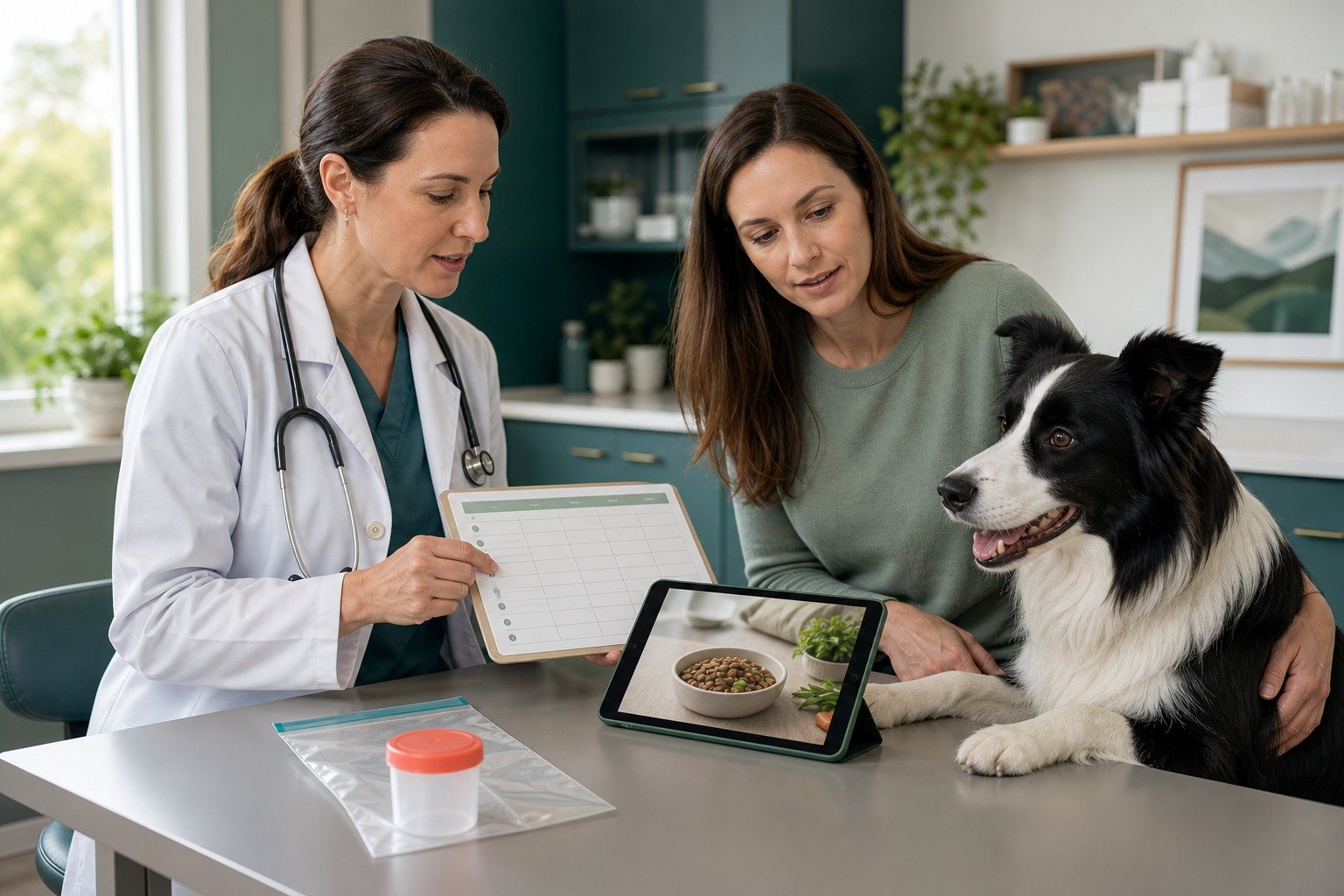
Digestive signs can come from the gastrointestinal tract or from disease elsewhere in the body. Diarrhea, constipation, vomiting, appetite change, weight loss, abdominal discomfort, bloating, bleeding, straining, dehydration, and behavior change each need context. A useful appointment begins with dates, frequency, stool description, vomiting versus regurgitation, appetite, water, weight, diet, treats, medications, supplements, travel, scavenging, toxin or foreign-object risk, other animals, and prior episodes. Bring an appropriately collected sample when the clinic requests one. Ask what problems are being considered, which findings change urgency, what each proposed test could answer, and how response will be measured. This guide is a conversation aid, not a diagnostic algorithm.
Short answer
Bring a pattern, not only a symptom label
MSD explains that a complete history and clinical examination often direct digestive evaluation, while fecal testing, bloodwork, imaging, or biopsy may be considered depending on the pattern. The most useful questions connect the exact signs to the diagnostic decision. [1]
- Record exact timing, pattern, exposures, diet, products, and recent changes.
- Use the record to prepare for veterinary assessment, not to diagnose or prescribe at home.
- Bring labels, medications, supplements, prior results, and safe photos or video when useful.
- Agree on monitoring, reassessment, and urgent-response instructions.
Safety first
Blood, repeated vomiting, severe pain, collapse, or rapid decline needs urgent care
Seek prompt veterinary guidance for black or bloody stool, repeated vomiting or diarrhea, inability to keep water down, severe pain, distended abdomen, nonproductive retching, marked lethargy, weakness, collapse, dehydration, suspected toxin or foreign object, or a young unvaccinated dog with significant diarrhea.
- Do not delay care for sudden, severe, escalating, or function-limiting signs.
- Do not start, stop, combine, or calculate treatment from this article.
- Keep a concise timeline and exact product or exposure details available.
Veterinary note
This article is educational and does not diagnose, treat, prescribe, or replace care from a licensed veterinarian. Your dog’s history, examination, diet, medications, and current signs determine what is appropriate.
Prepare the timeline and exact descriptions
Record onset, frequency, duration, progression, stool consistency and color, mucus or blood, straining, vomiting or regurgitation, appetite, water, urination, weight, energy, pain, and sleep. Use photographs when safe and acceptable to the clinic.
Separate vomiting from regurgitation by describing effort, timing, and appearance rather than assigning the term yourself. Record whether signs occur around meals, treats, exercise, travel, stress, medication, or scavenging.
Include calm or normal intervals. Intermittent signs, recovery time, and the dog's function between episodes can influence urgency and the diagnostic pathway.

Bring diet, product, and exposure details
List every food, topper, chew, treat, table item, medication, supplement, preventive, and recent change. Photograph labels and record transition timing. Do not omit occasional items; small exposures can matter.
Report travel, boarding, dog-park or daycare contact, raw or spoiled food, trash, compost, bones, toys, fabric, plants, chemicals, and access to human medication. Do not recreate or test a suspected exposure.
Ask whether a fresh stool sample is useful and how the clinic wants it collected, stored, and transported. A sample can support testing but does not replace the dog and history. Cornell recommends bringing a sample for diarrhea evaluation. [2]
Ask what the diagnostic steps could change
Start with: Which categories are most likely and which dangerous alternatives must be excluded? Ask how age, vaccine status, chronicity, weight trend, examination findings, and hydration affect the plan.
Tests may include fecal analysis, bloodwork, urinalysis, imaging, specialized gastrointestinal tests, endoscopy, or biopsy depending on the case. Not every dog needs every test. Ask what each result would rule in, rule out, or change. [1]
For chronic signs, ask whether the team is evaluating chronic enteropathy, systemic disease, parasites, pancreatic or absorption problems, obstruction, cancer, or another condition. Chronic enteropathy is a category, not one automatically selected treatment. [3]
Make treatment and follow-up questions measurable
Ask what the immediate goal is: hydration, symptom control, diagnostic clarification, nutrition support, pain relief, or monitoring. Request written instructions for food, medications, activity, sample collection, and emergency changes.
Do not use this article to select a bland diet, fasting period, probiotic, fiber, laxative, antidiarrheal, antibiotic, or supplement. Age, disease, nutritional needs, obstruction risk, and medications change what is appropriate. Constipation evaluation similarly depends on history and cause rather than one default remedy. [4]
Ask which outcome to track, when improvement should be reassessed, what adverse effects matter, and what would trigger imaging, referral, or a changed plan. Preserve reports and keep the same observation method for comparison.
Keep the care record current
Before leaving the appointment, repeat the plan back in your own words and confirm which instructions apply only until results return. Ask how the clinic will communicate test results, who to call after hours, and whether food, medication, or sample instructions change if the dog worsens. A written decision tree for routine questions, same-day calls, and emergency signs reduces uncertainty and prevents an old instruction from being carried forward after the clinical situation changes.
Prepare for a focused veterinary conversation
Bring a concise timeline, short natural-movement or symptom videos when safe, the exact names and photographs of every food, treat, medication, and supplement label, and notes about appetite, water intake, stool, sleep, activity, comfort, and behavior. Include recent injuries, travel, boarding, diet changes, missed medication, and previous test results. A complete record helps the veterinary team separate a repeatable pattern from a single impression.
Decide in advance what you need from the visit: an urgency decision, a diagnosis plan, a nutrition review, a pain or mobility assessment, or a monitored trial. Ask what result would change the plan and what finding would rule an option out. This keeps research and product information in the right role. Evidence can shape questions and expectations, but it cannot determine what is safe for an individual dog without the history and examination.
Owner tool
Prepare a digestive-health appointment brief
On a phone, swipe across the table to see every column.
| Checkpoint | Record | Why it helps |
|---|---|---|
| Pattern | Dates, stool, vomiting, appetite, function | Frames urgency |
| Inputs | Diet, treats, drugs, supplements | Finds contributors |
| Exposures | Travel, animals, trash, objects, toxins | Keeps risks visible |
| Decisions | Tests, goals, response, recheck | Clarifies next steps |
Better questions, calmer next steps
Questions to ask your veterinarian
- Which dangerous causes need to be excluded first?
- What does each proposed test answer?
- Should I bring a sample or safe photo?
- What treatment goal and outcome should I track?
- What change means emergency care?
FAQ
Should I bring a stool sample?
Ask the clinic how and when to collect one.
Is diarrhea always a food problem?
No. Many gastrointestinal and systemic causes are possible.
Do all chronic cases need biopsy?
No. Testing depends on the individual pathway.
Can I start a home remedy before the visit?
Do not improvise treatment when the cause is unclear.
Why list every treat and supplement?
They affect exposure, duplication, and interpretation.
Sources
- MSD Veterinary Manual: Introduction to Digestive Disorders of Dogs. History, examination, signs, and testing.
- Cornell University College of Veterinary Medicine: Diarrhea. Owner observations, urgency, sample, and diagnostics.
- Merck Veterinary Manual: Chronic Enteropathies in Small Animals. Chronic-enteropathy categories and diagnostic context.
- Merck Veterinary Manual: Constipation, Obstipation, and Megacolon. Constipation history and differential context.
