

A practical, vet-first guide to understanding your dog’s digestive patterns, spotting red flags, and bringing better information to your veterinary team.
Short answer
Dog digestive health is a pattern, not a single symptom
Healthy digestion is not just firm stool. It is the pattern of how your dog eats, drinks, stools, rests, moves, and responds after meals. A one-day soft stool after a clear diet change is different from repeated vomiting, blood, weight loss, a painful abdomen, or a senior dog who suddenly seems weak. The safest next step is to observe the whole pattern, write down the details, and involve your veterinarian early when signs are severe, recurring, or connected with other changes. [1] [2]
- Track timing, stool, vomiting, appetite, water intake, energy, diet changes, medications, and supplements.
- Do not treat recurring or severe digestive signs as a supplement shopping problem.
- Call your veterinarian promptly for red flags or when your dog is young, senior, medically fragile, or worsening.
Safety first
When digestive signs should not wait
Contact your veterinarian promptly if your dog has blood in stool or vomit, repeated vomiting, diarrhea that is severe or worsening, a bloated or painful abdomen, collapse, marked lethargy, trouble keeping water down, signs of dehydration, pale gums, sudden weakness, unexplained weight loss, or digestive signs after a toxin exposure, medication change, or foreign-object concern.
- Puppies, senior dogs, toy breeds, and dogs with chronic disease may need earlier care.
- Do not start fasting, home medications, probiotics, fiber, or supplements for urgent signs unless your veterinarian tells you to.
- If your dog seems painful, disoriented, weak, or unable to settle, treat that as a care decision, not a wait-and-see note.
The goal is not to panic. The goal is to avoid losing time when digestive signs may be part of a larger medical problem.
Veterinary note
This guide is for general education only. It does not diagnose, treat, or replace care from a licensed veterinarian. Your dog’s age, breed, medical history, medications, diet, and current symptoms can change what is safe.
What digestive health means for a dog
Digestive health is the way your dog’s mouth, stomach, intestines, pancreas, liver, gallbladder, immune system, diet, hydration, and daily routine work together to move food through the body and turn it into usable nutrition. Owners usually notice digestive health through stool quality, appetite, gas, vomiting, belly comfort, weight, coat quality, and daily energy. Those signs matter, but none of them tells the whole story by itself. [2]
A dog can have a temporary upset after eating something unusual. A dog can also have digestive signs because of parasites, infection, pancreatitis, inflammatory disease, endocrine disease, food intolerance, medication effects, toxin exposure, stress, dietary imbalance, or another problem that needs a veterinary diagnosis. The same visible sign can have many causes. That is why a careful history is often more useful than guessing from one symptom.
The most useful owner mindset is calm specificity. Instead of saying only that your dog has an upset stomach, describe what happened in ordinary terms: two loose stools after breakfast, one episode of vomiting after drinking, no interest in dinner, normal energy on the walk, or restlessness and belly guarding overnight. Those details help separate a minor routine change from a pattern that deserves faster triage. They also reduce the risk of overcorrecting with several diet or supplement changes at once.
What is reasonably supported
Observation and history help veterinary decision-making
Veterinary digestive references consistently treat signs such as vomiting, diarrhea, appetite change, abdominal pain, blood, dehydration, and lethargy as context-dependent. A written history helps your veterinarian understand duration, severity, possible triggers, and whether the digestive signs are isolated or part of a broader illness. [3]
Nutrition guidance also supports looking beyond the food bowl alone. Feeding amount, treats, toppers, table scraps, sudden diet changes, medications, and supplements can all affect the picture. That does not mean every digestive change is caused by food. It means the full intake history belongs in the conversation.
What remains uncertain
Symptoms do not identify the cause by themselves
Stool quality, gas, appetite shifts, and vomiting are observable clues, not diagnoses. A dog with loose stool may need parasite testing, diet review, medication review, imaging, bloodwork, supportive care, or a different plan depending on the case. Internet checklists can help you organize what you see, but they cannot safely tell you which disease is present or which treatment is appropriate.
Supplements, including probiotics, fiber, digestive enzymes, and calming aids, should be discussed in context. They may be reasonable in some plans and inappropriate in others. The higher the urgency, the less a shopping decision belongs in the first step.
Digestive signs worth tracking
Start with the signs you can observe without forcing an interpretation. Write down when the change started, how often it happens, and whether it is improving, staying the same, or worsening. If your dog vomits, note whether it happened once or repeatedly, whether food or water stays down, and whether your dog is bright or subdued afterward. If stool changes, note frequency, urgency, color, mucus, blood, straining, and whether accidents are happening. [4]
Appetite and water intake are just as important. A dog who skips one meal but acts normal is different from a dog who refuses food, drinks excessively, cannot keep water down, or seems weak. Energy, posture, restlessness, belly guarding, whining, hiding, or reluctance to move can change the urgency of the same digestive sign.
Context is the part many weak articles miss. Record new foods, treats, chews, table scraps, trash access, outdoor scavenging, boarding, travel, grooming, stress events, medication starts, missed doses, supplements, and exposure to other sick animals. Your veterinarian does not need a perfect diary. They need enough detail to decide what questions, exams, and tests make sense.
Everyday support starts with consistency
For a dog without urgent signs, digestive support usually starts with stable basics: a complete and appropriate diet, predictable feeding amounts, gradual transitions when changing food, clean water, safe treat habits, and a routine that fits the dog’s age, activity, and medical history. Sudden changes can make it harder to know what helped or harmed, especially when several foods, treats, supplements, and medications change at once. [5]
If your veterinarian agrees that a food transition is appropriate, ask how slowly to change it and what signs should stop the transition. Some dogs need a more cautious plan than the standard advice on a food bag. Dogs with chronic disease, prior pancreatitis, food-response concerns, or repeated gastrointestinal episodes deserve individualized guidance.
Be careful with well-meaning add-ons. Pumpkin, fiber, probiotics, digestive enzymes, broths, toppers, and bland-food routines are often discussed online, but they are not universally safe or useful. The right choice depends on the reason for the signs, the dog’s hydration, body condition, medications, and what the veterinarian is trying to rule in or out.
Where gut supplements may fit
Gut supplements are not first-line answers for every digestive change. They are tools that may fit a veterinary plan when there is a clear reason to use them, a known product type, and a way to judge whether the dog is improving. For example, your veterinarian may discuss a probiotic, fiber source, or diet strategy in a specific situation. That is different from buying a product because a symptom list sounds familiar.
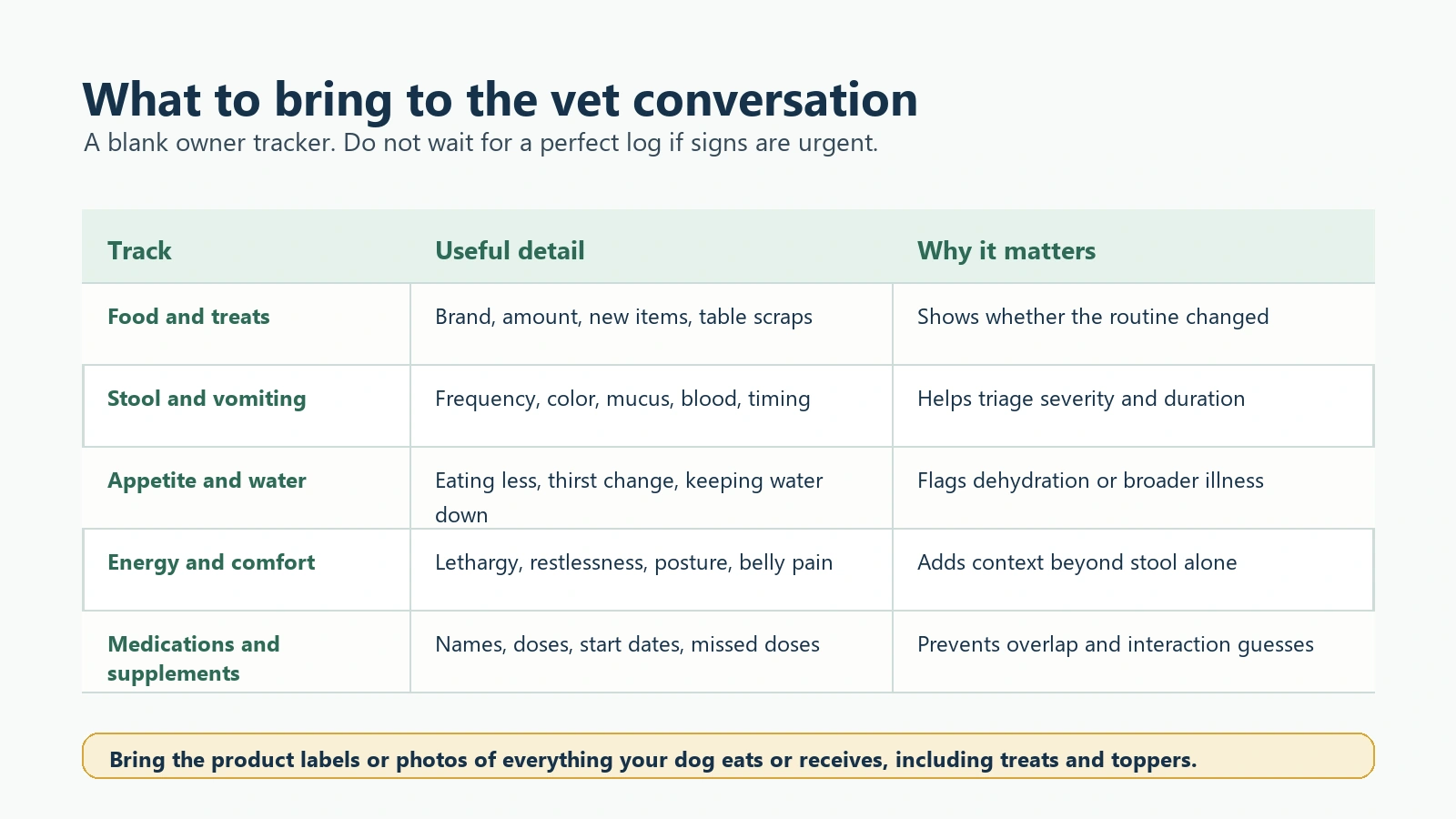
Before adding anything, list what your dog already receives: food, treats, chews, medications, preventives, oils, powders, toppers, supplements, and human foods. Bring labels or photos. This protects your dog from overlap and helps the veterinary team evaluate ingredients, claims, calories, fat content, and possible interactions.
Owner tool
A simple digestive-health log
Use this kind of log when signs are mild and your dog is otherwise stable, or while you are preparing for a veterinary call. Do not delay urgent care to complete a log.
On a phone, swipe across the table to see all columns.
| What to record | Useful details | Why it helps |
|---|---|---|
| Timing | When signs started, frequency, and whether they are worsening | Shows duration and urgency |
| Stool | Consistency, color, mucus, blood, urgency, accidents, straining | Helps describe the visible pattern |
| Vomiting | How often, what it looked like, whether water stays down | Helps separate a single episode from a riskier pattern |
| Food intake | Meals, treats, new foods, scraps, trash access, chews | Identifies changes and possible exposures |
| Whole-dog signs | Energy, pain, posture, hydration, weight, behavior | Shows whether digestion is part of broader illness |
- Take photos of food, treat, medication, and supplement labels.
- Write down the exact start date and what changed in the week before.
- Call sooner if signs involve blood, repeated vomiting, weakness, pain, dehydration, or a vulnerable dog.
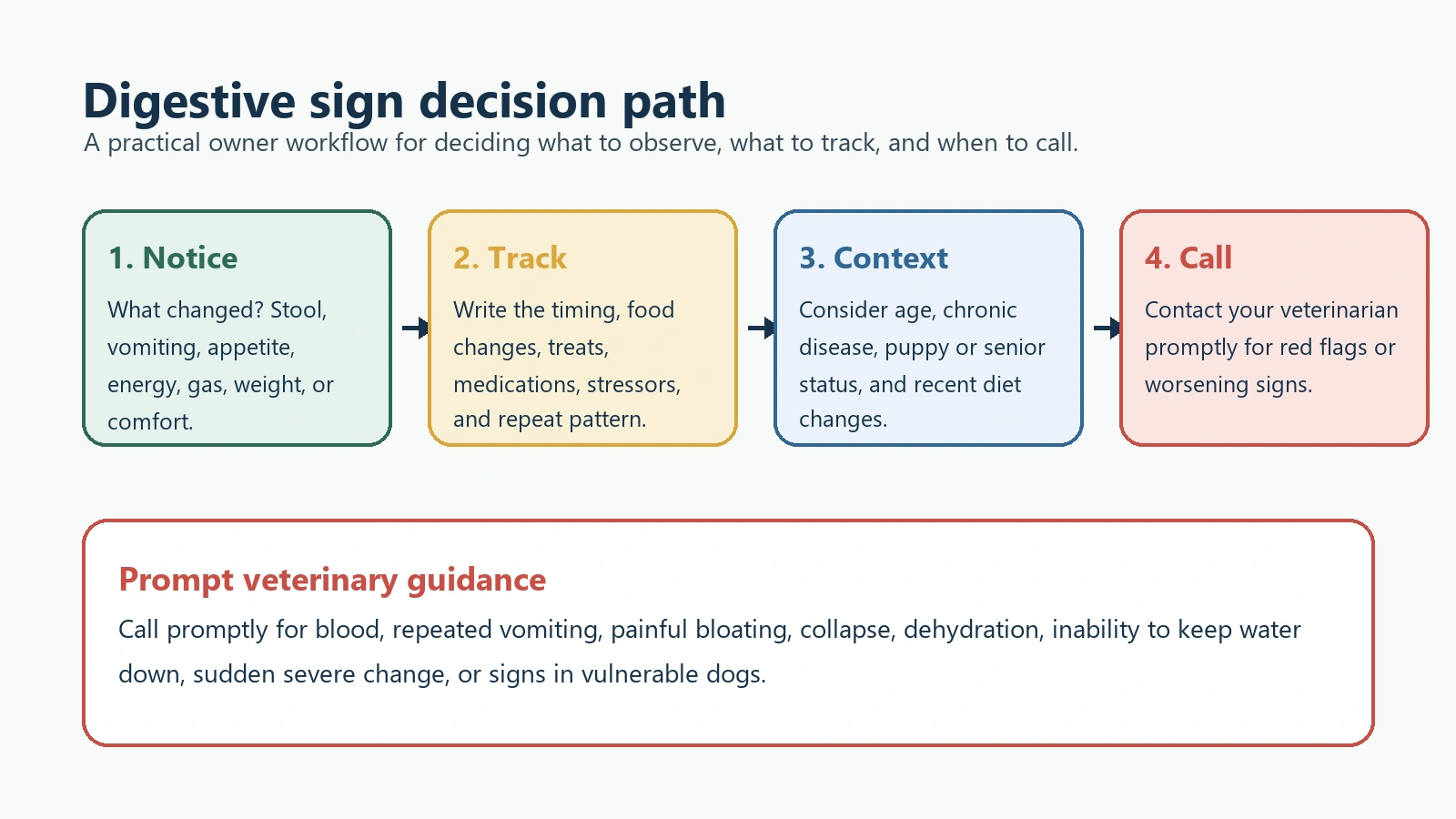
How to move from concern to a safer next step
Sort urgency first
Look for red flags before thinking about diet changes or supplements. Urgent signs need veterinary direction, not a longer home experiment.
Stabilize the variables
If your dog is stable, avoid changing several things at once. A stable routine makes patterns easier to understand and discuss.
Bring a clear history
Share the timeline, signs, diet, treats, medications, supplements, and photos of labels. Ask what would make the plan change.
Better questions, calmer next steps
Questions to ask your veterinarian
- Based on my dog’s age and history, which digestive signs are most concerning?
- Should we test for parasites, infection, pancreatitis, endocrine disease, food-response issues, or another cause?
- Is a diet change appropriate, and if so, how should the transition be handled?
- Should any treats, chews, toppers, supplements, or medications be paused or reviewed?
- What should I monitor over the next 24 to 72 hours, and what would make this urgent?
Bring the full list of food, treats, supplements, and medications. Photos of labels are often more useful than memory, especially when ingredient lists, fat content, calories, or dosing instructions matter.
FAQ
What does healthy digestion look like in a dog?
It usually means a stable appetite, comfortable stooling, normal energy, no repeated vomiting, and no signs of belly pain. The exact normal pattern varies by dog, so the most useful comparison is your dog’s usual routine.
Is occasional soft stool always a problem?
Not always. A single mild change can happen after a diet or routine change. It becomes more concerning when it is severe, recurring, bloody, paired with vomiting or lethargy, or happening in a puppy, senior dog, or medically fragile dog.
Should I give a probiotic for every digestive upset?
No. A probiotic may fit some veterinary plans, but it is not a universal answer and should not delay care for red flags. Ask your veterinarian whether a probiotic is appropriate for your dog’s situation and what product type or evidence they prefer.
What should I bring to a vet visit for digestive signs?
Bring the timeline, photos if helpful, a stool sample if your clinic requests one, and labels or photos for foods, treats, chews, supplements, preventives, and medications. Include recent travel, boarding, stress, scavenging, and diet changes.
Can stress affect digestion?
Stress can be part of the context for some dogs, but it should not be used as a shortcut diagnosis. If digestive signs are severe, persistent, recurring, or paired with other illness signs, a veterinary assessment is the safer path.
When is this an emergency?
Seek urgent veterinary care for collapse, severe weakness, a bloated or painful abdomen, repeated vomiting, inability to keep water down, blood in vomit or stool, suspected toxin exposure, severe dehydration, or sudden major decline.
Sources
- Introduction to Digestive Disorders of Dogs, MSD Veterinary Manual.
- Diarrhea, Cornell University College of Veterinary Medicine.
- Gastroenteritis in Dogs, VCA Animal Hospitals.
- Nutrition, Tufts Cummings School of Veterinary Medicine Clinical Nutrition Service.
- Nutrition Guidelines, World Small Animal Veterinary Association.
- Pet Food, U.S. Food and Drug Administration.
