



Questions to Ask Your Vet at a Senior Dog Wellness Exam
A senior wellness examination is not simply a younger dog's checkup with extra blood work. Aging rates differ by breed, size, individual history, and organ system, and old age itself…

How Dog Anxiety Affects the Human-Animal Bond and Owner Wellbeing
Living with a dog who panics, cannot be left alone, reacts to people or animals, fears routine sounds, or struggles with handling can reshape the owner's day. Sleep, work, travel,…
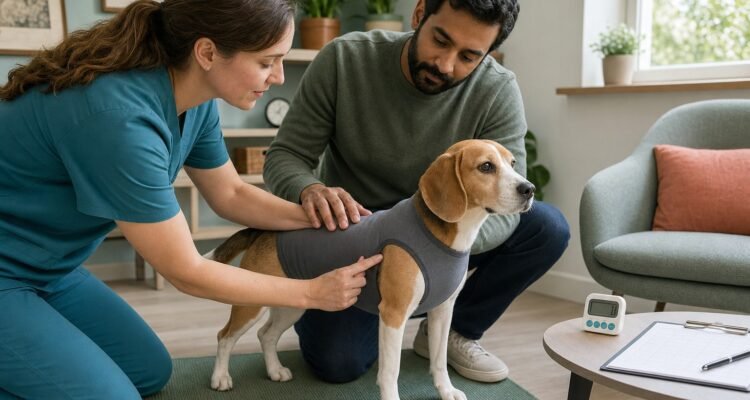
Anxiety Wraps and Pressure Products for Dogs: What Evidence Exists
Pressure wraps and compression garments are marketed as calming tools for noise fear, separation-related distress, generalized anxiety, travel, and veterinary visits. A 2024 systematic review found only four eligible canine…
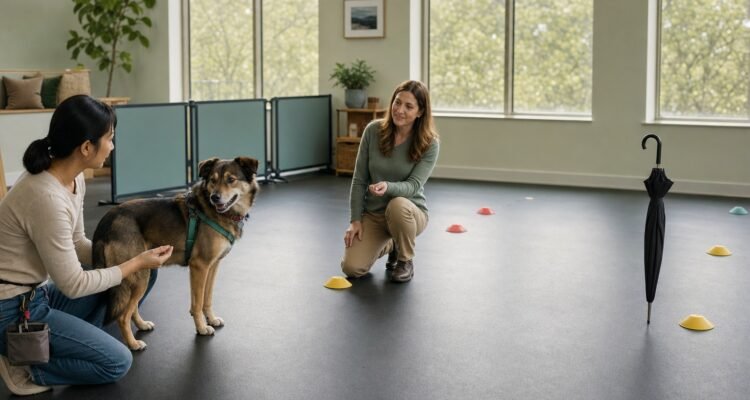
Counter-Conditioning and Desensitization for Anxious Dogs
Desensitization and counter-conditioning are related but distinct behavior-change processes. Desensitization presents a trigger at a low enough intensity that the dog can remain safe and able to learn, then changes…

Medication Options for Dog Anxiety: What Vets May Discuss
Medication can be appropriate when anxiety compromises welfare, safety, daily function, or the ability to learn, but there is no universal anxiety drug. Veterinarians distinguish baseline medication intended to alter…

Questions to Ask Your Vet About Dog Anxiety
Anxiety is an emotional state, not one behavior or one diagnosis. Panting, pacing, hiding, freezing, scanning, barking, destructive behavior, escape attempts, elimination, aggression, appetite changes, and inability to settle can…
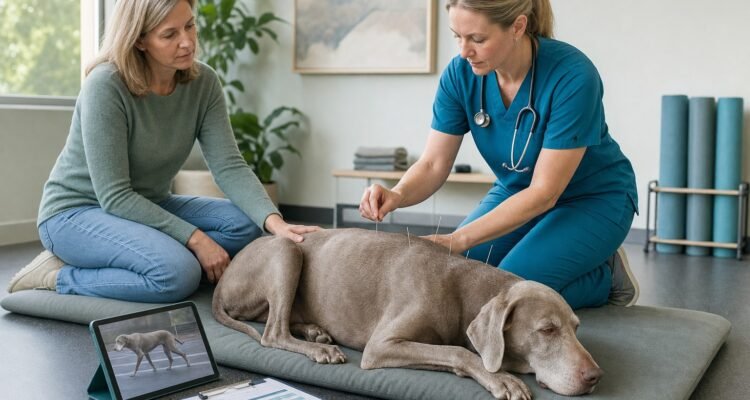
Acupuncture for Dogs with Joint Pain: What Research Currently Shows
Veterinary acupuncture places fine needles at selected points as a clinician-delivered physical modality. It is sometimes considered within multimodal pain care, but plausibility, tradition, owner reports, and availability are not…
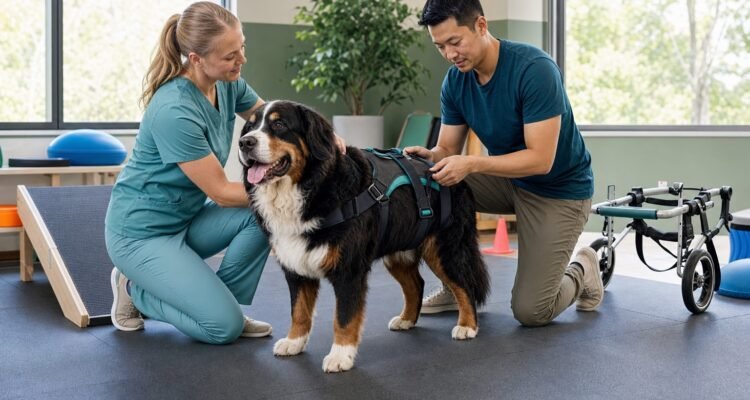
Assistive Devices for Dogs with Mobility Challenges: An Overview
Assistive devices can support selected dogs during recovery or long-term mobility loss, but the category label does not make a device suitable. Rear-support and full-body harnesses, slings, ramps, traction surfaces,…

Pain Management for Dogs with Joint Issues: What Vets Consider
Pain management for joint disease is not a single medication or a one-time decision. Veterinarians first identify likely pain sources, separate orthopedic from neurologic and other disease, and evaluate how…
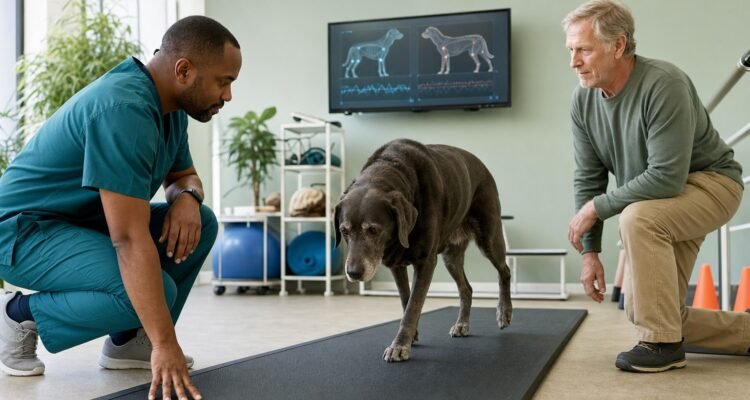
Canine Osteoarthritis: A Comprehensive Owner Information Guide
Canine osteoarthritis is a progressive, whole-joint disorder involving cartilage, bone, synovium, supporting tissues, inflammation, and pain. It may develop after joint instability, developmental disease, injury, abnormal conformation, or other joint…