

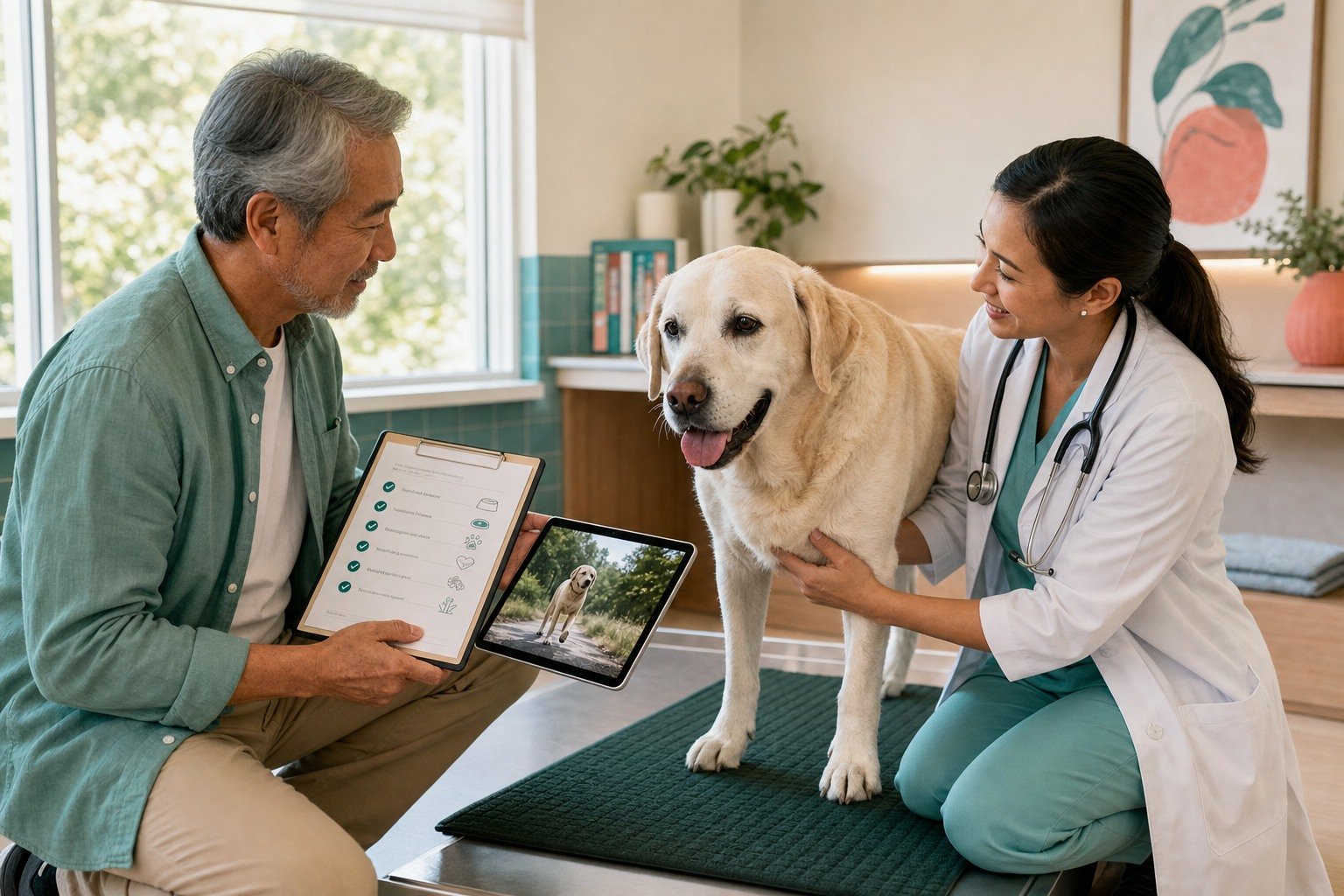
A senior wellness examination is not simply a younger dog's checkup with extra blood work. Aging rates differ by breed, size, individual history, and organ system, and old age itself is not a diagnosis. The visit should connect home observations with a complete examination, body and muscle condition, pain and mobility, oral health, nutrition, behavior and cognition, sensory changes, preventive care, medication and supplement review, and individualized screening. AAHA recommends more frequent evaluation and evidence-guided diagnostic testing for senior patients, but no checklist replaces clinical judgment. Bring priorities and ask what each proposed test could reveal, what result would change care, and when trends should be rechecked. This guide helps organize the conversation; it does not prescribe a universal testing schedule.
Short answer
Ask what changed, what is being screened, and what happens next
AAHA senior-care guidance emphasizes a tailored plan, complete history and examination, periodic laboratory and blood-pressure screening, quality of life, pain, cognition, nutrition, dental health, and caregiver communication. Questions should turn findings into priorities and a follow-up plan. [1] [2]
- Record observable changes, context, frequency, severity, recovery, and whole-dog function with dates.
- Use this guide to prepare a veterinary conversation, not to diagnose or choose treatment alone.
- Bring every medication, supplement, diet, prior result, and safe home video to the appointment.
- Agree on the next decision, measurable outcomes, reassessment timing, and urgent-contact signs.
Safety first
Do not wait for a routine visit when a senior dog declines suddenly
Seek prompt care for new pain, appetite or weight loss, repeated vomiting or diarrhea, increased thirst or urination, coughing, exercise intolerance, confusion, falls, urine or stool changes, or a rapidly changing mass. Seek urgent care for collapse, breathing difficulty, seizure, major trauma, inability to urinate, severe weakness, or uncontrolled bleeding.
- Do not delay care because a change seems like normal aging, stress, or a minor accident.
- Do not start, stop, combine, or calculate medication or treatment from this article.
- Protect comfort and safety while arranging appropriate veterinary evaluation.
Veterinary note
This article is educational and does not diagnose, treat, prescribe, or replace care from a licensed veterinarian. Your dog’s history, examination, diet, medications, and current signs determine what is appropriate.
Prepare a senior history that shows trends
List changes in appetite, water, urination, stool, sleep, pacing, vocalization, interaction, vision, hearing, grooming, stairs, rising, walking, play, and recovery. Compare current function with the dog's own baseline rather than another dog of the same age.
Bring short natural videos of walking, rising, coughing, unusual episodes, or nighttime behavior when safe. AAHA specifically supports photographs, videos, and previsit information because brief clinic observation may miss intermittent or home-specific changes. [1]
Bring exact labels for food, treats, supplements, preventives, and medication, including missed doses and adverse effects. Include prior diagnoses, procedures, test results, travel, exposure risk, and changes in the household.
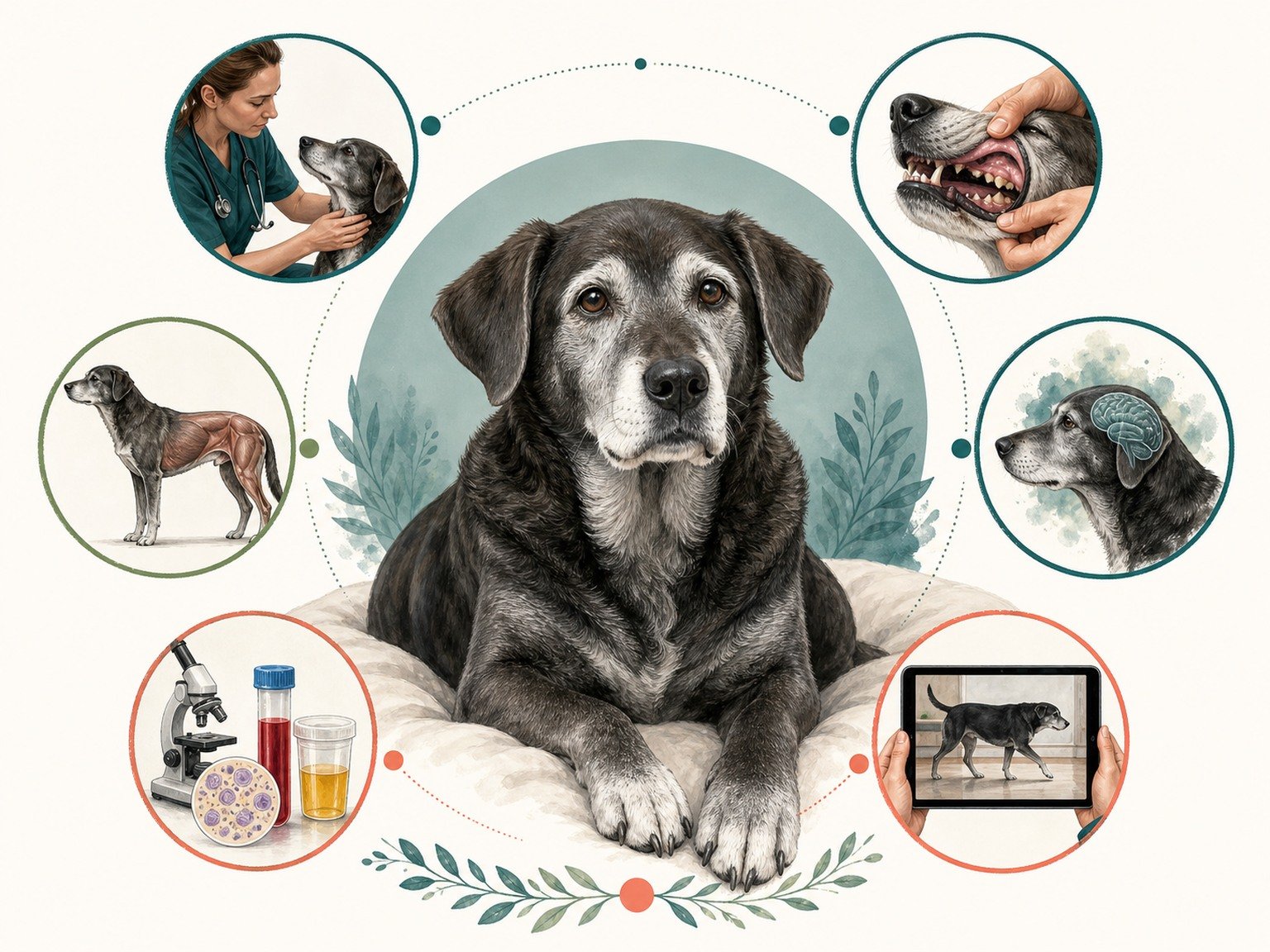
Ask what the examination is assessing
Ask about body weight, body condition, muscle condition, hydration, pain, gait, joints, spine, skin, masses, lymph nodes, eyes, ears, oral health, heart, lungs, abdomen, neurologic function, and reproductive or urinary findings. A complete examination creates context for testing.
Ask whether subtle changes could reflect pain, sensory loss, cognitive dysfunction, dental disease, endocrine illness, kidney disease, cancer, or another condition. The unhealthy-senior framework organizes follow-up by body system rather than assuming one aging diagnosis. [3]
Ask how handling can be adapted with nonslip flooring, padding, lower surfaces, extra time, or previsit medication when appropriate. A senior-friendly visit should not create avoidable fear or pain.
Ask why each test is recommended
AAHA's senior table lists periodic CBC, chemistry, urinalysis, blood pressure, parasite and infectious-disease testing, with additional tests based on findings, breed, region, and risk. These are recommendations, not a promise that a panel detects every disease. [2]
Ask what baseline the result will establish, what abnormality is being sought, whether fasting or urine collection matters, and what false-positive, repeat, imaging, or referral pathway could follow. Screening is most useful when a response plan exists.
Discuss dental imaging and anesthesia separately from the awake oral check. Age alone does not decide anesthetic risk; the team evaluates health, procedure benefit, monitoring, and individualized risk-reduction steps. [1]
Turn findings into one coordinated plan
Prioritize problems by comfort, safety, reversibility, disease risk, and caregiver capacity. A long list of findings may need staged decisions so the dog and family are not overwhelmed.
Ask for written targets: weight or muscle trend, pain and mobility measure, dental plan, nutrition goal, medication monitoring, behavior observation, and the exact interval for recheck. Ask which change should trigger an earlier call.
Discuss quality of life before a crisis. AAHA describes comfort, function, and individual joyful activities as useful recurring observations, not a one-time end-of-life score. [4] [5]
Prepare for a focused veterinary conversation
Bring a concise timeline, short natural-movement or symptom videos when safe, the exact names and photographs of every food, treat, medication, and supplement label, and notes about appetite, water intake, stool, sleep, activity, comfort, and behavior. Include recent injuries, travel, boarding, diet changes, missed medication, and previous test results. A complete record helps the veterinary team separate a repeatable pattern from a single impression.
Decide in advance what you need from the visit: an urgency decision, a diagnosis plan, a nutrition review, a pain or mobility assessment, or a monitored trial. Ask what result would change the plan and what finding would rule an option out. This keeps research and product information in the right role. Evidence can shape questions and expectations, but it cannot determine what is safe for an individual dog without the history and examination.
Owner tool
Prepare a senior wellness visit brief
On a phone, swipe across the table to see every column.
| Checkpoint | Record | Why it helps |
|---|---|---|
| Trend | Home change and date | Adds context |
| Exam | Finding and significance | Defines concern |
| Test | Question and decision | Shows purpose |
| Plan | Priority, measure, recheck | Coordinates care |
Better questions, calmer next steps
Questions to ask your veterinarian
- What changes are most important today?
- Which screening fits this dog and why?
- How are pain, muscle, cognition, and dental health assessed?
- What result would change the plan?
- What sign should prompt an earlier or urgent visit?
FAQ
How often should a senior dog be examined?
AAHA commonly recommends more frequent visits, individualized by health and risk.
Does normal blood work prove a senior dog is healthy?
No. Results are interpreted with history and examination.
Should every senior dog receive every test?
No. Screening is tailored.
Is anesthesia automatically unsafe because of age?
No. Risk is individualized.
Should I mention small behavior changes?
Yes. They may be clinically important.
Sources
- American Animal Hospital Association: 2023 Senior Care Guidelines. Comprehensive senior-care framework.
- American Animal Hospital Association: Diagnostic Tests and Recommended Frequencies. Evidence-guided screening recommendations.
- American Animal Hospital Association: Evaluating the Unhealthy Senior Pet. Body-system examination and diagnostic pathways.
- American Animal Hospital Association: Supporting Your Senior Pet. Owner-facing exam and screening overview.
- American Animal Hospital Association: Assessing Senior Pet Quality of Life. Repeated comfort and function observations.
