

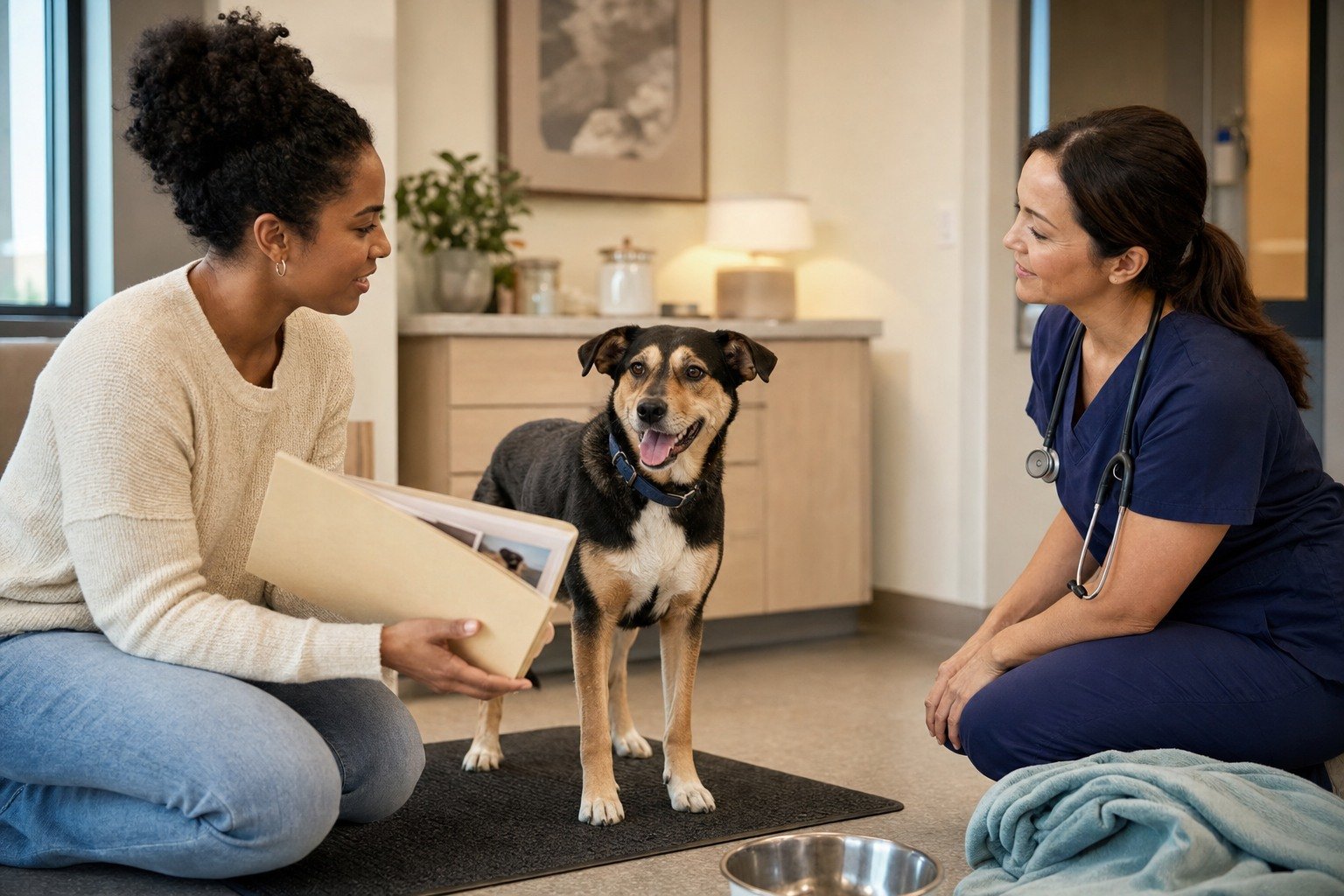
Adoption can change housing, transport, people, animals, food, water, sleep, activity, and toileting all at once. Those transitions matter to the history, but rescue status does not establish a diagnosis or a hidden story. Diarrhea, vomiting, appetite change, abnormal stool, weight loss, or abdominal signs can involve parasites, infection, diet, toxins, foreign material, medication, inflammation, obstruction, systemic illness, stress, or several factors. Gather every available shelter, foster, transport, vaccination, deworming, diet, medication, and test record. Mark missing information as unknown rather than guessing. Arrange veterinary intake, keep routine predictable, prevent shared-bowl and waste exposure until the household plan is clear, and report concerning signs promptly.
Short answer
Treat adoption as important context, not a digestive diagnosis
Shelter-care standards support organized records and population-health practices, while CAPC and AAHA emphasize individualized parasite and nutrition assessment. Digestive signs have many infectious and noninfectious causes. No source supports one day-one food, probiotic, deworming, quarantine, or testing protocol for every adopted dog. [1] [2] [3] [4]
- Start with the individual dog, exact question, complete history, and current veterinary plan.
- Use observations and evidence to improve a veterinary discussion, not to diagnose or treat at home.
- Keep population findings, research endpoints, and product-specific conclusions within their actual limits.
- Escalate sudden, severe, persistent, progressive, or function-limiting signs promptly.
Safety first
Do not dismiss worsening signs as normal adjustment
Seek urgent care for collapse, severe weakness, repeated vomiting, inability to keep water down, substantial blood, severe pain, a swollen abdomen, unproductive retching, breathing difficulty, suspected toxin or foreign object, or rapid decline. Call before entering a clinic when contagious disease may be possible.
- Do not delay urgent care while completing a checklist, testing a diet, or seeking a cheaper option.
- Do not start, stop, combine, divide, or calculate medication or supplements from this article.
- After a possible toxin, foreign object, overdose, or hazardous ingestion, contact veterinary or poison help promptly.
Veterinary note
This article is educational and does not diagnose, treat, prescribe, or replace care from a licensed veterinarian. Your dog’s history, examination, diet, medications, and current signs determine what is appropriate.
Build the most accurate day-one history possible
Collect adoption, shelter, foster, transport, and prior-clinic records. Include dates and labels for food, vaccination, deworming, fecal testing, medication, surgery, travel, illness, appetite, stool, and known exposures. Ask what was observed rather than requesting a guessed cause.
Separate known, reported, and unknown information. A shy posture does not prove abuse; diarrhea after adoption does not prove stress colitis; a normal-looking dog does not prove that parasite or diet history is complete. This protects the dog from a story that narrows assessment too early.
The Association of Shelter Veterinarians provides standards across shelters, foster organizations, rescues, and other population-care settings. [1] Those standards inform handoff and prevention, but the adopted dog still needs individual veterinary assessment.
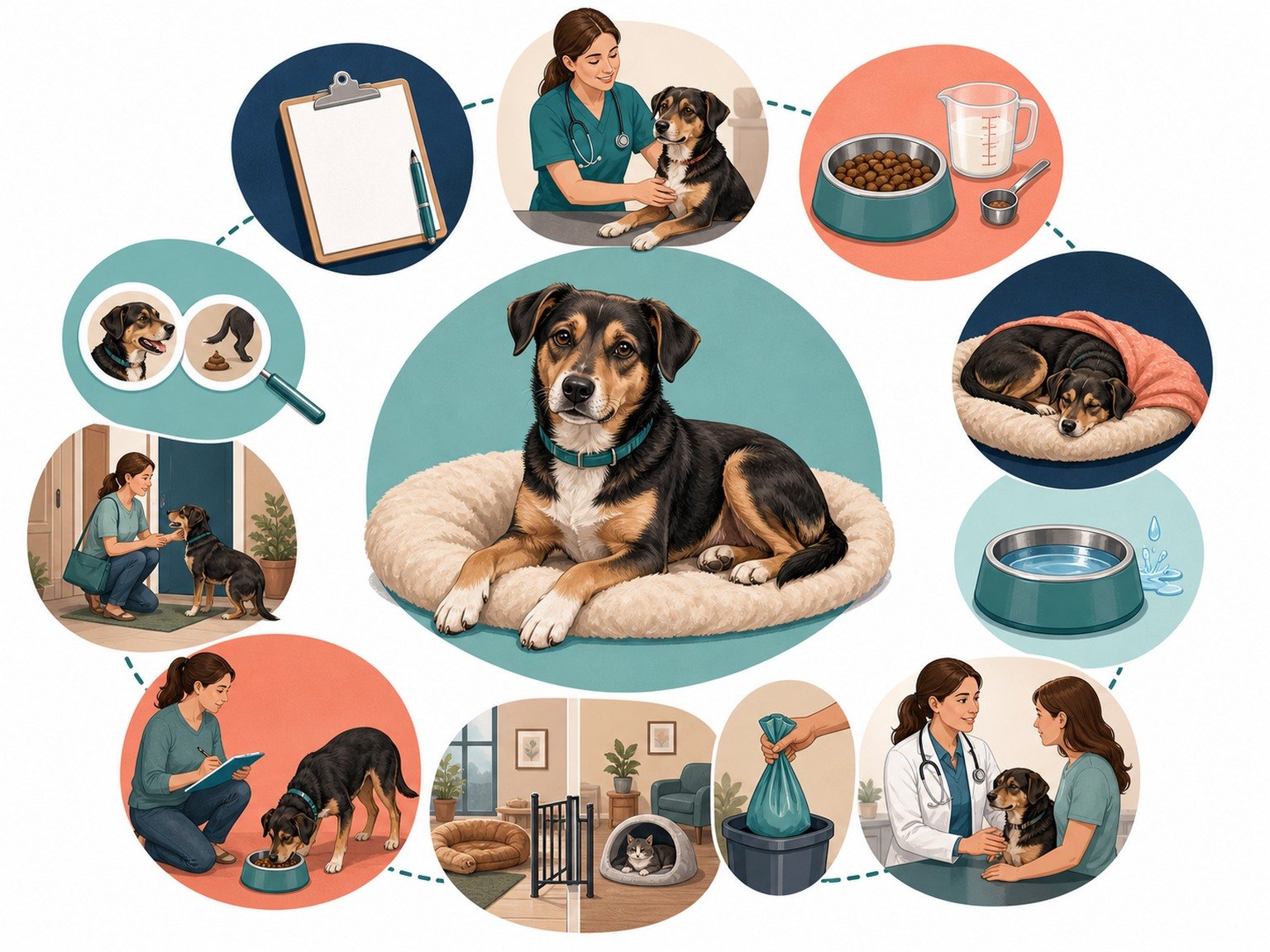
Stabilize food and routine without inventing a universal transition
Record what the dog was eating, exact formulation, amount, schedule, treats, chews, supplements, and medications. If prior food is unavailable or unsuitable, ask the veterinarian how to proceed. Do not assume every dog needs a fixed multi-day switch or bland diet.
AAHA recommends a complete nutrition history that includes patient, diet, feeding, environment, activity, supplements, and caregiver factors. [3] Measure what is fed and limit unrecorded extras so appetite and stool changes remain interpretable.
Provide quiet rest, predictable toileting access, clean water, and choice about social contact. Avoid flooding the dog with outings, new foods, visitors, training treats, and products. Predictability supports observation but does not treat infection, obstruction, inflammation, or another medical problem.
Coordinate parasites, infectious risk, and household hygiene
CAPC bases parasite testing and control on health, environment, geography, travel, outdoor access, and animal contact. [2] Bring exact prior products and dates. Do not repeat or combine dewormers because the record is incomplete without asking the veterinarian.
Pick up stool promptly, clean contaminated areas according to veterinary guidance, prevent access to feces and communal water, and separate feeding and waste areas when the household plan requires it. Wash hands after cleanup. Avoid punitive or stressful handling around accidents.
If vomiting, diarrhea, fever, lethargy, cough, nasal signs, or other contagious-disease concerns occur, call the clinic before arrival for entry instructions. Do not take an unwell dog into dog parks, daycare, stores, or shared relief areas to test socialization.
Track the dog, not an adjustment countdown
Record appetite, water, vomiting, stool frequency and appearance, blood or mucus, straining, urination, energy, pain, sleep, behavior, weight when safely available, diet, and medication. Add date, time, and exposure context.
Digestive disorders have many causes, and accurate history, examination, and selected tests guide diagnosis. [4] Bring requested samples and packaging. Photos can support communication but cannot replace examination, laboratory work, imaging, or other indicated assessment.
Reassess as records arrive and the dog's baseline becomes clearer. A dog may improve as routine stabilizes, but improvement does not prove the original cause. Persistent or recurrent signs deserve follow-up rather than repeated food switching or a permanent rescue stomach label.
Prepare for a focused veterinary conversation
Bring a concise timeline, short natural-movement or symptom videos when safe, the exact names and photographs of every food, treat, medication, and supplement label, and notes about appetite, water intake, stool, sleep, activity, comfort, and behavior. Include recent injuries, travel, boarding, diet changes, missed medication, and previous test results. A complete record helps the veterinary team separate a repeatable pattern from a single impression.
Decide in advance what you need from the visit: an urgency decision, a diagnosis plan, a nutrition review, a pain or mobility assessment, or a monitored trial. Ask what result would change the plan and what finding would rule an option out. This keeps research and product information in the right role. Evidence can shape questions and expectations, but it cannot determine what is safe for an individual dog without the history and examination.
Owner tool
Build an adopted-dog digestive intake record
On a phone, swipe across the table to see every column.
| Checkpoint | What to record | Why it helps |
|---|---|---|
| Known history | Food, tests, vaccines, drugs, travel | Preserves facts |
| Current baseline | Stool, vomiting, appetite, weight, behavior | Tracks change |
| Exposure | Animals, water, waste, scavenging, housing | Guides questions |
| Plan | Exam, testing, hygiene, recheck, urgent signs | Coordinates care |
Better questions, calmer next steps
Questions to ask your veterinarian
- Which records are reliable and what remains unknown?
- What diet and parasite steps fit this dog now?
- Could infectious or household exposure matter?
- Which signs require same-day or urgent care?
- When should the new baseline be reassessed?
FAQ
Do all rescue dogs have damaged gut health?
No.
Is diarrhea normal after adoption?
It should not be dismissed; report it and its context.
Should I start probiotics immediately?
Not without a defined veterinary reason.
Do I repeat deworming when records are unclear?
Ask the veterinarian first.
Does a three-day rule determine digestive adjustment?
No fixed timeline diagnoses or clears a dog.
Sources
- Association of Shelter Veterinarians: Guidelines for Standards of Care in Animal Shelters. Shelter, foster, rescue, records, and population-care standards.
- Companion Animal Parasite Council: General Guidelines for Dogs and Cats. Individual parasite testing and control.
- American Animal Hospital Association: Gathering a Comprehensive Nutrition History. Complete diet and exposure history.
- Merck Veterinary Manual: Introduction to Digestive Disorders of Dogs. Signs, diverse causes, history, examination, and testing.
- World Small Animal Veterinary Association: Global Nutrition Guidelines. Individual nutrition assessment and follow-up tools.
