


A dog does not experience a supplement in isolation. The same ingredient may appear in food, treats, chews, powders, oils, and combination products. Botanicals and concentrated nutrients can add physiologic effects or alter exposure to medications. Disease, surgery, anesthesia, laboratory testing, age, and body size can further change risk. The safest interaction check begins with one exact, current inventory.
Short answer
An interaction map is more useful than a yes-or-no list
Potential interactions include duplicated nutrients, additive sedation or bleeding effects, gastrointestinal irritation, altered absorption or metabolism, organ-disease concerns, and interference with procedures or tests. Evidence may be incomplete, so absence from an online checker is not proof of safety. Product timing and formulation details matter too. [1] [2]
- List exact products and amounts, not categories such as joint chew or calming aid.
- Include prescriptions, preventives, over-the-counter drugs, diet, treats, and planned anesthesia or testing.
- Change one nonessential product at a time only under the agreed veterinary plan.
Safety first
Suspected interactions can become urgent
Stop nonessential products and contact a veterinarian promptly for collapse, breathing difficulty, facial swelling, seizure, severe agitation or sedation, repeated vomiting, black stool, unusual bruising or bleeding, yellow gums or eyes, loss of coordination, marked weakness, or suspected overdose. Do not wait for an online interaction result.
- Do not combine products with overlapping vitamins, minerals, botanicals, fatty acids, or sedating ingredients without review.
- Do not stop prescribed medicine or restart a suspected supplement without veterinary direction.
- Tell the veterinary team about every product before surgery, anesthesia, dental care, or new medication.
Veterinary note
This article is educational and does not diagnose, treat, prescribe, or replace care from a licensed veterinarian. Your dog’s history, examination, diet, medications, and current signs determine what is appropriate.
Build one complete exposure inventory
Photograph every label and record product name, manufacturer, formulation, ingredient amounts, serving units, daily use, start date, reason, and last administration. Add complete food, treats, chews, toppers, preventives, prescriptions, compounded drugs, and human over-the-counter products accessible to the dog.
Update the list at every visit and before any procedure. FDA adverse-event guidance specifically asks reporters to include drugs, vitamins, supplements, food, medical history, and diagnostic findings because these details help interpret a possible event. [3]
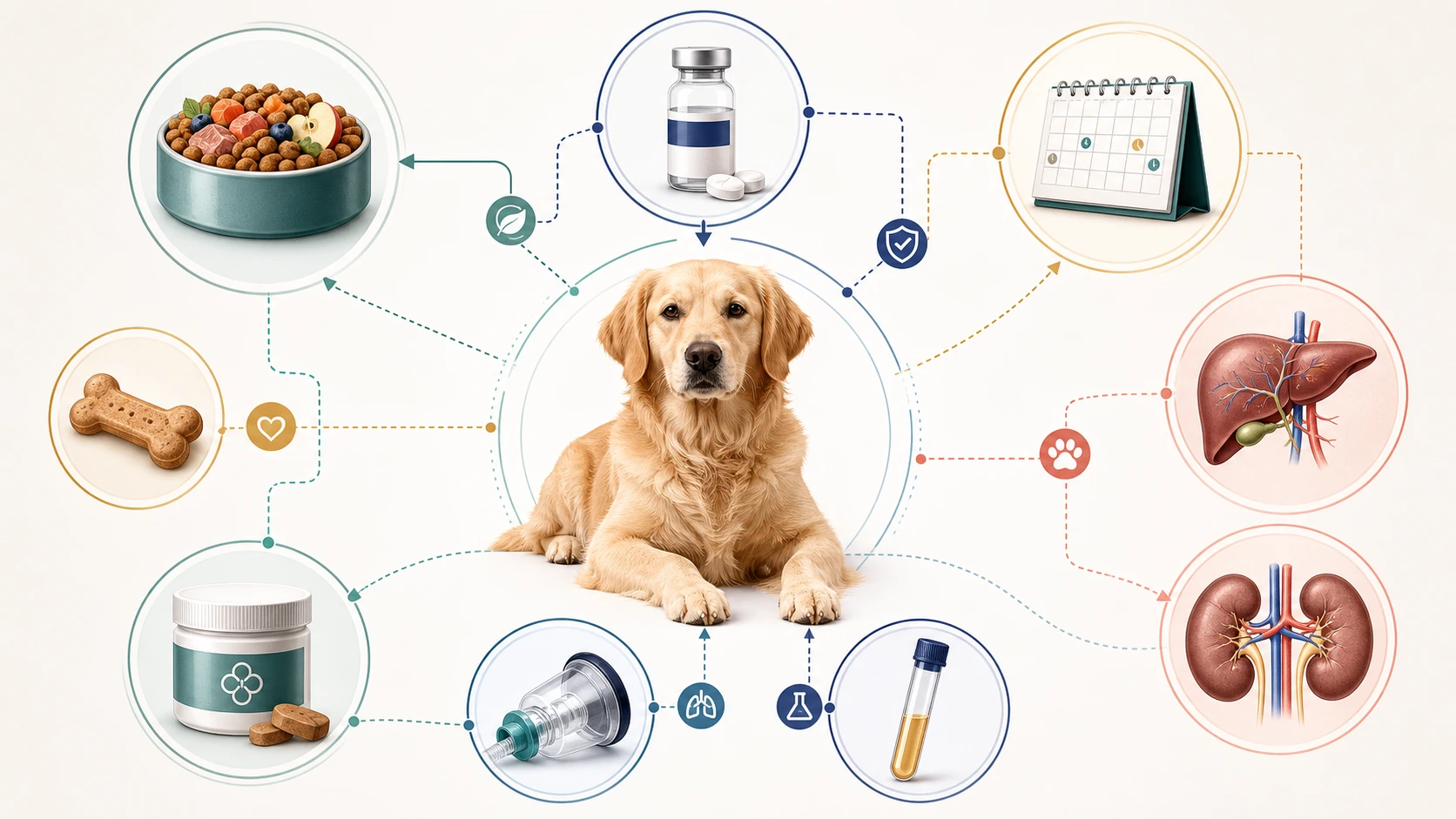
Look for more than classic drug-drug interactions
Two products may duplicate vitamin D, calcium, potassium, selenium, fatty acids, glucosamine, or botanicals even when their front labels advertise different purposes. Tufts veterinary nutrition guidance describes clinically important problems associated with stacked products and overlapping nutrients. [1]
Interactions can also be pharmacodynamic, such as additive sedation or bleeding tendency; pharmacokinetic, affecting absorption or metabolism; disease-related, where organ function changes tolerance; or procedural, where products matter around anesthesia or laboratory interpretation. Botanical products have active constituents and documented adverse-effect and interaction concerns. [2]
Connect risk to the individual dog and clinical plan
Ask how kidney, liver, gastrointestinal, endocrine, heart, neurologic, clotting, immune, or urinary disease changes the decision. Age, pregnancy, body size, nutritional adequacy, allergies, and previous reactions matter. A product tolerated by one dog does not establish safety for another. [4]
Prescribed medicines may have narrow safety margins or monitoring requirements. Cornell's NSAID guide tells owners to disclose other medicines, vitamins, and supplements and to contact the veterinarian about adverse signs. The same disclosure principle applies broadly even though each medicine has its own interaction profile. [5]
Create a controlled plan for starting, stopping, and rechecking
Before use, define the goal, baseline, expected timeframe, stop criteria, and recheck. Avoid starting several products at once because attribution becomes difficult. If the veterinarian recommends discontinuation before a procedure or test, record the exact instruction rather than inventing a washout period.
When signs change, document timing relative to every dose and meal, preserve containers and lot codes, and seek clinical assessment. Improvement after stopping or worsening after restarting can be informative but is not a safe home experiment and does not replace diagnosis or formal causality assessment. [3] [4]
Assign one household record as the source of truth and mark who administers each item. Include missed doses, accidental extra doses, temporary holds, refill changes, and product substitutions. A veterinarian cannot interpret an apparent interaction reliably when the timing record omits the very changes that altered exposure.
Prepare for a focused veterinary conversation
Bring a concise timeline, short natural-movement or symptom videos when safe, the exact names and photographs of every food, treat, medication, and supplement label, and notes about appetite, water intake, stool, sleep, activity, comfort, and behavior. Include recent injuries, travel, boarding, diet changes, missed medication, and previous test results. A complete record helps the veterinary team separate a repeatable pattern from a single impression.
Decide in advance what you need from the visit: an urgency decision, a diagnosis plan, a nutrition review, a pain or mobility assessment, or a monitored trial. Ask what result would change the plan and what finding would rule an option out. This keeps research and product information in the right role. Evidence can shape questions and expectations, but it cannot determine what is safe for an individual dog without the history and examination.
Owner tool
Prepare an interaction map for the visit
On a phone, swipe across the table to see every column.
| Exposure | Record exactly | Interaction question |
|---|---|---|
| Medication | Name, strength, dose time, indication | Metabolism, organ, bleeding, sedation |
| Supplement | Formula, amounts, serving, lot | Overlap and active effects |
| Diet and extras | Exact food, treats, chews, toppers | Nutrient duplication or absorption |
| Procedure or test | Date, anesthesia, laboratory plan | Hold instructions or interpretation |
Better questions, calmer next steps
Questions to ask your veterinarian
- Which ingredients overlap across the complete exposure list?
- Could any product add sedation, bleeding, GI, blood-pressure, glucose, or organ effects?
- Should anything change before anesthesia, dental care, imaging, or laboratory tests?
- Which prescribed-drug monitoring result could a supplement complicate?
- What are the exact stop signs, instructions, and recheck date?
FAQ
Can an online checker clear a supplement?
No. Databases may be incomplete and cannot account for the dog's diagnosis, formulation, amount, or procedure.
Do food ingredients count?
Yes. Diet, treats, chews, and toppers can duplicate nutrients or affect clinical plans.
Should supplements stop before surgery?
Follow the veterinary team's product-specific instruction; do not invent a universal timeline.
Is a natural herb inactive?
No. Botanicals can have physiologic effects, adverse effects, and interactions.
Can I stop prescription medicine if I suspect an interaction?
Contact the prescribing veterinarian or emergency service; abrupt changes can create additional risk.
Sources
- Tufts Petfoodology: When Less Is More: Sensible Use of Supplements. Examples and guidance on nutrient duplication and supplement interactions.
- Merck Veterinary Manual: Herbal Medicine in Veterinary Patients. Botanical adverse effects and drug-herb interaction context.
- U.S. Food and Drug Administration: How to Report Animal Drug and Device Side Effects. Adverse-event records should include medicines, vitamins, and supplements.
- Veterinary Clinics of North America: Veterinary Pet Supplements and Nutraceuticals. Regulation, safety, quality, and evidence review.
- Cornell University College of Veterinary Medicine: NSAID Medication Guide for Animals. Instruction to disclose medicines, vitamins, supplements, and concurrent conditions.
