


Dog supplements sit in a confusing space where food-style products, concentrated nutrients, botanicals, microbes, and products making drug-like promises can look similar on a shelf. In the United States, products marketed as animal dietary supplements do not have the same statutory category that human dietary supplements have. Safety therefore depends on the exact intended use, ingredients, manufacturing controls, evidence, the individual dog, and active monitoring.
Short answer
Treat every supplement as a real exposure
A supplement can add active ingredients, calories, allergens, contaminants, or duplicated nutrients and can interact with food, disease, tests, anesthesia, or medication. FDA explains that animal products commonly called supplements may be regulated as food or as new animal drugs depending on intended use and claims. [1] [2]
- Start with a defined goal and evidence, not a product category or testimonial.
- Record the full label, lot number, expiration, directions, and every concurrent product.
- Agree on stop signs and a reassessment date before beginning a veterinarian-approved trial.
Safety first
A suspected reaction needs care, not an online product debate
Stop the product and contact a veterinarian promptly for vomiting, diarrhea, facial swelling, hives, breathing change, collapse, seizure, unusual bleeding, severe lethargy, agitation, yellow gums or eyes, loss of coordination, or suspected overdose. Use emergency care for severe signs. Keep the container and lot information available.
- Never give a human supplement solely because its ingredient sounds familiar.
- Do not combine products with overlapping nutrients or botanicals without calculating total exposure.
- Do not use a supplement to postpone diagnosis or replace prescribed treatment.
Veterinary note
This article is educational and does not diagnose, treat, prescribe, or replace care from a licensed veterinarian. Your dog’s history, examination, diet, medications, and current signs determine what is appropriate.
Understand the regulatory landscape without oversimplifying it
FDA states that DSHEA, the human dietary-supplement law, does not apply to animal foods. Products marketed as animal supplements are evaluated according to intended use: a food purpose belongs in animal-food regulation, while disease-treatment or nonfood structure-function intent can place a product in new-animal-drug territory. [1] [2]
That does not mean every product is illegal or unsafe, and it does not mean market availability proves premarket review for effectiveness. The useful owner question is what the exact product claims, how it is classified and manufactured, and what evidence supports use in this dog. [3]
Match evidence to the exact product and goal
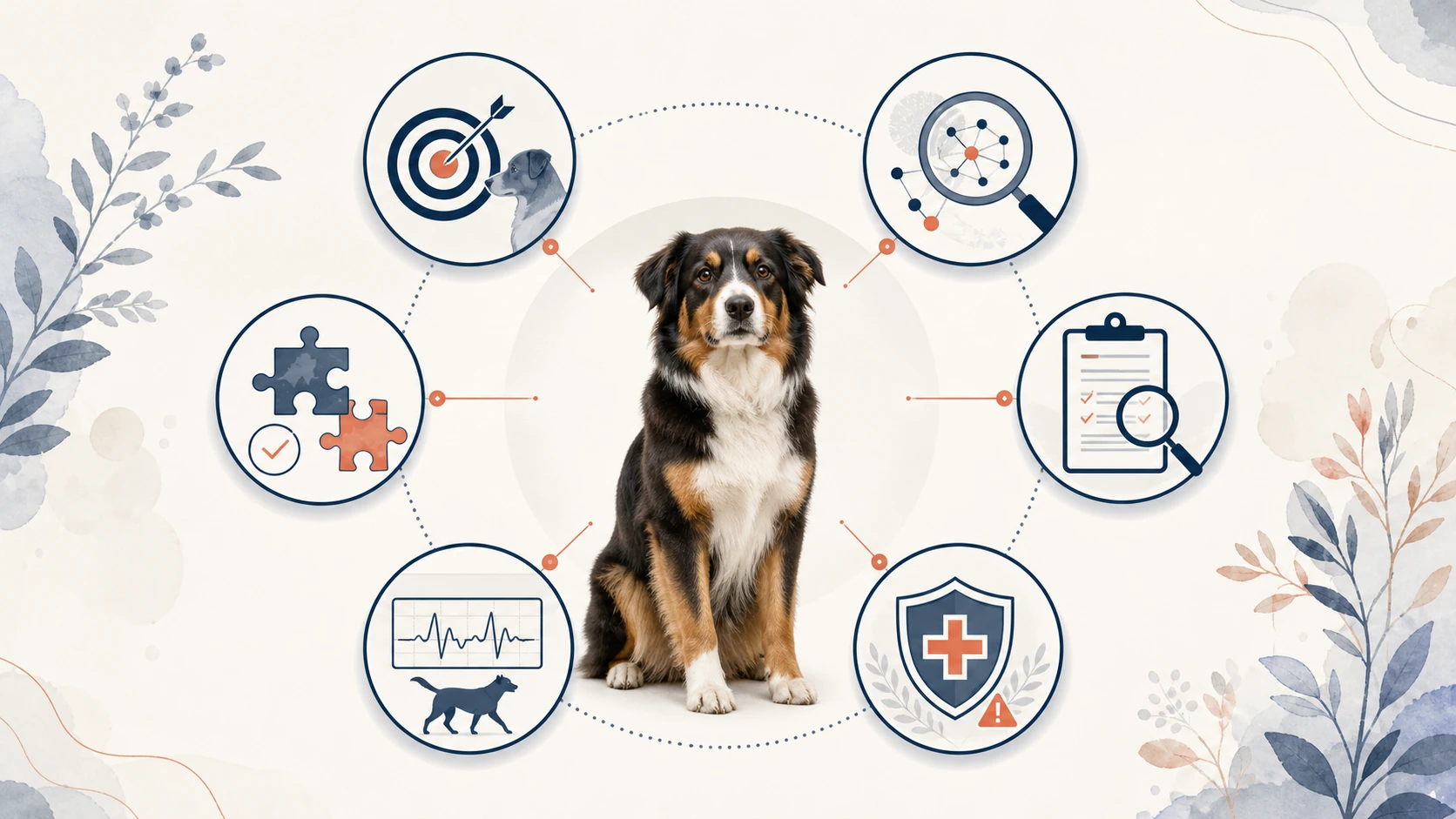
Ingredient plausibility, a laboratory finding, a study in another species, and a controlled canine clinical outcome are different evidence levels. Look for the same chemical form, formulation, population, comparator, duration, and meaningful outcome. A multi-ingredient product cannot borrow certainty from one ingredient studied elsewhere.
Testimonials, star ratings, best-of lists, and before-and-after stories cannot control for diagnosis, natural fluctuation, concurrent treatment, or selective reporting. Ask whether benefit was measured against a comparator and whether harms, withdrawals, conflicts, and uncertainty were reported. [3]
Evaluate quality without turning one badge into a guarantee
Useful quality signals include clear ingredient amounts, lot identification, expiration or best-by information, manufacturer contact details, written quality controls, contaminant testing, and access to a lot-specific certificate of analysis when appropriate. These signals improve traceability but do not prove clinical benefit or suitability.
Avoid vague proprietary blends, missing amounts, impossible disease claims, no responsible company contact, labels that differ across sales pages, and products that encourage replacing veterinary care. Save photographs of every label panel before use because online listings and formulas can change. [2] [3]
Plan interactions, monitoring, and reporting
Give the veterinarian one list covering prescriptions, over-the-counter drugs, preventives, diets, treats, chews, toppers, and supplements. Duplicate vitamins, minerals, fatty acids, sedating ingredients, or herbs may be spread across products. Kidney, liver, gastrointestinal, endocrine, clotting, neurologic, and immune conditions may change risk. [4]
Define a baseline, one intended outcome, the trial duration, stop criteria, and the recheck. If a problem occurs, record timing, product and lot, amount, other exposures, signs, and veterinary findings. FDA provides reporting routes for animal food, drug, and device events; reporting does not itself prove causation. [5]
Keep the original packaging and do not transfer chews, capsules, or powders into an unlabeled container. Household members and pet sitters should know which products are authorized, where they are stored, and whom to call after a dosing mistake. This simple control prevents accidental double administration and preserves the information needed for urgent care.
Prepare for a focused veterinary conversation
Bring a concise timeline, short natural-movement or symptom videos when safe, the exact names and photographs of every food, treat, medication, and supplement label, and notes about appetite, water intake, stool, sleep, activity, comfort, and behavior. Include recent injuries, travel, boarding, diet changes, missed medication, and previous test results. A complete record helps the veterinary team separate a repeatable pattern from a single impression.
Decide in advance what you need from the visit: an urgency decision, a diagnosis plan, a nutrition review, a pain or mobility assessment, or a monitored trial. Ask what result would change the plan and what finding would rule an option out. This keeps research and product information in the right role. Evidence can shape questions and expectations, but it cannot determine what is safe for an individual dog without the history and examination.
Owner tool
Run a supplement safety screen
On a phone, swipe across the table to see every column.
| Question | Evidence to collect | Reason to pause |
|---|---|---|
| Why use it? | Defined goal and canine evidence | Vague wellness promise |
| What is in it? | Exact amounts and full label | Hidden blend or overlap |
| Who made it? | Traceable company and quality process | No accountable contact |
| How is it monitored? | Baseline, stop signs, recheck | No way to judge benefit or harm |
Better questions, calmer next steps
Questions to ask your veterinarian
- What diagnosis or goal would justify this product?
- Does the evidence match this exact formulation and dog?
- Which ingredients overlap with the diet, medications, or other supplements?
- Could it affect anesthesia, laboratory tests, bleeding, sedation, or organ disease?
- What should make us stop, report, or recheck?
FAQ
Are dog supplements FDA approved?
Products marketed as supplements are not automatically FDA-approved animal drugs; classification depends on intended use and claims.
Does natural mean safer?
No. Natural substances can be active, toxic, contaminated, or interactive.
Is third-party testing enough?
It can support identity or quality questions but does not prove effectiveness or individual suitability.
Can two joint supplements be combined?
Not without reviewing overlapping ingredients and total exposure with the veterinarian.
Should a reaction be reported?
Contact the veterinarian first; product problems or adverse events may also be reportable through the appropriate FDA route.
Sources
- U.S. Food and Drug Administration: Animal Foods and Feeds. Federal classification and oversight of animal foods and products marketed as supplements.
- U.S. Food and Drug Administration: Animal Food Labeling and Pet Food Claims. Federal label elements and disease-claim boundaries.
- Veterinary Clinics of North America: Veterinary Pet Supplements and Nutraceuticals. Peer-reviewed review of regulation, quality control, safety, and evidence.
- Tufts Petfoodology: When Less Is More: Sensible Use of Supplements. Veterinary nutrition guidance on duplication and interactions.
- U.S. Food and Drug Administration: Report a Problem. Official routes for reporting animal product problems and adverse events.
